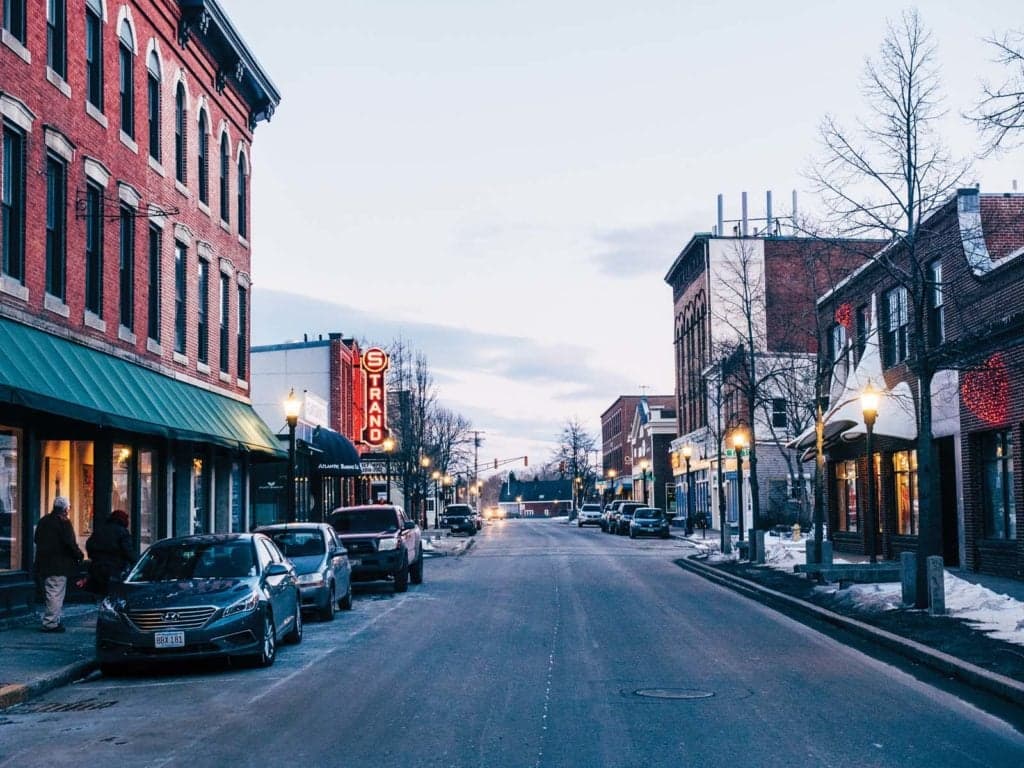
Photo: Wikipedia
Political ClimatePolitical Climate in Rockland, ME
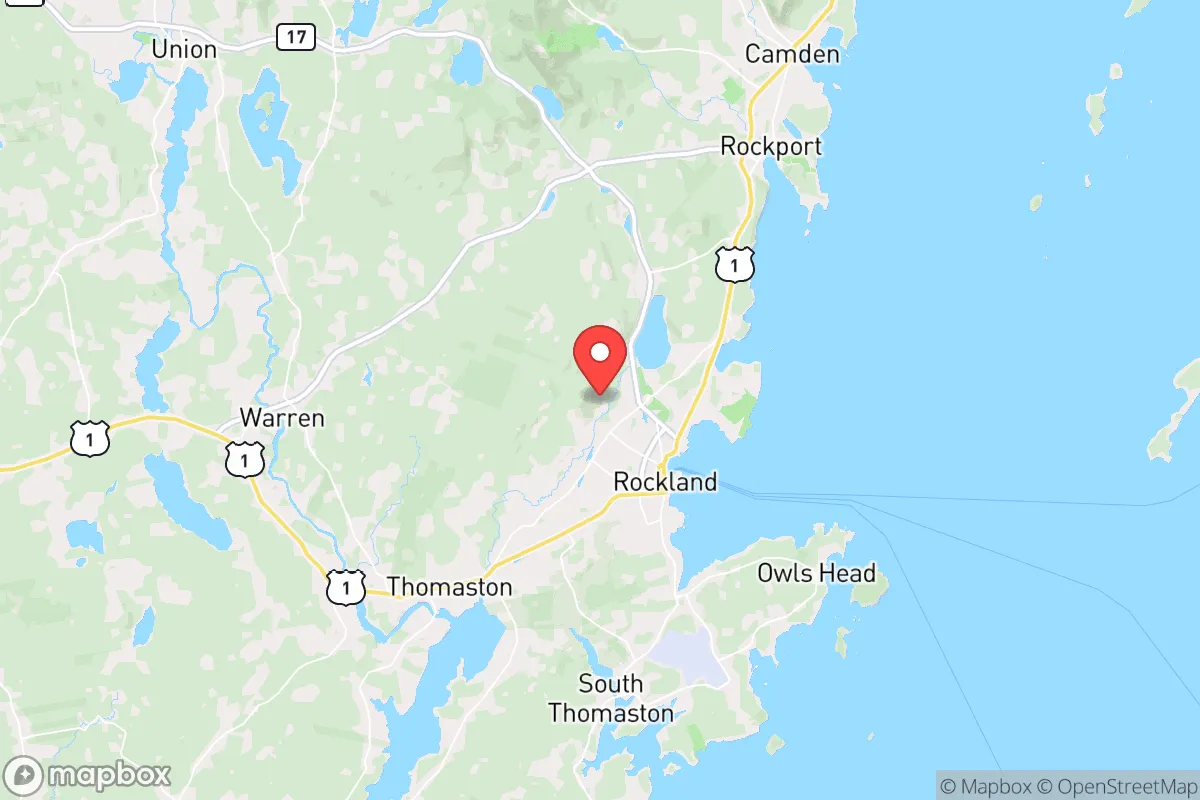
District shown is the primary district for this city’s centroid. Cities may span multiple districts.
Local Political AnalysisPolitical Analysis of Rockland, ME
Rockland, Maine, leans heavily Democratic, with a Cook PVI of D+11, meaning it votes about 11 points more Democratic than the national average. This wasn't always the case—I remember when this town was a lot more blue-collar and independent, with folks voting for the person, not the party. Over the last decade or so, the shift has been pretty dramatic, driven by an influx of out-of-state transplants and a growing reliance on tourism and arts grants. The local government has steadily moved left, and if you value personal freedoms and limited government, you’ve probably felt the squeeze.
How it compares
Rockland is an island of deep blue in a sea of red and purple. Drive 20 minutes inland to Warren or Union, and you’ll find a completely different mindset—people there are more likely to wave a Gadsden flag than a Pride flag, and they’ll tell you straight up they don’t trust Augusta. Camden, just up the coast, is even more progressive than Rockland, with a higher concentration of wealthy second-home owners who push for strict land-use ordinances and green-energy mandates. Meanwhile, Thomaston and South Thomaston are more mixed, with a stubborn streak of old-school Mainers who still believe in property rights and keeping the government out of their basements. The contrast is stark: Rockland’s city council has been quick to adopt statewide progressive policies on housing, energy, and social issues, while surrounding towns often vote to opt out or resist them.
What this means for residents
If you’re a conservative or even a moderate libertarian, living in Rockland means you’re constantly fighting uphill battles. The local school board and town council have pushed for equity-based curriculum changes and diversity initiatives that many locals feel prioritize ideology over academics. Property taxes are high—partly because the town keeps adding new programs and staff—and there’s a growing sense that your personal choices, from how you heat your home to what you build on your land, are subject to more rules every year. The housing market is tight, and new development is often blocked by zoning restrictions that favor affordable housing mandates over private property rights. For a long-time resident like me, it feels like the town is being run for newcomers and seasonal visitors, not for the families who’ve been here for generations.
The cultural and policy distinctions here are real. Rockland has embraced the "Maine Way" of progressive governance—think plastic bag bans, strict short-term rental regulations, and a heavy focus on climate action plans. The lobster fishing industry, which used to be the backbone of the local economy, is now treated almost as an afterthought in favor of art galleries and farm-to-table restaurants. In the long term, I worry that the town’s drift toward one-party rule will push out the very people who give it character—the independent-minded fishermen, mechanics, and small business owners who don’t fit the new mold. If you’re considering a move here, just know that your voice on local issues will likely be drowned out by a well-organized progressive majority, and your freedoms to live as you see fit will be tested more each year.

State Political ClimatePolitical Climate in Maine
State Political AnalysisPolitical Environment in the State
Maine has long been a political paradox, leaning Democratic at the presidential level but fiercely independent in its local politics, with a strong libertarian streak that often surprises outsiders. Over the past 20 years, the state has shifted from a reliably blue stronghold to a more competitive purple, driven by a growing progressive coastal population and a rural backlash that has kept conservative voices alive, especially in the northern and western counties. The 2020 and 2024 elections saw Maine split its electoral votes for the first time, with the 2nd Congressional District going to Trump in both cycles, while the 1st District remained solidly Democratic, highlighting a deepening urban-rural chasm that defines the state’s political climate today.
Urban vs. rural divide
The political map of Maine is essentially a story of two states. The southern coastal corridor, anchored by Portland and its suburbs like South Portland and Falmouth, is the engine of Democratic power, with Portland itself voting over 80% for Biden in 2020. This area is dense with out-of-state transplants, young professionals, and progressive activists who drive policies on climate change, social justice, and expanded government services. In contrast, the vast rural interior and northern reaches—places like Bangor, Presque Isle, and Caribou—are deeply conservative, with many towns voting 65-70% for Trump. The 2nd Congressional District, which covers the entire state outside the Portland metro, is one of the few rural districts in the Northeast that consistently elects Republicans, and its voters are fiercely protective of gun rights, logging, and farming. Even within the 1st District, towns like Kennebunkport and York show a more moderate, fiscally conservative bent, but they are increasingly outnumbered by the Portland metro’s growth. The divide is stark: drive an hour north of Portland and you’ll find Trump flags and “Don’t Tread on Me” plates; drive south and you’ll see “In This House We Believe” signs on every lawn.
Policy environment
Maine’s policy environment is a mixed bag that reflects its split personality. On taxes, the state has a progressive income tax system with rates up to 7.15%, and property taxes are among the highest in the nation, which hits rural landowners hard. The regulatory posture is generally heavy, especially on environmental issues—Maine has strict land-use laws, a ban on certain pesticides, and aggressive renewable energy mandates that have driven up electricity costs. Education policy is dominated by the teachers’ unions, with school choice limited to a few charter schools and no voucher program, though homeschooling is legal and relatively common in rural areas. Healthcare is a bright spot for conservatives: Maine has a robust private insurance market, and the state did not expand Medicaid until 2019 under a voter referendum, showing a populist streak that resists top-down mandates. Election laws are a point of contention—Maine uses ranked-choice voting for federal and state primaries, which some conservatives argue dilutes traditional voting power, though it has not yet produced major upsets. The state also has no voter ID law, which remains a flashpoint for election integrity concerns among conservative residents.
Trajectory & freedom
Over the past decade, Maine has moved in a concerning direction for those who value personal liberty. The most alarming trend is on gun rights: in 2023, the state passed a “red flag” law (LD 2224) allowing courts to temporarily confiscate firearms from individuals deemed a risk, and in 2024, it enacted a 72-hour waiting period for all gun purchases and expanded background checks to private sales. These laws were pushed through after the Lewiston mass shooting in October 2023, but many rural residents see them as an erosion of the Second Amendment. On parental rights, Maine has been a battleground: the state’s “Maine Learning Results” curriculum includes LGBTQ+ content in K-12 schools, and there is no opt-out provision for parents who object, leading to lawsuits and school board fights in towns like Oxford and Norway. Medical autonomy took a hit with the 2023 passage of a vaccine mandate for healthcare workers, which remains in effect despite court challenges. Property rights are under pressure from the state’s “Land for Maine’s Future” program, which uses taxpayer funds to buy private land for conservation, often displacing timber and farming operations. On the positive side, Maine has no state income tax on Social Security benefits, which is a draw for retirees, and it has a strong tradition of town meeting government that gives locals real say in zoning and budgets.
Civil unrest & political movements
Maine has seen a rise in organized political activism on both sides, but the flashpoints are unmistakable. The most visible movement is the “Maine Gun Owners” group, which has organized rallies at the State House in Augusta against every new gun restriction, drawing thousands of rural residents. On the left, the “Maine People’s Alliance” and “Maine Youth Action” have been aggressive in pushing for rent control, higher minimum wages, and climate legislation, often clashing with business owners in Portland. Immigration politics are relatively quiet compared to other states, but the 2023 influx of asylum seekers to Portland strained city resources and led to a backlash in smaller towns like Sanford, where a proposed shelter was met with protests. Maine is not a sanctuary state, but Portland has declared itself a “welcoming city,” which rankles conservatives who see it as a magnet for illegal immigration. Election integrity remains a hot topic: the 2020 and 2024 elections saw no major scandals, but the use of drop boxes and mail-in ballots without strict ID requirements has fueled distrust in rural areas. The “Maine Independence Party” and secessionist talk in Aroostook County are fringe but persistent, with some residents feeling ignored by Augusta and Portland.
Projection
Looking ahead 5-10 years, Maine is likely to become more polarized, not less. The Portland metro is growing faster than the rest of the state, driven by remote workers from Massachusetts and New York, which will continue to shift the 1st District further left. Meanwhile, the 2nd District will remain a conservative stronghold, but its population is aging and declining, which could eventually flip it blue if in-migration patterns change. The biggest wildcard is the state’s housing crisis—skyrocketing prices in Portland are pushing young families into rural towns like Augusta and Waterville, which could bring progressive voters into previously red areas. On policy, expect more gun control, more environmental regulations, and continued pressure on parental rights, as the Democratic majority in the legislature shows no signs of moderating. However, the state’s independent streak and the strength of the “Maine Way”—a culture of self-reliance and neighborly distrust of government—will keep any radical shifts in check. A new resident moving to rural Maine today should expect a decade of political fights over land use, school curriculum, and gun laws, but also a community that values freedom in practice, even if the state government doesn’t always reflect it.
For a conservative-leaning individual or family considering a move to Maine, the bottom line is this: choose your location carefully. The southern coast and Portland metro are increasingly hostile to conservative values, with high taxes, restrictive gun laws, and a progressive school system. But the rural interior—places like Lincoln, Dover-Foxcroft, and Fort Kent—still offer a lifestyle of low crime, strong community, and relative freedom from government overreach. You’ll pay high property taxes anywhere, but you’ll find neighbors who share your values and a local government that listens. Just be prepared to drive an hour for a grocery store and to fight for your rights at the ballot box every two years.
* Values derived from national, state, county, city and local statistics and may differ in a specific area. Last updated: 2026-05-01T16:57:17.000Z
Narrative content on this page is AI-generated and may contain mistakes. Verify any details that matter before acting on them.
ReloMaps may earn a commission from affiliate links at no extra cost to you.

