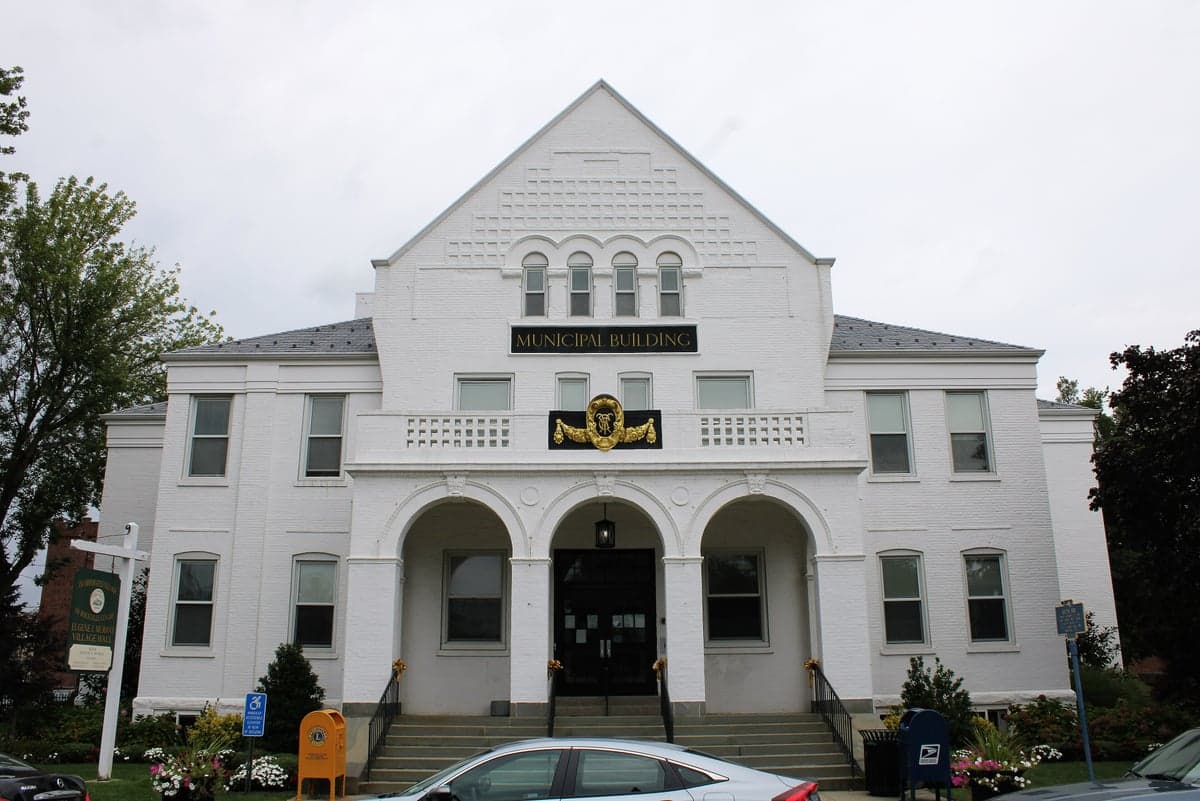
Photo: Wikipedia
Political ClimatePolitical Climate in Rockville Centre, NY
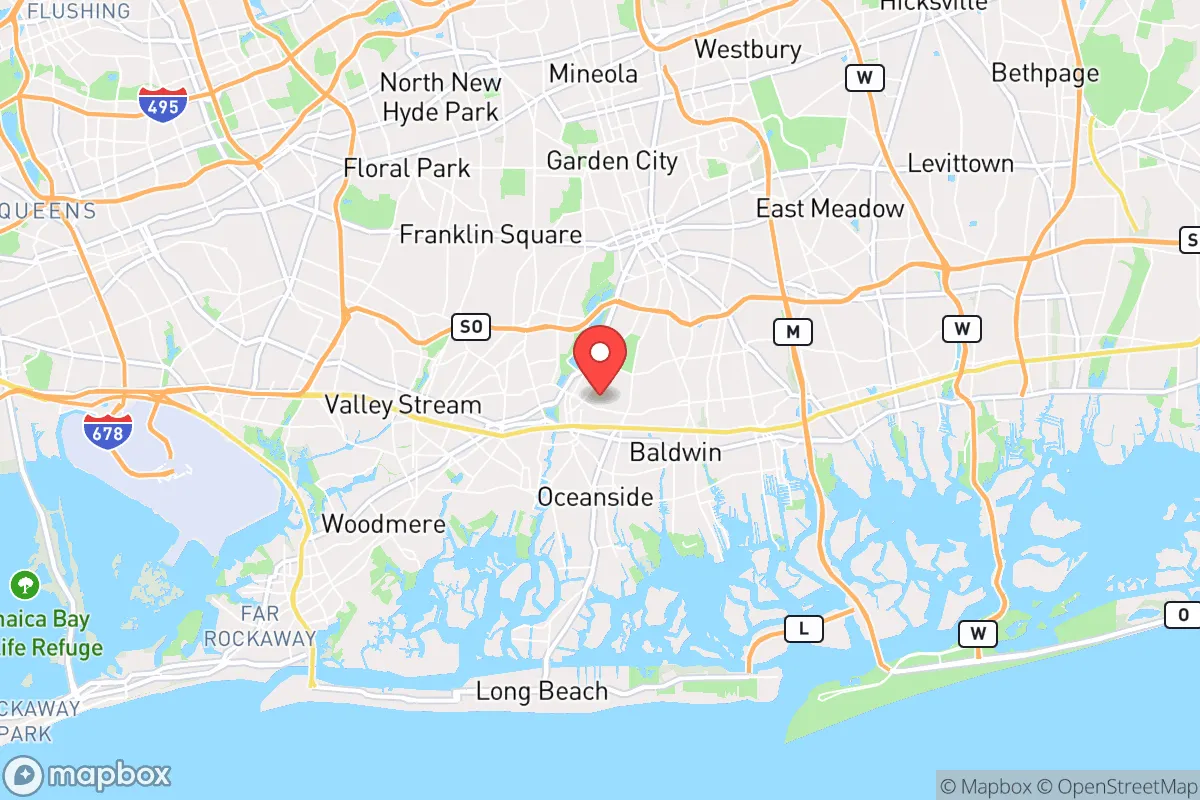
District shown is the primary district for this city’s centroid. Cities may span multiple districts.
Local Political AnalysisPolitical Analysis of Rockville Centre, NY
Rockville Centre has always been a bit of a political oddball on Long Island, but the winds have shifted noticeably in recent years. The village itself leans Democratic, with a Cook PVI of D+2, but that number doesn't tell the whole story. For decades, this was a reliably moderate-to-conservative town, a place where fiscal responsibility and traditional values were the default. Now, you're seeing a slow but steady creep of progressive policies that would have been unthinkable even ten years ago, and it's got a lot of us longtime residents watching closely.
How it compares
To understand Rockville Centre's politics, you have to look at its neighbors. Head east to Massapequa or Seaford, and you're in deep-red territory—places where the Republican machine still runs strong and property taxes are a constant battle cry. Go west to Long Beach or Valley Stream, and you're in solidly blue areas with a much more activist local government. Rockville Centre sits right in the middle, but it's been drifting west. The village board and school board have seen a quiet influx of candidates backed by local Democratic clubs who are pushing for things like "equity" initiatives in the schools and more aggressive zoning changes that feel like a backdoor to higher-density development. It's a far cry from the old days when the biggest political fight was over whether to repave the streets or trim the trees.
What this means for residents
For the average homeowner, the biggest red flag is the slow erosion of local control. The village has always prided itself on being a tight-knit community where you knew your neighbors and the trustees. But now, you're seeing more state-level mandates being embraced at the local level—things like New York's bail reform laws and the push for "sanctuary" policies that limit cooperation with federal immigration authorities. It's not that Rockville Centre has become a hotbed of crime, but the attitude has shifted from "we'll handle our own problems" to "we'll follow Albany's lead." That's a dangerous path when you consider how out-of-touch Albany can be with suburban realities. Property taxes are already crushing, and every new progressive mandate—whether it's energy codes or affordable housing quotas—adds another layer of cost and bureaucracy that hits homeowners directly.
There's also a cultural shift that's harder to quantify but easy to feel. The local parades, the church-sponsored events, the sense that the village was a place where you could raise a family without constant political messaging—that's still there, but it's fraying. You'll see more yard signs for progressive candidates, more chatter about "diversity, equity, and inclusion" training in the schools, and a general sense that the old "live and let live" attitude is being replaced by a more activist, government-knows-best approach. It's not a revolution, but it's a slow, steady drift that has many of us wondering what the village will look like in another decade.
On the plus side, Rockville Centre still has a strong sense of community and a vocal group of residents who remember what it was like before the shift. The local Republican club is still active, and the village's fiscal management has historically been sound—though that's being tested by rising pension costs and state mandates. The key distinction here is that Rockville Centre is not yet a lost cause. It's a place where a few smart, engaged residents can still make a difference at the ballot box and in the school board meetings. But if you're considering a move here, keep an eye on the next few election cycles. The direction the village takes in the next five years will tell you everything about whether it remains the Rockville Centre we grew up in, or becomes just another suburb of New York City's progressive machine.

State Political ClimatePolitical Climate in New York
State Political AnalysisPolitical Environment in the State
New York State has been a solidly Democratic stronghold for decades, with the party holding a supermajority in the state legislature and winning every presidential election since 1984 by double digits. The dominant coalition is a mix of New York City’s progressive base, suburban liberals in the downstate suburbs, and upstate college towns, but the state’s overall lean is driven overwhelmingly by the five boroughs. Over the last 10-20 years, the state has lurched further left, with the 2020 election seeing Joe Biden win by 23 points, and the 2022 gubernatorial race giving Kathy Hochul a 6-point victory despite a surprisingly strong showing from Republican Lee Zeldin. The trajectory is clear: the state’s political center of gravity is shifting toward progressive activism, leaving rural and conservative areas feeling increasingly alienated.
Urban vs. rural divide
The political map of New York is a tale of two states. New York City—Manhattan, Brooklyn, Queens, the Bronx, and Staten Island—is the engine of Democratic dominance, with Manhattan alone delivering margins of 80-20 in most statewide races. The downstate suburbs, including Nassau County and Westchester County, have trended blue over the past decade, though they still harbor pockets of moderate Republicanism, particularly in towns like Oyster Bay and Yorktown. Upstate, the divide is stark: cities like Buffalo, Rochester, Syracuse, and Albany are Democratic strongholds, while the vast rural expanses of the Southern Tier, North Country, and Finger Lakes region vote heavily Republican. For example, Allegany County voted +41 for Trump in 2020, while Tompkins County (home to Ithaca) voted +48 for Biden. The divide isn’t just political—it’s cultural, with upstate conservatives feeling ignored by a state government that prioritizes NYC’s transit, housing, and social programs over their needs.
Policy environment
New York’s policy environment is among the most progressive in the nation, and it’s a major reason conservatives look elsewhere. The state has the highest combined state and local tax burden in the country, with income tax rates topping out at 10.9% and property taxes that are among the highest in the nation—especially in places like Westchester County and Nassau County, where effective rates can exceed 2% of home value. The regulatory posture is heavy: the state’s rent control laws, strict environmental regulations (like the Climate Leadership and Community Protection Act), and a sprawling bureaucracy make starting a business or buying a home a costly endeavor. Education policy is dominated by the teachers’ unions, with the state spending over $25,000 per pupil annually, yet many upstate districts struggle with declining enrollment and aging facilities. Healthcare is heavily regulated, with the state expanding Medicaid and implementing a public option for health insurance. Election laws have been loosened significantly: no-excuse absentee voting, early voting, and automatic voter registration are now law, and the state has banned partisan gerrymandering (though the redistricting process remains contentious).
Trajectory & freedom
New York is becoming less free by almost any measure, and the trend is accelerating. On gun rights, the state passed the SAFE Act in 2013, which banned assault weapons and high-capacity magazines, and then the 2022 Concealed Carry Improvement Act (CCIA) after the Bruen decision, which made it extremely difficult to get a permit to carry outside the home—requiring “good moral character” affidavits and banning guns in a long list of “sensitive places.” Parental rights have taken a hit: the state passed a law in 2022 allowing minors as young as 12 to consent to mental health treatment without parental notification, and the “Safe Schools” program has been criticized for promoting gender ideology without parental input. On speech, the state’s hate crimes law has been used to prosecute controversial speech, and the state’s “social media law” (S7872) requires platforms to remove “hateful conduct,” raising First Amendment concerns. Medical autonomy was curtailed during COVID with some of the nation’s strictest mandates, and property rights are under pressure from rent control expansions and the state’s “Good Cause Eviction” law, which makes it nearly impossible to evict tenants. The 2024 legislative session saw bills to ban “conversion therapy” for minors and expand abortion protections, further entrenching progressive priorities.
Civil unrest & political movements
New York has been a flashpoint for political activism on both sides. The 2020 Black Lives Matter protests in New York City were among the largest in the country, with widespread property damage and a subsequent push to defund the police that led to a $1 billion cut to the NYPD budget (later partially restored). The state’s sanctuary policies, including the “Green Light Law” that allows undocumented immigrants to get driver’s licenses, have made it a target for conservative criticism, especially after a surge of migrants in 2023-2024 overwhelmed shelters in NYC and upstate cities like Rochester and Albany. On the right, the “New York State Rifle & Pistol Association” has been a leading force in challenging gun laws, and the “Parental Rights in Education” movement has gained traction in suburbs like Long Island and Westchester, with school board meetings becoming battlegrounds over curriculum and library books. Election integrity remains a concern for conservatives, with the state’s 2020 vote-by-mail expansion and the 2022 “John R. Lewis Voting Rights Act” (which mandates pre-clearance for local election changes) seen as eroding trust. Secession talk is mostly rhetorical, but the “New York State of Mind” movement—a push for upstate counties to secede—has gained some online traction, though it’s not serious.
Projection
Over the next 5-10 years, New York will likely become more progressive, driven by demographic shifts: the state’s population is declining in upstate rural areas and growing in NYC and its suburbs, where younger, more diverse, and more liberal residents are moving in. The 2024 census estimates show New York losing a congressional seat, with the biggest losses in the Southern Tier and North Country. In-migration from other states is overwhelmingly to NYC, with upstate counties like Chautauqua and St. Lawrence seeing net outflows. The state’s fiscal situation is precarious—high taxes and spending, combined with a shrinking tax base, could lead to further tax hikes or service cuts. A new resident moving in now should expect a state where the political climate is increasingly hostile to conservative values, with a government that is unlikely to change course. The practical takeaway: if you value low taxes, gun rights, parental control over education, and a lighter regulatory touch, New York is a tough sell. The state’s natural beauty, economic opportunities in NYC, and strong public schools in certain suburbs may still appeal, but the political trajectory is clear—and it’s not trending toward freedom.
For a conservative-leaning individual or family, the bottom line is this: New York offers world-class amenities in its cities and stunning landscapes upstate, but you’ll pay a heavy price in taxes, regulation, and cultural friction. If you’re moving here, be prepared for a state government that sees itself as a national leader in progressive policy, and a political environment where your voice will be a minority in the legislature. The best bets for conservatives are the rural counties of the Southern Tier and North Country, or the outer suburbs of Staten Island and Putnam County, but even there, the state’s long arm reaches. Think carefully about whether the trade-offs are worth it.
* Values derived from national, state, county, city and local statistics and may differ in a specific area. Last updated: 2026-04-24T12:35:23.000Z
Narrative content on this page is AI-generated and may contain mistakes. Verify any details that matter before acting on them.
ReloMaps may earn a commission from affiliate links at no extra cost to you.

