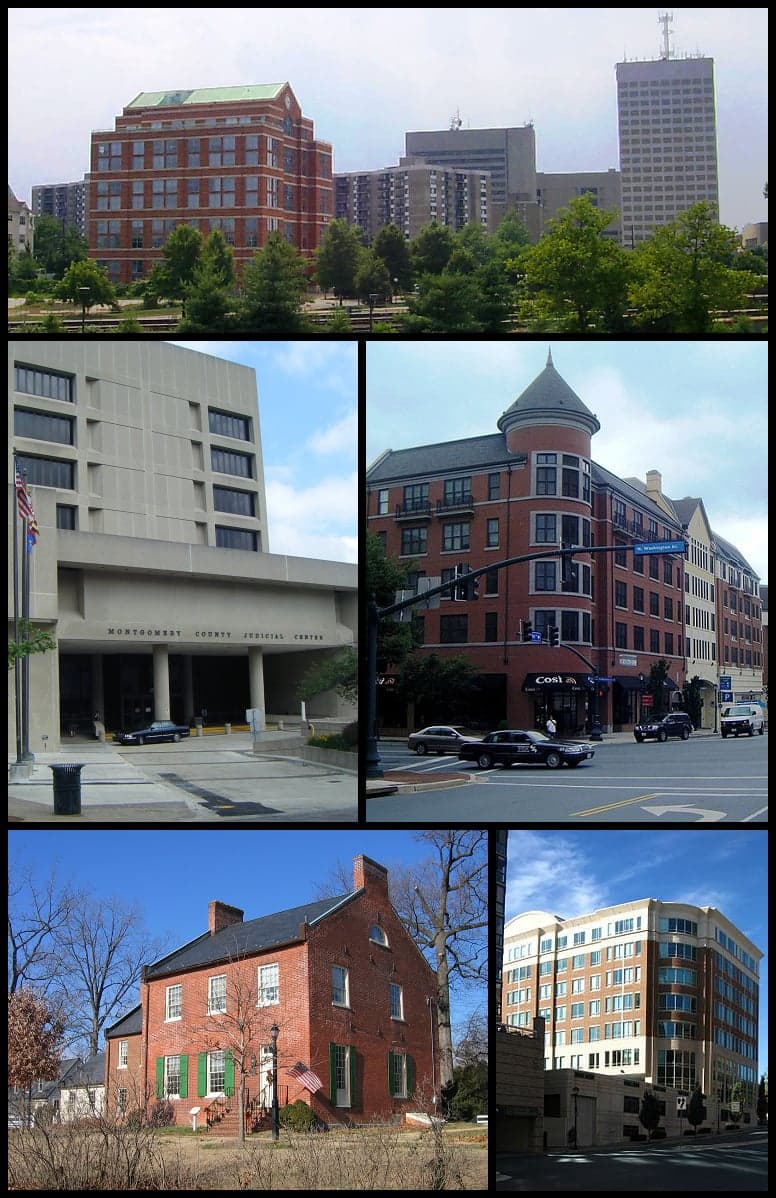
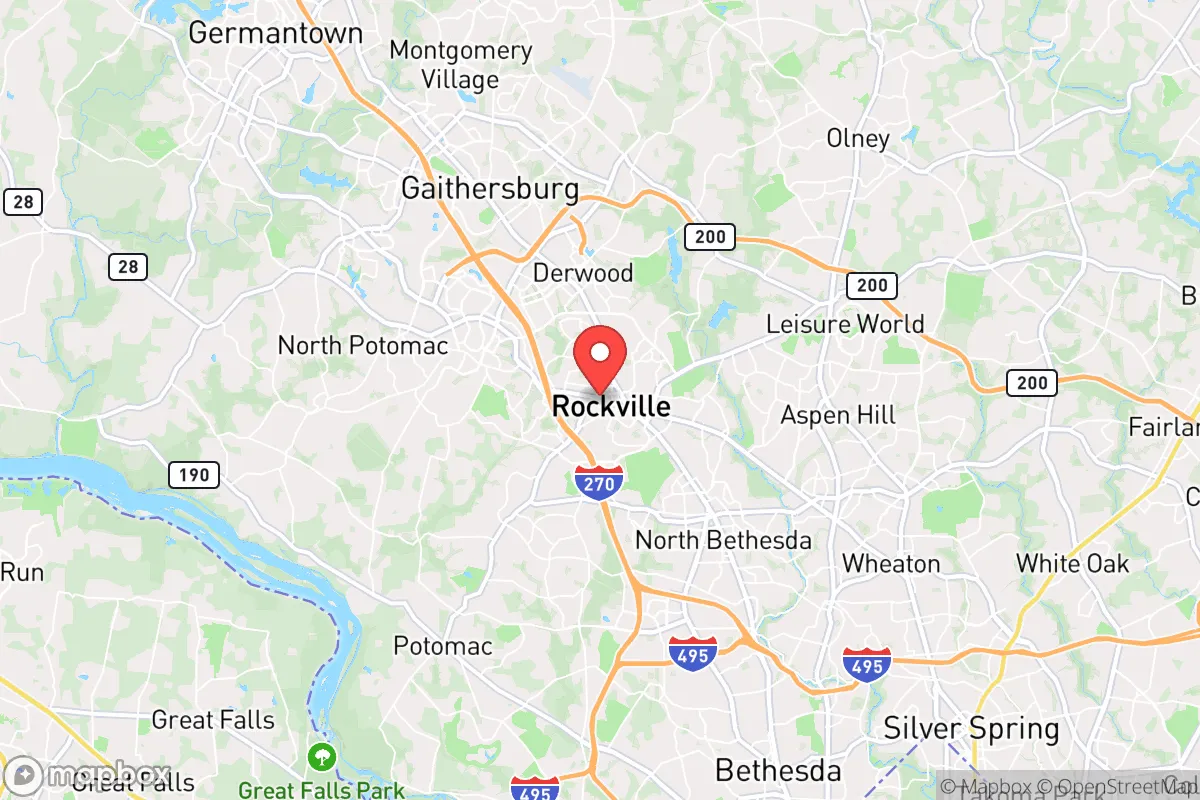
Photo: Wikipedia
Demographics of Rockville, MD
Affluence Level in Rockville, MD
An upper-middle-class area. Household wealth, education levels, and homeownership run ahead of national benchmarks.
People of Rockville, MD
Today, Rockville, Maryland is a densely settled, highly educated city of 67,218 residents where no single ethnic group holds a majority. Its population is 44.5% White, 17.8% Hispanic, 16.2% East and Southeast Asian, 10.8% Black, and 4.8% Indian (subcontinent), with 64.6% of adults holding a college degree. The city is characterized by a blend of established single-family neighborhoods and newer high-rise developments near the Metro, creating a distinct identity as a prosperous, multicultural suburb that feels more urban than its Montgomery County neighbors. A significant 17.2% of residents are foreign-born, giving Rockville a cosmopolitan texture that contrasts with its mid-century reputation as a predominantly white, middle-class bedroom community.
How the city was settled and grew
Rockville’s original population was drawn by agriculture and its role as the Montgomery County seat, established in 1776. The earliest settlers were English and German farmers who built the town around the courthouse square, with the historic West End neighborhood developing as the residential core for merchants and professionals in the 19th century. The arrival of the Baltimore and Ohio Railroad in 1873 spurred modest growth, but Rockville remained a small county seat of roughly 1,000 people into the early 1900s. The first major demographic shift came during the Great Migration, when Black families moved from the rural South into areas like Lincoln Park, a historically African American neighborhood founded in the 1890s that became the heart of the city’s Black community. By 1950, Rockville’s population had reached only about 6,000, but the post-World War II suburban boom—fueled by federal government expansion and the construction of the Capital Beltway—transformed it. White middle-class families, many employed by the federal government or defense contractors, flooded into new subdivisions such as Twinbrook and Woodley Gardens, which were built on former farmland in the 1950s and 1960s.
Modern era (post-1965)
The Immigration and Nationality Act of 1965 fundamentally reshaped Rockville’s population. The city’s proximity to Washington, D.C., and its excellent public schools attracted highly skilled immigrants, particularly from East and Southeast Asia. King Farm, a planned community built in the 1990s on a former dairy farm, became a magnet for Chinese and Korean families, many of whom work in technology and biotech sectors along the I-270 corridor. Simultaneously, the Indian (subcontinent) population grew rapidly, clustering in neighborhoods like Fallsgrove and the newer developments near the Shady Grove Metro station, drawn by the same employment opportunities and school quality. The Hispanic population expanded later, from the 1980s onward, with many families settling in the Twinbrook area and parts of the Rockville Town Center, often working in construction, landscaping, and service industries. The Black population, which had been concentrated in Lincoln Park and the Hungerford area, became more dispersed as middle-class Black families moved into previously white neighborhoods, though Lincoln Park retains its historic identity. By 2020, Rockville had become a majority-minority city, with White residents dropping from over 80% in 1980 to 44.5% today.
The future
Rockville’s population is trending toward further diversification, but the pattern is one of distinct ethnic enclaves rather than wholesale blending. The East/Southeast Asian and Indian communities are growing steadily, driven by continued high-skilled immigration and chain migration, with new arrivals often settling near established co-ethnic networks in King Farm and Fallsgrove. The Hispanic population is plateauing, as birth rates decline and some families move to more affordable outer suburbs like Germantown or Frederick. The White population is aging and slowly declining, though the city’s walkable Town Center and new luxury apartments are attracting some younger, childless professionals. The Black population remains stable but is not growing as fast as the Asian cohorts. Over the next 10-20 years, Rockville will likely become even more Asian and Indian, with the White share falling below 40% and the Hispanic share holding steady. The city is not homogenizing; rather, it is tribalizing into well-defined ethnic neighborhoods, each with its own schools, churches, and grocery stores, while the Town Center serves as a neutral, cosmopolitan common ground.
For someone moving to Rockville now, the city offers a stable, high-opportunity environment with excellent schools and low crime, but it is not a melting pot in the traditional sense. New residents should expect to live among a community that shares their background, whether that is East Asian in King Farm, Indian in Fallsgrove, or Black in Lincoln Park. The city’s future is one of managed diversity—prosperous, educated, and segmented—making it an attractive choice for families who value safety and schools over social integration.

* Values derived from national, state, county, city and local statistics and may differ in a specific area. Last updated: 2026-04-22T02:27:47.000Z
Narrative content on this page is AI-generated and may contain mistakes. Verify any details that matter before acting on them.
ReloMaps may earn a commission from affiliate links at no extra cost to you.

