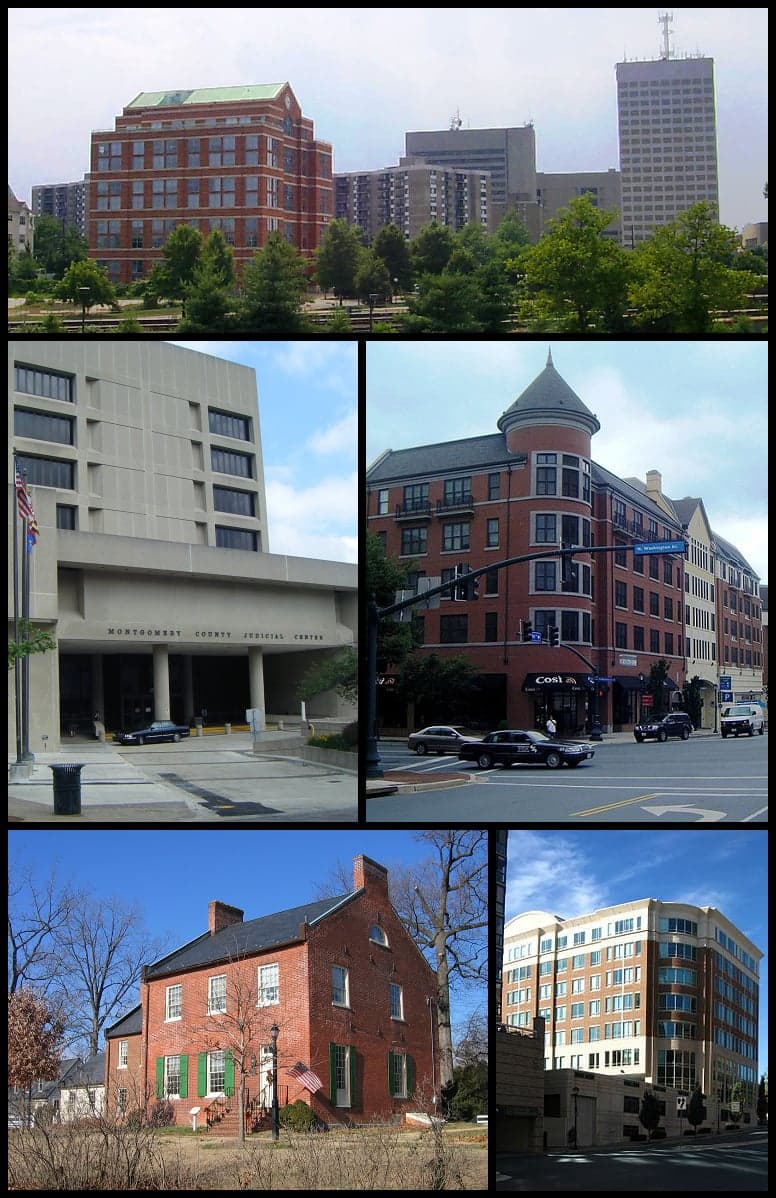
Photo: Wikipedia
Strategic Assessment of Rockville, MD
Multiple tactical vulnerabilities. Population density, target proximity, or disaster risk are likely compounding. A retreat property and exit planning is required.
What does the Strategic Assessment tell us?
Our Strategic Assessment grades tactical survivability of an area. Major population centers, military targets, fallout zones, natural disasters, and border exposure all drive risk — lower exposure means a more defensible position in a crisis.
This is heavily inspired by Joel Skousen's Strategic Relocation book. Highly recommended you checkout the book ($)What does this tell us?
Our Strategic Assessment grades tactical survivability of an area. Major population centers, military targets, fallout zones, natural disasters, and border exposure all drive risk — lower exposure means a more defensible position in a crisis.
This is heavily inspired by Joel Skousen's Strategic Relocation book. Highly recommended you checkout the book ($)Strategic Pillars

Key Distances
Regional Safe Places
Below is our recommended "safe zones" in Maryland and the surrounding area based on our strategic heuristics. For most people, it's unrealistic to live in a “safe zone” full-time due to work, family or other personal reasons. They tend to be more rural. However, many of these areas are perfect for second homes and retreat properties that double as a vacation home or even a short-term rental.
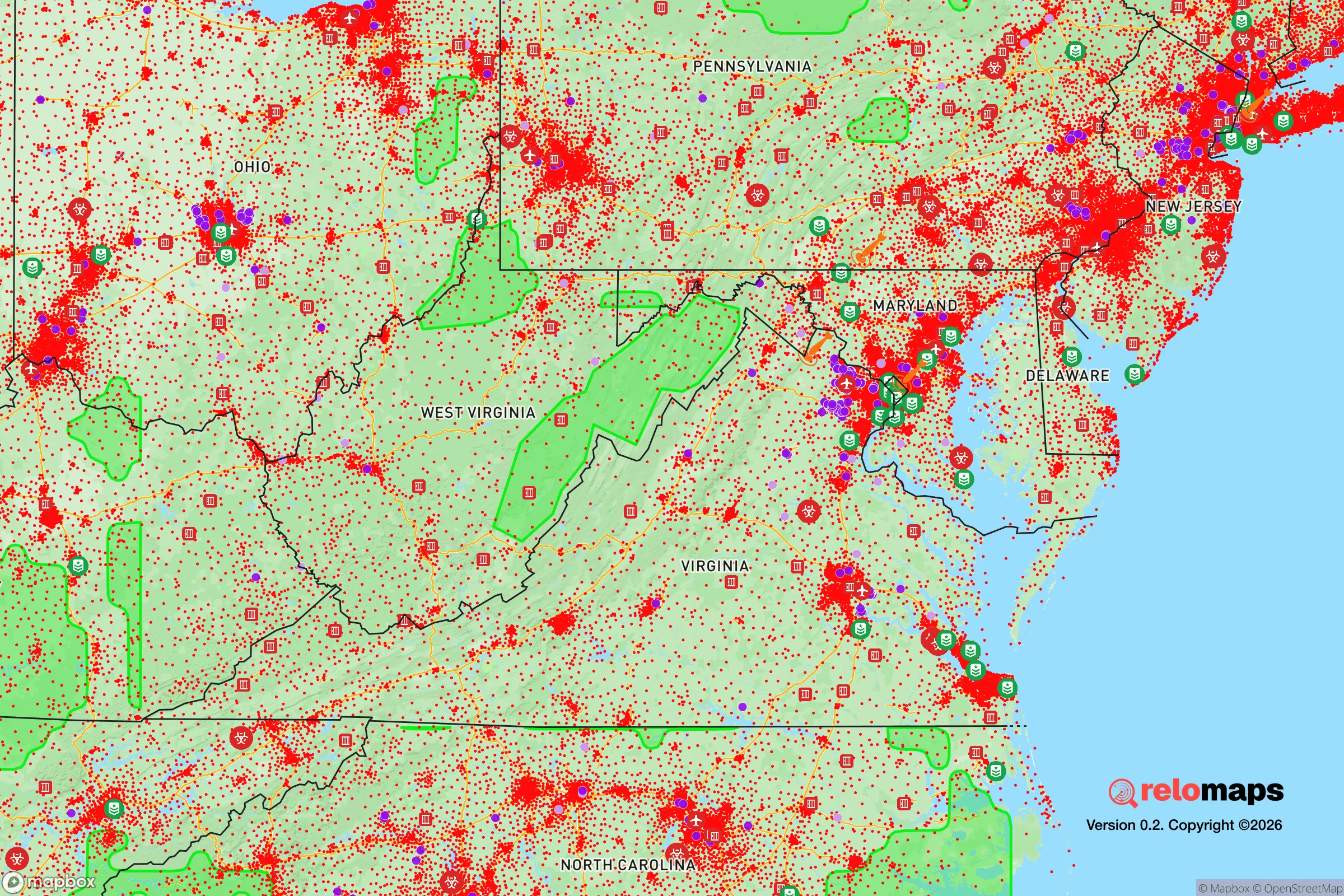
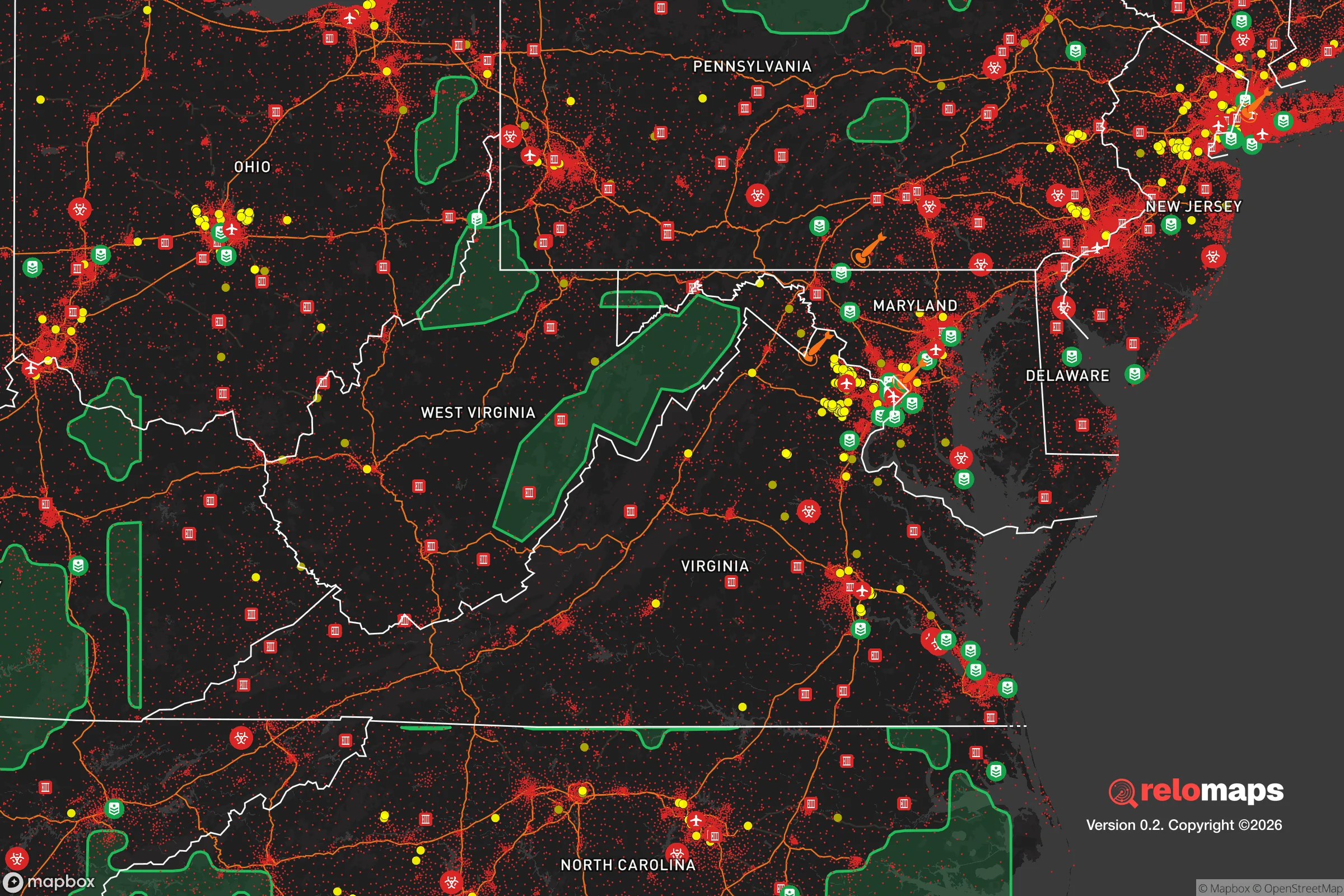


Important Note: For informational purposes only. This does not mean nothing bad ever happens in the green zones. Please use common sense. This is based on public data and modeled with AI. We tried to take a conservative approach but mistakes happen. We update this regularly as new information becomes available.
Solar Generator Recommendations
Backup power matters more here than in safer locations. We've picked three solar generators across budgets and capacity tiers — start with the budget unit if you only need a few essentials, or step up if you want to run a fridge and HVAC for days at a time.

Jackery Portable Power Station Explorer 300
Budget OptionPower on the Go: Weighing only 11 lbs, it's convenient to set up and store with book-sized foldable solar panels

BLUETTI Portable Power Station AC180
Designed for both indoor and outdoor scenarios, AC180 is highly capable as it has a robost capacity and continuous output power.

EF ECOFLOW DELTA Pro Ultra Power Station
Upgraded PickEcoFlow DELTA Pro Ultra is a whole-home energy system designed to grow with your family. Integrated with the Smart Home Panel 2, it scales to meet your evolving energy needs — keeping your home powered, intelligent, and secure through every stage of life.
We earn a commission, at no additional cost to you.
Strategic Assessment Analysis
Rockville, Maryland, presents a complex strategic picture for the conservative-leaning prepper or survivalist. While its location within the Washington, D.C. metro area offers certain economic and logistical advantages, those same factors introduce severe vulnerabilities that must be weighed carefully. For the individual or family prioritizing long-term resilience, self-sufficiency, and the ability to weather civic unrest, Rockville is best understood as a high-risk, high-reward location that demands a robust, proactive preparation strategy rather than a passive retreat.
Geographic position and natural advantages for long-term survival
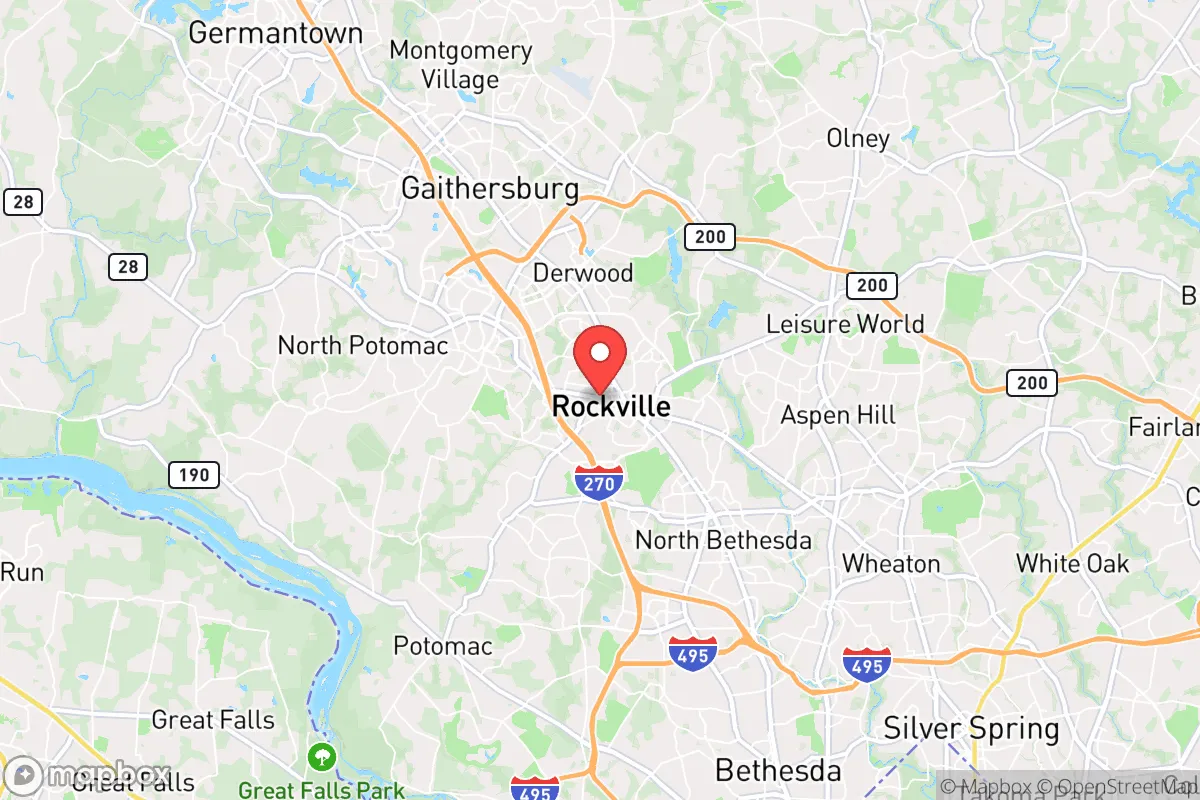
Rockville sits in the Piedmont region of Maryland, roughly 15 miles northwest of downtown Washington, D.C. Its elevation—averaging around 450 feet above sea level—provides a modest but meaningful buffer against the tidal flooding and storm surge that threaten coastal areas like Annapolis or the Eastern Shore. The area is not prone to major earthquakes, and while it experiences the occasional nor’easter or hurricane remnant, catastrophic weather events are rare compared to the Gulf Coast or Tornado Alley. The local climate supports a four-season growing cycle, with ample rainfall averaging 43 inches per year, which is a genuine asset for anyone serious about food production. The Potomac River and its tributaries, including Rock Creek and the Seneca Creek watershed, offer surface water sources, though access is heavily regulated and often restricted by parkland or private property. The region’s natural hardwood forests provide cover, fuel, and game, but the deer population is overmanaged and small game is pressured by suburban development. For a relocator, the key natural advantage is water availability and a moderate climate that doesn’t require extreme heating or cooling infrastructure—both critical for off-grid living.
Risks, exposures, and proximity to fallout-relevant landmarks
The single greatest strategic liability of Rockville is its proximity to the nation’s capital. Rockville is less than 20 miles from the White House and the Pentagon, placing it well within the primary blast and fallout zones of a nuclear detonation on the National Mall. Even a conventional attack on D.C. infrastructure—a dirty bomb, a cyber-induced grid failure, or a large-scale chemical release—would send cascading effects into Rockville within hours. The area is also a major transportation corridor: I-270, I-495 (the Capital Beltway), and the MARC Brunswick Line rail all converge here. In a crisis, these routes become chokepoints for evacuation or supply movement, and they also serve as vectors for civil unrest. Rockville is home to a significant federal workforce and a dense population of over 67,000 residents, plus tens of thousands more in adjacent Gaithersburg and Bethesda. During the 2020 civil unrest, Montgomery County saw protests and property damage within Rockville city limits, a reminder that political tensions can boil over even in affluent suburbs. The presence of federal facilities, including the National Institutes of Health in nearby Bethesda and the Food and Drug Administration in Silver Spring, makes the region a target for both foreign and domestic actors. For the prepper, this means Rockville is not a retreat—it is a forward operating base that could become untenable within hours of a major event.
Practical resilience for a relocator: food, water, energy, and defensibility
For those committed to staying in Rockville, practical resilience requires a layered approach that acknowledges the area’s constraints. Municipal water comes from the Potomac River via the Washington Aqueduct and local reservoirs, which means a single point of failure—a cyberattack on the treatment plant or a contamination event—could cut off supply to the entire region. A well on private property is rare in Rockville’s suburban grid; most homes are on city water. Rainwater collection is legal in Maryland but limited to 5,000 gallons per property without a permit, and the county enforces strict runoff regulations. Food resilience is similarly challenging: Rockville has farmers’ markets and a few community gardens, but the vast majority of calories come from grocery stores that rely on just-in-time delivery. Montgomery County has no commercial grain mills, no large-scale food processing facilities, and no major livestock operations within 10 miles. For a family, this means a minimum of three months of stored food is non-negotiable, and ideally a year’s supply if you plan to ride out a prolonged disruption. Energy-wise, the grid is reliable day-to-day but vulnerable to cyberattack and physical sabotage—the nearby Potomac River substations are critical nodes. Solar with battery backup is feasible, but many homeowners associations in Rockville restrict panel placement, and the tree canopy reduces yield. Defensibility is the weakest link: Rockville is a dense, interconnected suburb with no natural chokepoints, no defensible terrain, and a police force that would be overwhelmed in a widespread crisis. Your best bet is a well-fortified single-family home on a corner lot with clear sightlines, reinforced doors, and a neighborhood watch that shares your mindset. Apartment dwellers face even steeper odds, with limited egress and shared walls that compromise security.
The overall strategic picture for a conservative prepper
Rockville is not a place to bug out to—it is a place to bug in from, and only if you have the resources and discipline to do so. For the single individual or family with a conservative worldview who values proximity to employment, healthcare, and education but refuses to be caught flat-footed, Rockville offers a high-stakes test of preparedness. The area’s economic stability and access to specialized medical care are genuine advantages, but they come at the cost of being a primary target zone. If you are serious about long-term survival, Rockville should be viewed as a temporary base for building skills, stockpiling supplies, and networking with like-minded individuals before relocating to a lower-risk area—perhaps in western Maryland, the Shenandoah Valley, or rural Pennsylvania. The smartest strategy is to treat Rockville as a hub for intelligence and resources, not as a final destination. Maintain a go-bag, a vehicle with full fuel and off-road capability, and a pre-planned route to a secondary location at least 100 miles from D.C. The area’s conveniences are real, but in a crisis, they evaporate fast. Prepare accordingly, and don’t let the suburban calm fool you—the storm is closer than it looks.

* Values derived from national, state, county, city and local statistics and may differ in a specific area. Last updated: 2026-04-22T02:27:47.000Z
Narrative content on this page is AI-generated and may contain mistakes. Verify any details that matter before acting on them.
ReloMaps may earn a commission from affiliate links at no extra cost to you.

