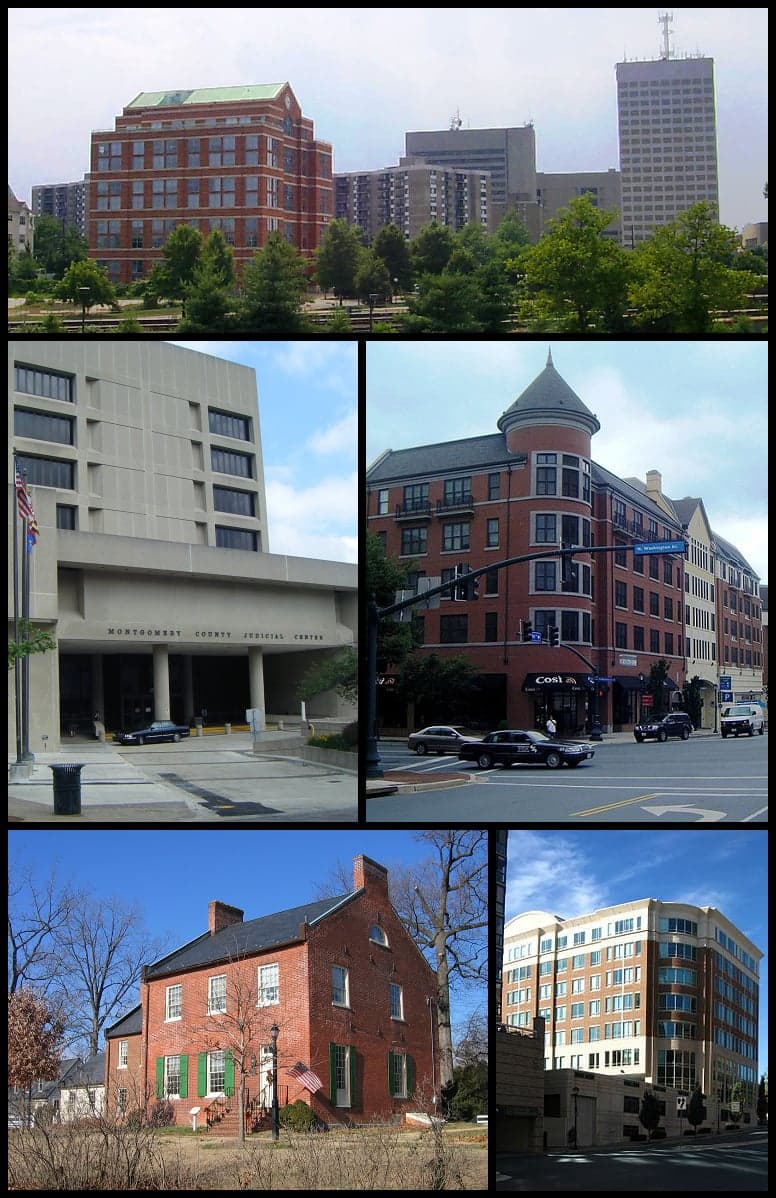
Photo: Wikipedia
Political ClimatePolitical Climate in Rockville, MD
District shown is the primary district for this city’s centroid. Cities may span multiple districts.
Local Political AnalysisPolitical Analysis of Rockville, MD
Rockville, Maryland, is about as deep blue as it gets in the D.C. suburbs, with a Cook PVI of D+30 — meaning it votes 30 points more Democratic than the national average. That wasn't always the case. I remember when this was a quieter, more moderate place, where folks kept their politics to themselves and the county government mostly focused on keeping the roads paved and the schools funded. Over the last decade or so, the shift has been dramatic. It's not just that the area leans left; it's that the local leadership has embraced a progressive agenda that touches nearly every aspect of daily life, from housing mandates to business regulations. If you value personal freedom and a light touch from government, the trajectory here is something to watch closely.
How it compares
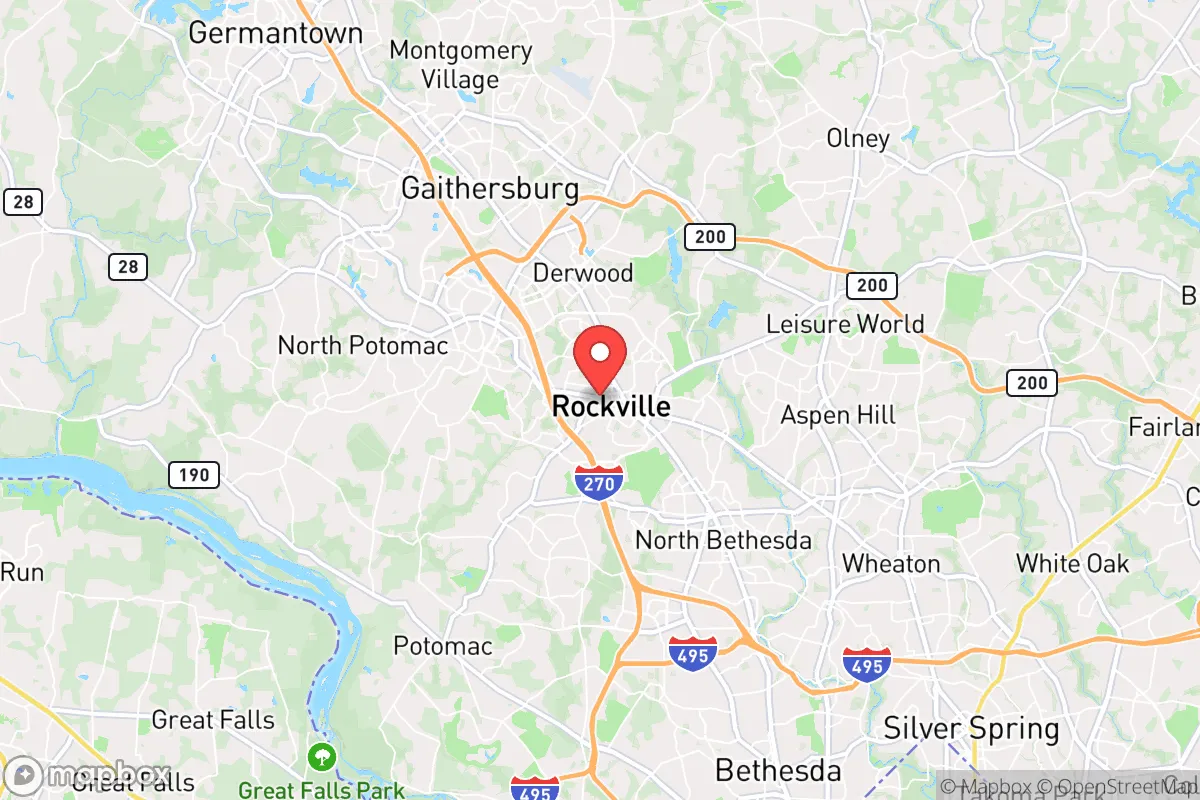
To understand Rockville's politics, you have to look at its neighbors. Drive 15 minutes north to Gaithersburg, and you'll find a similar Democratic stronghold, though maybe a notch less intense. Head west to rural Poolesville or the farm country near Dickerson, and the vibe flips — those areas still have a libertarian streak, with folks who want to be left alone. The real contrast is with places like Frederick City (still blue, but more moderate) or, further out, Hagerstown, which leans red. Rockville sits at the core of Montgomery County, which is the epicenter of Maryland's progressive policy experiments. The county council and city council often compete to see who can pass the most ambitious new laws on zoning, taxes, and social programs. It's a world away from the "live and let live" attitude you find just a few exits up I-270.
What this means for residents
For someone who values personal autonomy, the biggest concern is the sheer volume of government involvement in your choices. Want to build a deck or add a bedroom? Prepare for a permitting process that can take months and cost thousands in fees. Thinking about starting a small business? The local licensing and inspection requirements can feel like a full-time job before you even open your doors. There's also the tax burden — Montgomery County has some of the highest property and income taxes in the state, and Rockville adds its own city taxes on top. The schools are excellent, no doubt, but you pay for it. More recently, there's been a push for stricter rent control and "missing middle" housing laws that override neighborhood zoning. The idea is to force density, but it often feels like the government is telling you what you can do with your own property. For a long-time resident, it's a slow erosion of the idea that your home is truly your castle.
One cultural distinction that stands out is the local government's willingness to use its police power for social engineering. Rockville was an early adopter of "sanctuary city" policies, limiting cooperation with federal immigration enforcement. While supporters see this as compassionate, critics argue it prioritizes political statements over public safety. The city has also pushed hard on environmental mandates — think bans on certain types of gas appliances and strict energy codes for new construction. These policies are sold as forward-thinking, but they add layers of cost and complexity to everyday life. If you're the kind of person who prefers to make your own decisions without a bureaucrat's sign-off, Rockville's political climate will feel increasingly suffocating. The long-term trend points to more of the same: more regulations, higher taxes, and less room for individual choice. It's a beautiful area with great amenities, but the price of admission — both financial and personal — keeps going up.

State Political ClimatePolitical Climate in Maryland
State Political AnalysisPolitical Environment in the State
Maryland has long been a deep blue state, but its political landscape is far more complex than a simple Democratic label suggests. The state’s overall partisan lean is solidly Democratic — Joe Biden won it by 33 points in 2020 — but that number masks a fierce urban-rural split that has widened dramatically over the past two decades. The dominant coalition is built around the Washington, D.C. suburbs and Baltimore, while the rest of the state has shifted hard to the right. Over the last 10-20 years, the Democratic grip has tightened at the state level, but the cultural and economic divide between the liberal metro core and the conservative periphery has become a defining feature of life here.
Urban vs. rural divide
The political map of Maryland is essentially a tale of two states. The western panhandle, including places like Hagerstown and Cumberland, votes reliably Republican, as does the Eastern Shore — towns like Easton and Salisbury are solidly red. The real action is in the central corridor. Montgomery County and Prince George’s County, both D.C. suburbs, are the engine of Democratic dominance, delivering margins of 70-80% for statewide Democrats. Baltimore City is similarly lopsided. But just 30 miles north of D.C., Frederick County has become a bellwether — it voted for Trump in 2016 and 2020, but also elected a Democratic governor in 2022, reflecting its status as a purple battleground where exurban growth is slowly shifting the balance. Harford County, northeast of Baltimore, remains reliably red, while Anne Arundel County (home to Annapolis) is a classic swing county that has trended left in recent cycles. The takeaway: if you live in the D.C. or Baltimore orbit, you’re in a blue bubble; drive an hour in any direction, and you’re in Trump country.
Policy environment
Maryland’s policy environment is aggressively progressive, and it shows in the tax code. The state has a progressive income tax that tops out at 5.75%, but local counties add their own piggyback taxes, pushing effective rates above 8% in places like Montgomery County. Property taxes are high, and the state’s estate tax kicks in at $5 million, hitting families who inherit a family farm or small business. On education, Maryland spends more per pupil than almost any other state, but the results are uneven — wealthy suburban districts excel, while Baltimore City schools remain chronically underfunded and underperforming. The state has a sanctuary policy that limits cooperation between local law enforcement and federal immigration authorities, and it was one of the first states to enact a red flag law allowing gun confiscation without due process. Election laws are among the most permissive in the country: no-excuse mail-in voting, same-day registration, and automatic voter registration are all in place. For a conservative, the policy environment feels like a slow, steady expansion of government reach into your wallet, your home, and your rights.
Trajectory & freedom
Maryland is becoming less free by almost any measure, and the trend has accelerated since 2020. The most visible flashpoint is gun rights. In 2023, the legislature passed a ban on carrying firearms in “sensitive places” — effectively most public spaces — and a permit-to-purchase law that adds a 10-day waiting period and a training requirement. These laws are being challenged in court, but they represent a clear expansion of state control over a constitutional right. On parental rights, Maryland passed a law in 2022 that removes parental opt-out for LGBTQ curriculum in public schools, a move that has sparked intense backlash in conservative counties. Medical freedom took a hit with the state’s aggressive COVID-19 mandates, which included some of the longest-lasting school mask requirements in the nation. Property rights are under pressure from the state’s Blueprint for Maryland’s Future, a massive education funding plan that raises taxes and gives the state more control over local school boards. The trajectory is clear: more regulation, higher taxes, and less room for individual choice.
Civil unrest & political movements
Maryland has seen its share of political turbulence. The 2015 Baltimore riots following the death of Freddie Gray were a national flashpoint, and the city has never fully recovered its population or economic momentum. Since then, the Black Lives Matter movement has been active, particularly in Baltimore and Prince George’s County, with protests and calls to defund the police. On the right, the Maryland Shall Issue gun rights group has been a persistent legal force, winning court battles that have forced the state to loosen some restrictions. The sanctuary state status has created tension between the state government and some local sheriffs, particularly in Garrett County and the Eastern Shore, who have refused to comply with certain state directives. Election integrity has been a hot-button issue since 2020, with Republican activists in counties like Carroll and Washington pushing for stricter voter ID laws — so far, without success. The most visible flashpoint for a new resident would be the constant presence of political signs and the palpable cultural divide between the liberal suburbs and the conservative rural areas.
Projection
Over the next 5-10 years, Maryland is likely to become more Democratic and more progressive, driven by two forces: the continued growth of the D.C. suburbs and the out-migration of conservatives to states like Florida, Texas, and Tennessee. The state’s population is aging and slowly declining in rural areas, while the metro core is absorbing younger, more diverse, and more liberal transplants. The Blueprint for Maryland’s Future will lock in higher taxes and more state control over education for decades. Gun laws will likely get tighter, not looser, unless the Supreme Court intervenes. The one wild card is the state’s gubernatorial race in 2026 — if a moderate Republican like Larry Hogan were to run again, he could win, but the legislature would remain firmly in Democratic hands, limiting any conservative policy wins. For someone moving in now, expect to see a state that is increasingly comfortable with high taxes, strict regulations, and a government that sees itself as the primary solution to social problems.
For a conservative considering a move to Maryland, the bottom line is this: you can find like-minded communities in the rural counties and exurbs, but you will be fighting an uphill battle against a state government that is actively moving in the opposite direction of your values. The tax burden is heavy, the regulatory environment is restrictive, and your personal freedoms — especially around guns, education, and medical choices — are under constant pressure. If you value low taxes, limited government, and cultural alignment with conservative principles, Maryland is likely not the right fit. But if you need to be in the D.C. area for work or family, and you’re willing to live in a red pocket like Frederick or Harford County, you can carve out a decent life — just know that the state government will be a persistent adversary.
* Values derived from national, state, county, city and local statistics and may differ in a specific area. Last updated: 2026-04-22T02:27:47.000Z
Narrative content on this page is AI-generated and may contain mistakes. Verify any details that matter before acting on them.
ReloMaps may earn a commission from affiliate links at no extra cost to you.

