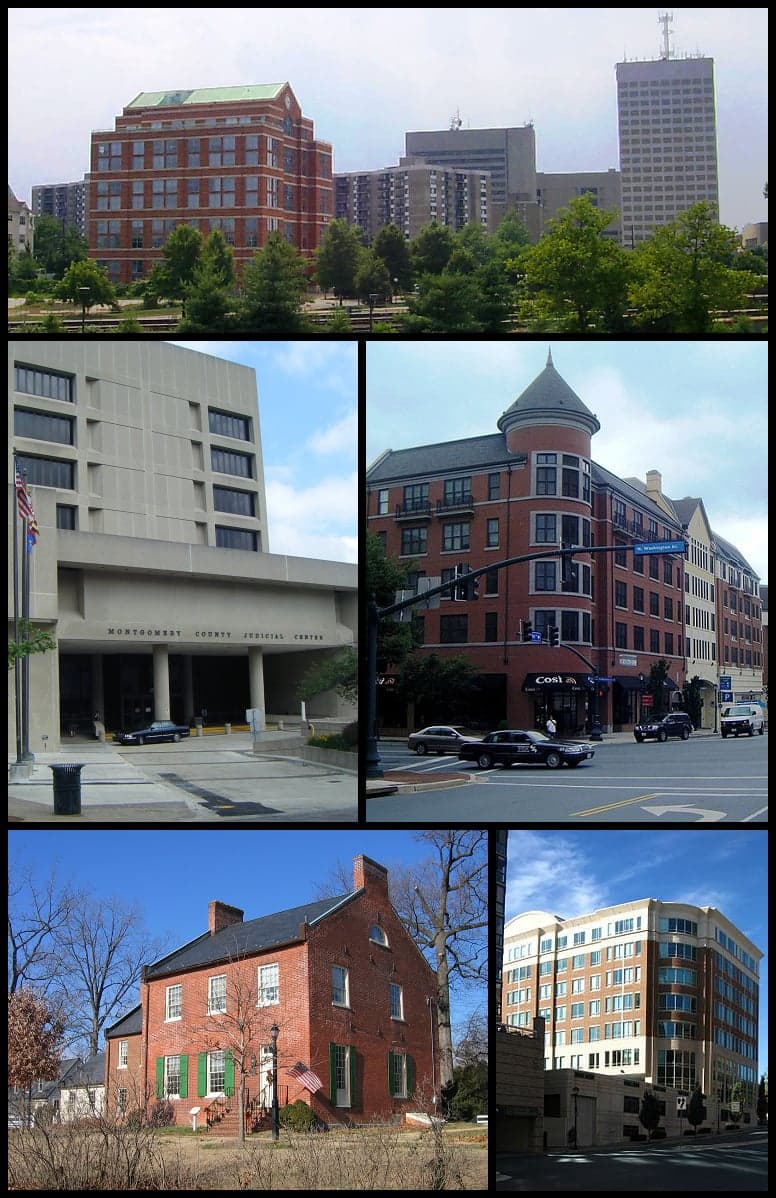
Photo: Wikipedia
Personal Sovereignty in Rockville, MD
Viable for self-reliance. Generally workable, though some barriers may limit total independence.
What does Personal Sovereignty tell us?
Personal Sovereignty measures your capacity for self-reliance and independence with minimal government friction. Higher scores mean fewer barriers between you and the way you want to live... but it assumes you have the space you need and good neighbors.
What does this tell us?
Personal Sovereignty measures your capacity for self-reliance and independence with minimal government friction. Higher scores mean fewer barriers between you and the way you want to live... but it assumes you have the space you need and good neighbors.
State Policy
Energy independence: Importer (8% of energy produced in-state)
Personal Liberty
Homesteading

Personal Liberty Analysis
Rockville, Maryland, presents a challenging environment for personal sovereignty, where state-level policies significantly constrain individual autonomy despite the city’s own relatively moderate local governance. As a strategic relocation consideration for those prioritizing self-reliance and minimal government overreach, the area’s high tax burden, restrictive gun laws, and dense zoning create substantial hurdles. While Montgomery County’s progressive tilt dominates, a survivalist or prepper mindset must weigh these factors carefully against the region’s proximity to federal employment and infrastructure. The bottom line: Rockville offers stability and resources, but at the cost of surrendering significant personal freedoms to state and county authorities.
Tax burden and regulatory posture: how much of your income and freedom is claimed
Maryland’s tax posture is among the most aggressive in the nation, and Rockville sits at the epicenter of that burden. The state’s income tax ranges from 2% to 5.75%, but Montgomery County adds a local income tax of 3.2%, bringing the combined top marginal rate to nearly 9%—before federal taxes. Property taxes are also steep: the county’s effective rate hovers around 1.1% of assessed value, and Rockville adds its own city property tax of roughly 0.27%, meaning a $500,000 home carries an annual tax bill of about $6,850. Sales tax is 6%, with no exemptions for groceries, though unprepared food is taxed at a lower rate. For a prepper or survivalist, this means every dollar earned is heavily skimmed before it can be saved for supplies, land, or equipment. The regulatory environment is equally dense: Montgomery County enforces strict building codes, environmental regulations, and business licensing that can delay or block projects like installing a backup generator, building a root cellar, or running a home-based side business. The state’s energy policies also mandate renewable portfolio standards, which can increase utility costs and complicate off-grid solar setups. In short, the tax and regulatory climate in Rockville is designed to fund expansive government programs, not to encourage individual financial independence.
Self-defense and gun law specifics: what you can and cannot do to protect your home
Maryland’s gun laws are among the most restrictive in the country, and Rockville residents face severe limitations on self-defense options. The state requires a Handgun Qualification License (HQL) to purchase a handgun, which involves a background check, fingerprinting, and a four-hour training course. Additionally, Maryland has a “may-issue” concealed carry permit system, but in practice, the state’s “good and substantial reason” requirement was struck down by the Supreme Court’s Bruen decision in 2022. However, the state legislature has since passed a law requiring permit applicants to demonstrate a “good and substantial reason” that is not merely self-defense, effectively re-imposing a de facto ban on most concealed carry. Open carry is generally prohibited without a permit. The state also bans “assault weapons” and high-capacity magazines (over 10 rounds), and has a 7-day waiting period for handgun purchases. For a survivalist, this means your home defense options are limited to handguns with restricted magazine capacity, and you cannot legally carry a firearm for protection outside the home without navigating a bureaucratic maze. The county also has a “red flag” law allowing authorities to seize firearms based on anonymous reports, which raises concerns about due process and government overreach. In a crisis scenario, these laws could leave residents vulnerable, as the legal framework prioritizes state control over individual self-defense.
Self-reliance and homesteading viability: lot sizes, zoning, and off-grid feasibility
Rockville’s suburban density and strict zoning make traditional homesteading nearly impossible. The city’s minimum lot size in most residential zones is 6,000 to 10,000 square feet, which is too small for significant food production or livestock. Zoning codes prohibit keeping chickens, goats, or bees in most single-family neighborhoods, and any agricultural activity requires a special exception that is rarely granted. Off-grid living is effectively illegal: the county requires connection to municipal water and sewer systems, and solar panels must be grid-tied with net metering agreements. Rainwater harvesting is allowed but limited to 5,000 gallons per property, and composting is restricted to enclosed bins. For a prepper seeking self-sufficiency, the options are limited to container gardening, small raised beds, and indoor food storage. The good news is that Rockville has excellent access to emergency supplies: there are multiple big-box retailers, hardware stores, and a Costco within a 10-minute drive. However, the lack of land and restrictive codes mean you cannot build a bunker, dig a well, or install a septic system. If self-reliance is a priority, look to the outer suburbs of Frederick County or rural areas like Poolesville, where lot sizes are larger and zoning is more permissive. In Rockville, you are dependent on the grid and municipal services, which is a vulnerability in a long-term disruption scenario.
Personal liberties: parental rights, medical autonomy, speech, and property
On personal liberties, Rockville reflects Maryland’s progressive tilt, which can clash with conservative values. Parental rights are constrained: the state has a “medically accurate” sex education mandate that includes LGBTQ+ content, and parents cannot opt their children out of specific lessons—only the entire curriculum. Medical autonomy is limited by state vaccine mandates for school attendance, and during the COVID-19 pandemic, Montgomery County imposed some of the strictest mask and vaccine mandates in the country, including for outdoor activities. Free speech is generally protected, but the county has a “hate speech” ordinance that can be used to penalize certain political expressions, and public gatherings require permits that can be denied based on content. Property rights are heavily regulated: the county’s zoning board has broad authority to deny permits for home-based businesses, short-term rentals, or even minor renovations like adding a deck. The state’s “eminent domain” powers are also broad, and the county has used them for redevelopment projects. For a survivalist, the most concerning aspect is the lack of medical freedom: you cannot legally treat yourself with certain antibiotics or stockpile prescription medications without a doctor’s oversight, and the state’s prescription drug monitoring program tracks all controlled substances. In a collapse scenario, these restrictions could become life-threatening. Overall, personal liberties in Rockville are secondary to state and county priorities, which prioritize collective health and safety over individual choice.
Compared to other areas in the Mid-Atlantic, Rockville offers a relatively low level of personal sovereignty. The tax burden is among the highest in the nation, gun laws are restrictive, homesteading is impractical, and personal liberties are curtailed by progressive policies. For a conservative-leaning individual or family prioritizing self-reliance and minimal government overreach, this is not a favorable environment. However, for those who value proximity to federal jobs, excellent schools, and robust infrastructure, Rockville can be a strategic base—provided you are willing to work within the system and accept the trade-offs. If sovereignty is your top priority, consider relocating to Virginia’s Shenandoah Valley or West Virginia’s Eastern Panhandle, where taxes are lower, gun laws are more permissive, and zoning allows for genuine self-sufficiency. Rockville is a place to live within the system, not to escape it.

* Values derived from national, state, county, city and local statistics and may differ in a specific area. Last updated: 2026-04-22T02:27:47.000Z
Narrative content on this page is AI-generated and may contain mistakes. Verify any details that matter before acting on them.
ReloMaps may earn a commission from affiliate links at no extra cost to you.

