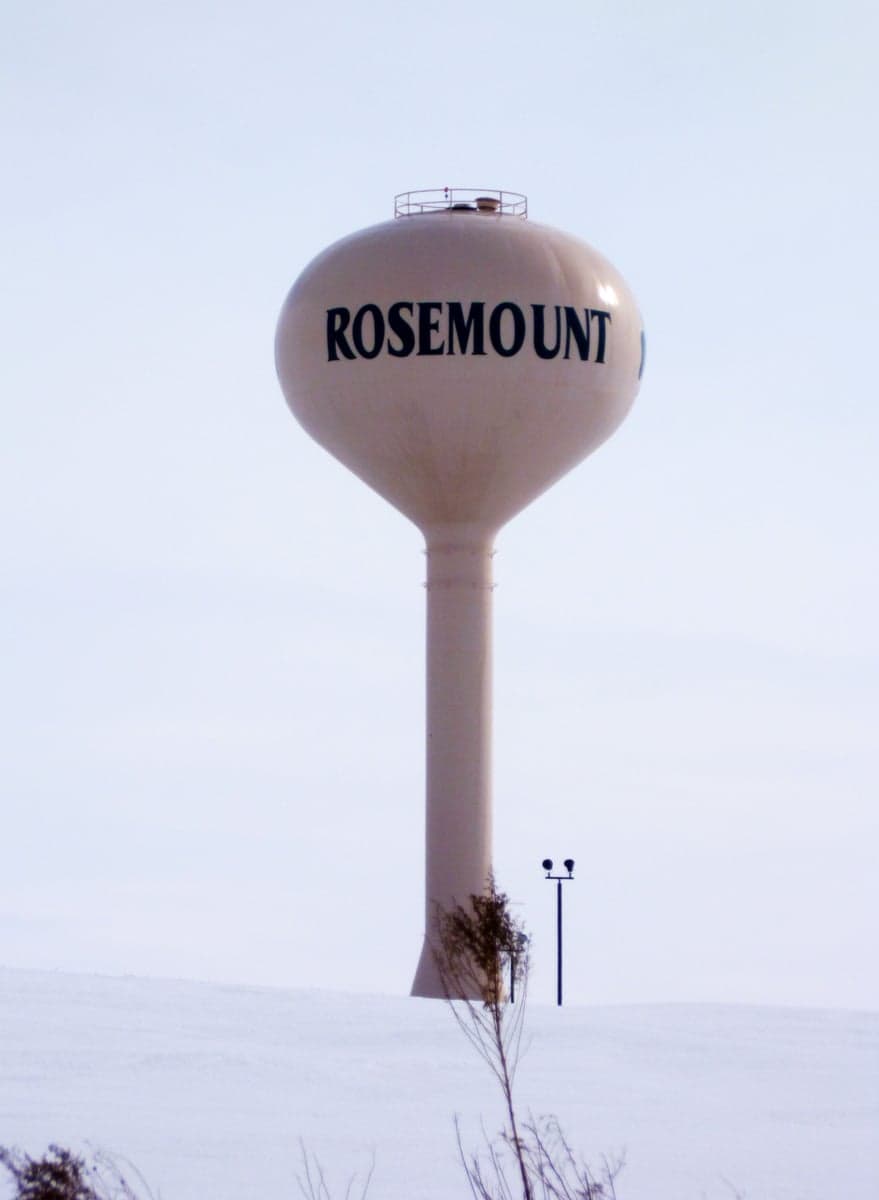
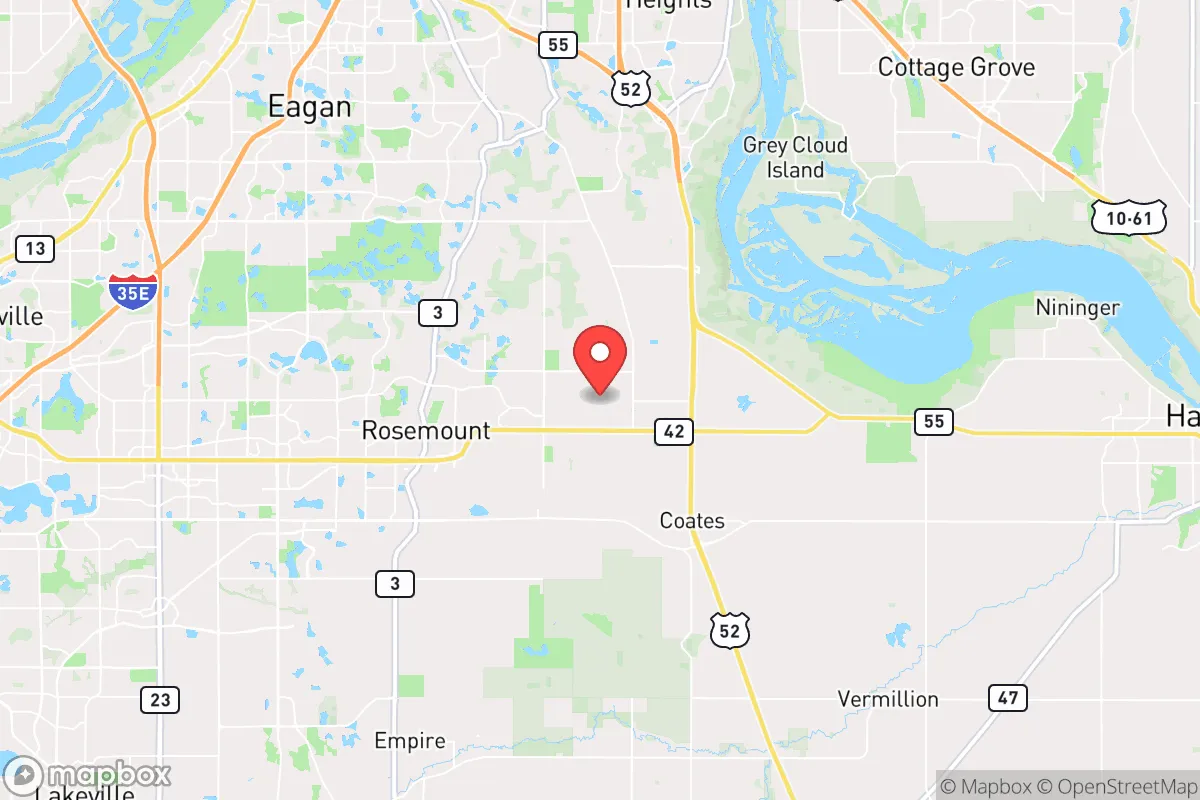
Photo: Wikipedia
Personal Sovereignty in Rosemount, MN
Viable for self-reliance. Generally workable, though some barriers may limit total independence.
What does Personal Sovereignty tell us?
Personal Sovereignty measures your capacity for self-reliance and independence with minimal government friction. Higher scores mean fewer barriers between you and the way you want to live... but it assumes you have the space you need and good neighbors.
What does this tell us?
Personal Sovereignty measures your capacity for self-reliance and independence with minimal government friction. Higher scores mean fewer barriers between you and the way you want to live... but it assumes you have the space you need and good neighbors.
State Policy
Energy independence: Importer (20% of energy produced in-state)
Personal Liberty
Homesteading

Personal Liberty Analysis
Rosemount, Minnesota offers a mixed bag for those prioritizing personal sovereignty, with a state-level political environment that leans interventionist but a local culture that still values self-reliance. As a southern suburb of the Twin Cities, Rosemount sits in Dakota County, which voted +14 Democratic in the 2024 presidential election, but the city itself retains a more independent, rural-minded character than its northern neighbors. For the survivalist or prepper, the key question is whether the regulatory and tax climate allows you to live on your own terms, or whether you’ll be fighting government overreach at every turn. The answer depends heavily on your specific priorities—gun rights, property freedom, and medical autonomy—and how much you’re willing to navigate state-level restrictions that are increasingly at odds with local sentiment.
Tax burden and regulatory posture in Rosemount
Minnesota’s tax burden is among the highest in the nation, ranking 5th worst for combined state and local taxes according to the Tax Foundation’s 2025 index. Rosemount residents face a state income tax that tops out at 9.85%, plus a state sales tax of 6.875% (Dakota County adds 0.5% for a total of 7.375%). Property taxes are also significant: the effective rate in Dakota County hovers around 1.2% of assessed value, meaning a $400,000 home carries roughly $4,800 annually in property taxes. For a prepper focused on financial independence, this is a heavy anchor. The state’s regulatory posture is equally burdensome: Minnesota has a robust environmental review process for land use, and the Metropolitan Council—a regional planning body—has authority over zoning and development in the seven-county metro area, including Rosemount. This means any significant off-grid or homesteading project will likely require permits and face bureaucratic hurdles. The state’s energy code is also strict, mandating high-efficiency standards that can increase construction costs for self-built structures. While Rosemount itself has a relatively pro-development city council, the state-level regulatory apparatus is a constant source of friction for those seeking to minimize government entanglement.
Self-defense and gun law specifics in Minnesota
Minnesota is a “shall-issue” state for concealed carry permits, and Rosemount has no local ordinances restricting firearm possession beyond state law. However, the state’s gun laws have tightened significantly in recent years. In 2023, Minnesota passed a “red flag” law (Extreme Risk Protection Order) allowing courts to temporarily seize firearms from individuals deemed a risk, without a criminal conviction. The state also requires universal background checks for all firearm transfers, including private sales, and has a 30-day waiting period for handgun purchases. For the survivalist, these are clear infringements on the Second Amendment. On the positive side, Minnesota does not require a permit to open carry, and the state preempts local governments from enacting stricter gun ordinances than state law—so Rosemount cannot ban firearms in city parks or impose its own waiting periods. The state also has a “stand your ground” doctrine, though it is not as explicit as in states like Texas; Minnesota law does not impose a duty to retreat in one’s home or place of business. For those considering relocation, the gun climate in Rosemount is better than in coastal states but worse than in the Dakotas or Iowa. The proximity to Wisconsin (a constitutional carry state) is a practical consideration for some preppers, but crossing state lines with firearms requires careful attention to federal law.
Self-reliance and homesteading viability in Rosemount
Rosemount still retains a semi-rural feel, with many properties on lots of one acre or more, especially in the older parts of town. The city’s zoning code allows for “urban agriculture,” including chickens and bees, but livestock such as goats or pigs are restricted to parcels of two acres or more, and require a conditional use permit. For the serious homesteader, this is limiting: you cannot keep a milk cow or raise meat rabbits without significant acreage. The city also has strict regulations on accessory structures—sheds over 200 square feet require a building permit, and any dwelling intended for habitation (including tiny houses or converted shipping containers) must meet the state building code. Off-grid living is effectively illegal in Rosemount: the city requires connection to municipal water and sewer for any habitable structure, and solar panels must be grid-tied unless you obtain a variance. Rainwater collection is allowed for outdoor use but not for potable water without a permit from the Minnesota Department of Health. For the prepper seeking true self-reliance, these regulations are a dealbreaker. However, the surrounding townships—such as Empire or Vermillion—offer more flexibility, with larger minimum lot sizes (2.5 to 5 acres) and fewer restrictions on livestock and structures. A strategic move might be to buy land just outside Rosemount’s city limits, where county zoning is more permissive, while still having access to the city’s services for emergencies.
Personal liberties in Rosemount: parental rights, medical autonomy, speech, and property
Minnesota has a strong track record on parental rights in education, with a state law requiring school districts to notify parents of any curriculum involving human sexuality and allowing parents to opt their children out. However, the state’s 2023 “trans refuge” law prohibits schools from notifying parents if a child requests a name or pronoun change without the child’s consent—a direct erosion of parental authority. Rosemount’s public schools (Independent School District 196) have generally followed state guidance, meaning parents should expect limited transparency on these issues. On medical autonomy, Minnesota is a “blue” state: it has legalized recreational marijuana (2023), and it mandates insurance coverage for gender-affirming care. For those who prioritize medical freedom, the state’s vaccine mandates for school attendance (including COVID-19 for healthcare workers) and its strict prescription drug monitoring program are red flags. Free speech protections are robust under the Minnesota Constitution, which has its own free speech clause that has been interpreted broadly by state courts. Rosemount has no local “hate speech” ordinances that would chill political expression. Property rights are where the state’s overreach is most felt: Minnesota’s eminent domain laws allow the government to take private land for economic development, and the Metropolitan Council has used this authority for transit-oriented projects. For the prepper, this means that even if you buy land in Rosemount, you are not immune to future condemnation for a light-rail line or highway expansion.
Overall, Rosemount offers a moderate level of personal sovereignty compared to other metro-area suburbs, but it falls short of the freedom found in rural Minnesota or neighboring states like South Dakota. The state’s high taxes, restrictive gun laws, and regulatory barriers to self-reliance make it a challenging environment for the committed survivalist. However, the city’s relatively low crime rate (violent crime is about half the national average), strong community networks, and access to outdoor recreation along the Mississippi River and Vermillion River provide some compensating benefits. For the conservative-leaning single individual or parent who values proximity to jobs in the Twin Cities but wants to maintain a degree of independence, Rosemount is a compromise—not a fortress. If your priority is maximum autonomy, look further south or west, where county-level governance is more aligned with individual liberty. But if you need to stay in the metro for work or family, Rosemount is one of the better options in a state that is increasingly hostile to the prepper mindset.

* Values derived from national, state, county, city and local statistics and may differ in a specific area. Last updated: 2026-05-01T13:12:38.000Z
Narrative content on this page is AI-generated and may contain mistakes. Verify any details that matter before acting on them.
ReloMaps may earn a commission from affiliate links at no extra cost to you.

