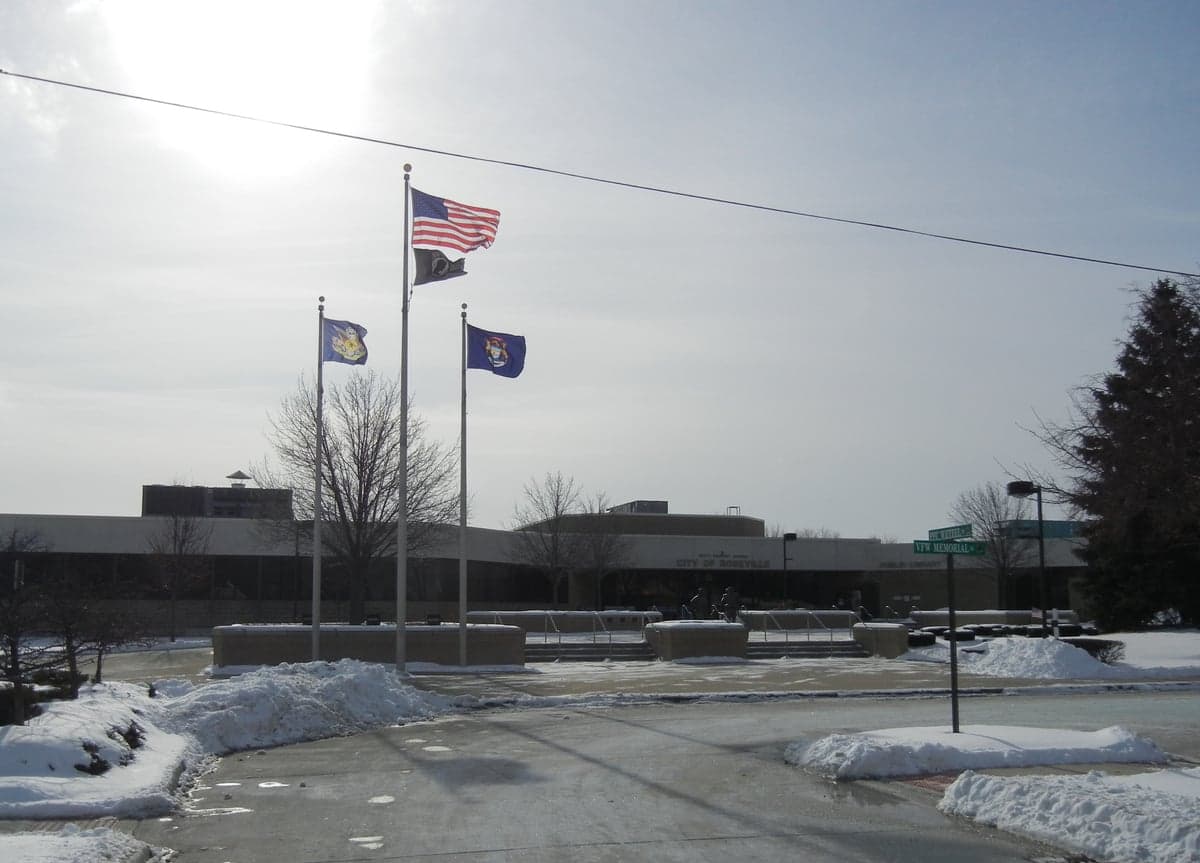
Photo: Wikipedia
Personal Sovereignty in Roseville, MI
Strong independent fundamentals that actively favor personal liberty and low regulation.
What does Personal Sovereignty tell us?
Personal Sovereignty measures your capacity for self-reliance and independence with minimal government friction. Higher scores mean fewer barriers between you and the way you want to live... but it assumes you have the space you need and good neighbors.
What does this tell us?
Personal Sovereignty measures your capacity for self-reliance and independence with minimal government friction. Higher scores mean fewer barriers between you and the way you want to live... but it assumes you have the space you need and good neighbors.
State Policy
Energy independence: Importer (20% of energy produced in-state)
Personal Liberty
Homesteading

Personal Liberty Analysis
Roseville, Michigan, offers a mixed bag for those prioritizing personal sovereignty, with the state’s broader regulatory environment creating significant friction for survivalist and prepper-minded individuals. While the city itself is a working-class suburb of Detroit, its autonomy is heavily constrained by Michigan’s state-level policies on taxation, self-defense, and property rights, which lean toward a more collectivist, top-down approach. For a single individual or parent looking to minimize government overreach and maximize self-reliance, Roseville requires careful navigation—it’s not a libertarian haven, but it’s not a total lockdown either, provided you know where the cracks in the system are.
Tax burden and regulatory posture: what you pay and what you can do
Michigan’s tax structure is a double-edged sword for sovereignty-minded residents. The state levies a flat 4.25% income tax on all earnings, which is moderate compared to high-tax states like California, but there’s no local income tax in Roseville, so your paycheck isn’t further nibbled at the city level. Property taxes, however, are a heavier burden: the average effective rate in Macomb County hovers around 2.1% of assessed home value, which is above the national average. For a $200,000 home, that’s roughly $4,200 annually—money that goes to schools and municipal services you may not fully control or use. The regulatory posture in Roseville is typical of a post-industrial Michigan suburb: zoning is strict, with the city enforcing a minimum lot size of 6,000 square feet in most residential zones, and home-based businesses face permitting hurdles. If you’re looking to run a small-scale repair shop or sell homemade goods from your garage, expect to jump through hoops with the city planning department. The state’s regulatory climate is also notable for its prevailing wage laws and occupational licensing requirements, which can stifle independent contracting and trades work—a key concern for preppers who value side hustles and barter economies. Overall, the tax burden is manageable for a single earner, but families will feel the squeeze, and the regulatory red tape is a clear signal that the state views personal economic freedom as secondary to bureaucratic control.
Self-defense and gun law specifics: what you can carry and where
Michigan’s gun laws have shifted significantly in recent years, and Roseville residents must navigate a patchwork of state and local restrictions. The state is a shall-issue jurisdiction for concealed pistol licenses (CPLs), meaning if you pass a background check and complete an 8-hour safety course, the county sheriff must issue your permit—no subjective discretion. This is a win for self-defense advocates. However, Michigan also has a universal background check law for all firearm sales, including private transactions, which took effect in 2024. This means you cannot legally sell a rifle to a neighbor without going through a licensed dealer, a clear infringement on private property rights and a barrier to building community armories. Open carry is legal without a permit for anyone 18 or older who can legally possess a firearm, but Roseville’s city ordinances prohibit carrying firearms in public parks and recreation areas, which is a common local overreach. For preppers, the key concern is magazine capacity: Michigan bans magazines holding more than 10 rounds for rifles and 15 rounds for handguns, a restriction that directly impacts defensive capability. Stand-your-ground laws are on the books, but the state’s duty to retreat in public spaces (outside your home or vehicle) creates legal gray areas. If you’re serious about self-defense, you’ll need to invest in legal insurance (like U.S. LawShield) and stay current on local ordinance changes—Roseville’s city council has shown a willingness to tighten rules, so vigilance is mandatory.
Self-reliance and homesteading viability: lot sizes, zoning, and off-grid feasibility
Roseville’s suburban density makes traditional homesteading a challenge, but not impossible for the determined. Most residential lots are 60 feet wide by 100 feet deep, offering about 6,000 square feet—enough for a substantial vegetable garden, a small chicken coop (up to 4 hens allowed without a permit), and a modest rainwater collection system. However, the city’s zoning code explicitly prohibits livestock larger than poultry, so goats, pigs, or bees are off the table without a variance. Off-grid living is effectively illegal: the city requires connection to municipal water and sewer, and solar panels must be grid-tied with no battery storage unless you get a special electrical permit. For a prepper looking to reduce dependency, this is a major red flag—you cannot truly disconnect from the system. The good news is that backyard gardening is unrestricted, and the soil in Macomb County is decent for vegetables (though you’ll want raised beds due to historical industrial contamination in some areas). Composting is allowed, but open burning is banned, so you’ll need a tumbler. If you’re a single individual, you can feasibly grow 30-40% of your annual produce on a standard lot, but families will need to look at larger properties in neighboring townships like Clinton or Macomb for true self-reliance. The regulatory posture here is clear: Roseville is designed for consumers, not producers.
Personal liberties: parental rights, medical autonomy, speech, and property
On personal liberties, Michigan’s state-level policies create a mixed environment that requires active defense. Parental rights are relatively strong: Michigan has a parental rights in education law that requires schools to notify parents of any medical or mental health services offered to minors, and parents can opt their children out of sex education. However, the state’s mandatory vaccination laws for school attendance (with only medical and religious exemptions, no philosophical) are a point of friction for families who value medical autonomy. Medical freedom took a hit during the COVID-19 era, with Michigan having some of the strictest emergency orders in the Midwest, though those have since expired. Currently, there are no state-level mandates for vaccines or masks, but the memory of government overreach lingers. Free speech is protected under the First Amendment, but Roseville has a noise ordinance that can be used to shut down political gatherings or religious services if neighbors complain—a tool for local control. Property rights are the weakest link: Michigan’s eminent domain laws allow the government to seize land for private development (e.g., the 2005 Kelo decision is still active precedent), and Roseville’s blight ordinances give the city broad power to fine homeowners for unkempt lawns or peeling paint. For a prepper, this means you cannot let your property look “abandoned” without risking fines or seizure. The overall liberty environment is one of conditional freedom: you can do a lot, but the state and city reserve the right to intervene whenever they deem it necessary.
Compared to other areas in the Midwest, Roseville offers a baseline level of personal sovereignty that is workable but far from ideal for the survivalist mindset. The tax burden is moderate, the gun laws are restrictive but navigable, and the homesteading potential is limited by lot size and zoning. The real threat is the regulatory creep—Michigan’s government has shown a willingness to expand its reach into private lives, from vaccine mandates to magazine bans. For a single individual or parent who values self-reliance, Roseville is a place where you can build a resilient life, but only if you stay informed, organized, and ready to push back against local ordinances. If you’re looking for a true sovereignty haven, you’d be better off in rural northern Michigan or a state like Idaho. But if your job or family ties keep you in the Detroit metro, Roseville is a decent compromise—just keep your guard up and your legal paperwork in order.

* Values derived from national, state, county, city and local statistics and may differ in a specific area. Last updated: 2026-04-30T03:37:46.000Z
Narrative content on this page is AI-generated and may contain mistakes. Verify any details that matter before acting on them.
ReloMaps may earn a commission from affiliate links at no extra cost to you.

