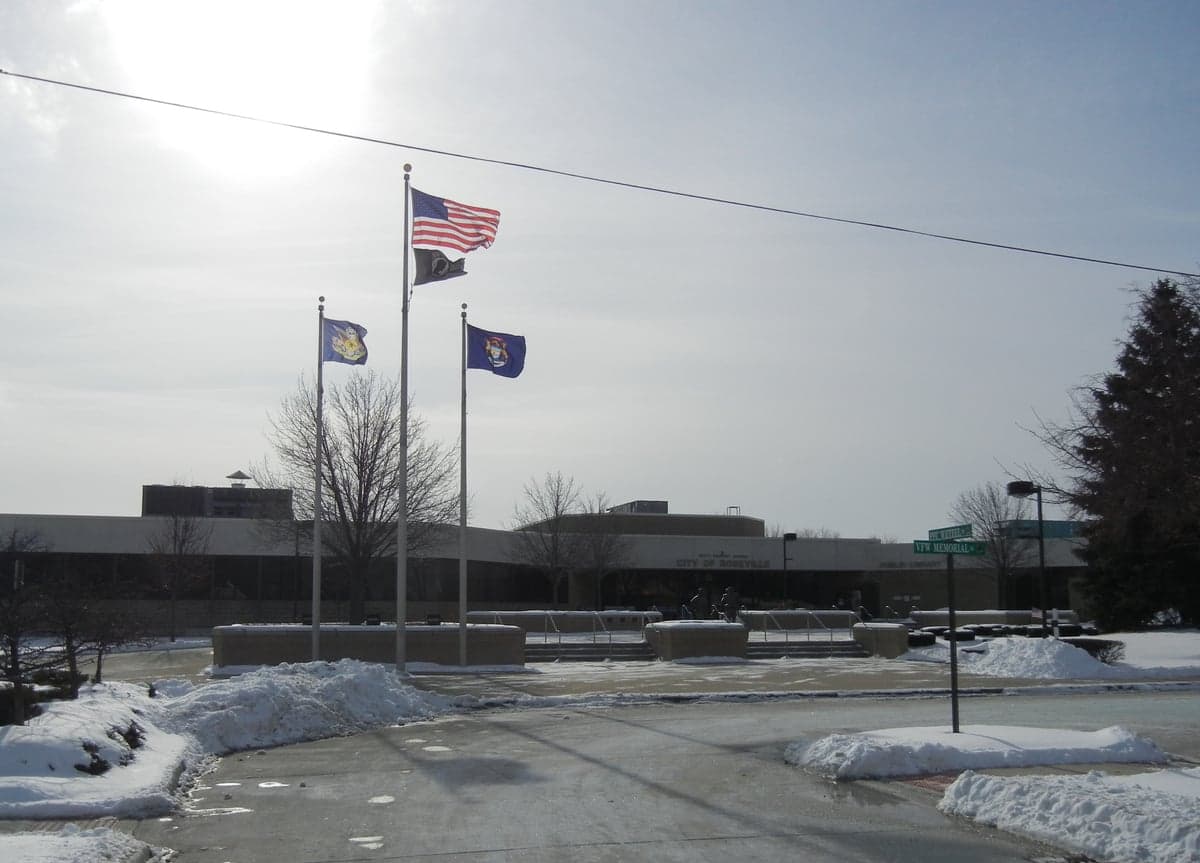
Photo: Wikipedia
Political ClimatePolitical Climate in Roseville, MI
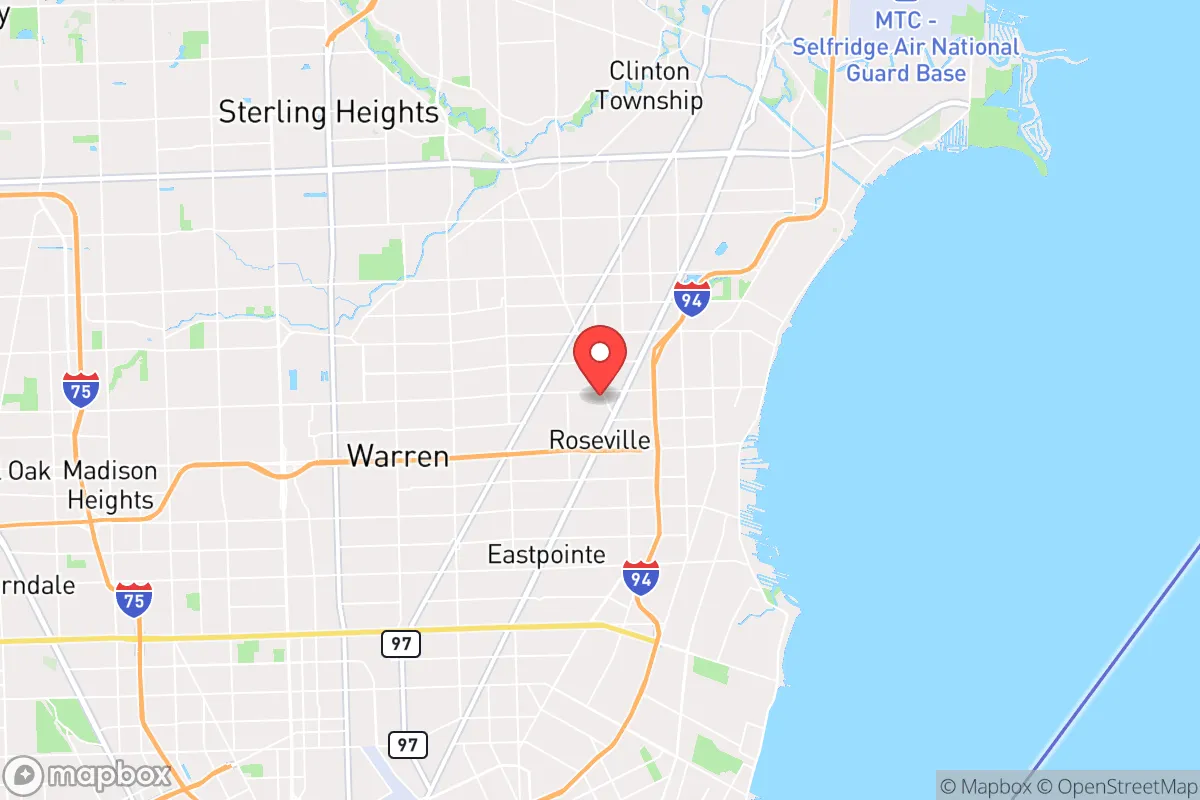
District shown is the primary district for this city’s centroid. Cities may span multiple districts.
Local Political AnalysisPolitical Analysis of Roseville, MI
Roseville, Michigan, sits in a politically interesting spot. With a Cook PVI of R+3, the city leans slightly Republican, but it's not a deep-red stronghold by any means. If you've been around here long enough, you remember when this was a solid working-class Democratic town, back when the UAW had a tighter grip and folks voted more on union loyalty than cultural issues. That's shifted over the last decade or so, and you can feel it in local conversations and at the ballot box. The trajectory is toward the right, but it's a slow, uneven drift—not a stampede.
How it compares
To really get Roseville's politics, you have to look at the neighbors. Head north a few miles into Macomb Township or Shelby Township, and you're in solidly Republican territory—places where the "Trump won big" signs stay up year-round. Go south into Detroit proper, and you're in a deep-blue urban core. Roseville is the buffer zone. It's more conservative than Warren to the west, which still has a stronger union-Democrat flavor, and more moderate than St. Clair Shores to the east, which leans a bit more Republican but with a libertarian streak. What sets Roseville apart is that it's a place where a lot of folks moved to get away from Detroit's problems—higher taxes, crime, and the feeling that the city government was more interested in social experiments than basic services. That migration has slowly nudged the local politics toward a "leave us alone" conservatism, not a fire-breathing one.
What this means for residents
For someone living here, the R+3 lean means you're not going to see the kind of aggressive progressive policy pushes you'd get in Ann Arbor or Ferndale. The city council and school board races tend to be low-key affairs focused on potholes, public safety, and keeping taxes reasonable. There's a healthy skepticism of state-level mandates from Lansing—whether it's COVID-era restrictions or new environmental regulations that feel like they're written by people who've never set foot in a Macomb County auto plant. The concern among longtime residents is that as the Detroit exurbs continue to fill up with younger, more diverse families, the political center of gravity could shift. Some worry that the "progressive" wave washing over other parts of Michigan—things like DEI initiatives in schools or zoning changes that prioritize density over single-family homes—might eventually lap at Roseville's doorstep. For now, though, the vibe is: we mind our own business, we don't want government in our wallets or our lives, and we'd like to keep it that way.
Culturally, Roseville still feels like old-school Macomb County. You'll find more American flags than pride flags, more pickup trucks than Teslas, and a general attitude that the Second Amendment isn't up for debate. The local police are well-funded and respected, and there's little appetite for "defund" rhetoric. The biggest policy distinction is probably the city's approach to development: it's pro-business but not in a chaotic, anything-goes way. They've been careful about keeping the downtown area from turning into a strip-mall wasteland, which is more than you can say for some neighboring towns. Looking ahead, the long-term trend depends on who moves in. If Roseville stays a place where people come for affordable homes and a quiet life, the conservative tilt will hold. But if housing prices push younger, left-leaning buyers out of Detroit and into the inner-ring suburbs, that R+3 could start looking like a toss-up in a decade or two. For now, it's a decent place to raise a family without feeling like you're living in a political battleground.

State Political ClimatePolitical Climate in Michigan
State Political AnalysisPolitical Environment in the State
Michigan has long been a political battleground, but over the past decade it has shifted from a reliably blue state to a true purple toss-up, with a conservative-leaning population in the northern and western regions increasingly pushing back against the progressive dominance of the southeastern metro areas. The state’s overall partisan lean is now narrowly Democratic at the state level, but that margin is razor-thin — in 2024, Donald Trump won Michigan by roughly 1.5 points, a stark reversal from the 2020 election where Joe Biden carried it by just under 3 points. The 10-20 year arc shows a state that was once a union-heavy, Democratic stronghold slowly fracturing along geographic and cultural lines, with the GOP making deep inroads in rural and exurban areas while Detroit and its inner suburbs remain the engine of Democratic turnout.
Urban vs. rural divide
The political map of Michigan is essentially a story of two states. The southeastern corner — anchored by Detroit, Ann Arbor, and Grand Rapids — drives the Democratic vote, with Wayne County alone delivering over 600,000 votes for Biden in 2020. But the rest of the state is overwhelmingly conservative. The Upper Peninsula, once a Democratic stronghold, has flipped hard red; in 2024, Trump won every county in the U.P. except for Marquette and Houghton. The western side of the Lower Peninsula, including Traverse City and Holland, is a mix of conservative-leaning suburbs and rural areas, while the central and northern regions — places like Cadillac, Alpena, and Gaylord — are deeply red. The key swing areas are the suburban counties surrounding Detroit — Macomb, Oakland, and Kent — which have trended rightward since 2016. Macomb County, a classic Reagan Democrat stronghold, flipped from Obama in 2012 to Trump in 2016 and 2020, and stayed red in 2024. This urban-rural split means that state elections are decided by a handful of suburban precincts, not by the cities or the countryside.
Policy environment
Michigan’s policy environment is a mixed bag for conservatives. The state has a flat income tax rate of 4.25%, which is relatively low compared to neighboring states like Illinois and Ohio, but property taxes can be high, especially in the southeastern suburbs. The regulatory posture is moderate — Michigan is not a right-to-work state anymore, as the Democratic legislature repealed the 2012 right-to-work law in 2023, a major blow to business freedom. Education policy is a flashpoint: the state has a robust school choice system, including charter schools and a universal school voucher program (the Michigan Education Savings Account), but the Detroit Public Schools Community District remains a failing, union-dominated system. Healthcare is heavily regulated, with Medicaid expansion under the Affordable Care Act still in place. Election laws are a concern for conservatives: Michigan has universal mail-in voting, no-excuse absentee ballots, and same-day voter registration, all of which were expanded by the 2018 Proposal 3 ballot initiative. The 2020 election saw significant controversy in Detroit, with allegations of ballot harvesting and irregular counting procedures that have never been fully resolved to the satisfaction of many conservatives.
Trajectory & freedom
Michigan is trending in a concerning direction for personal freedom. The most alarming recent development is the 2023 repeal of the right-to-work law, which forces workers to pay union dues as a condition of employment — a direct infringement on individual liberty. Gun rights have been under assault: in 2023, the Democratic legislature passed a package of gun control measures including universal background checks, safe storage requirements, and a red flag law that allows courts to temporarily confiscate firearms without due process. Parental rights have taken a hit with the 2023 expansion of the LGBTQ+ nondiscrimination law, which critics argue allows schools to hide a child’s gender identity from parents. Medical autonomy is also eroding: the state has strict vaccine mandates for healthcare workers and schoolchildren, and the 2023 repeal of the 1931 abortion ban (via Proposal 3) enshrined abortion access up to viability, which many conservatives view as a loss of life protection. Property rights are relatively strong, but the state’s heavy-handed environmental regulations, particularly around the Great Lakes, can make development a nightmare. On the positive side, Michigan has no state-level rent control, and the state’s tax burden is still lower than many blue states, but the trajectory is clearly toward more government control.
Civil unrest & political movements
Michigan has been a hotbed of political activism on both sides. The 2020 lockdowns saw massive protests at the state capitol in Lansing, including the famous “Operation Gridlock” where armed protesters shut down the building over COVID restrictions. The Wolverine Watchmen kidnapping plot against Governor Gretchen Whitmer in 2020 highlighted the extreme fringe of the conservative movement, but also the deep distrust of state government. On the left, the 2020 election protests in Detroit were intense, with activists demanding “count every vote” while conservatives alleged irregularities. Immigration politics are relatively quiet in Michigan compared to border states, but the state does have sanctuary city policies in Detroit and Ann Arbor, which limit cooperation with federal immigration enforcement. Election integrity remains a live issue: the 2020 election saw a massive surge in absentee ballots, and the 2024 election was again marred by claims of irregularities in Wayne County. The state’s independent redistricting commission, created by a 2018 ballot initiative, has drawn maps that are more competitive but still favor Democrats in the state legislature. A new resident would notice the constant political tension, especially in the suburbs where yard signs and bumper stickers are a daily reminder of the divide.
Projection
Over the next 5-10 years, Michigan is likely to remain a purple state, but the demographic trends favor conservatives. The exodus from Detroit and the southeastern suburbs to the northern and western parts of the state is accelerating, driven by remote work and a desire for lower costs and more freedom. The Upper Peninsula and northern Lower Peninsula are growing slowly but steadily, while the Detroit metro area is losing population. This shift will make the state more competitive for Republicans, but the Democratic stronghold in the southeast will still be enough to keep statewide races close. The biggest wildcard is the continued in-migration of conservatives from blue states like Illinois and California, who are drawn to Michigan’s lower taxes and natural beauty. However, the state’s progressive policy trajectory — especially on gun rights, union power, and election laws — will likely accelerate under Democratic control, which could push more conservatives to the exits. A new resident moving in now should expect a state that is politically divided, with a government that is increasingly hostile to conservative values, but with a growing grassroots movement fighting back. The bottom line: Michigan is a beautiful state with great people, but you’ll need to stay engaged and vote to protect your freedoms.
For a conservative considering a move to Michigan, the practical takeaway is that you’ll find like-minded communities in the northern and western regions, but you’ll be living under a state government that is actively working against your values. The cost of living is reasonable, the outdoor recreation is world-class, and the people are friendly, but you’ll need to be vigilant about your rights — especially your Second Amendment rights and your parental rights. If you’re willing to fight for your freedom, Michigan can be a great place to live, but don’t expect the state government to have your back.
* Values derived from national, state, county, city and local statistics and may differ in a specific area. Last updated: 2026-04-30T03:37:46.000Z
Narrative content on this page is AI-generated and may contain mistakes. Verify any details that matter before acting on them.
ReloMaps may earn a commission from affiliate links at no extra cost to you.

