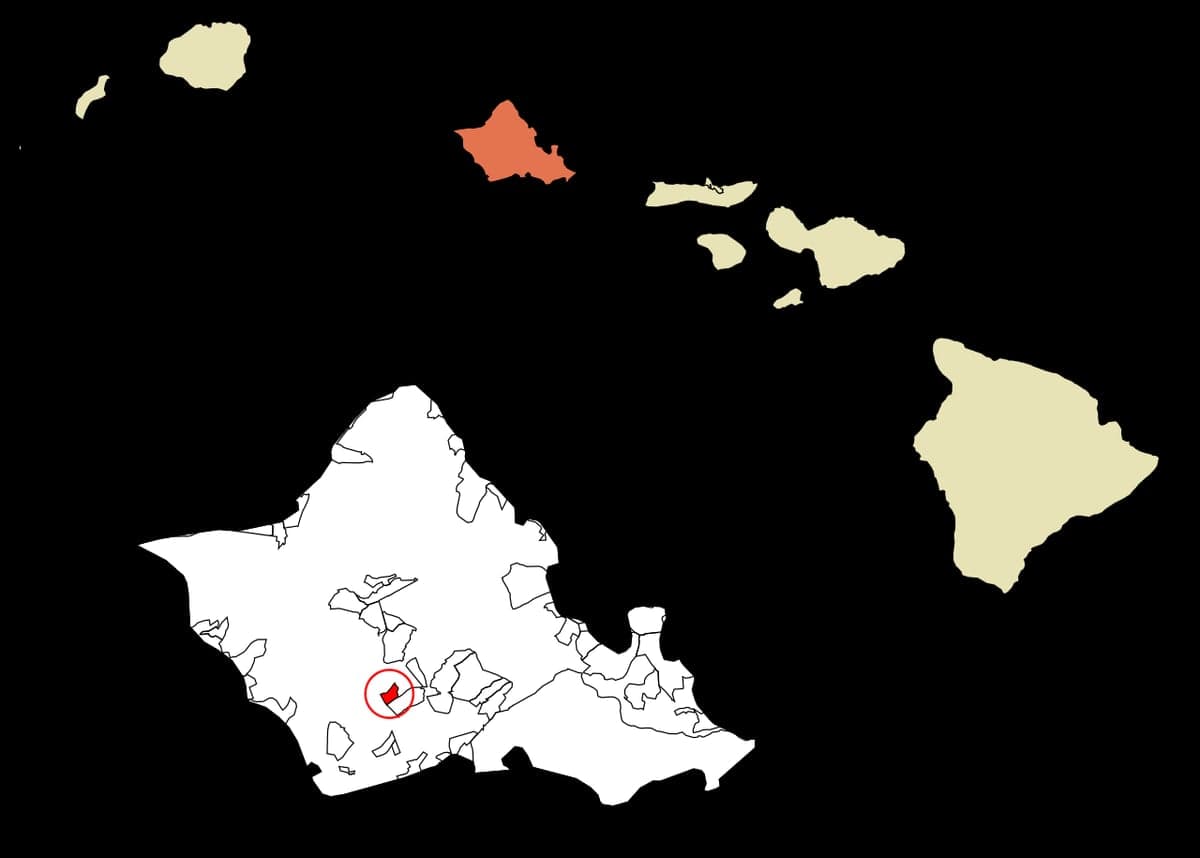
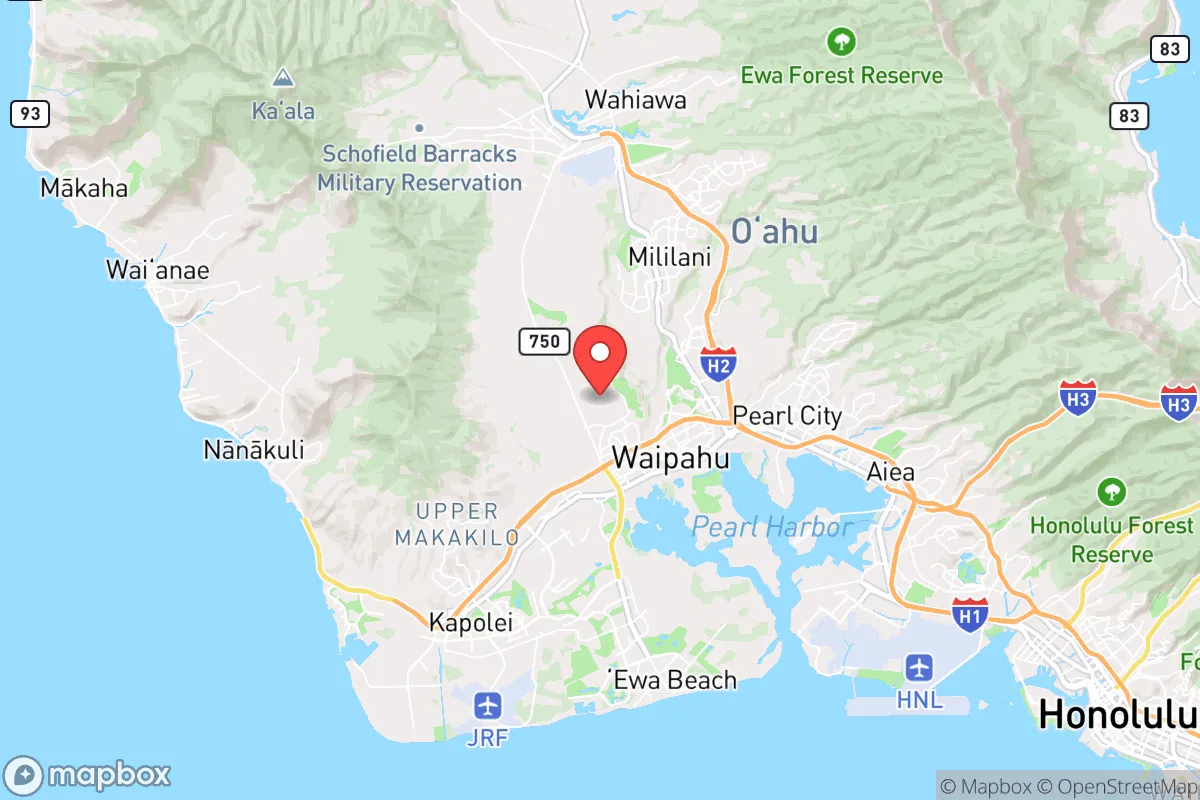
Photo: Wikipedia
Personal Sovereignty in Royal Kunia, HI
Moderate friction. Expect trade-offs in some aspect of personal liberty and independence.
What does Personal Sovereignty tell us?
Personal Sovereignty measures your capacity for self-reliance and independence with minimal government friction. Higher scores mean fewer barriers between you and the way you want to live... but it assumes you have the space you need and good neighbors.
What does this tell us?
Personal Sovereignty measures your capacity for self-reliance and independence with minimal government friction. Higher scores mean fewer barriers between you and the way you want to live... but it assumes you have the space you need and good neighbors.
State Policy
Energy independence: Importer (2% of energy produced in-state)
Personal Liberty
Homesteading

Personal Liberty Analysis
Royal Kunia, a residential community nestled in central Oahu, presents a complex picture for those prioritizing personal sovereignty. While Hawaii’s state-level policies often rank among the most restrictive in the nation, the day-to-day autonomy environment in Royal Kunia is shaped by a mix of suburban convenience, tight-knit community dynamics, and the practical realities of island living. For a conservative-leaning individual or family weighing relocation, the trade-offs are stark: you gain a stable, family-oriented neighborhood with strong property values, but you must navigate a state government that consistently ranks low on indices of economic and personal freedom. The key is understanding where you can carve out genuine self-reliance within a system that is not designed to encourage it.
Tax burden and regulatory posture in Hawaii’s controlled economy
Hawaii’s tax and regulatory environment is a significant headwind for anyone seeking to maximize personal financial autonomy. The state imposes a combined state and local sales tax that can exceed 4.5%, and unlike many mainland states, this applies to a broad range of goods and services, including groceries in some counties. Property taxes in Royal Kunia are relatively moderate for Hawaii—around 0.35% of assessed value—but this is offset by a progressive income tax that tops out at 11% on high earners, one of the highest rates in the country. For a prepper or survivalist mindset, the regulatory posture is even more concerning: Hawaii has some of the nation’s strictest land-use laws, a powerful county planning commission, and a state-level permitting process that can delay or block construction, renovation, or even simple property improvements. The state’s General Excise Tax (GET) is applied to nearly all business transactions, including services, which means even if you run a small home-based business, you are taxed at every step. For those accustomed to low-tax, low-regulation states like Texas or Florida, this feels like a constant drag on personal sovereignty.
Self-defense and gun law specifics in a restrictive state
Hawaii’s gun laws are among the most restrictive in the United States, and Royal Kunia residents must comply with them fully. The state requires a permit to acquire any firearm, a process that involves a background check, fingerprinting, and a 14-day waiting period. Carrying a concealed weapon is effectively impossible for most civilians—Hawaii is a “may-issue” state, and county police chiefs have near-total discretion to deny permits, with fewer than 50 concealed carry permits issued statewide in recent years. Open carry is prohibited. For self-defense in the home, you can own a handgun or long gun, but ammunition purchases are also regulated, and there is a ban on “assault weapons” and large-capacity magazines (over 10 rounds). The state also maintains a firearm registry. For a survivalist, this means your ability to defend your property or family with firearms is heavily constrained by government permission slips. Non-lethal self-defense options like pepper spray are legal but must be purchased from licensed dealers. The practical takeaway: if gun rights are a core component of your personal sovereignty, Royal Kunia and Hawaii as a whole will feel like a cage.
Self-reliance and homesteading viability in a suburban island setting
Royal Kunia is a planned community with mostly single-family homes on lots averaging 5,000 to 7,000 square feet—small by mainland standards but generous for Oahu. Zoning is strictly residential, and the county’s land-use ordinance prohibits keeping livestock like chickens, goats, or pigs on standard residential lots. Even vegetable gardening is subject to homeowner association (HOA) rules in many subdivisions, which can restrict the size and placement of garden beds, compost bins, or rainwater catchment systems. Off-grid living is not feasible: all homes are connected to the municipal water and electrical grid, and solar panel installation requires county permits and HOA approval. The cost of electricity in Hawaii is roughly three times the national average, driven by imported oil, so grid independence is a major financial and logistical challenge. For a prepper, the small lot size and restrictive covenants mean you cannot realistically achieve food or energy self-sufficiency on your property. The best you can do is a modest vegetable garden and a backup battery system—but true homesteading is out of reach. Community resilience is possible through neighborhood networks, but it requires navigating a dense regulatory environment.
Personal liberties in a high-regulation state: parental rights, medical autonomy, speech, and property
Hawaii’s state government exerts significant control over personal liberties, which can be jarring for those accustomed to more individualistic states. Parental rights in education are limited: the state mandates comprehensive sex education in public schools, and parents cannot opt their children out of lessons on sexual orientation or gender identity without a formal exemption process. Homeschooling is legal but requires annual notification and submission of a curriculum plan to the Department of Education. Medical autonomy is also constrained—Hawaii has a vaccine mandate for school attendance that is among the strictest in the nation, with only medical exemptions allowed (no religious or philosophical exemptions). During the COVID-19 pandemic, the state imposed some of the longest-lasting mask and travel restrictions in the country. On speech, Hawaii has a strong tradition of free expression, but local ordinances can restrict signage, leafleting, and public gatherings in certain zones. Property rights are heavily circumscribed by the state’s Land Use Commission, which classifies all land into urban, rural, or agricultural districts, and any change of use requires a lengthy public hearing process. For a conservative concerned about government overreach, these policies represent a steady erosion of personal decision-making authority.
Overall, Royal Kunia offers a stable, family-friendly environment with good schools and a strong sense of community, but it sits within a state that consistently ranks near the bottom for personal and economic freedom. Compared to areas like rural Texas, Idaho, or Montana, where property rights, gun laws, and tax burdens are far more favorable to self-reliance, Royal Kunia is a compromise. It is a place where you can build a comfortable life if you are willing to work within the system—but it is not a haven for those seeking maximum personal sovereignty. For the survivalist or prepper, the strategic calculation is clear: you gain safety and community, but you lose the ability to fully control your own food, energy, defense, and medical choices. If your priority is autonomy above all else, look elsewhere. If you value stability and are prepared to navigate a high-regulation environment, Royal Kunia can work—but only with eyes wide open to the constraints.

* Values derived from national, state, county, city and local statistics and may differ in a specific area. Last updated: 2026-04-24T11:00:40.000Z
Narrative content on this page is AI-generated and may contain mistakes. Verify any details that matter before acting on them.
ReloMaps may earn a commission from affiliate links at no extra cost to you.

