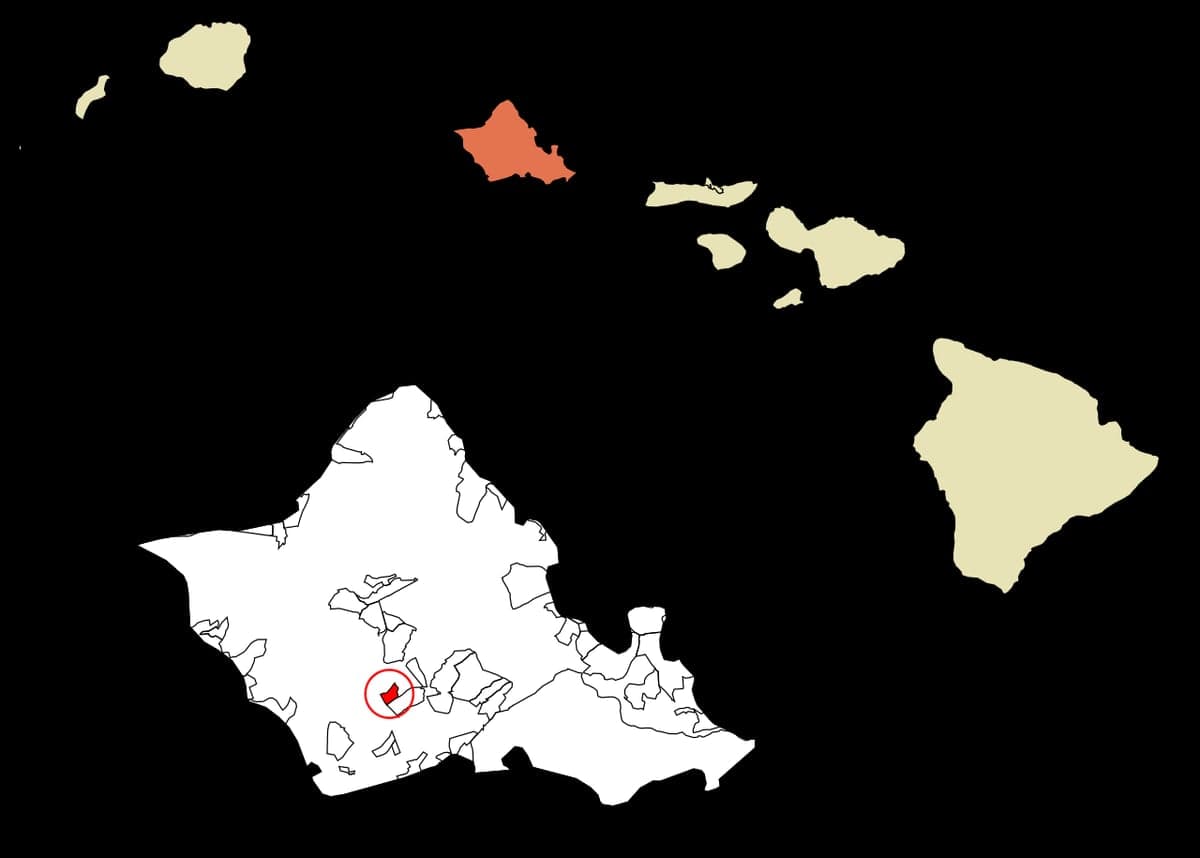
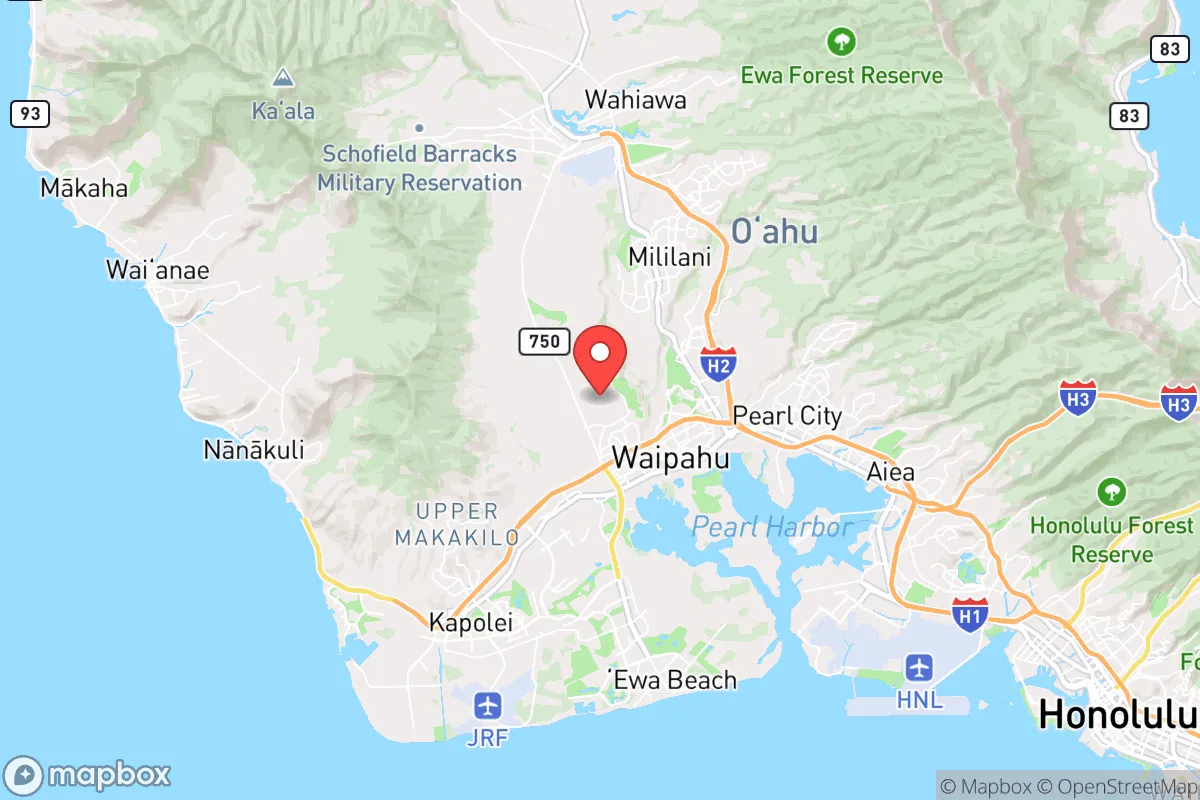
Photo: Wikipedia
Demographics of Royal Kunia, HI
Affluence Level in Royal Kunia, HI
An upper-middle-class area. Household wealth, education levels, and homeownership run ahead of national benchmarks.
People of Royal Kunia, HI
Royal Kunia, a census-designated place of 13,687 residents on Oahu’s central plateau, is a predominantly Asian-American community with a distinctive character shaped by post-1965 immigration and suburban development. The population is 57.7% East and Southeast Asian, with a small 4.4% foreign-born share, reflecting a largely U.S.-born second and third generation. The area feels quieter and more family-oriented than Honolulu’s urban core, with a 32.9% college-educated rate and a notable absence of the transient military presence found in nearby Wahiawa. Its identity is rooted in planned residential growth rather than historic plantation settlement, making it a relatively new, stable enclave for Asian-American families seeking space and affordability.
How the city was settled and grew
Royal Kunia did not exist as a settlement during Hawaii’s plantation era. The area was originally part of the vast sugarcane and pineapple fields that covered central Oahu, with no permanent village or historic neighborhoods predating the 1990s. The first significant wave of population came not from immigrant laborers but from domestic relocation: in the 1990s and early 2000s, developers transformed former agricultural land into master-planned subdivisions. The earliest neighborhoods, such as Kunia View Estates and Kunia Highlands, were built to attract middle-class families from Honolulu and the Leeward Coast who wanted newer, larger homes. These initial residents were overwhelmingly Asian-American—primarily of Japanese, Chinese, and Filipino ancestry—who had already been in Hawaii for generations and were seeking suburban space. No historic plantation camps or pre-war ethnic enclaves exist here; the entire community is a product of late-20th-century suburbanization.
Modern era (post-1965)
The post-1965 Hart-Cellar Act had little direct effect on Royal Kunia because the area was still farmland. Instead, the modern era began in earnest after 2000, when the second wave of development filled in remaining parcels. Neighborhoods like Kunia Royal Kunia and Kunia Palisades attracted a mix of established Asian-American families from older Honolulu suburbs and a smaller number of newer immigrants, primarily from the Philippines and Vietnam. The 4.4% foreign-born rate is low by Oahu standards, indicating that most residents are U.S.-born. The Asian share (57.7%) is overwhelmingly Japanese (the largest single group), followed by Filipino and Chinese. The Hispanic population (8.7%) and White population (6.7%) are small but present, concentrated in newer subdivisions like Kunia Vista. The Black population (2.1%) and Indian-subcontinent population (0.3%) are minimal, reflecting Royal Kunia’s lack of the ethnic diversity seen in Honolulu proper. The area’s growth has been driven by intra-island migration—families moving from older, denser neighborhoods like Moanalua or Aiea to newer, larger homes in Royal Kunia.
The future
Royal Kunia is likely to remain a stable, predominantly Asian-American suburb with slow, infill growth. The population is not homogenizing into a single Asian identity but is tribalizing along ethnic lines within the broader Asian category: Japanese families concentrate in the older Kunia Highlands section, Filipino families are more common in Kunia Palisades, and newer Vietnamese and Chinese residents are found in Kunia Vista. The foreign-born share (4.4%) is plateauing, as most growth comes from U.S.-born children of earlier Asian immigrants rather than new arrivals. The Hispanic and White shares are expected to remain stable, as Royal Kunia lacks the job base or housing stock to attract significant new groups. Over the next 10-20 years, the population will likely age in place, with younger families moving to even newer subdivisions on the Ewa Plain. The college-educated rate (32.9%) may rise slightly as professionals from Honolulu continue to seek affordable single-family homes.
For a conservative-leaning individual or parent considering relocation, Royal Kunia offers a stable, family-oriented environment with strong Asian-American cultural institutions and low crime. The population is not growing rapidly or diversifying dramatically, meaning the community’s character will remain consistent. The trade-off is limited rental options and a long commute to Honolulu jobs, but for those seeking a quiet, established suburban enclave with a clear demographic identity, Royal Kunia is a reliable choice.

* Values derived from national, state, county, city and local statistics and may differ in a specific area. Last updated: 2026-04-24T11:00:40.000Z
Narrative content on this page is AI-generated and may contain mistakes. Verify any details that matter before acting on them.
ReloMaps may earn a commission from affiliate links at no extra cost to you.

