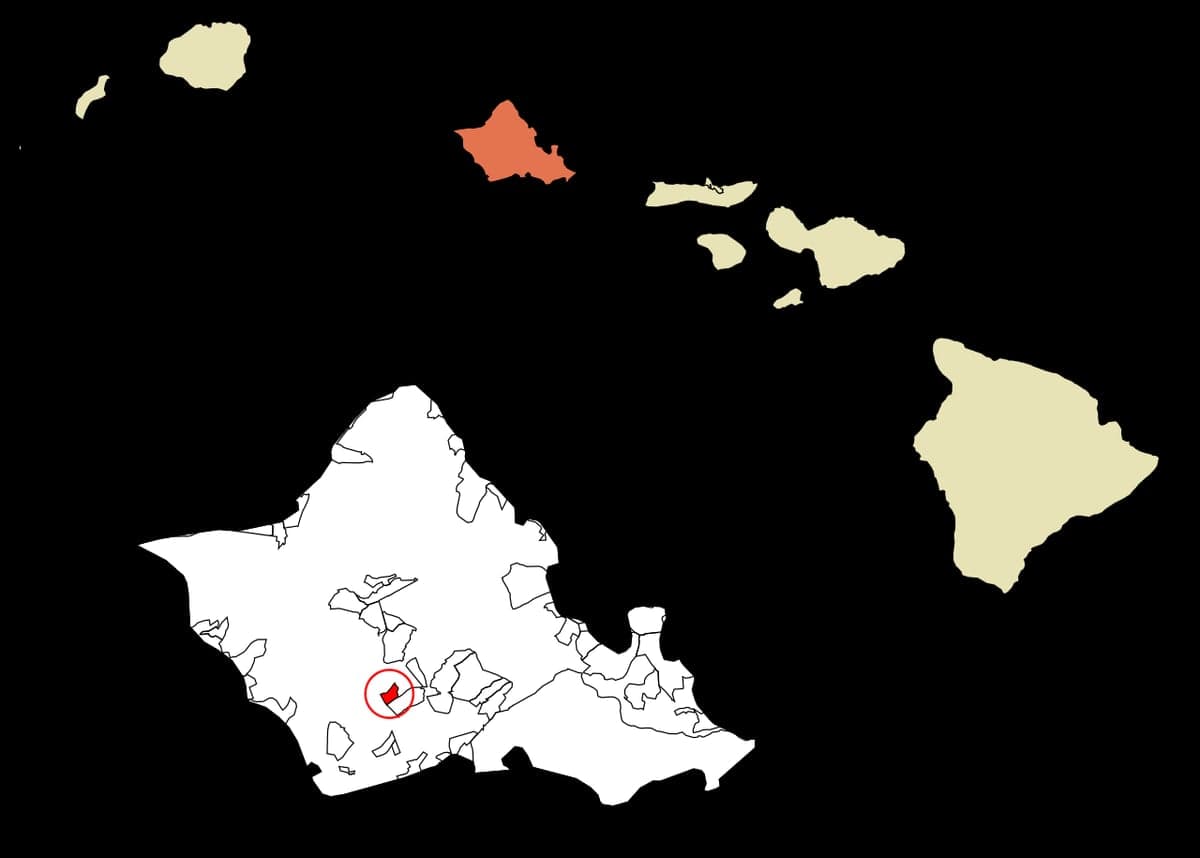
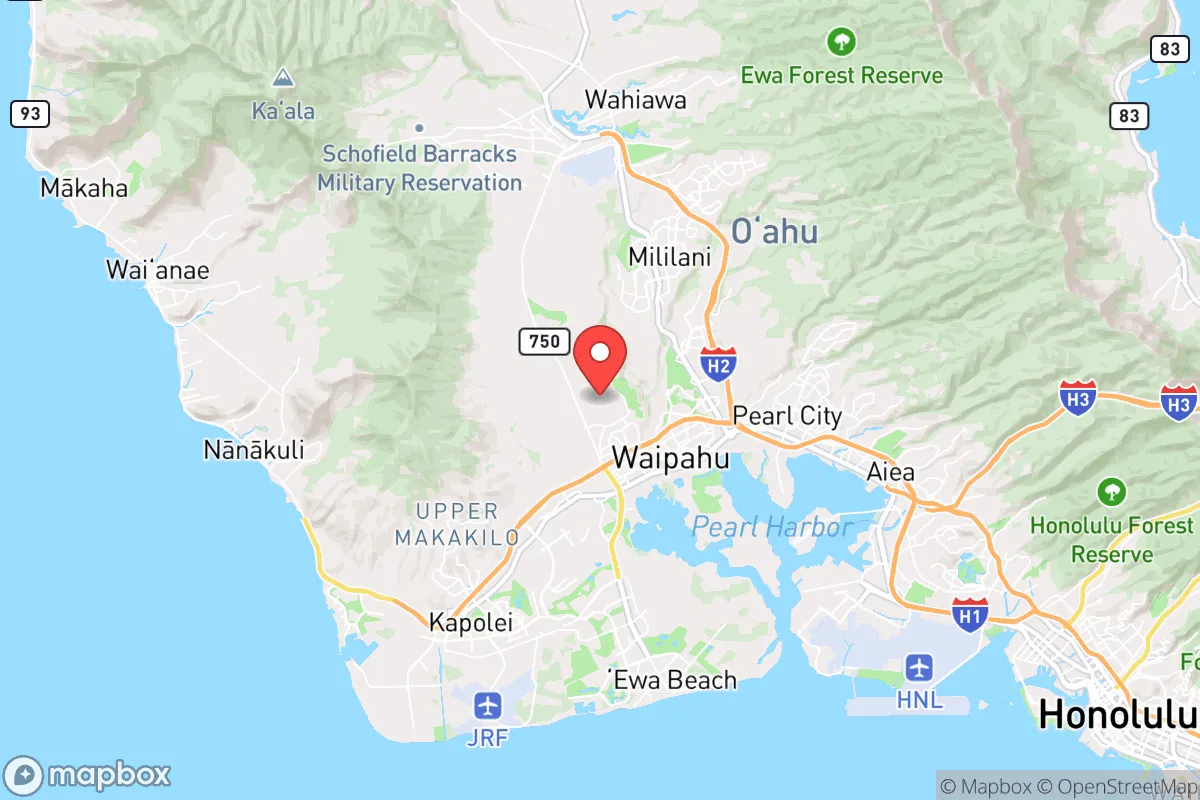
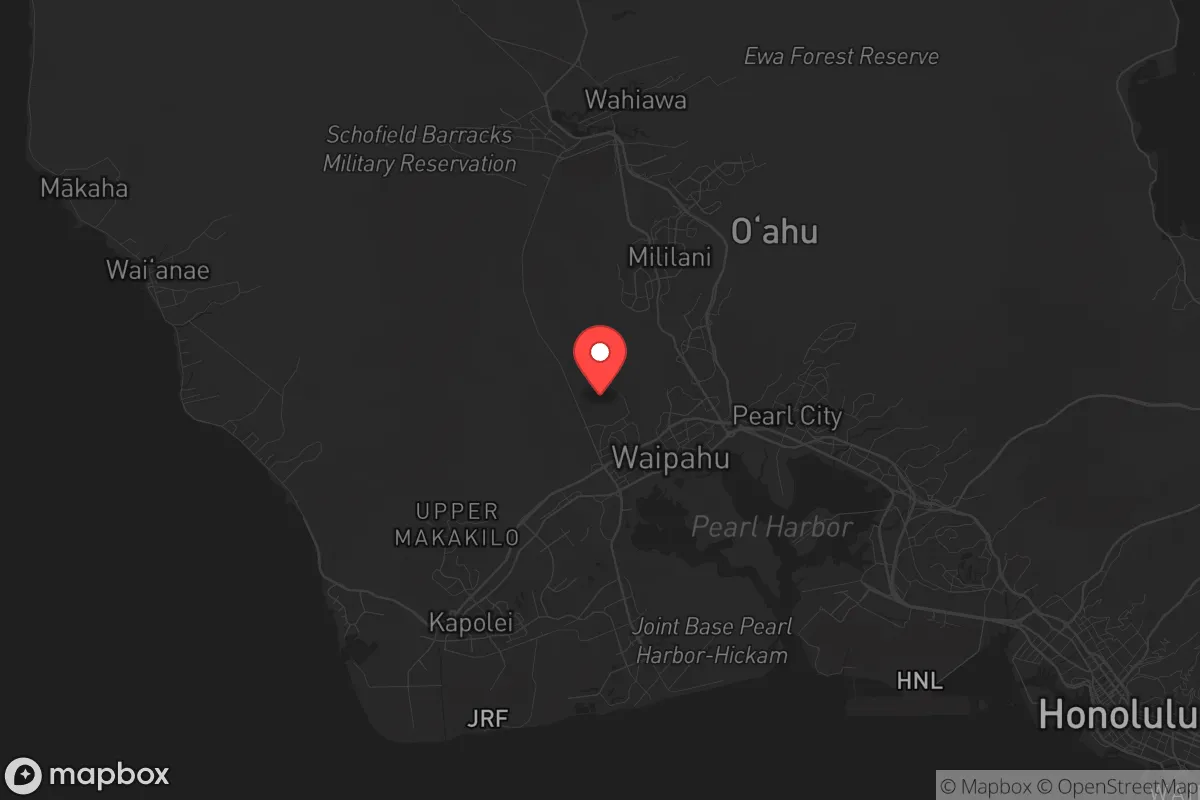
Photo: Wikipedia
Political ClimatePolitical Climate in Royal Kunia, HI
District shown is the primary district for this city’s centroid. Cities may span multiple districts.
Local Political AnalysisPolitical Analysis of Royal Kunia, HI
Royal Kunia, Hawaii, sits in a district with a Cook PVI of D+12, meaning it leans heavily Democratic, but that number doesn't tell the whole story for folks who've been here a while. The political climate has shifted noticeably over the last decade, moving from a more moderate, live-and-let-live vibe toward a progressive agenda that feels increasingly top-down. If you're looking at this area, you need to understand that the local government's appetite for regulation and social engineering has grown, and it's starting to chafe against the traditional values of self-reliance and personal freedom that many residents still hold dear.
How it compares
Compared to nearby areas, Royal Kunia is a bit of a mixed bag. Head west toward Kapolei or Ewa Beach, and you'll find a similar Democratic lean, but with a stronger military and working-class influence that keeps things more grounded. Drive east into Honolulu proper, and you're in the heart of the progressive machine—think stricter zoning, higher taxes, and more aggressive environmental mandates. The contrast is real: in Royal Kunia, you still get a sense of neighborhood autonomy, but the county and state policies coming out of Honolulu are increasingly uniform. Places like Mililani or Waipahu, just a few miles away, have a slightly more conservative undercurrent, especially on fiscal issues and property rights, but they're being dragged along by the same political tide.
What this means for residents
For those living in Royal Kunia, the practical impact shows up in your wallet and your daily choices. Property taxes have crept up, and new development comes with a laundry list of environmental and affordable housing mandates that drive up costs for everyone. The county's push for "complete streets" and transit-oriented development sounds nice, but it often means less parking, more congestion, and a feeling that your car—and your freedom to move—is being treated as a problem to be solved. There's also a growing concern about school curriculum and local ordinances that prioritize ideological goals over practical outcomes. Long-time residents remember when the county was more hands-off, and the shift toward micromanagement feels like a slow erosion of the personal responsibility that made this community work.
Culturally, Royal Kunia still holds onto a strong sense of ohana and neighborly trust, but the policy landscape is pushing in a different direction. You'll see more local ballot initiatives about plastic bans, rental caps, and energy mandates that sound good on paper but add layers of bureaucracy to everyday life. The political trajectory here is concerning for anyone who values limited government and individual rights—the D+12 rating isn't just a number; it's a mandate for the kind of progressive overreach that makes you wonder how much longer the old Hawaii spirit of "talk story and work it out" can survive. If you're considering a move here, keep an eye on local elections and zoning board meetings—that's where the real battles over your freedoms are being fought.

State Political ClimatePolitical Climate in Hawaii
State Political AnalysisPolitical Environment in the State
Hawaii has been a one-party Democratic stronghold for decades, with Democrats holding supermajorities in both legislative chambers and every statewide office since 2010. The state’s overall partisan lean is roughly D+20 in presidential elections, but that masks a growing conservative undercurrent, especially among Native Hawaiians and rural residents who feel left behind by Honolulu’s progressive agenda. Over the last 10-20 years, the trajectory has been a slow but steady shift left on social issues, even as economic frustrations have fueled a quiet, populist backlash that could reshape the map in the next decade.
Urban vs. rural divide
The political map of Hawaii is starkly divided between the urban core of Honolulu on Oahu and the rest of the state. Honolulu and its suburbs—like Waikiki, Kailua, and Mililani—are the engine of Democratic dominance, delivering 70%+ margins for progressive candidates. These areas are dense, diverse, and heavily influenced by unionized government workers, tourism industry employees, and a growing tech-adjacent workforce. In contrast, the neighbor islands—Hawaii Island (the Big Island), Maui, and Kauai—are more politically mixed. Rural districts like Puna on the Big Island and Hana on Maui have pockets of libertarian-leaning independence, while Kona and Waimea on the Big Island have seen Republican gains in recent cycles. The 2022 gubernatorial race saw Republican candidate Duke Aiona win Hawaii County (the Big Island) by a narrow margin, a sign that the rural-urban gap is widening. The North Shore of Oahu remains a unique swing area—agricultural, surf-oriented, and skeptical of Honolulu’s urban policies.
Policy environment
Hawaii’s policy environment is among the most progressive in the nation, but it comes with a heavy price tag. The state has the highest combined state and local tax burden in the country, driven by a 4% general excise tax (applied to nearly all goods and services) and some of the highest property taxes on investment properties. There is no state income tax on military pensions, but all other income is taxed at progressive rates up to 11%. Education policy is dominated by a single statewide school district, which critics argue stifles local control and innovation. The state’s public school system ranks near the bottom nationally in test scores, yet per-pupil spending is above average—a classic case of bureaucratic bloat. Healthcare is heavily regulated, with a state-run insurance exchange and strict certificate-of-need laws that limit competition. Election laws are relatively open: same-day voter registration, no-excuse absentee voting, and automatic voter registration have been implemented since 2020. However, the state’s gun laws are among the strictest in the country, requiring permits to purchase, registration of all firearms, and a ban on assault weapons and high-capacity magazines. The 2022 passage of Act 207 further restricted open carry and strengthened red-flag laws, which many conservatives view as an erosion of Second Amendment rights.
Trajectory & freedom
Hawaii is becoming less free by nearly every measure tracked by the Cato Institute’s Freedom in the 50 States index, which ranks the state 47th overall. Recent legislation has expanded government control in several areas. The 2023 Act 2 (the “Safe Spaces Act”) criminalized the carrying of firearms in a broad range of “sensitive places,” including parks, beaches, and public transit, effectively gutting the state’s already weak concealed carry regime. In education, the 2021 passage of Act 51 mandated that all public schools adopt ethnic studies curricula and implement “culturally responsive” teaching standards, which critics argue prioritize ideology over academics. Parental rights took a hit with the 2022 Act 208, which removed the requirement for parental notification when a minor seeks an abortion. On the economic front, the 2023 Act 10 raised the minimum wage to $18 by 2028, a move that small business owners warn will accelerate the exodus of local jobs to the mainland. Property rights are also under pressure: the state’s Land Use Commission has broad authority to rezone agricultural land for development, but recent decisions have favored conservation over housing, exacerbating the affordability crisis. The one bright spot for conservatives was the 2023 defeat of a proposed “wealth tax” on high-net-worth individuals, which failed in committee after fierce opposition from the business community.
Civil unrest & political movements
Hawaii has a history of organized activism, but it’s often more about local issues than national partisan battles. The Thirty Meter Telescope (TMT) protests on Mauna Kea from 2015-2019 were a major flashpoint, drawing Native Hawaiian sovereignty activists, environmentalists, and libertarians who opposed government overreach. The movement was largely peaceful but revealed deep distrust of state institutions. More recently, the 2023 Maui wildfires sparked protests over government response and land-use policies, with some residents accusing officials of prioritizing tourism over local safety. On the right, the Hawaii Republican Party has been revitalized by a coalition of fiscal conservatives, gun rights advocates, and Native Hawaiian sovereignty groups who oppose the Democratic establishment. The Hawaii Firearms Coalition has been active in lawsuits challenging the state’s gun laws, including a 2024 case that successfully overturned the ban on carrying firearms in state parks. Immigration politics are less heated than on the mainland, but the state’s sanctuary policies—which limit cooperation with federal immigration enforcement—have drawn criticism from conservatives who argue they strain public resources. Election integrity has been a minor issue, with the state’s all-mail voting system (implemented in 2020) drawing scrutiny from both parties over ballot security, though no major scandals have emerged.
Projection
Over the next 5-10 years, Hawaii’s political trajectory is likely to be shaped by two forces: demographic change and economic pressure. The state’s population has been declining since 2016, driven by high costs and limited opportunity, and the people leaving are disproportionately middle-class families and young professionals—the very voters who might lean conservative. In-migration is mostly from mainland retirees and remote workers, who tend to be more liberal. This suggests the Democratic majority will hold, but the rural-urban divide will deepen. The Big Island and Maui could see more competitive races, especially if the state’s housing crisis continues to push residents to cheaper areas. The 2026 gubernatorial election will be a key test: if Republicans can field a credible candidate who focuses on economic freedom and local control, they could win back the governor’s office for the first time since 2010. However, the legislature is likely to remain firmly Democratic, meaning any conservative governor would face a hostile majority. The biggest wildcard is the Native Hawaiian sovereignty movement, which could fracture the Democratic coalition if it gains traction as a third-party force. A new resident moving in now should expect a state that is politically stable but increasingly polarized, with a government that is responsive to organized activism but resistant to change.
Bottom line for a new resident: If you value low taxes, gun rights, and local control, Hawaii will be a challenging place to live. The state’s progressive policies are deeply entrenched, and the cost of living is punishing. However, if you’re willing to engage in local politics—especially on the neighbor islands—you’ll find a community of like-minded conservatives who are fighting to preserve what’s left of personal freedom. The key is to choose your location wisely: avoid Honolulu’s core and look to rural districts like Puna, Kona, or Waimea, where the political climate is more balanced and the lifestyle is less regulated. Be prepared for high taxes and strict regulations, but also for a community that values independence and self-reliance—qualities that are still alive in Hawaii’s rural heartland.
* Values derived from national, state, county, city and local statistics and may differ in a specific area. Last updated: 2026-04-24T11:00:40.000Z
Narrative content on this page is AI-generated and may contain mistakes. Verify any details that matter before acting on them.
ReloMaps may earn a commission from affiliate links at no extra cost to you.

