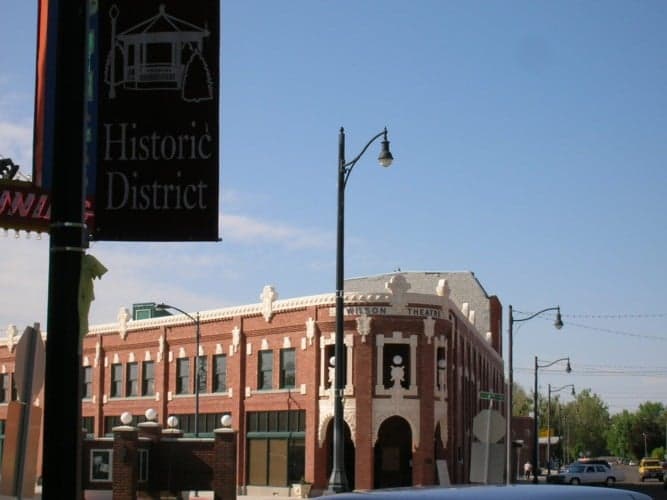
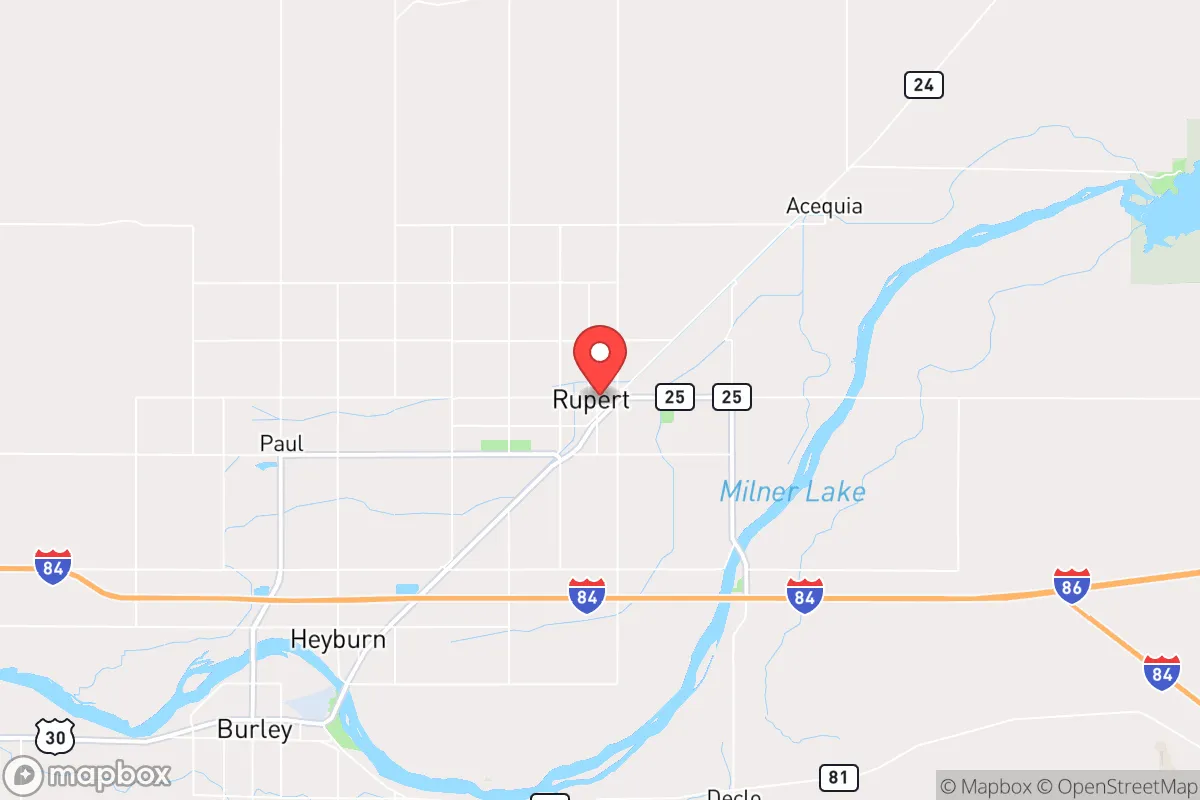
Photo: Wikipedia
Personal Sovereignty in Rupert, ID
Moderate friction. Expect trade-offs in some aspect of personal liberty and independence.
What does Personal Sovereignty tell us?
Personal Sovereignty measures your capacity for self-reliance and independence with minimal government friction. Higher scores mean fewer barriers between you and the way you want to live... but it assumes you have the space you need and good neighbors.
What does this tell us?
Personal Sovereignty measures your capacity for self-reliance and independence with minimal government friction. Higher scores mean fewer barriers between you and the way you want to live... but it assumes you have the space you need and good neighbors.
State Policy
Energy independence: Importer (25% of energy produced in-state)
Personal Liberty
Homesteading

Personal Liberty Analysis
Rupert, Idaho, offers a personal sovereignty environment that stands out sharply from the coastal and urban norms many relocating conservatives are fleeing. Located in Minidoka County, this small agricultural city of roughly 6,000 people sits in a state that has deliberately structured its laws to maximize individual autonomy, minimize government overreach, and preserve the right to self-reliance. For those approaching relocation from a survivalist or prepper mindset, Rupert represents a place where the legal and cultural framework supports—rather than undermines—the ability to live on your own terms, provided you understand the specific boundaries of local zoning and state preemption.
Tax burden and regulatory posture: How Idaho keeps government off your back
Idaho’s tax and regulatory environment is among the most favorable in the nation for those seeking to minimize government intrusion into their finances and daily operations. The state imposes a flat income tax rate of 5.8% as of 2025, with ongoing legislative pressure to reduce it further, and no state-level estate or inheritance taxes. Property taxes in Minidoka County are notably low—averaging around 0.6% of assessed value—which is roughly half the national average and significantly less than what you’d face in states like California, Illinois, or New York. Sales tax in Rupert sits at 6%, with no local add-ons, and essential items like groceries and prescription drugs are exempt. The regulatory posture in Idaho is explicitly pro-business and pro-property rights; the state has right-to-work laws, minimal occupational licensing burdens compared to the West Coast, and a state government that regularly passes legislation to preempt local ordinances that would restrict land use or firearm rights. For the prepper, this means fewer layers of bureaucratic approval needed to build a shop, store supplies, or run a small-scale agricultural operation. The state’s constitutional carry law (effective July 2016) is a direct reflection of this philosophy—no permit required to carry a concealed firearm, which signals a baseline respect for personal defense that many other states have abandoned.
Self-defense and gun law specifics: Constitutional carry and castle doctrine in practice
Idaho’s firearm laws are among the most robust in the nation for those prioritizing personal security and the right to defend themselves without government permission. Rupert residents benefit from permitless concealed carry for anyone 18 or older who can legally possess a firearm, meaning no training course, background check beyond the purchase, or government-issued license is required to carry a loaded handgun in public. The state’s castle doctrine is expansive: there is no duty to retreat in any place where you have a legal right to be, and deadly force is presumed justified if an intruder unlawfully enters your home, vehicle, or occupied structure. Stand-your-ground protections apply statewide, including in public spaces. Magazine capacity is unrestricted, and the state has preempted local governments from enacting their own gun control ordinances—so Rupert’s city council cannot ban certain firearms or impose waiting periods. For the survivalist, this legal framework means you can stockpile ammunition, own standard-capacity rifles, and train without fear of sudden legislative bans. The only notable restriction is that private sales between individuals do not require a background check, but purchasing from a licensed dealer still triggers a NICS check. Idaho also recognizes firearm suppressors and short-barreled rifles under state law, aligning with the prepper’s desire for discreet and efficient tools. The cultural attitude in Minidoka County is overwhelmingly pro-Second Amendment; local law enforcement is not hostile to armed citizens, and the sheriff’s office has historically supported constitutional carry.
Self-reliance and homesteading viability: Lot sizes, zoning, and off-grid feasibility
Rupert’s zoning and land-use policies make it a viable location for those pursuing a self-reliant lifestyle, though the specifics depend heavily on whether you buy inside city limits or in the surrounding county. Within Rupert proper, residential lots typically range from 0.25 to 0.5 acres, and city zoning allows for backyard gardens, small livestock like chickens (subject to a permit and setback requirements), and rainwater collection for non-potable uses. However, the city code restricts larger animals like goats or pigs, and off-grid living—meaning no connection to municipal water or sewer—is generally not permitted within city limits due to health and safety ordinances. The real opportunity for homesteaders lies in the unincorporated areas of Minidoka County, where lot sizes of 1 to 5 acres are common and relatively affordable (raw land can be found for $3,000–$8,000 per acre as of 2025). County zoning is far more permissive: you can keep horses, cattle, and poultry without special permits; build a detached workshop or storage shed without extensive red tape; and install a septic system and private well with standard county health department approval. Off-grid solar is legal and increasingly common, though net metering with the local utility (Idaho Power) is available if you want grid backup. The county does not enforce building codes in most rural areas, meaning you can construct your own structures without government inspection—a major advantage for the prepper who values autonomy over aesthetics. Water rights are a critical consideration: Idaho follows prior appropriation doctrine, so you must file for a water right if you plan to use groundwater for irrigation beyond domestic use. The Snake River aquifer provides reliable water, but the permitting process is something to research before buying land.
Personal liberties: Parental rights, medical autonomy, speech, and property
Idaho has positioned itself as a stronghold for parental rights and medical freedom, which directly appeals to those concerned about government overreach into family and health decisions. The state’s Parental Rights in Education Act (2023) requires schools to obtain parental consent before administering surveys or providing instruction on sexual orientation or gender identity, and it prohibits school personnel from encouraging students to keep secrets from parents. Medical autonomy is protected by Idaho’s Health Care Freedom Act, which prohibits any law that compels individuals to purchase health insurance or participate in a government-run health system. The state also has some of the strongest vaccine exemption laws in the country: Idaho allows both medical and religious exemptions for school-required vaccinations, and there is no state mandate for COVID-19 vaccines for any age group. For the prepper, this means you can refuse medical interventions without losing access to public services or facing employment discrimination. Free speech protections are robust; Idaho has no hate speech laws that criminalize political or religious expression, and the state’s constitution explicitly protects the right to assemble and petition the government. Property rights are further secured by Idaho’s private property protection act, which requires the government to compensate landowners for any regulatory taking that reduces property value by more than 20%. This makes it difficult for local governments to impose restrictive zoning that would prevent you from using your land for self-sufficient purposes. The only notable limitation is that Idaho does not have a state-level right-to-farm law as strong as some Midwestern states, so if you buy near existing farmland, be prepared for noise, dust, and chemical applications that are legally protected agricultural practices.
Overall, Rupert and its surrounding county offer a level of personal sovereignty that is increasingly rare in the United States. The combination of low taxes, permissive gun laws, flexible rural zoning, and strong protections for parental and medical autonomy creates an environment where a survivalist or prepper can operate with minimal government interference. Compared to states like Oregon, Washington, or Colorado—where property taxes are higher, gun laws are tightening, and local governments routinely restrict land use and personal choices—Idaho’s Minidoka County feels like a deliberate refuge. The trade-offs are real: limited healthcare infrastructure, harsh winters, and a remote location that requires self-sufficiency in emergencies. But for those who prioritize freedom over convenience, Rupert represents a place where the law is on your side, not an obstacle to be overcome.

* Values derived from national, state, county, city and local statistics and may differ in a specific area. Last updated: 2026-04-21T09:13:53.000Z
Narrative content on this page is AI-generated and may contain mistakes. Verify any details that matter before acting on them.
ReloMaps may earn a commission from affiliate links at no extra cost to you.

