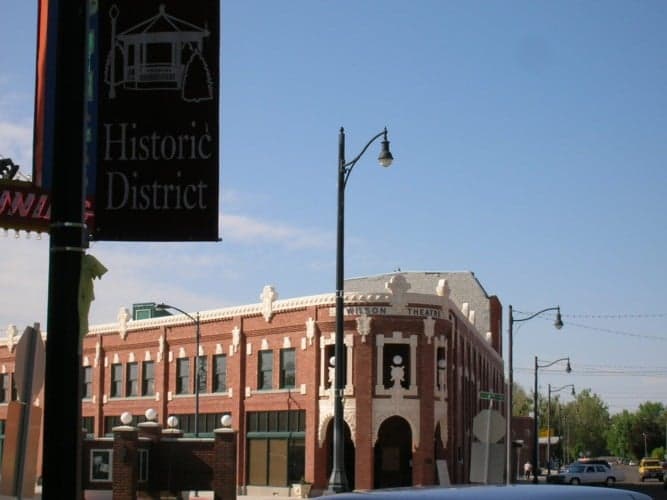
Photo: Wikipedia
Political ClimatePolitical Climate in Rupert, ID
District shown is the primary district for this city’s centroid. Cities may span multiple districts.
Local Political AnalysisPolitical Analysis of Rupert, ID
Rupert, Idaho, sits in the heart of Minidoka County, and if you’re looking for a place that’s still holding the line on traditional values, this is it. The area’s Cook PVI of R+13 tells you the basics, but the real story is deeper—this community has been reliably conservative for generations, and while the national winds have shifted left, Rupert has stayed remarkably steady. You won’t find the kind of progressive drift here that’s crept into places like Boise or even Twin Falls; folks here still believe in local control, the Second Amendment, and keeping government out of your personal business.
How it compares
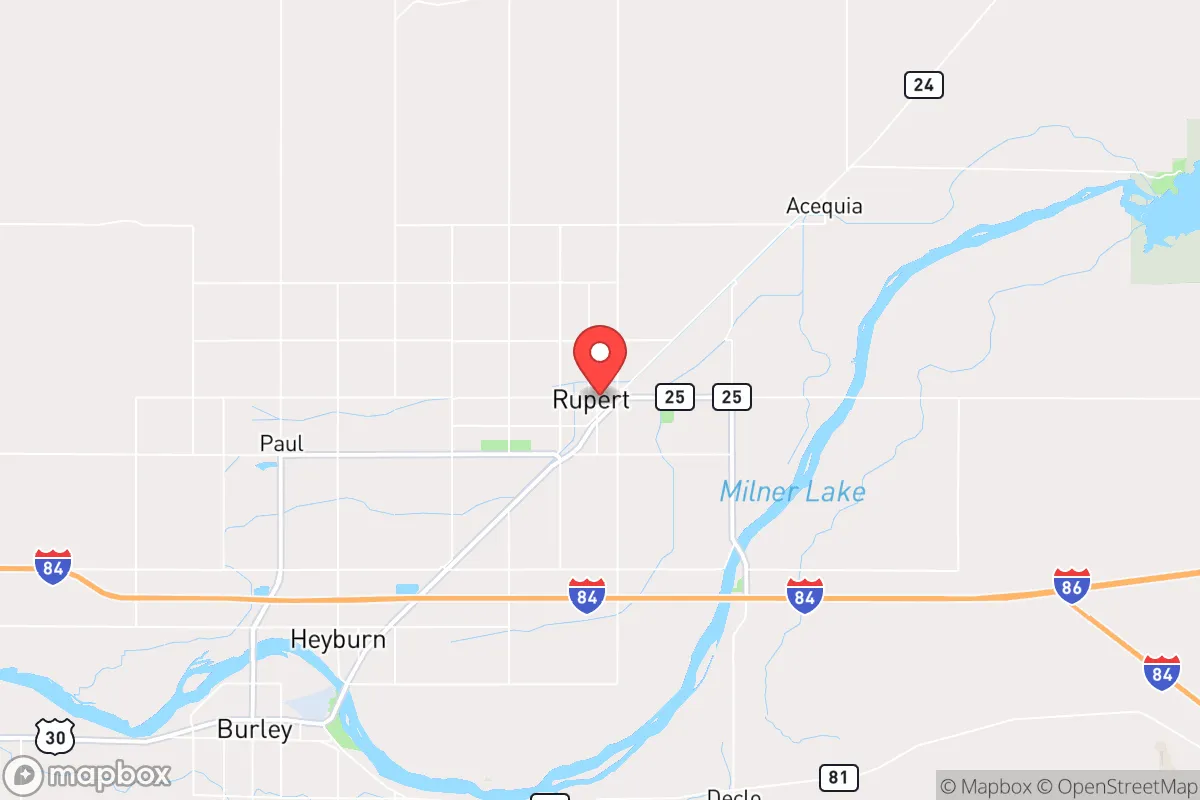
Drive an hour west to Twin Falls, and you’ll notice a different energy—more transplants, more chain stores, and a political scene that’s starting to show cracks in the conservative foundation. Rupert, by contrast, feels like a time capsule of what Idaho used to be. The surrounding towns—Burley, Heyburn, Paul—all lean right, but Rupert is the anchor. While Minidoka County as a whole votes red by wide margins, Rupert itself is the most consistent, with local elections often decided in the Republican primary. The contrast with places like Pocatello or Moscow, where university influence has pushed things left, is night and day. If you’re worried about government overreach into your freedoms—whether it’s vaccine mandates, land-use restrictions, or school curriculum battles—Rupert is a place where those fights are still being won by the side of common sense.
What this means for residents
For the people who live here, the political climate means a lot of things you don’t have to think about twice. You can carry a firearm without worrying about a patchwork of local ordinances. Your property rights are respected—no one’s coming for your land to build a bike lane or a solar farm you didn’t ask for. The schools still teach the basics without pushing social agendas, and the county commission isn’t looking to impose mask mandates or lockdowns. That said, there’s a quiet concern among long-time residents that the growth pressure from the Magic Valley could bring in folks who don’t share those values. The potato processing plants and dairy operations keep the economy humming, but they also attract workers from states where progressive ideas are the norm. So far, Rupert has absorbed that without changing its character, but it’s something to keep an eye on.
Culturally, Rupert is still a place where the church potluck is the social calendar and the county fair is the big event. There’s no tolerance for the kind of government overreach that tries to tell you how to raise your kids or run your business. The local paper, the Minidoka County News, still runs editorials that would make a Portland journalist’s head spin. If you’re looking for a community that values personal responsibility over government programs, and where the phrase “live and let live” still means something, Rupert is about as solid as it gets. The trajectory is stable, but only if the people here stay engaged. The next few years will tell whether the conservative backbone holds or starts bending under outside pressure.

State Political ClimatePolitical Climate in Idaho
State Political AnalysisPolitical Environment in the State
Idaho has long been one of the most reliably conservative states in the nation, with a Republican trifecta controlling the governorship, legislature, and congressional delegation for decades. The state’s partisan lean has only deepened over the past 20 years, driven by a surge of conservative transplants from California, Washington, and Oregon seeking lower taxes, less regulation, and a culture that aligns with traditional values. In 2024, Donald Trump carried Idaho by over 30 points, and Republicans hold supermajorities in both chambers of the state legislature. The dominant coalition is a mix of rural libertarians, evangelical Christians, and suburban families who prioritize fiscal discipline, gun rights, and parental control over education.
Urban vs. rural divide
The political map of Idaho is starkly divided between its few urban centers and the vast rural expanse. The Treasure Valley, anchored by Boise, Meridian, and Nampa, is the state’s population hub and has become a battleground within the Republican primary. Boise itself has trended slightly more moderate, with Ada County voting about 55% Republican in 2024, down from 60% a decade ago. However, the surrounding suburbs like Eagle and Star remain deeply red, fueled by families fleeing left-leaning states. The real engine of Idaho’s conservatism is the rural interior—counties like Boundary, Lemhi, and Oneida routinely vote 80-90% Republican. The Idaho Panhandle, including Coeur d’Alene and Post Falls, has seen an influx of conservative refugees from Washington and Oregon, flipping Kootenai County from competitive to solidly red. The only blue dot of note is Blaine County (home to Sun Valley), which votes Democratic by wide margins due to its wealthy, transplant-heavy ski resort economy.
Policy environment
Idaho’s policy environment is a model of small-government conservatism. The state has a flat income tax rate of 5.8% (down from 6.5% in 2023), no estate tax, and property taxes that are among the lowest in the West. The legislature has aggressively cut regulations, particularly in housing and energy, to encourage development. Education policy is a flashpoint: the state passed the Idaho Parental Rights Act in 2024, which requires schools to notify parents of any curriculum involving gender identity or sexual orientation and allows parents to opt their children out. School choice is limited but growing, with a new education savings account program for special-needs students. Healthcare remains a concern—Idaho rejected Medicaid expansion initially but later accepted it via ballot initiative, though the legislature has since added work requirements. Election laws are strict: voter ID is required, same-day registration is not allowed, and the state has banned private funding of elections. The legislature also passed a law in 2023 making it a felony for election officials to accept out-of-state donations for election administration.
Trajectory & freedom
Idaho is on a trajectory of expanding personal freedom, particularly in areas of gun rights, parental rights, and medical autonomy. The state has constitutional carry (permitless concealed carry) and in 2024 passed the Second Amendment Preservation Act, which prohibits state law enforcement from enforcing any federal gun laws that infringe on the Second Amendment. On medical freedom, Idaho passed the Medical Freedom Act in 2023, banning vaccine mandates by private employers and government entities. The legislature also outlawed nearly all abortions in 2020 via a trigger law, with no exceptions for rape or incest—only to save the mother’s life. Property rights have been strengthened with a 2024 law limiting the use of eminent domain for private economic development. However, there are concerning trends: the influx of new residents from blue states is slowly shifting the culture in Boise and the Treasure Valley, leading to more local zoning battles and school board fights over critical race theory and LGBTQ curriculum. The state’s libertarian streak remains strong, but the legislature has shown a willingness to use government power to enforce conservative social norms, which some residents see as overreach.
Civil unrest & political movements
Idaho has a history of organized political movements on both sides, but the right-wing activism is far more visible. The Idaho Freedom Foundation is a powerful conservative think tank that has successfully pushed for tax cuts, school choice, and anti-vaccine legislation. The People’s Rights organization, founded by Ammon Bundy, has a strong presence in the rural north, particularly around Bonners Ferry and Sandpoint, where they have clashed with local health departments over COVID-19 mandates. Immigration politics are heated: the legislature passed a bill in 2024 requiring local law enforcement to cooperate with ICE, and there is a growing movement to declare Idaho a “sanctuary state” for the unborn, not for illegal immigrants. Election integrity remains a hot-button issue, with the legislature creating a special committee in 2023 to investigate the 2020 election, though no widespread fraud was found. Protests are rare but do occur—in 2020, Boise saw Black Lives Matter demonstrations that were met with counter-protests from armed militia groups. The most visible flashpoint for a new resident would be the constant presence of “Don’t Tread on Me” flags, pro-life billboards, and campaign signs for conservative candidates even in off-years.
Projection
Over the next 5-10 years, Idaho will likely become even more conservative in its state-level policies, but the cultural battle will intensify in the Treasure Valley. The state is projected to grow by another 300,000 people by 2030, with most settling in Ada and Canyon counties. This will put pressure on housing, infrastructure, and schools, leading to more local government intervention that could frustrate libertarian-leaning residents. The legislature will continue to pass preemption laws to block progressive city ordinances on housing, zoning, and environmental regulations. The biggest wild card is the Idaho Republican Party itself, which is split between the establishment wing and the more hardline Freedom Caucus. If the Freedom Caucus gains full control, expect even more aggressive legislation on school choice, tax elimination, and federal nullification. For a new resident, the state will remain a haven for conservative values, but the cost of living will rise, and the political fights will shift from state-level to local school boards and city councils.
For a conservative family or individual moving to Idaho, the bottom line is this: you will find a state that respects your gun rights, your parental authority, and your wallet. The government is generally on your side, but the rapid growth means you’ll need to get involved locally to keep it that way. The rural areas offer the most freedom, but the jobs are in the Treasure Valley. If you’re looking for a place where your values are the norm and the government stays out of your life, Idaho is one of the last best places in the West. Just be prepared for the traffic and the Californians.
* Values derived from national, state, county, city and local statistics and may differ in a specific area. Last updated: 2026-04-21T09:13:53.000Z
Narrative content on this page is AI-generated and may contain mistakes. Verify any details that matter before acting on them.
ReloMaps may earn a commission from affiliate links at no extra cost to you.

