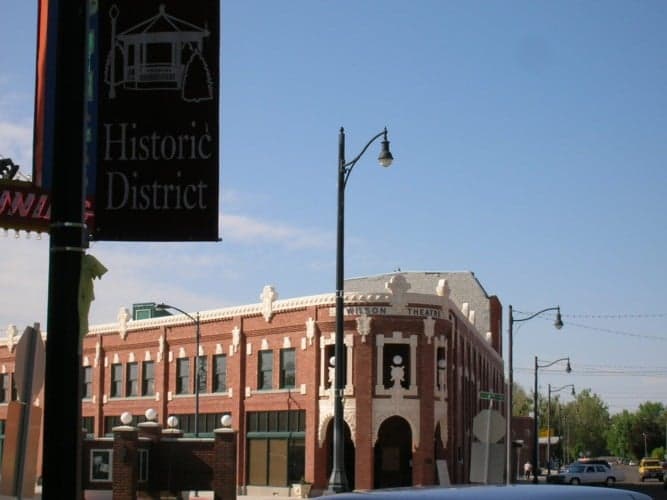
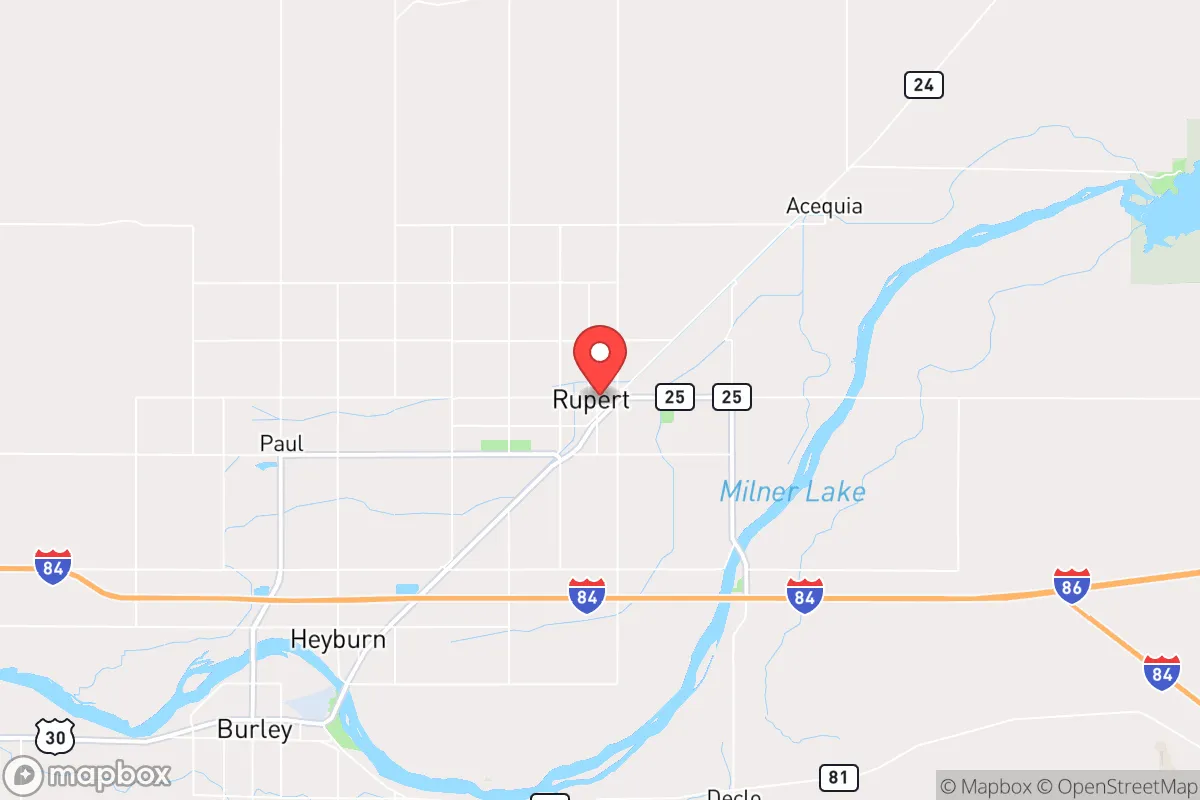
Photo: Wikipedia
Demographics of Rupert, ID
Affluence Level in Rupert, ID
A below-average socioeconomic profile. Incomes, home values, and educational attainment trail the U.S., with higher poverty and unemployment.
People of Rupert, ID
The people of Rupert, Idaho, today form a community defined by its agricultural roots and a significant demographic shift: the city is now majority-Hispanic at 53.6%, with a white population of 45.8%. With a population of 6,157 and a notably low college attainment rate of 8.1%, Rupert is a working-class, family-oriented town where Spanish is widely spoken and the local economy revolves around farming, food processing, and small businesses. The city’s identity is a blend of its original Mormon pioneer heritage and a newer, predominantly Mexican-American culture, creating a community that is both traditional and evolving.
How the city was settled and grew
Rupert was founded in 1905 as a planned community under the Carey Act, a federal land reclamation program that brought irrigation to the arid Snake River Plain. The original settlers were predominantly white, Mormon families from Utah and the Midwest, drawn by the promise of affordable farmland and a cooperative irrigation system. These pioneers built the city’s core around Historic Downtown Rupert, centered on 8th Street, where the Minidoka County Courthouse and early commercial buildings still stand. The first wave of settlers established small family farms growing sugar beets, potatoes, and alfalfa, with the Amalgamated Sugar Company factory (built in 1916) becoming the town’s economic anchor. A second wave arrived during the Great Depression, when Dust Bowl refugees from Oklahoma and Texas—many of them also white and Protestant—settled in the West End neighborhood, working as farm laborers and in the sugar beet fields. By 1950, the population was nearly 100% white, with a strong Mormon majority shaping the town’s social and political life.
Modern era (post-1965)
The post-1965 period brought the most profound change to Rupert’s population, driven by the demand for agricultural labor. The Immigration and Nationality Act of 1965 opened the door for increased immigration from Latin America, and by the 1970s, Mexican and Mexican-American workers began arriving in large numbers to work in the sugar beet, potato, and dairy industries. These families initially settled in the South Side neighborhood, near the railroad tracks and the Amalgamated Sugar plant, in modest housing often provided by employers. Over the next three decades, the Hispanic population grew steadily, and by the 2000s, it had become a majority. The East Rupert area, along Highway 24, saw the development of newer subdivisions and mobile home parks that attracted second- and third-generation Hispanic families seeking homeownership. Today, the Hispanic community is not a transient labor force but a settled population with deep roots: many children are U.S.-born, and Spanish-language churches, tiendas, and taquerias line the main streets. The white population, meanwhile, has aged and declined, with many younger white residents moving to larger cities like Twin Falls or Boise for education and employment. The North Side neighborhood, near the Rupert Golf Course, remains predominantly white and older, while the Central District around the high school is more mixed.
The future
Rupert’s demographic trajectory points toward continued Hispanic growth and a further decline in the white share of the population. The foreign-born share stands at 10.6%, but the U.S.-born Hispanic population is much larger and younger, with a median age likely in the mid-20s compared to the white population’s late 40s. This means natural increase—more births than deaths—will drive Hispanic growth for at least another generation. The city is not tribalizing into distinct enclaves; rather, it is homogenizing into a Hispanic-majority working-class community, with the remaining white residents concentrated in older, more established neighborhoods. The low college attainment rate (8.1%) suggests that Rupert will remain a blue-collar town, with limited in-migration of professionals or retirees. The next 10-20 years will likely see the Hispanic share rise to 65-70%, with the white population shrinking to around 30%. The city’s schools, already majority-Hispanic, will continue to reflect this shift, and local politics—currently dominated by conservative white Republicans—may gradually see more Hispanic representation.
For someone moving to Rupert now, the city offers a stable, family-oriented environment with a strong agricultural economy and a low cost of living. The community is becoming more uniformly Hispanic and working-class, with a culture that blends traditional American conservatism with Mexican-American values of family, faith, and hard work. New residents should expect a bilingual, bicultural setting where the old Mormon pioneer legacy is fading and a new, vibrant identity is taking shape.

* Values derived from national, state, county, city and local statistics and may differ in a specific area. Last updated: 2026-04-21T09:13:53.000Z
Narrative content on this page is AI-generated and may contain mistakes. Verify any details that matter before acting on them.
ReloMaps may earn a commission from affiliate links at no extra cost to you.

