Photo: Wikipedia
Demographics of Russellville, AR
Affluence Level in Russellville, AR
A below-average socioeconomic profile. Incomes, home values, and educational attainment trail the U.S., with higher poverty and unemployment.
People of Russellville, AR
Russellville, Arkansas, is a city of roughly 29,000 residents that blends a historic white Southern working-class base with a rapidly growing Hispanic community, now making up 18% of the population. The city’s character is rooted in its role as a regional industrial and educational hub, anchored by Arkansas Tech University and major employers like the Arkansas Nuclear One power plant. With a foreign-born population of 5.9% and a college attainment rate of 29.9%, Russellville is more diverse and educated than much of the surrounding Arkansas River Valley, yet remains predominantly white (69.5%) and politically conservative. The people here value stability, family, and a slower pace of life, with a noticeable divide between long-established neighborhoods and newer subdivisions absorbing in-migrants.
How the city was settled and grew
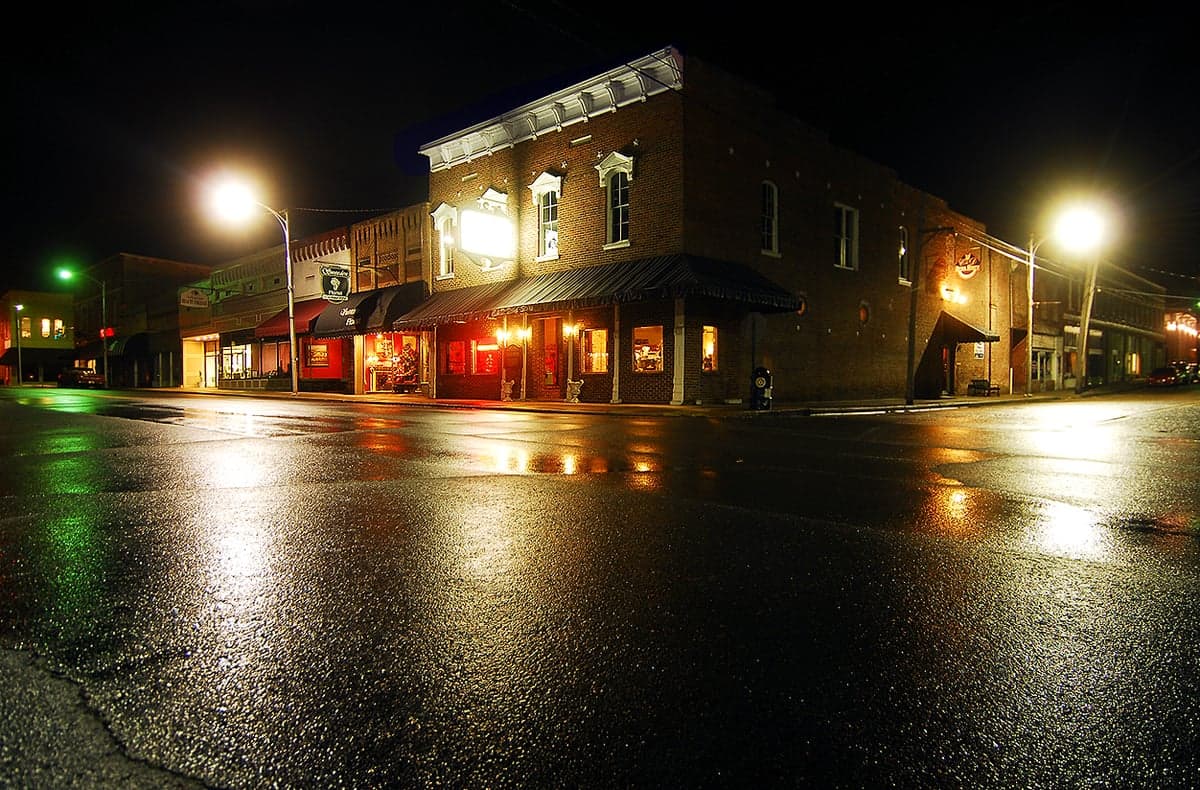
Russellville’s population history begins with its founding in the 1830s as a small trading post along the Arkansas River, but the first major wave of settlers arrived after the Civil War, drawn by the expansion of the Little Rock and Fort Smith Railroad in the 1870s. These early residents were overwhelmingly white families from the Upland South—Tennessee, Kentucky, and Missouri—who established farms and small businesses. The historic Downtown Russellville district, centered around Main Street and the railroad depot, became the commercial and social heart for these Anglo-Protestant settlers. A second wave came in the 1940s and 1950s with the construction of the Arkansas Nuclear One plant and the expansion of Arkansas Tech University (then Arkansas Polytechnic College), which brought engineers, educators, and skilled tradesmen from across the state and Midwest. These newcomers settled in the North Russellville neighborhoods near the university, building modest postwar homes that still define the area’s character. The Black population, which never exceeded 5% historically, concentrated in a small enclave near East 16th Street, a legacy of segregation-era housing patterns that persists today with 4.3% of the city’s residents identifying as Black.
Modern era (post-1965)
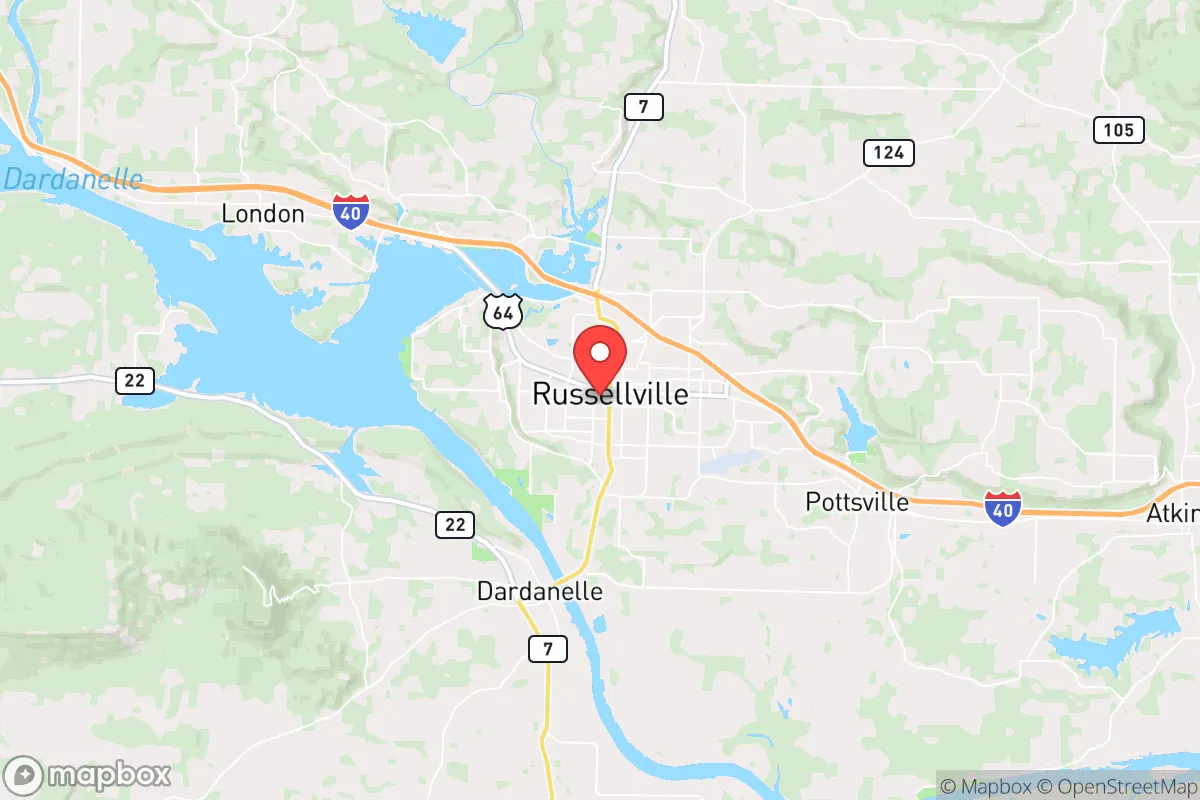
The post-1965 immigration reforms had a modest direct effect on Russellville, but the city’s demographic shift accelerated after 1990, driven by domestic in-migration and a surge in Hispanic residents. The Hispanic share grew from under 3% in 1990 to 18% by 2020, fueled by labor demand in poultry processing (Tyson Foods has a plant in nearby Danville) and construction during the 2000s housing boom. These families initially settled in West Russellville, an area west of Arkansas Avenue where older, affordable housing stock and proximity to industrial jobs created a natural gateway. Today, West Russellville has a visible Hispanic commercial corridor with tiendas and taquerias, though the population is now spreading into South Russellville near Highway 64 as families move into newer subdivisions. The East/Southeast Asian community (1.6%) is small but concentrated near the university, with many families connected to Arkansas Tech’s international programs or the medical sector at Saint Mary’s Regional Health System. The Indian-subcontinent population (0.3%) is negligible and largely tied to professional roles at the university or the nuclear plant. Meanwhile, white residents have suburbanized into Lakewood Estates and Pleasant View neighborhoods on the city’s eastern edge, creating a pattern of ethnic clustering rather than full integration. The Black population has remained stable at around 4%, with most families still residing in the East 16th Street corridor, though some have moved to newer subdivisions in the north.
The future
Russellville’s population is heading toward greater Hispanic plurality, with projections suggesting the Hispanic share could reach 25-30% by 2040, driven by both natural increase and continued migration for industrial and service jobs. The white population is aging and slowly declining in absolute numbers, as younger white families often leave for larger metros like Fayetteville or Little Rock. The city is not homogenizing; instead, it is tribalizing into distinct enclaves—West and South Russellville for Hispanic families, East Russellville for Black residents, and the eastern subdivisions for white professionals. The East/Southeast Asian and Indian communities are likely to remain small and tied to the university, with little growth outside of academic recruitment. For a conservative-leaning newcomer, this means moving into a city where the cultural and political center remains white and conservative, but where daily life increasingly involves Spanish-language signage and a more visible immigrant workforce. The next decade will test whether Russellville’s institutions—schools, churches, local government—can integrate these groups or whether the enclave pattern hardens.
For someone moving in now, Russellville is becoming a more diverse, working-class city with a stable industrial base and a growing Hispanic presence, but it remains a place where traditional Southern values and a low cost of living are the primary draws. The population is not shrinking or stagnating, but it is shifting in ways that will reshape neighborhoods and schools over the next generation. A newcomer should expect a community that is welcoming to families and conservative in politics, but one where the ethnic landscape is quietly transforming beneath the surface.

* Values derived from national, state, county, city and local statistics and may differ in a specific area. Last updated: 2026-04-21T07:16:39.000Z
Narrative content on this page is AI-generated and may contain mistakes. Verify any details that matter before acting on them.
ReloMaps may earn a commission from affiliate links at no extra cost to you.

