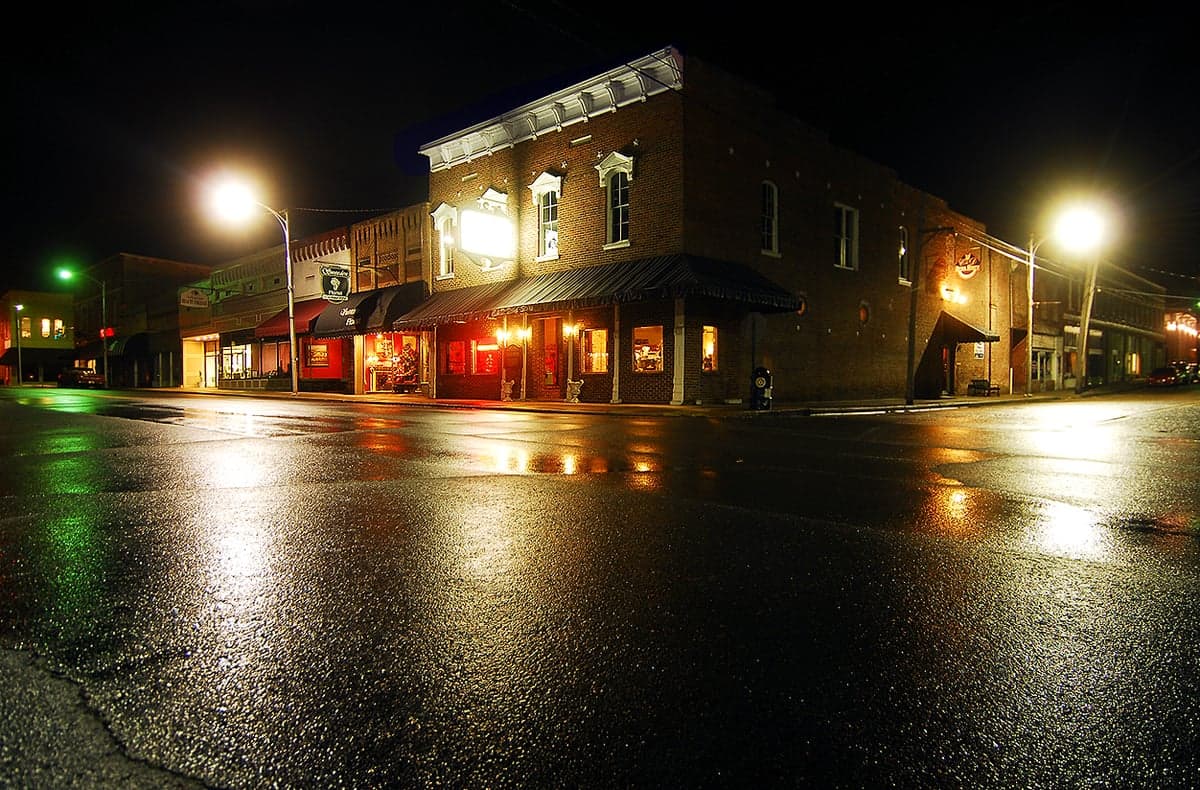
Photo: Wikipedia
Political ClimatePolitical Climate in Russellville, AR
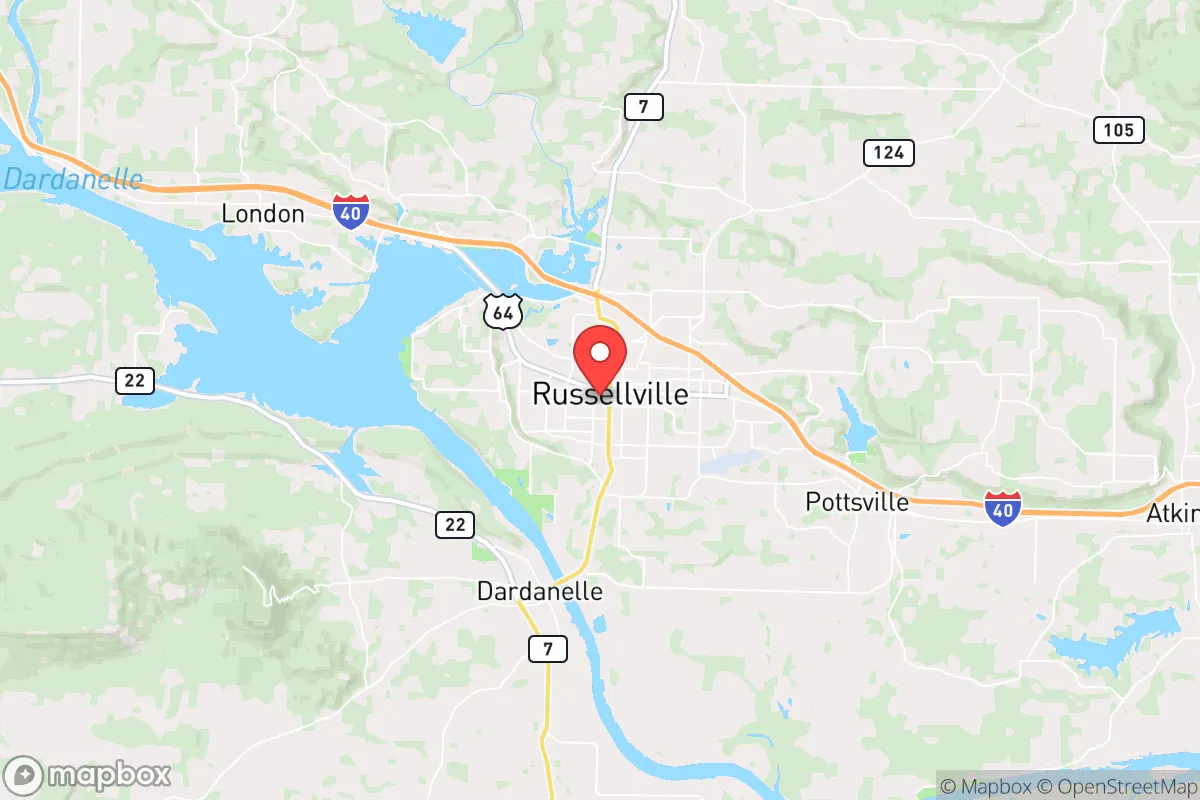
District shown is the primary district for this city’s centroid. Cities may span multiple districts.
Local Political AnalysisPolitical Analysis of Russellville, AR
Russellville is about as reliably conservative as it gets in Arkansas, and that’s not changing anytime soon. The Cook PVI clocks the area at R+20, meaning it votes about 20 points more Republican than the national average, and that’s been the baseline for as long as anyone can remember. In the 2024 presidential race, Pope County went for the GOP candidate by a comfortable double-digit margin, and local races rarely see a serious challenge from the left. If you’re looking for a place where traditional values and limited government aren’t just campaign slogans but the actual way of life, this is it.
How it compares
Drive thirty minutes east to Conway, and you’ll feel the shift—it’s a college town with a younger, more transient population that leans noticeably bluer, especially in city council races. Head south to Hot Springs, and you’ll find a more mixed bag, with tourism and a transient retirement crowd pulling the politics toward the center. But Russellville? It’s surrounded by rural, deeply conservative counties like Johnson and Yell, so the pressure to stay right-of-center is constant. The Arkansas Tech University campus does bring in some progressive voices, but they’re a minority here—most students come from conservative backgrounds themselves, and the faculty’s influence on local elections has been minimal. The real contrast is with Fayetteville, about an hour west, which has become a progressive stronghold with rent control debates and sanctuary city talk. Russellville residents watch that with a wary eye, seeing it as a cautionary tale of what happens when government overreach creeps into everyday life.
What this means for residents
For the average family or small business owner, the political climate here means fewer headaches from overregulation. Property taxes are low, zoning is minimal, and there’s no appetite for the kind of housing mandates or energy restrictions that are popping up in blue-leaning towns. The city council and county quorum court are stacked with folks who believe the best government is the one that stays out of your way—no mask mandates, no vaccine passports, no nonsense about banning gas stoves or telling you what you can plant in your yard. That said, it’s not a free-for-all. The local GOP is active and organized, and there’s a strong church presence that keeps social conservatism front and center. You’ll find school board meetings where parents show up in force to push back on critical race theory or LGBTQ curriculum, and those battles have been won decisively so far. The long-term concern is that as Arkansas Tech grows and attracts more out-of-state students, the cultural drift could accelerate—but for now, the old guard holds firm.
One thing that sets Russellville apart is its practical, no-nonsense approach to policy. There’s no performative outrage here—just a quiet, stubborn commitment to personal freedom and local control. The Second Amendment is respected without debate, taxes stay low because voters reject every bond issue that isn’t absolutely necessary, and the biggest political fights tend to be about road maintenance or school funding, not culture wars. That’s not to say there aren’t tensions: the recent push for a city-wide recycling program was shot down as government overreach, and there’s always a faction that worries about federal dollars coming with strings attached. But overall, if you value a community where your vote actually counts and your rights aren’t up for negotiation, Russellville delivers. Just don’t expect it to change much—the people here like it exactly the way it is.

State Political ClimatePolitical Climate in Arkansas
State Political AnalysisPolitical Environment in the State
Arkansas has been a reliably red state for decades, with a strong Republican lean that has only deepened since the early 2000s. The state voted for Donald Trump by a comfortable 27-point margin in 2024, and the GOP holds supermajorities in both chambers of the state legislature and all six of its U.S. House seats. This wasn't always the case — as recently as the 1990s, Arkansas was a Democratic stronghold, but a combination of cultural shifts, national party realignment, and a growing distrust of federal overreach has pushed it firmly into the conservative column. For a family or individual looking for a place where traditional values and limited government are still the norm, Arkansas offers a political climate that feels increasingly rare in much of the country.
Urban vs. rural divide
The political map of Arkansas is a textbook example of the urban-rural split that defines American politics today. The state's two major population centers — Little Rock and Fayetteville — are the only real blue dots on an otherwise deep red map. Pulaski County, home to Little Rock, has voted Democratic in every presidential election since 2008, and the city itself is a bastion of progressive activism, with a city council that has pushed for things like sanctuary city policies and defunding the police (though those efforts have been largely symbolic). Washington County, which includes Fayetteville and the University of Arkansas, is a bit more purple, but still leans left relative to the rest of the state. Outside of these two corridors, the political landscape is overwhelmingly conservative. Bentonville and Rogers in Northwest Arkansas are reliably red, driven by the massive presence of Walmart and a booming business community. Jonesboro in the northeast and Texarkana in the southwest are solidly Republican. The rural counties — places like Stone County, Van Buren County, and Yell County — routinely vote 80% or more for Republican candidates. The divide isn't just about party; it's about worldview. In the cities, you'll find more diversity of thought and a younger, more transient population. In the countryside, you'll find generational roots, church communities, and a deep skepticism of government power.
Policy environment
Arkansas's policy environment is a mixed bag for conservatives, but the overall trend is positive. The state has a flat income tax of 4.4% (down from 7% a decade ago), and the legislature is actively working to phase it out entirely. Property taxes are low, and there is no state-level estate or inheritance tax. The regulatory climate is business-friendly, with right-to-work laws in place and a tort reform system that limits lawsuit abuse. On education, the state has embraced school choice through the Arkansas LEARNS Act, signed into law in 2023, which created universal Education Savings Accounts (ESAs) for all students. This is a major win for parental rights and educational freedom. On healthcare, the state expanded Medicaid under the private option model, which has been a point of contention among conservatives, but the program has not led to the kind of government takeover many feared. Election integrity is a strong point: Arkansas has voter ID laws, limits on ballot harvesting, and a ban on private funding of election administration. The state also passed a law in 2021 requiring signature verification for absentee ballots. On the flip side, the state's alcohol laws are still somewhat restrictive — you can't buy liquor on Sundays in many counties — and there are ongoing battles over occupational licensing reform. Overall, the policy environment leans heavily toward personal responsibility and limited government, with a few lingering areas of overregulation that are slowly being addressed.
Trajectory & freedom
Arkansas is moving in the right direction on personal freedom, but it's a slow and steady process rather than a dramatic shift. The most significant recent expansion of liberty came with the Arkansas LEARNS Act, which gives parents the ability to direct their children's education funding to the school of their choice — public, private, or homeschool. This is a massive blow to the government education monopoly and a win for family autonomy. On gun rights, Arkansas is a constitutional carry state, meaning no permit is required to carry a concealed firearm. The state also passed a Second Amendment Preservation Act in 2021, which prohibits state and local law enforcement from enforcing federal gun laws that violate the state constitution. This is a direct challenge to federal overreach and a model for other states. On medical freedom, Arkansas passed a law in 2023 prohibiting COVID-19 vaccine mandates by private employers, and the state has no mask or vaccine mandates in place. Property rights are strong, with no statewide zoning laws that would infringe on land use. The one area of concern is the state's Medical Marijuana Amendment, which was passed by voters in 2016 but has been implemented in a way that feels overly restrictive — high fees, limited dispensaries, and a narrow list of qualifying conditions. Some conservatives see this as a government overreach into personal medical choices, while others view it as a necessary regulatory framework. On balance, the trajectory is toward more freedom, especially in education and self-defense.
Civil unrest & political movements
Arkansas is not a hotbed of civil unrest, but it has seen its share of political flashpoints. The most visible in recent years has been the debate over critical race theory and LGBTQ+ issues in schools. In 2021, the state passed the Save Adolescents From Experimentation (SAFE) Act, which bans gender transition procedures for minors. This sparked protests in Little Rock and Fayetteville, with left-wing activist groups like the ACLU of Arkansas filing lawsuits. The state also passed a law prohibiting the teaching of critical race theory in public schools, which has been a rallying point for conservative parents. Immigration politics are relatively quiet, but there have been tensions in Springdale and Rogers, where a growing Hispanic population has led to debates over sanctuary policies and local law enforcement cooperation with ICE. The state has no sanctuary cities, and local law enforcement is generally cooperative with federal immigration authorities. Election integrity has been a major focus since 2020, with the state legislature passing a series of laws to tighten voting procedures. There have been no major election fraud scandals, but the state has been proactive in preventing them. On the left, groups like Indivisible Arkansas and Arkansas United have organized protests and lobbying efforts, but they remain a minority voice. For a new resident, the political atmosphere is generally calm and respectful, with most disagreements playing out in the legislature and at the ballot box rather than in the streets.
Projection
Looking ahead five to ten years, Arkansas is likely to become even more conservative, but with a few important caveats. The state is experiencing significant in-migration from blue states like California, Illinois, and New York, particularly to Northwest Arkansas. These newcomers are often drawn by lower taxes and a better business climate, but they also bring with them more moderate or even left-leaning political views. This could slowly shift the political balance in places like Benton County and Washington County toward a more purple hue. However, the rural areas are growing faster than the cities in terms of political influence, thanks to the state's strong Republican gerrymandering and the fact that rural voters are more reliable in primary elections. The biggest wildcard is the ongoing fight over education and parental rights. If the LEARNS Act is fully implemented and successful, it could cement Arkansas as a national leader in school choice and attract more conservative families. If it falters due to legal challenges or bureaucratic resistance, it could create a backlash that pushes the state even further right. On the economic front, the state's low-tax, low-regulation environment is likely to continue attracting businesses and families, which will further entrench the conservative majority. The biggest risk is that the state's growing population of newcomers could eventually dilute the conservative base, but that's a long-term concern, not an immediate one.
For a new resident, the bottom line is this: Arkansas offers a political climate that is stable, conservative, and increasingly free. You won't find the kind of culture war battles that dominate the news in California or New York, but you will find a state government that respects your right to live your life as you see fit — as long as you're willing to do the same for your neighbors. The schools are improving, the taxes are low, and the gun laws are among the best in the country. If you're looking for a place where you can raise a family without the government breathing down your neck, Arkansas is a solid bet. Just be prepared for the occasional fight over how much freedom is too much — because that's a debate that's never going away.
* Values derived from national, state, county, city and local statistics and may differ in a specific area. Last updated: 2026-04-21T07:16:39.000Z
Narrative content on this page is AI-generated and may contain mistakes. Verify any details that matter before acting on them.
ReloMaps may earn a commission from affiliate links at no extra cost to you.

