 Popular

Photo: Wikipedia
Quality of Life in Sacramento, CA
A high quality of life with strong walkability, manageable living costs, healthy neighborhood signals, and solid amenity access.
What does Quality of Life tell us?
Quality of Life blends cost of living, nearby amenities, socioeconomic signals, and neighborhood character. City-level scores represent the whole municipality; individual neighborhoods can differ.
What does this tell us?
Quality of Life blends cost of living, nearby amenities, socioeconomic signals, and neighborhood character. City-level scores represent the whole municipality; individual neighborhoods can differ.
Cost of Living
56% above national average
The Real Cost of Living in Sacramento, CA for 2026
| Tier | Individual | Family (4) |
|---|---|---|
| Survival | $27k | $51k |
| Comfortable | $94k | $138k |
| Luxury | $146k+ | $226k+ |
| Elite (Top 5%) | $171k+ | $266k+ |
61%
The Area Signal
A metric tracking the socioeconomic signals of the area.
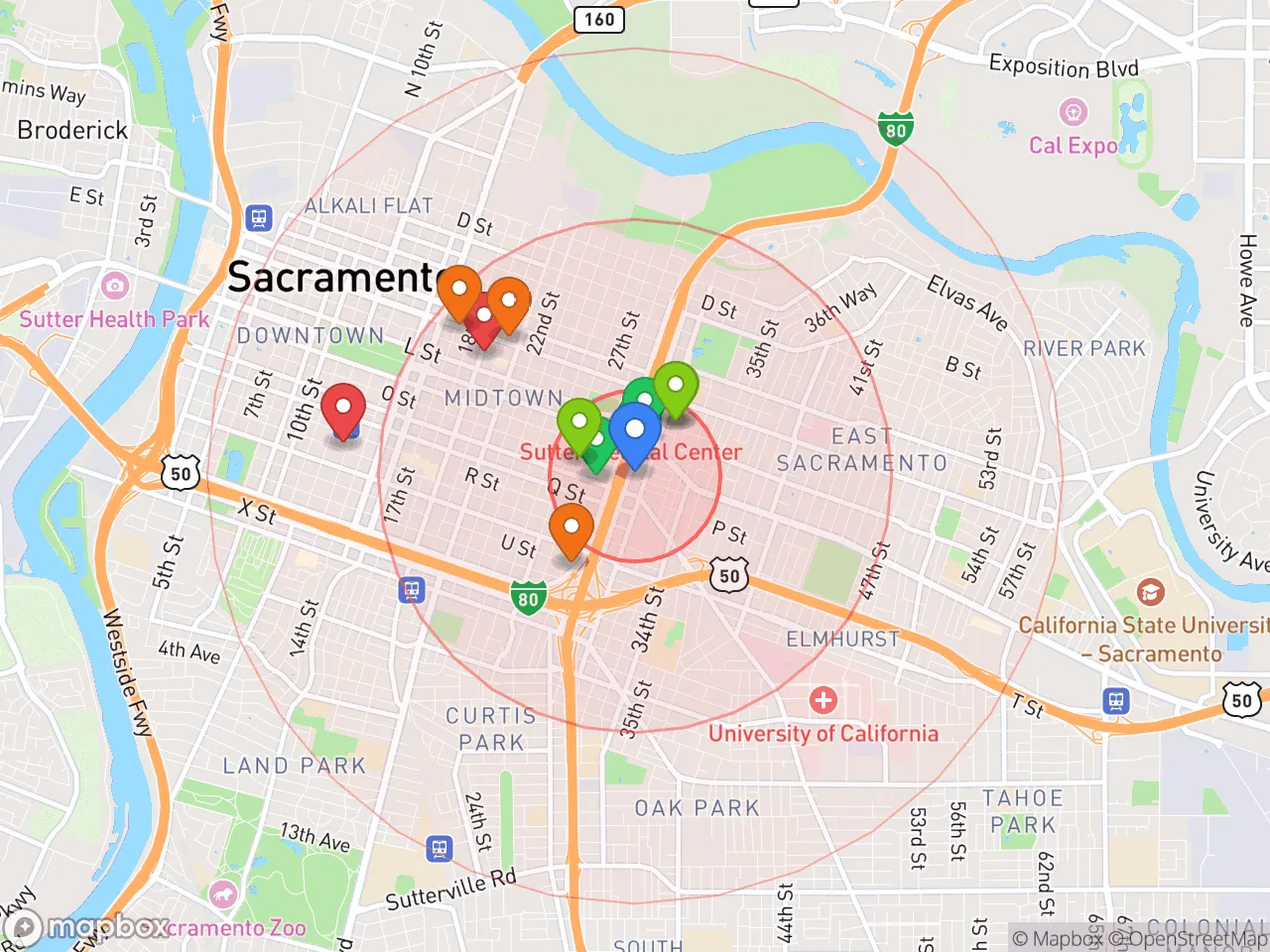
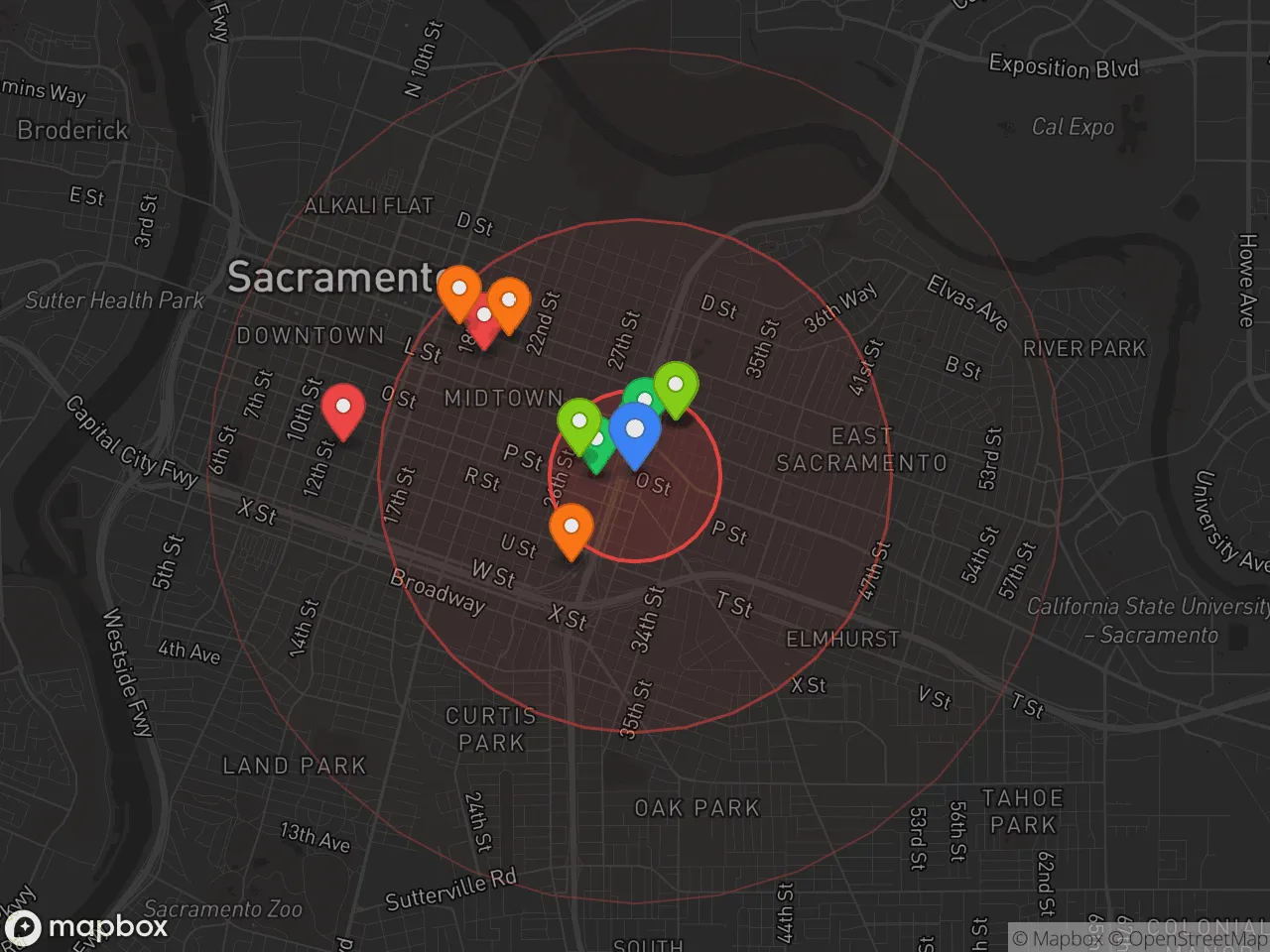
Hobbies
Explore the areaGroceries
7 within 10 miles
Gas
20 within 10 miles
Hospital
20 within 20 miles
Airport
SAN — Oakland San Francisco Bay
Post Office
USPS — Sacramento, CA
Critical Amenities
Quality-of-Life Analysis
Sacramento, California, presents a quality-of-life profile defined by its status as the state capital and a regional economic hub, attracting a diverse mix of government employees, healthcare professionals, and young families. The city’s affluence is moderate compared to the Bay Area, with a cost of living index of 156 (where 100 equals the U.S. average) and a median household income that supports a solidly middle-to-upper-middle-class demographic. Residents tend to be politically engaged, culturally diverse, and drawn to the area’s blend of urban amenities and proximity to outdoor recreation, including the American and Sacramento rivers.
Cost of living, housing affordability, and how Sacramento compares to nearby areas
Sacramento’s cost of living is 56% above the national average, driven primarily by housing costs that are high by national standards but significantly lower than in the Bay Area. The median home value sits at $484,600, which is roughly half the median in San Francisco and about 30% less than in Oakland, making the city a more attainable option for first-time buyers and those relocating from coastal California. Median rent is $1,694, a figure that undercuts nearby cities like San Jose (where median rent exceeds $2,800) and provides a relative bargain for renters seeking proximity to state government jobs or the UC Davis Medical Center. However, these prices still strain budgets for households earning below the area median income of roughly $80,000, and the city’s inventory of affordable housing remains tight, with competition for units under $1,500 per month. The average commute of 25.6 minutes is shorter than the Bay Area average of 30+ minutes, a practical advantage for workers who can avoid the region’s notorious traffic on Interstates 5 and 80.
What daily life is like for families: schools, amenities, and neighborhood rhythm
Daily life in Sacramento revolves around a network of distinct neighborhoods—from the tree-lined boulevards of East Sacramento to the revitalized grid of Midtown—each offering walkable pockets of cafes, farmers markets, and parks. The city’s public school system, Sacramento City Unified School District, includes several highly rated magnet and charter options, such as the Sacramento New Technology High School and John F. Kennedy High School, though overall district performance lags behind suburban counterparts like Elk Grove Unified. Amenities are robust: the city boasts over 200 parks, the Crocker Art Museum, and the Golden 1 Center arena for concerts and Sacramento Kings basketball. The American River Parkway provides a 23-mile trail for biking and jogging, while the nearby Sierra Nevada foothills offer weekend hiking and skiing within a 90-minute drive. The rhythm of life is slower than in San Francisco but more urban than in surrounding suburbs like Roseville or Folsom, with a growing food scene centered on farm-to-fork dining and craft breweries.
Sacramento is best suited for professionals in government, healthcare, or education who want a lower cost of living than the Bay Area without sacrificing urban amenities, as well as families who prioritize outdoor access and a manageable commute over top-tier public schools. Retirees and remote workers also find the city appealing due to its relatively affordable housing and mild Mediterranean climate, with 260 sunny days per year. Those seeking a vibrant nightlife or cutting-edge tech job market may find the city underwhelming compared to Los Angeles or San Francisco, but for residents who value a balanced, community-oriented lifestyle with room to grow, Sacramento delivers a strong quality-of-life proposition.

Crime in Sacramento, CA
WARNING: The crime statistics are unreliable for this jurisdiction. Local authorities have either not reported or under reported their data to the FBI. This could be due to bad intentions, incompetence or technical issues. Regardless, we suggest skepticism.
Significantly higher crime rates than 84% of comparable U.S. locations.
Violent CrimeViolent Crime Analysis
Property CrimeProperty Crime Analysis
Crime Analysis
Sacramento’s overall safety picture is concerning, with violent and property crime rates significantly exceeding both California and national averages. The city recorded a violent crime rate of 719.4 incidents per 100,000 residents and a property crime rate of 2,287.8 per 100,000 in the most recent reporting period. These figures place Sacramento among the higher-crime large metro areas in the state, a reality shaped in part by local criminal justice policies that prioritize progressive, offender-focused approaches over public safety.
Crime in context
Sacramento’s violent crime rate is roughly double the national average of approximately 380 per 100,000 and well above California’s statewide rate of about 440 per 100,000. Property crime in the city also outpaces the national rate of roughly 1,950 per 100,000. These elevated numbers reflect a broader trend seen in many large California metros, where liberal district attorneys and judges have implemented policies such as reduced bail, early release programs, and sentencing alternatives that keep repeat offenders on the street. For example, Sacramento County District Attorney Thien Ho, while elected on a reform platform, has continued many of the progressive policies of his predecessor, including diversion programs for serious property crimes. The result is a justice system that, while sympathetic to offenders, directly undermines deterrence and victim protection.
What residents experience
For daily life in Sacramento, the high crime rates translate into tangible risks. Property crime—including theft, burglary, and motor vehicle theft—is the most common concern, with residents reporting frequent package thefts, car break-ins, and vandalism even in relatively safe neighborhoods. Violent crime, while less common, is concentrated in specific areas and includes aggravated assault, robbery, and homicide. The city’s homicide rate of roughly 12 per 100,000 is more than double the national average. Residents often adjust their routines by avoiding certain streets after dark, installing security systems, and choosing parking garages over street parking. The prevalence of property crime also drives up insurance costs and reduces the sense of security in otherwise desirable districts like Midtown and East Sacramento.
Neighborhood-level variation is significant, however. Areas such as Land Park, East Sacramento, and parts of Fair Oaks report crime rates well below the city average, with violent crime nearly absent and property crime manageable. In contrast, neighborhoods like Del Paso Heights, Oak Park, and North Sacramento experience violent crime rates two to three times the city average. This disparity means that a resident’s actual safety depends heavily on their specific block and housing choice. Prospective movers should research neighborhood-specific crime maps and consider that even in lower-crime pockets, the city’s overall progressive justice environment means that offenders arrested locally may quickly return to the streets, reducing the long-term effectiveness of any neighborhood’s safety measures.
* Values derived from national, state, county, city and local statistics and may differ in a specific area. Last updated: 2026-04-21T10:02:47.000Z
Narrative content on this page is AI-generated and may contain mistakes. Verify any details that matter before acting on them.
ReloMaps may earn a commission from affiliate links at no extra cost to you.

