 Popular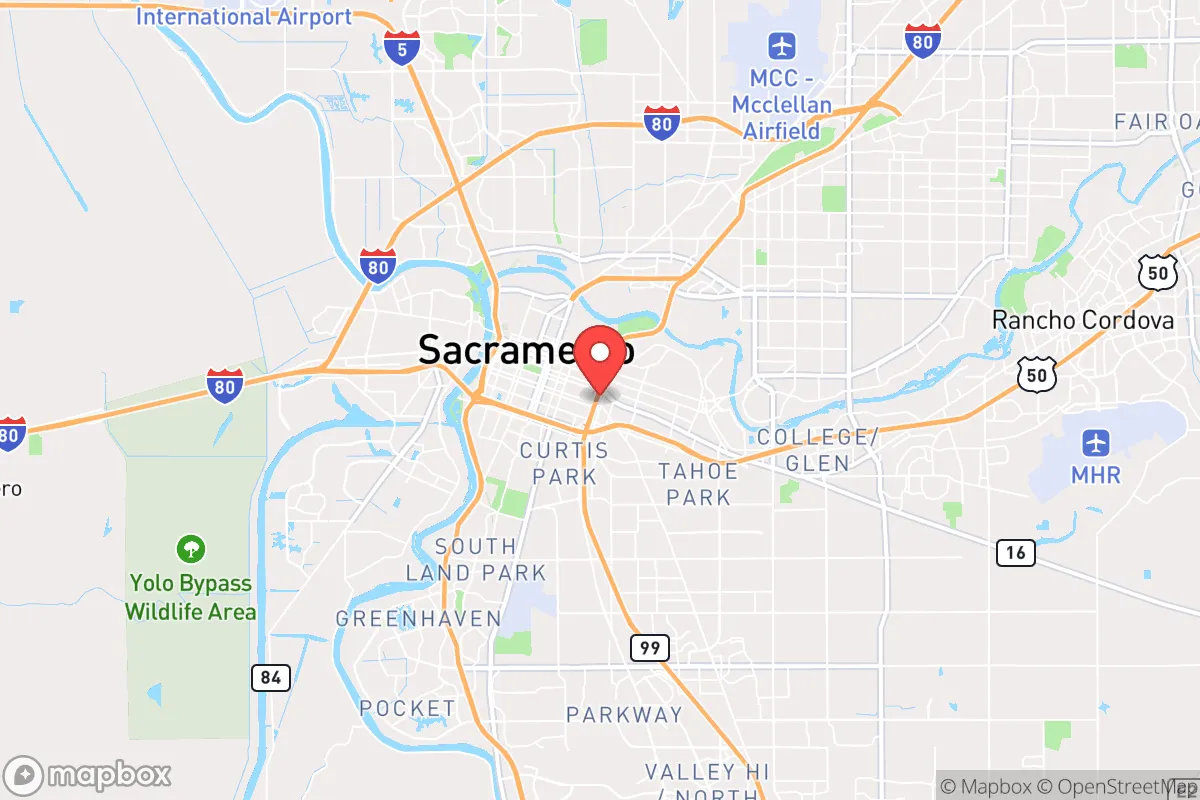
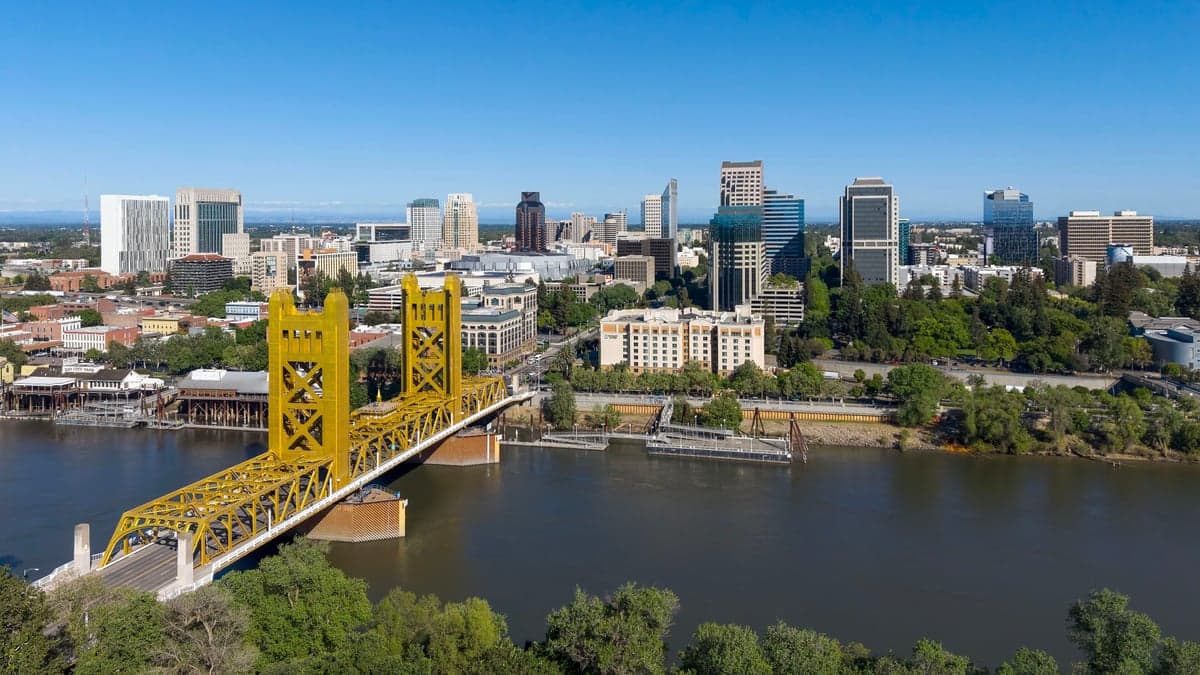
Photo: Wikipedia
Political ClimatePolitical Climate in Sacramento, CA
District shown is the primary district for this city’s centroid. Cities may span multiple districts.
Local Political AnalysisPolitical Analysis of Sacramento, CA
Sacramento’s political climate has shifted hard to the left over the past decade, and if you’ve lived here as long as I have, you’ve watched it happen in real time. The city now carries a Cook PVI of D+16, meaning it votes about 16 points more Democratic than the national average. That’s not just a blue dot—it’s a deep blue anchor. While the city itself has been reliably Democratic for decades, the intensity of that lean has ramped up, especially since 2020. You used to see a healthy mix of moderate Democrats and a few Republicans in local races; now, the primaries are often decided by who can promise the most aggressive progressive policies. The trajectory is clear: Sacramento is moving further left, and the old guard of fiscal moderates is being replaced by a younger, more activist political class.
How it compares
Drive 20 minutes east to Roseville or Rocklin, and you’re in a completely different political world. Those Placer County suburbs lean Republican, with many residents who work in Sacramento but commute back to areas where property taxes are lower and school boards still push back on critical race theory and gender ideology in classrooms. Head south to Elk Grove, and you’ll find a purple-ish swing zone that’s been trending blue, but still has a vocal conservative minority. The contrast is stark: in Sacramento proper, you can’t walk a block downtown without seeing a “Housing is a Human Right” banner or a city council meeting where the agenda is packed with environmental justice ordinances and police oversight measures. The surrounding towns feel like a different state—and honestly, they’re the ones holding onto the California I grew up in.
What this means for residents
For those of us who value personal freedoms and limited government, the writing is on the wall. The city council has steadily expanded its reach into everyday life: from mandatory composting ordinances with fines for non-compliance, to a citywide ban on natural gas in new construction, to a rent control expansion that makes it harder for small landlords to operate. The school board has embraced ethnic studies requirements and gender-affirming policies that leave little room for parental input. If you’re a business owner, you’re navigating a thicket of new regulations—paid sick leave mandates, minimum wage hikes tied to inflation, and a “just cause” eviction law that makes it nearly impossible to remove a problem tenant. The cost of all this? Higher taxes, more fees, and a sense that the government sees itself as your partner in every decision, whether you asked for it or not.
Cultural and policy distinctions
One thing that sets Sacramento apart from even San Francisco is the sheer speed of policy adoption. The city has a “progressive first” mentality—if a bill passes in the state legislature, Sacramento often implements a local version before the ink is dry. The homeless encampment sweeps are a perfect example: after a federal court ruling limited enforcement, the city essentially stopped clearing major camps, leading to visible public health and safety issues downtown. Meanwhile, the police budget has been cut and reallocated to “community safety” programs that are still struggling to show results. For a long-time resident, it feels like the city is running an experiment on its own people, and the results so far are mixed at best. If you’re considering a move here, just know: the political climate isn’t just blue—it’s actively reshaping the way you live, work, and raise your family, and not always in ways that respect your right to make your own choices.

State Political ClimatePolitical Climate in California
State Political AnalysisPolitical Environment in the State
California is a one-party Democratic superstate where Republicans have been effectively locked out of statewide power for nearly two decades, with the party holding zero statewide elected offices and a superminority in the legislature. The state’s political trajectory over the last 10-20 years has been a steady march leftward, driven by massive population growth in coastal metros and a simultaneous exodus of conservative-leaning residents to states like Texas and Idaho. While the state still has deep red pockets in the Central Valley and far northern counties, the overall lean is now roughly D+25 in presidential elections, a shift from the more competitive D+10 environment of the early 2000s.
Urban vs. rural divide
The political map of California is a tale of two states. The coastal megalopolises—Los Angeles, San Francisco, San Diego, and Oakland—generate the vast majority of Democratic votes, with San Francisco County routinely delivering 85%+ of its vote to Democratic presidential candidates. In contrast, the interior is a patchwork of red and purple counties. Bakersfield (Kern County) and Fresno (Fresno County) are reliably Republican strongholds, with Kern County voting +15 R in 2024. Orange County, once a conservative bastion, flipped blue in 2018 and has stayed there, driven by Asian-American suburbanites and younger voters. The Inland Empire (Riverside and San Bernardino counties) is a true swing region—it went for Biden in 2020 but by a much narrower margin than the coast, and Trump improved his margins there in 2024. Redding (Shasta County) in the far north is a deep red outlier, with the county voting +30 R in 2024, but it’s too sparsely populated to offset the coastal vote.
Policy environment
California’s policy environment is a textbook case of progressive governance with high costs and heavy regulation. The state has the highest income tax rate in the nation (13.3% top marginal rate), a state sales tax that can exceed 10% in some cities, and some of the highest gas taxes in the country. Property taxes are capped by Prop 13 (1978), but recent ballot measures have chipped away at it. The regulatory posture is aggressive: California has its own environmental review process (CEQA) that can delay or kill development projects for years, and the state mandates electric vehicle sales by 2035. Education policy is dominated by the California Teachers Association, with school choice virtually nonexistent—no vouchers, no charter school expansion. Healthcare is heavily regulated, with the state running its own insurance exchange (Covered California) and moving toward a single-payer system. Election laws are among the most permissive in the country: universal mail-in voting, same-day registration, and no voter ID requirement—a system that conservatives view as ripe for fraud, though no major scandals have been proven.
Trajectory & freedom
California is becoming less free by almost any measure, particularly in the realms of property rights, speech, and parental rights. The state has enacted some of the nation’s strictest gun control laws, including a 2023 law (SB 2) that effectively bans carrying firearms in most public places, and a 2024 law (AB 28) that imposes an 11% excise tax on guns and ammunition. On parental rights, the state passed AB 1955 in 2024, which prohibits school districts from requiring parental notification when a child changes their gender identity—a direct blow to parental authority. On speech, California’s AB 587 (2023) forces social media companies to disclose their content moderation policies, which critics say is a backdoor to government censorship. Medical autonomy took a hit with the state’s COVID-19 vaccine mandates for healthcare workers and schoolchildren, though the latter was paused. Property rights are under constant assault: the state’s rent control laws (AB 1482) cap annual rent increases at 5% plus inflation, and a 2024 ballot measure (Prop 33) attempted to expand local rent control even further (it failed, but the fight continues).
Civil unrest & political movements
California has been a flashpoint for civil unrest and political movements on both sides. The 2020 George Floyd protests in Los Angeles and San Francisco were among the largest and most destructive in the nation, with looting and arson causing billions in damage. The “Recall Newsom” movement in 2021 was the most serious Republican challenge in decades, but it failed by a 24-point margin, revealing the limits of conservative organizing in a blue state. Immigration politics are a constant battleground: California is a sanctuary state (SB 54, 2017), prohibiting state and local law enforcement from cooperating with federal immigration authorities. This has led to flashpoints in cities like San Diego, where border crossings surged in 2023-2024, overwhelming local resources. Secession rhetoric is alive on the right, with the “Calexit” movement (though it’s fringe) and the “State of Jefferson” movement in the far north, which wants to split off rural counties into a new state. Election integrity is a hot-button issue: the state’s universal mail-in voting system, combined with no voter ID, has led to persistent (though unproven) allegations of fraud, particularly in close races like the 2022 Orange County congressional contests.
Projection
Over the next 5-10 years, California is likely to become even more Democratic and more progressive, driven by demographic trends and in-migration patterns. The state’s population is aging and shrinking, with net domestic outmigration of roughly 300,000 people per year—many of them conservative-leaning families and retirees heading to Texas, Arizona, and Idaho. The people moving in are overwhelmingly young, college-educated, and left-leaning, drawn to tech jobs in Silicon Valley and entertainment in Los Angeles. This will deepen the urban-rural divide and make it nearly impossible for Republicans to win statewide. The state’s fiscal situation is precarious: a projected $68 billion deficit in 2024-2025 will force tough choices, but the Democratic supermajority is likely to raise taxes rather than cut spending. Expect more gun control, more rent control, more mandates on businesses, and a continued erosion of parental rights. The one wild card is a potential economic downturn—if the tech sector crashes or housing prices collapse, the state’s progressive coalition could fracture.
For a conservative-leaning individual or family considering a move to California, the bottom line is stark: you will be a political minority in a state that actively works against your values. Your taxes will be high, your gun rights severely restricted, your parental authority undermined, and your voice in elections diluted by a system designed to maximize Democratic turnout. If you’re looking for a place where your vote matters and your freedoms are respected, California is not that place. The only exceptions are a few deep red counties like Shasta or Kern, where you can find like-minded neighbors—but you’ll still be subject to state laws that get more restrictive every year. If you’re determined to move here, do your homework on local politics, budget for high taxes, and be prepared to fight for your rights at the ballot box and in court.
* Values derived from national, state, county, city and local statistics and may differ in a specific area. Last updated: 2026-04-21T10:02:47.000Z
Narrative content on this page is AI-generated and may contain mistakes. Verify any details that matter before acting on them.
ReloMaps may earn a commission from affiliate links at no extra cost to you.

