Quality of Life in Salem, VA
A high quality of life with strong walkability, manageable living costs, healthy neighborhood signals, and solid amenity access.
What does Quality of Life tell us?
Quality of Life blends cost of living, nearby amenities, socioeconomic signals, and neighborhood character. City-level scores represent the whole municipality; individual neighborhoods can differ.
What does this tell us?
Quality of Life blends cost of living, nearby amenities, socioeconomic signals, and neighborhood character. City-level scores represent the whole municipality; individual neighborhoods can differ.
Cost of Living
11% below national average
The Real Cost of Living in Salem, VA for 2026
| Tier | Individual | Family (4) |
|---|---|---|
| Survival | $17k | $31k |
| Comfortable | $48k | $70k |
| Luxury | $121k+ | $187k+ |
| Elite (Top 5%) | $149k+ | $231k+ |
95%
The Area Signal
A metric tracking the socioeconomic signals of the area.
Hobbies
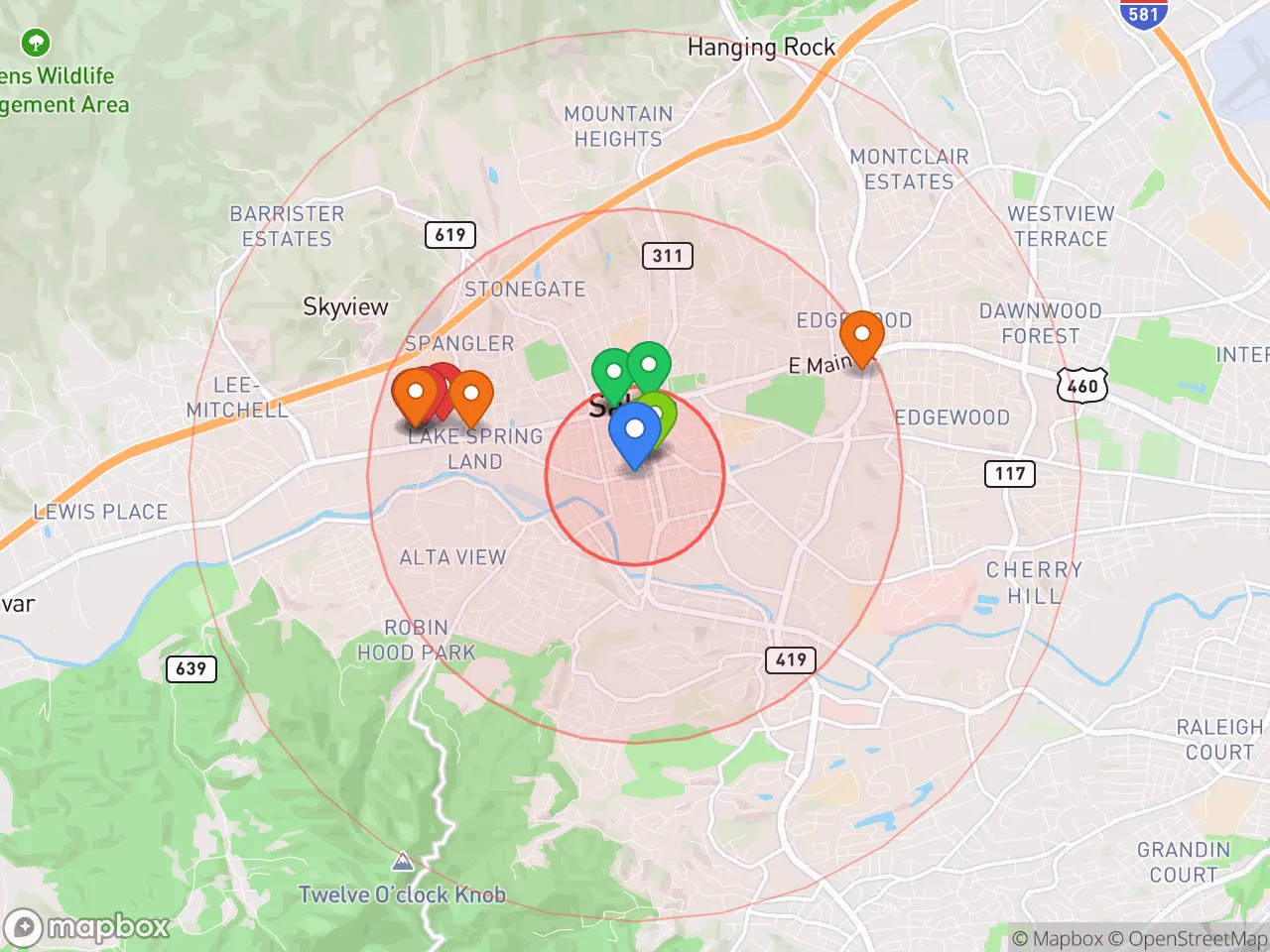
Explore the areaGroceries
3 within 10 miles
Gas
20 within 10 miles
Hospital
6 within 20 miles
Airport
RDU — Raleigh–Durham International
Post Office
USPS — Salem, VA
Critical Amenities
Quality-of-Life Analysis
Salem, Virginia, presents a notably affluent yet accessible quality of life, attracting a mix of families, retirees, and professionals who value a small-city atmosphere with strong economic stability. With a cost of living index of 89 (11% below the U.S. average), the city offers a financial cushion that is rare in the Roanoke Valley, drawing residents from higher-cost areas like Northern Virginia and the Northeast. The population skews slightly older and more educated than the state average, with a median age of 41 and a high proportion of homeowners, reflecting a community that prioritizes long-term stability and community engagement.
How Salem's cost of living and housing compare to Roanoke and the region
Salem's affordability is a primary draw, with a median home value of $244,800 and median rent of $1,046, both significantly below national benchmarks. Compared to neighboring Roanoke City, Salem homes command a premium of roughly 15-20%, but the trade-off is lower property tax rates and a higher median household income ($62,000 vs. Roanoke's $48,000). The average commute of 18.7 minutes is among the shortest in the Roanoke Valley, well under the national average of 26 minutes, allowing residents to reach major employers like LewisGale Medical Center, the Salem VA Medical Center, and the city's robust manufacturing sector without the congestion found in larger metros. For renters, the median rent of $1,046 is roughly $200 less than the national average, though inventory is tight, with vacancy rates below 4% in 2025.
What daily life is like for families: schools, parks, and local amenities
Daily life in Salem revolves around a walkable historic downtown, a strong public school system, and abundant outdoor recreation. Salem City Schools consistently rank among the top 10% in Virginia for academic performance, with Salem High School offering a nationally recognized STEM program and a 94% graduation rate. The city's 14 parks, including the 200-acre Green Hill Park and the popular Salem Farmers Market (open April through October), provide low-cost family activities. The Salem Civic Center and the nearby Roanoke River Greenway offer year-round events and trail access. For dining and shopping, downtown Salem features locally owned restaurants like Mac and Bob's and the Blue Apron, while big-box retail is concentrated along Electric Road. The city's rhythm is notably slower than Roanoke's, with most businesses closing by 9 p.m. and a strong emphasis on community events like the Salem Fair and the annual Christmas parade.
Who thrives in Salem: the ideal resident profile
Salem is best suited for those seeking a stable, family-oriented environment with a lower cost of living and strong public services. Retirees are drawn to the low crime rate (violent crime is 40% below the national average) and proximity to Carilion Roanoke Memorial Hospital, while remote workers benefit from the short commute and fiber-optic internet coverage in most neighborhoods. Families with school-aged children will find the school system a major asset, though the limited nightlife and entertainment options may feel restrictive for young singles or couples without children. Professionals in healthcare, education, and manufacturing will find the strongest job alignment, as these sectors dominate the local economy. Overall, Salem rewards those who value predictability, community ties, and financial breathing room over urban excitement.

Crime in Salem, VA
Lower crime rates than 81% of comparable U.S. locations.
Violent CrimeViolent Crime Analysis
Property CrimeProperty Crime Analysis
Crime Analysis
Salem, Virginia, presents a mixed safety profile that is notably safer than many nearby urban centers but still warrants caution, particularly regarding property crime. The city’s violent crime rate of 153.2 incidents per 100,000 residents is significantly lower than the national average, while its property crime rate of 1,187.4 per 100,000 exceeds both state and national benchmarks. This divergence means residents generally face a lower risk of violent victimization but a higher likelihood of theft, burglary, and vehicle-related offenses compared to the typical American city.
Crime in context
When measured against national figures, Salem’s violent crime rate is roughly half the U.S. average, placing it among the safer small cities in the Roanoke Valley. However, the property crime rate is approximately 20% higher than the national average and notably above Virginia’s statewide rate of roughly 1,050 per 100,000. This pattern is common in cities that serve as regional retail and employment hubs—Salem’s concentration of shopping centers, hotels, and event venues like the Salem Civic Center creates transient opportunities for theft and vehicle break-ins. The city’s location along Interstate 81 also contributes to property crime, as it provides easy access for traveling offenders.
What residents experience
For daily life, the practical impact of these statistics is that Salem feels safe in most residential neighborhoods and public spaces, but residents must remain vigilant about securing vehicles, homes, and personal belongings. The most common property crimes are larceny-theft and motor vehicle theft, with many incidents occurring in commercial parking lots and near the university district. Violent crime is rare and typically confined to isolated incidents rather than random attacks, though the presence of a progressive-leaning judicial system in the broader Roanoke Valley—including district attorneys and judges who prioritize rehabilitation over incarceration—has raised concerns among some residents about repeat offenders cycling back onto the streets. This ideological approach, while intended to reduce recidivism, can result in shorter sentences for property criminals who then reoffend in Salem’s retail corridors.
Neighborhood-level variation is moderate. The area around Roanoke College and the downtown historic district generally reports lower crime rates, while the commercial strips along Electric Road and Thompson Memorial Drive see higher property crime volumes. The western residential neighborhoods near the Salem-Roanoke County line are considered the safest, with violent crime virtually absent. Prospective residents should note that while Salem’s overall safety is above average for a city its size, the elevated property crime rate and the effects of progressive prosecutorial policies in the region mean that basic crime prevention measures—like locking car doors and installing outdoor lighting—are essential rather than optional.
* Values derived from national, state, county, city and local statistics and may differ in a specific area. Last updated: 2026-05-01T02:56:09.000Z
Narrative content on this page is AI-generated and may contain mistakes. Verify any details that matter before acting on them.
ReloMaps may earn a commission from affiliate links at no extra cost to you.

