Personal Sovereignty in Salem, VA
Viable for self-reliance. Generally workable, though some barriers may limit total independence.
What does Personal Sovereignty tell us?
Personal Sovereignty measures your capacity for self-reliance and independence with minimal government friction. Higher scores mean fewer barriers between you and the way you want to live... but it assumes you have the space you need and good neighbors.
What does this tell us?
Personal Sovereignty measures your capacity for self-reliance and independence with minimal government friction. Higher scores mean fewer barriers between you and the way you want to live... but it assumes you have the space you need and good neighbors.
State Policy
Energy independence: Importer (20% of energy produced in-state)
Personal Liberty
Homesteading

Personal Liberty Analysis
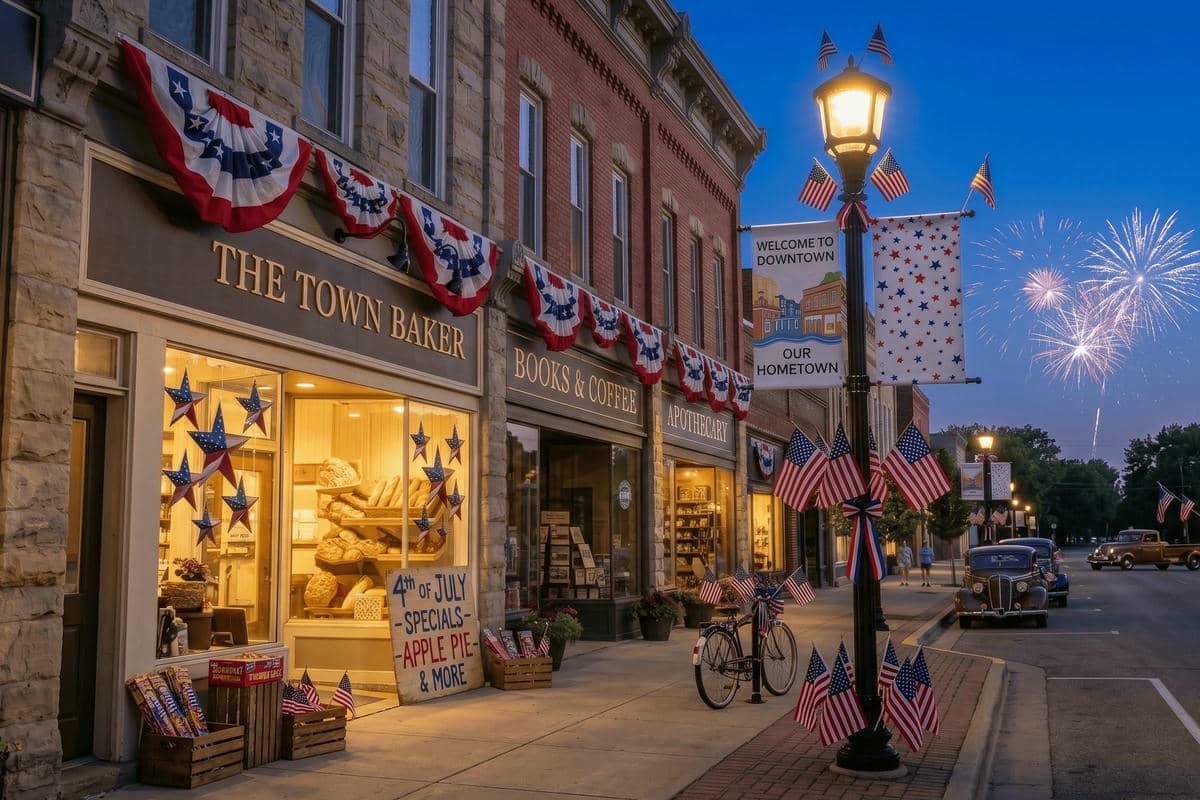
Salem, Virginia, offers a notably high degree of personal sovereignty compared to many mid-Atlantic localities, largely due to its position within a state that has historically resisted the most aggressive forms of federal overreach. While no city is a libertarian utopia, Salem’s combination of a relatively restrained local government, a strong Second Amendment culture, and a community ethos that still values self-reliance makes it a viable option for those prioritizing autonomy. The city sits in a sweet spot: close enough to the Roanoke Valley’s economic engine to provide opportunity, yet far enough from the regulatory heavy-handedness of Northern Virginia or the coastal cities to preserve a sense of individual control over one’s life and property.
Tax burden and regulatory posture: How Salem compares to surrounding counties
Salem’s tax environment is a mixed bag that leans favorable for those seeking to keep more of their own money. The city levies a real estate tax rate of $1.14 per $100 of assessed value, which is higher than neighboring Roanoke County’s $0.99 rate but lower than the City of Roanoke’s $1.21. This is a key consideration: Salem is an independent city, not part of a county, so you get city services without the county tax overlay. The personal property tax on vehicles is 4.15% of assessed value, a standard Virginia rate that feels burdensome but is in line with the rest of the state. The real advantage is the absence of a local income tax—Virginia’s state income tax tops out at 5.75%, and Salem does not add a city surcharge. For a prepper or survivalist, the regulatory posture is more important than the raw tax rate. Salem’s zoning code is relatively permissive for an independent city, with no citywide ban on backyard chickens and reasonable allowances for home-based businesses. The city’s building codes are standard International Code Council (ICC) standards, which means you can build a detached garage or workshop without excessive red tape, though you will need permits. The biggest regulatory win for sovereignty-minded individuals is that Salem does not impose a stormwater utility fee on single-family homes, a hidden tax that has crept into many Virginia localities. Overall, the tax burden is moderate, but the regulatory environment is notably less intrusive than in Northern Virginia or the Tidewater region.
Self-defense and gun law specifics: What Salem residents can and cannot do
Virginia is a shall-issue state for concealed carry permits, and Salem’s local government has not attempted to create its own firearm restrictions beyond state law. This means that Salem residents can carry a concealed handgun with a permit issued by the circuit court, and the process is straightforward: a background check and proof of a state-approved firearms safety course. The city does not have a local ordinance banning open carry, so law-abiding citizens can legally carry a firearm openly in most public spaces. However, there are critical state-level restrictions that apply in Salem. Virginia law prohibits carrying firearms into places of worship unless the congregation authorizes it, and the state’s “one handgun a month” law was repealed in 2021, so you can now purchase multiple handguns in a single transaction. Magazine capacity is not restricted by state law, so standard-capacity magazines are legal. The biggest concern for the prepper mindset is that Virginia has a “red flag” law (Emergency Substantial Risk Order), which allows law enforcement to petition a court to temporarily seize firearms from an individual deemed a threat. This law is enforced in Salem, and it represents a clear point of government overreach that could be abused. On the positive side, Salem’s police department is not known for aggressive enforcement of minor firearms-related technicalities, and the local sheriff’s office is generally supportive of Second Amendment rights. For those building a survival armory, there are no local restrictions on the types of firearms you can own, including AR-15s and other modern sporting rifles.
Self-reliance and homesteading viability: Lot sizes, zoning, and off-grid feasibility
Salem’s urban character limits the full homesteading experience, but the surrounding area offers real opportunities for self-reliance. Within the city limits, minimum lot sizes in residential zones are typically 6,000 to 10,000 square feet, which is enough for a substantial garden but not for keeping livestock beyond chickens. The city’s zoning code explicitly allows for “urban agriculture” including beekeeping and small-scale crop production, but it prohibits pigs, goats, and cattle on standard residential lots. For those serious about off-grid living, the real play is to buy land in Roanoke County or Botetourt County just outside Salem, where agricultural zoning allows for much larger parcels—often 2 to 5 acres minimum—and where you can legally keep horses, goats, and even a few head of cattle. Off-grid feasibility is limited within Salem itself because the city requires connection to municipal water and sewer for any habitable dwelling. However, in the unincorporated areas of Roanoke County, you can drill a well and install a septic system, and there are no county-level bans on solar panels or rainwater collection. The key regulatory win for preppers is that Virginia state law preempts localities from banning rainwater harvesting, so you can legally collect roof runoff for irrigation. The biggest hurdle is the cost of land: a 5-acre parcel within 15 minutes of Salem will run $80,000 to $150,000, but that buys you the space to build a self-sufficient compound with a garden, orchard, and workshop.
Personal liberties: Parental rights, medical autonomy, speech, and property
Salem sits in a state that has seen significant erosion of personal liberties in recent years, but the local culture pushes back against the worst excesses. On parental rights, Virginia law gives parents broad authority over their children’s education, including the right to homeschool without a teaching degree—you simply file a notice of intent and provide a curriculum. Salem City Public Schools has a reputation for being accommodating to homeschoolers, allowing part-time enrollment in specific classes like advanced math or band. Medical autonomy is a mixed bag: Virginia has expanded Medicaid and mandates certain vaccine requirements for school attendance, but Salem’s local government has not imposed any COVID-era mandates beyond state requirements, and the city council has not passed any local health ordinances that restrict personal medical choices. Free speech is protected by the First Amendment, and Salem’s public forums—including the city council meetings and the Salem Civic Center—have not seen the kind of speech suppression that has occurred in more progressive cities. Property rights are strong in Salem, with no rent control and no local ordinances that restrict what you can do with your home beyond basic zoning. The biggest threat to property sovereignty is the state-level “affordable housing” push, which could theoretically lead to upzoning, but Salem has resisted this so far. For the survivalist, the most important liberty is the ability to prepare without government interference: Salem has no local ordinance banning the stockpiling of food, water, or medical supplies, and there are no restrictions on the number of firearms or ammunition you can possess.
In the broader context of Virginia and the mid-Atlantic, Salem offers a level of personal sovereignty that is increasingly rare. It is not a free county like some areas of the rural West, but it provides a workable balance for those who want to live within a functioning city while maintaining the ability to defend themselves, homeschool their children, and prepare for uncertain times. The biggest threats to this sovereignty come from the state level—the red flag law, vaccine mandates for healthcare workers, and potential future restrictions on firearm purchases. But Salem’s local government is not actively hostile to individual liberty, and the community’s conservative lean provides a buffer against the worst policy impulses from Richmond. For the strategic relocator who values autonomy above convenience, Salem is a solid choice—not perfect, but far better than most alternatives in the region.

* Values derived from national, state, county, city and local statistics and may differ in a specific area. Last updated: 2026-05-01T02:56:09.000Z
Narrative content on this page is AI-generated and may contain mistakes. Verify any details that matter before acting on them.
ReloMaps may earn a commission from affiliate links at no extra cost to you.

