Political ClimatePolitical Climate in Salem, VA
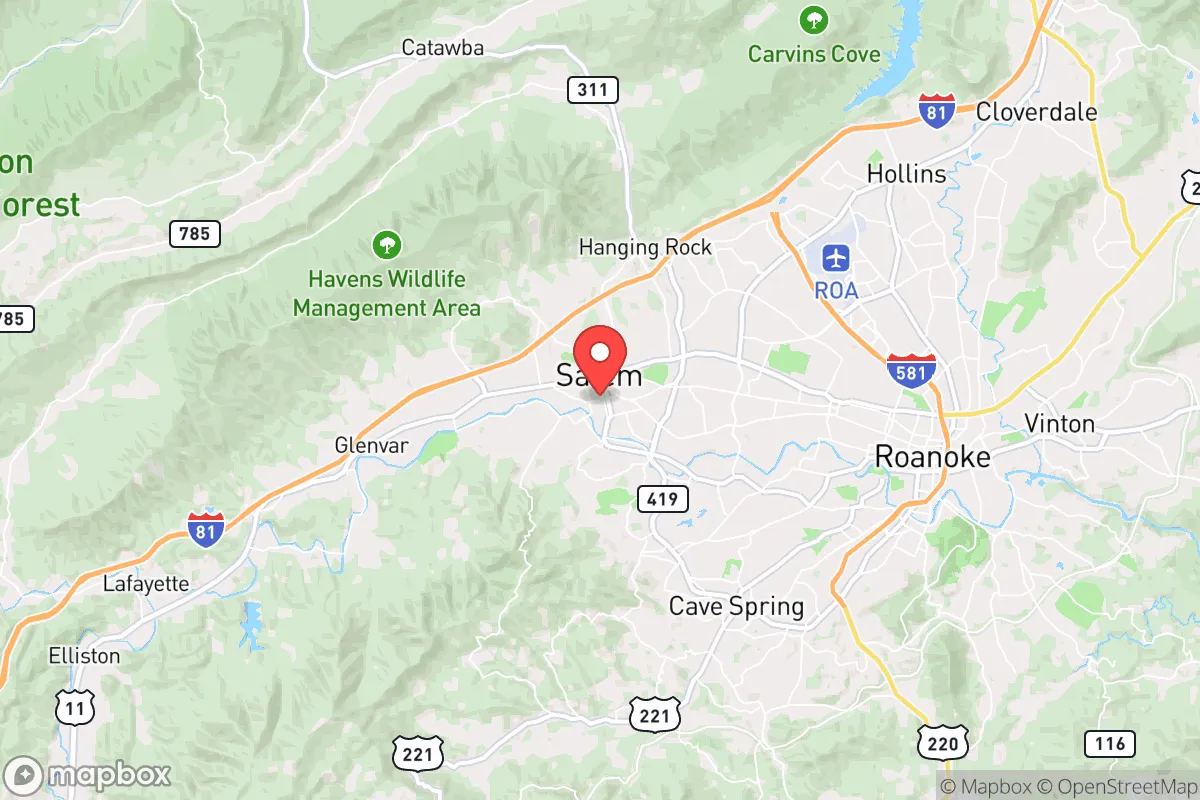
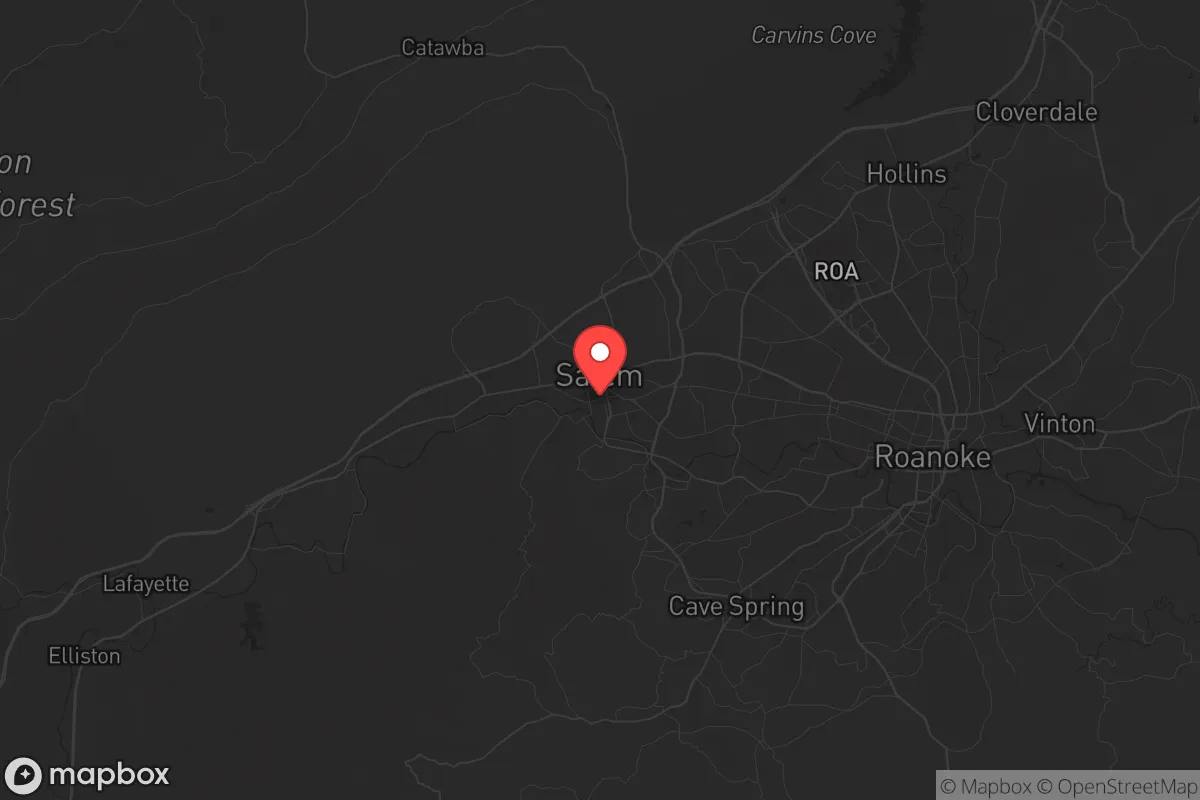
District shown is the primary district for this city’s centroid. Cities may span multiple districts.
Inherited from parent state — no local data available.
Local Political AnalysisPolitical Analysis of Salem, VA
Salem, Virginia, has long been a reliably conservative community, and that hasn't changed much despite the broader shifts you see in places like Roanoke just a few miles up the road. The Cook PVI sits at R+12, which tells you the real story: this is a place where traditional values and a live-and-let-live attitude still hold strong. You won't find the kind of progressive energy here that's taken over some of the bigger cities in the state, and honestly, that's a big part of why folks who've been here for generations feel pretty good about the direction things are headed. The local elections tend to reflect that same sentiment, with most offices held by people who understand that government's job is to stay out of your business, not run it.
How it compares
If you look at the surrounding area, the contrast is pretty stark. Roanoke City, just a 10-minute drive east, has been trending more liberal over the last decade, with a lot of the same policy experiments you see in places like Richmond or Northern Virginia—higher taxes, more regulations, and a general sense that the government knows better than you do. Salem, on the other hand, has held the line. The city council and school board here are still dominated by folks who believe in fiscal responsibility and personal accountability. Compare that to nearby Blacksburg or Christiansburg, where the university influence has pushed things leftward, and you start to see why Salem feels like a bit of an island of common sense in a region that's slowly drifting away from it. The R+12 rating isn't just a number; it's a reflection of a community that votes with its feet and its wallet, choosing stability over the chaos you see in more progressive areas.
What this means for residents
For the people who live here, the political climate translates into a daily life that's a lot less complicated. You don't have to worry about the city council trying to micromanage your property or your business. The tax burden is reasonable, and the local government is generally more interested in keeping the streets clean and the schools functional than in pushing some social agenda. There's a real sense that your rights—whether it's the right to own a firearm, the right to speak your mind without being canceled, or the right to raise your kids according to your own values—are respected here. That's getting harder to find in Virginia, especially as the state legislature in Richmond keeps trying to chip away at local control. Salem's resistance to that overreach is one of the main reasons people move here from places like Fairfax or Arlington, where the government feels like it's in every aspect of your life.
That said, you can't be complacent. There's always pressure from the outside, especially as Roanoke's influence grows and some of the more progressive ideas start to seep into the county-level conversations. The key is staying engaged, showing up to local meetings, and making sure the people in charge remember that they work for us, not the other way around. Salem's political culture is still one of the best in the state for anyone who values freedom and personal responsibility, but it only stays that way if the people who live here keep fighting for it. The trajectory is good, but it's not guaranteed, and that's the honest truth from someone who's watched other towns lose their way.

State Political ClimatePolitical Climate in Virginia
State Political AnalysisPolitical Environment in the State
Virginia is a classic swing state that has been trending blue over the past 15 years, but it’s far from a monolith. The state’s overall partisan lean is a razor-thin Democratic tilt at the presidential level—Joe Biden won it by about 10 points in 2020, but Republicans hold the governor’s mansion and came within a hair of flipping the state legislature in 2023. The real story is a deep urban-rural split that’s getting wider, with the booming DC suburbs and the Hampton Roads area pulling the state left, while the rest of the Commonwealth—especially Southside and the Shenandoah Valley—holds firm as conservative ground. If you’re looking at Virginia as a relocation option, you need to understand that your experience will depend almost entirely on which county you land in.
Urban vs. rural divide
The political map of Virginia is a tale of two states. The northern Virginia suburbs—places like Loudoun County, Prince William County, and Arlington—are the engine of the state’s Democratic majority. These areas have exploded with federal workers, tech transplants, and a highly educated, diverse population that votes reliably blue. Loudoun alone went from a Republican stronghold to a +20-point Democratic county in less than a decade. Down in the southeast, Norfolk and Virginia Beach are more mixed—Virginia Beach still has a strong military and conservative base, but the city council and state delegate seats have been trending left. Meanwhile, the rural spine of the state—Roanoke, Lynchburg, and the entire Southside region from Danville to Martinsville—votes Republican by 30 to 40 points. The divide isn’t just cultural; it’s economic. The urban crescent gets the jobs and investment, while rural Virginia feels left behind by Richmond’s policy priorities.
Policy environment
Virginia’s policy environment is a mixed bag that depends heavily on who’s in power. The state income tax is a flat 5.75%, which is moderate, but property taxes are set locally and can vary wildly—expect to pay more in Fairfax County than in Franklin County. Governor Glenn Youngkin, a Republican, has pushed for a 12% cut in the income tax rate and eliminated the grocery tax, but the Democrat-controlled Senate has blocked most of his agenda. On education, Virginia has become a battleground: Youngkin signed a law requiring parental notification when a child changes their gender identity at school, and he’s pushed for more charter schools and lab schools. But the state board of education remains under progressive influence, and critical race theory-style curricula are still present in many districts. Healthcare is heavily regulated, with a state-run exchange under the ACA. Election laws have tightened slightly under Youngkin—voter ID is required, and same-day registration is not allowed—but Virginia still has no-excuse absentee voting and early voting, which conservatives view as a vulnerability. The regulatory climate is generally business-friendly in the rural areas, but northern Virginia’s local governments are aggressive with zoning and environmental rules.
Trajectory & freedom
Virginia’s trajectory on personal freedom is a tug-of-war. On the positive side, Youngkin signed a parental rights bill in 2023 that requires schools to notify parents about sexually explicit materials and gives them the right to opt their kids out. He also signed a law banning the sale of “willfully and blatantly obscene” books in schools. On gun rights, Virginia is a shall-issue state for concealed carry, and Youngkin signed a law allowing permitless carry in 2024—a major win for Second Amendment supporters. However, the Democrat-controlled legislature has passed red flag laws and a ban on assault weapons sales to those under 21, and they’ve maintained a one-handgun-per-month purchase limit. On medical freedom, Virginia has no mask or vaccine mandates currently, but the state health department retains emergency powers that could be reactivated. The biggest concern for liberty-minded residents is the Virginia Clean Economy Act, which mandates a 100% carbon-free grid by 2050 and has driven up electricity rates. Property rights are generally strong outside of the urban crescent, but localities in northern Virginia have used zoning to limit housing density and impose costly impact fees.
Civil unrest & political movements
Virginia has been a flashpoint for political movements on both sides. The 2017 Unite the Right rally in Charlottesville put the state on the map for violent left-right clashes, and the city is still deeply polarized. More recently, the 2020 protests in Richmond saw the Robert E. Lee statue become a battleground, with the state Supreme Court eventually allowing its removal. The Virginia Citizens Defense League is one of the most active gun rights groups in the country, and they’ve held massive rallies at the state capitol every year since 2020. On the left, groups like Indivisible and Swing Left have a strong presence in northern Virginia and Richmond. Immigration politics are a hot-button issue: Virginia is not a sanctuary state, but several cities including Alexandria and Richmond have declared themselves sanctuary cities, limiting cooperation with ICE. Election integrity remains a concern for conservatives—Virginia uses electronic voting machines with paper backups, but the state’s voter rolls have been criticized for not being cleaned up aggressively enough. You’ll see “election integrity” signs in rural counties and “protect democracy” signs in the suburbs.
Projection
Over the next 5-10 years, Virginia is likely to continue its slow drift leftward, but not as fast as some predict. The in-migration from blue states like New York and California is concentrated in northern Virginia, which will keep the DC suburbs blue. However, the rest of the state is actually getting redder as rural areas lose population and become more conservative. The key battleground will be the exurbs—places like Stafford County and Spotsylvania County—where transplants from northern Virginia are moving for cheaper housing but bringing their voting habits with them. If Republicans can hold the governor’s mansion in 2025 and flip the state Senate, they could lock in Youngkin’s tax cuts and parental rights policies. But if Democrats sweep, expect a push for a state-level version of the Green New Deal, stricter gun laws, and a repeal of the parental notification law. For a new resident, the bottom line is that Virginia offers a high quality of life and strong economy, but you need to choose your county carefully—and be prepared for the political pendulum to keep swinging.
For a conservative relocating to Virginia, the practical takeaway is this: you can find a welcoming community in the Shenandoah Valley, Southside, or the western part of the state, but you’ll be fighting an uphill battle in the legislature. The state’s tax burden is moderate, but the regulatory creep from Richmond is real. If you value parental rights, gun rights, and local control, Virginia is still a better bet than Maryland or New Jersey—but it’s not Texas or Florida. Do your homework on the specific county and city council races, because that’s where your daily freedom will be decided.
* Values derived from national, state, county, city and local statistics and may differ in a specific area. Last updated: 2026-05-01T02:56:09.000Z
Narrative content on this page is AI-generated and may contain mistakes. Verify any details that matter before acting on them.
ReloMaps may earn a commission from affiliate links at no extra cost to you.

