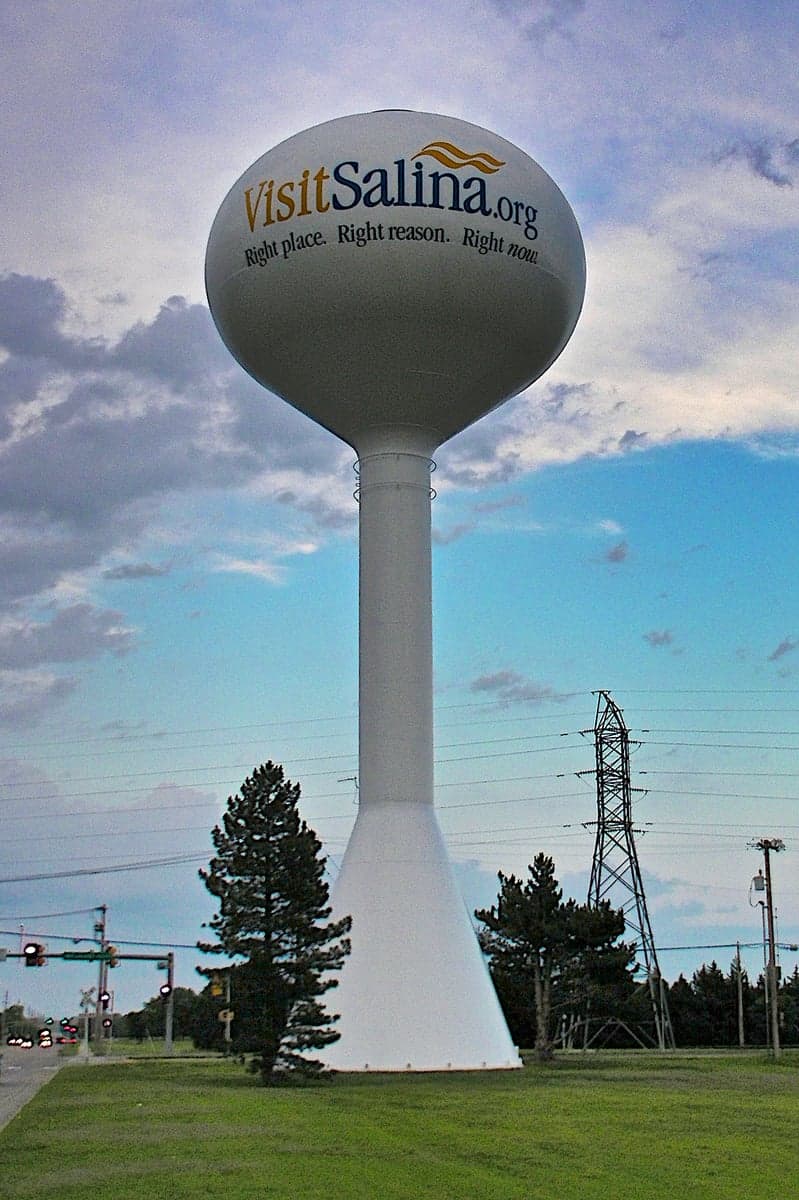
Photo: Wikipedia
Strategic Assessment of Salina, KS
Workable tactical position. Some exposure to population density or targets, but generally defensible in a crisis.
What does the Strategic Assessment tell us?
Our Strategic Assessment grades tactical survivability of an area. Major population centers, military targets, fallout zones, natural disasters, and border exposure all drive risk — lower exposure means a more defensible position in a crisis.
This is heavily inspired by Joel Skousen's Strategic Relocation book. Highly recommended you checkout the book ($)What does this tell us?
Our Strategic Assessment grades tactical survivability of an area. Major population centers, military targets, fallout zones, natural disasters, and border exposure all drive risk — lower exposure means a more defensible position in a crisis.
This is heavily inspired by Joel Skousen's Strategic Relocation book. Highly recommended you checkout the book ($)Strategic Pillars

Key Distances
Regional Safe Places
Below is our recommended "safe zones" in Kansas and the surrounding area based on our strategic heuristics. For most people, it's unrealistic to live in a “safe zone” full-time due to work, family or other personal reasons. They tend to be more rural. However, many of these areas are perfect for second homes and retreat properties that double as a vacation home or even a short-term rental.
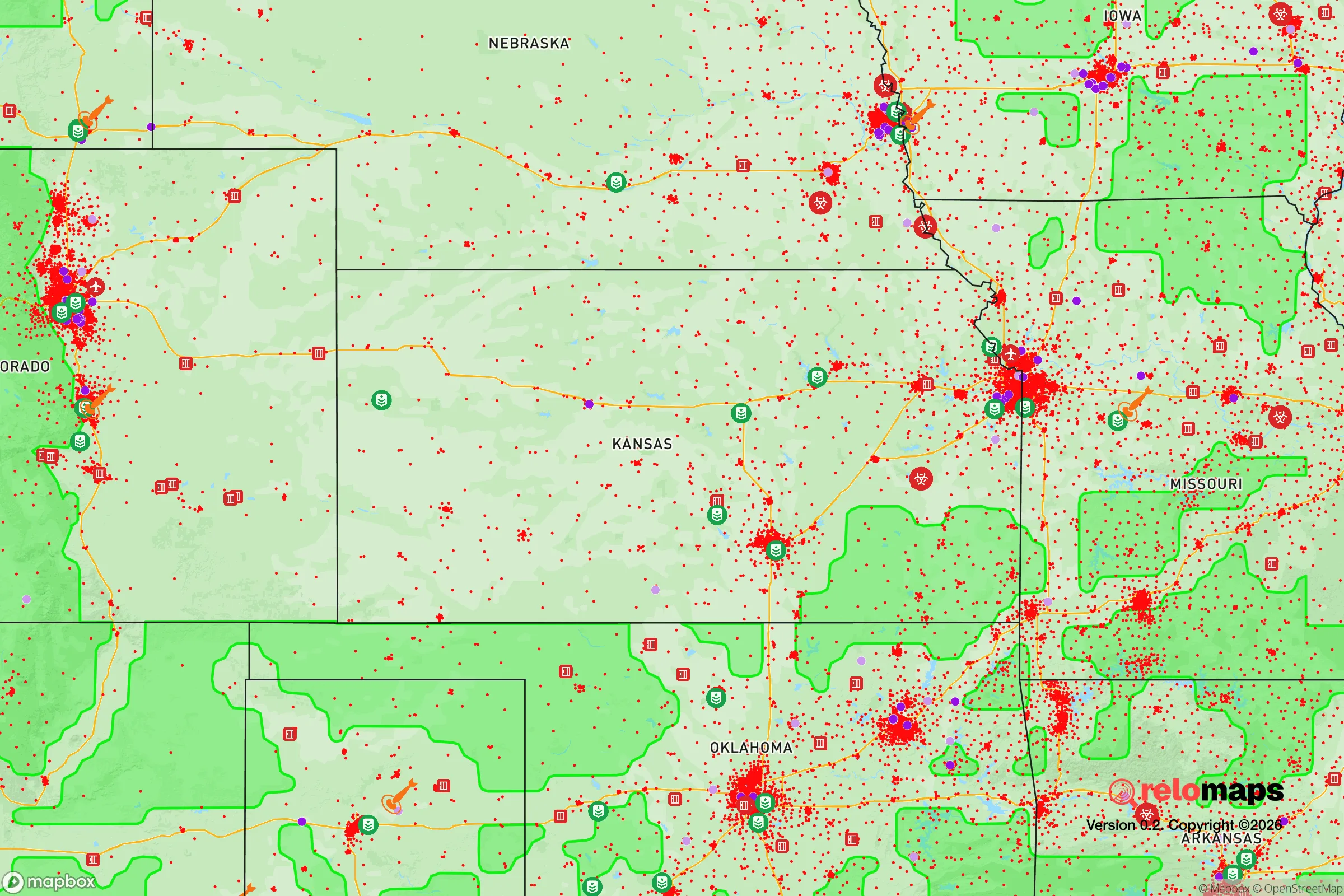
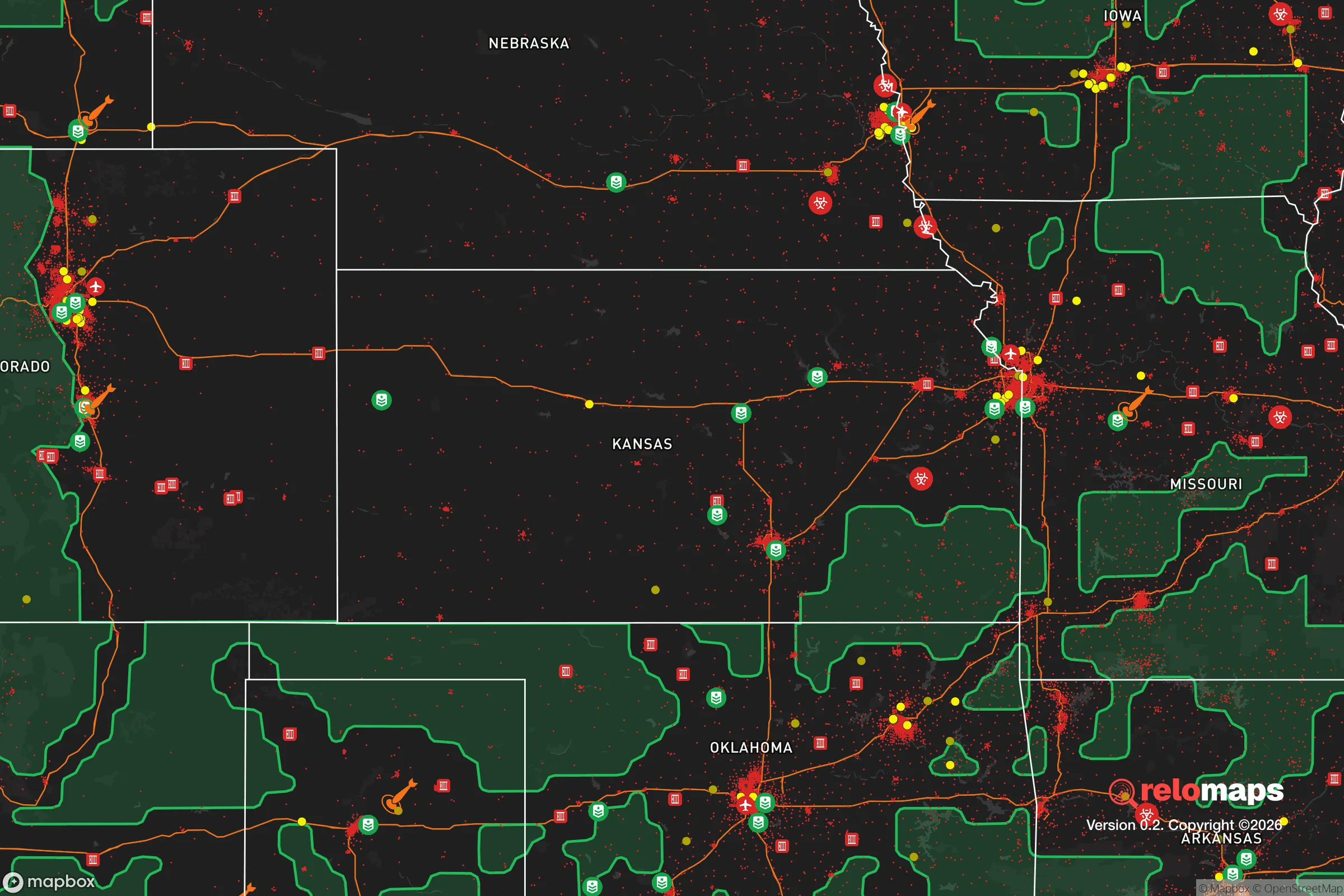


Important Note: For informational purposes only. This does not mean nothing bad ever happens in the green zones. Please use common sense. This is based on public data and modeled with AI. We tried to take a conservative approach but mistakes happen. We update this regularly as new information becomes available.
Solar Generator Recommendations
Backup power matters more here than in safer locations. We've picked three solar generators across budgets and capacity tiers — start with the budget unit if you only need a few essentials, or step up if you want to run a fridge and HVAC for days at a time.

Jackery Portable Power Station Explorer 300
Budget OptionPower on the Go: Weighing only 11 lbs, it's convenient to set up and store with book-sized foldable solar panels

BLUETTI Portable Power Station AC180
Designed for both indoor and outdoor scenarios, AC180 is highly capable as it has a robost capacity and continuous output power.

EF ECOFLOW DELTA Pro Ultra Power Station
Upgraded PickEcoFlow DELTA Pro Ultra is a whole-home energy system designed to grow with your family. Integrated with the Smart Home Panel 2, it scales to meet your evolving energy needs — keeping your home powered, intelligent, and secure through every stage of life.
We earn a commission, at no additional cost to you.
Strategic Assessment Analysis
Salina, Kansas, sits in a sweet spot that few relocators fully appreciate: far enough from the major population centers to avoid the worst of any cascading collapse, yet close enough to the Interstate 135 and I-70 corridors to move people or supplies if the grid holds. This north-central Kansas town of roughly 46,000 is the kind of place that doesn't make national headlines, which is precisely the point. For someone thinking in terms of decades, not election cycles, Salina offers a combination of geographic isolation, agricultural self-sufficiency, and low strategic value that makes it a serious candidate for a long-term relocation base.
Geographic position and natural advantages for long-term security
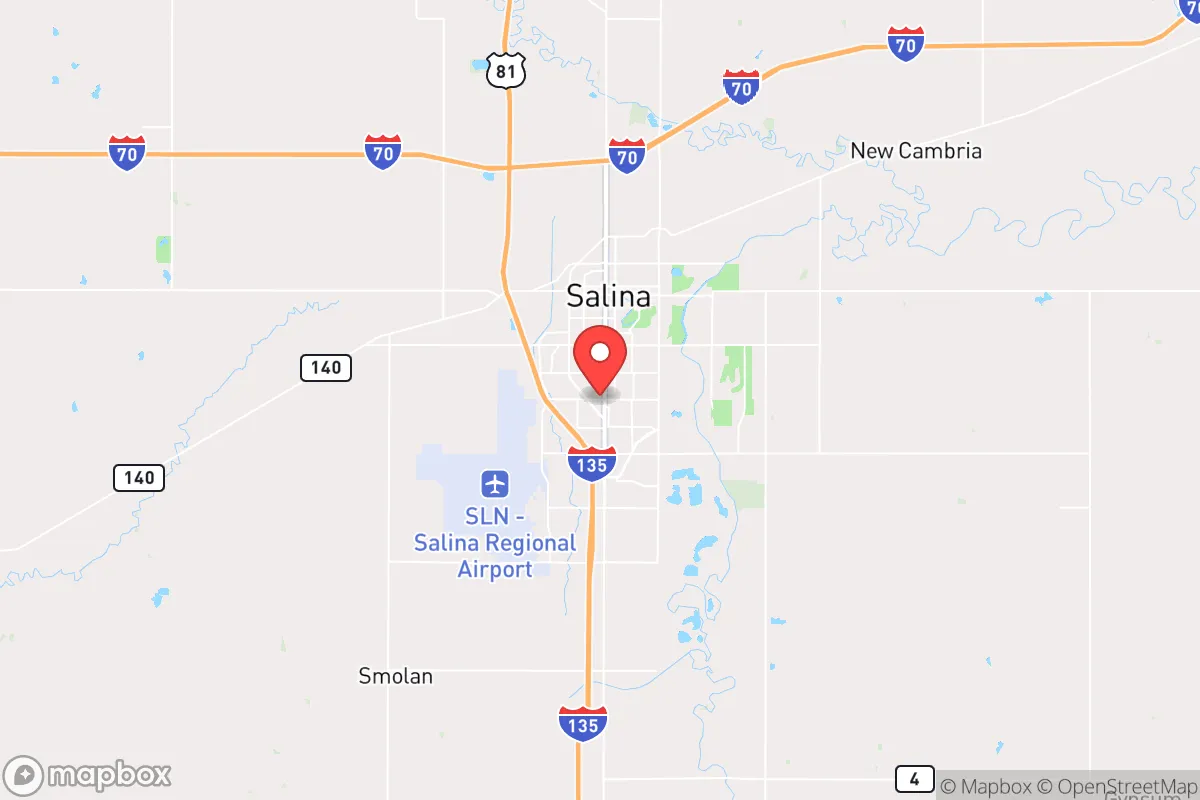
Salina's location is its strongest card. It sits at the junction of I-135 and I-70, giving it two solid highway arteries for resupply or evacuation if needed, but it's not a chokepoint that would attract military or criminal attention. The city is roughly 90 miles north of Wichita and 170 miles west of Kansas City — close enough to tap into regional medical and supply networks during normal times, but far enough that a major event in either city would likely leave Salina untouched. The surrounding landscape is flat, open farmland, which means long sightlines and minimal cover for anyone approaching. That same openness makes the area hard to ambush or infiltrate without being seen from a distance. The Smoky Hills region to the west offers some terrain variation and limited cover for caching supplies or setting up a secondary position. The Saline River runs through town, providing a surface water source that, with proper treatment, can supplement well water. The Ogallala Aquifer lies to the west, but Salina itself sits atop the Dakota Aquifer, a deep but reliable groundwater source that many rural wells in the area tap into. For a relocator thinking about water security, that's a significant advantage over towns that rely entirely on surface reservoirs.
Risks, exposures, and proximity to fallout-relevant landmarks
No location is perfect, and Salina has its share of vulnerabilities. The most obvious is Schilling Air Force Base, which closed in 1965 but left behind a former military airfield now used as the Salina Regional Airport. While not an active strategic target, any military-adjacent infrastructure carries residual risk if the US were to mobilize or if a foreign actor decided to hit legacy installations. More concerning is the proximity to McConnell Air Force Base in Wichita, which houses the 931st Air Refueling Wing and is a legitimate target in any major conflict. A strike on McConnell would not directly threaten Salina at 90 miles distance, but fallout patterns depend on wind direction and yield. The same logic applies to the nuclear power plant at Wolf Creek, about 120 miles southeast near Burlington. In a worst-case scenario, prevailing winds would carry fallout east and northeast, which actually spares Salina in most weather models. The city's position in the middle of the country also means it's far from both coasts, reducing the risk of sea-based attacks or naval blockade effects. Tornadoes are the most realistic natural threat — Salina sits in the heart of Tornado Alley, and the 2008 EF-2 that hit the city is a reminder that severe weather is a recurring hazard. A well-built storm shelter or basement is non-negotiable here. Crime is low by national standards, with violent crime rates roughly half the national average, but property crime, particularly theft from vehicles and outbuildings, is a persistent nuisance in the rural areas just outside town.
Practical resilience for a relocator: food, water, energy, and defensibility
For someone serious about self-sufficiency, Salina's practical advantages stack up well. The surrounding region is some of the most productive agricultural land in the world — wheat, corn, soybeans, and sorghum are the main crops, and cattle operations are common. A relocator with a few acres outside city limits can realistically produce a significant portion of their own calories within two growing seasons. The local soil is deep, fertile loam, and the growing season runs roughly April through October, which is long enough for most staple crops. Water access is the critical variable. Inside city limits, Salina's municipal water comes from the Saline River and groundwater wells, but a rural property should have a tested well before purchase. The Dakota Aquifer is deep — typically 200 to 400 feet — but yields good quality water with moderate mineral content. Drilling a new well runs $15,000 to $25,000 in 2025 dollars, which is a worthwhile investment for anyone planning to stay long-term. Energy is less of a concern. Kansas is a wind energy powerhouse, and Salina is near several large wind farms, including the Smoky Hills Wind Project. The local grid is reasonably stable, but a relocator should plan for solar panels and battery storage as a hedge against extended outages. Natural gas is widely available in the area, and propane delivery is common for rural properties. Defensibility is mixed. The flat terrain makes it hard to hide, but it also makes it hard for anyone to approach unseen. A rural property with a long driveway, a good fence, and a clear view of the road is about as defensible as you can get in the Great Plains. The local population is overwhelmingly conservative and self-reliant, which means neighbors are more likely to help than to loot. The Salina Police Department and Saline County Sheriff's Office are professional and well-regarded, but response times in rural areas can be 20 to 30 minutes, so personal preparedness is expected.
The overall strategic picture for Salina is one of quiet viability. It is not a glamorous choice, and that is exactly why it works. The city lacks the high-profile targets, dense populations, and coastal exposure that make most American metros a liability in a crisis. It offers reliable water, abundant farmland, a stable energy grid, and a population that largely shares the values of self-reliance and mutual aid. The downsides — tornado risk, deep well costs, and the flat terrain that limits concealment — are manageable with planning. For a conservative relocator looking to put down roots in a place that will function when the rest of the country is struggling, Salina deserves a serious look. It is not a fortress, but it is a foundation. And in the current climate, a solid foundation is worth more than any amount of tactical gear or stored ammunition.

* Values derived from national, state, county, city and local statistics and may differ in a specific area. Last updated: 2026-04-29T17:52:38.000Z
Narrative content on this page is AI-generated and may contain mistakes. Verify any details that matter before acting on them.
ReloMaps may earn a commission from affiliate links at no extra cost to you.

