Photo: Wikipedia
Quality of Life in Salina, KS
A high quality of life with strong walkability, manageable living costs, healthy neighborhood signals, and solid amenity access.
What does Quality of Life tell us?
Quality of Life blends cost of living, nearby amenities, socioeconomic signals, and neighborhood character. City-level scores represent the whole municipality; individual neighborhoods can differ.
What does this tell us?
Quality of Life blends cost of living, nearby amenities, socioeconomic signals, and neighborhood character. City-level scores represent the whole municipality; individual neighborhoods can differ.
Cost of Living
30% below national average
The Real Cost of Living in Salina, KS for 2026
| Tier | Individual | Family (4) |
|---|---|---|
| Survival | $15k | $27k |
| Comfortable | $32k | $47k |
| Luxury | $102k+ | $158k+ |
| Elite (Top 5%) | $120k+ | $186k+ |
129%
The Area Signal
A metric tracking the socioeconomic signals of the area.
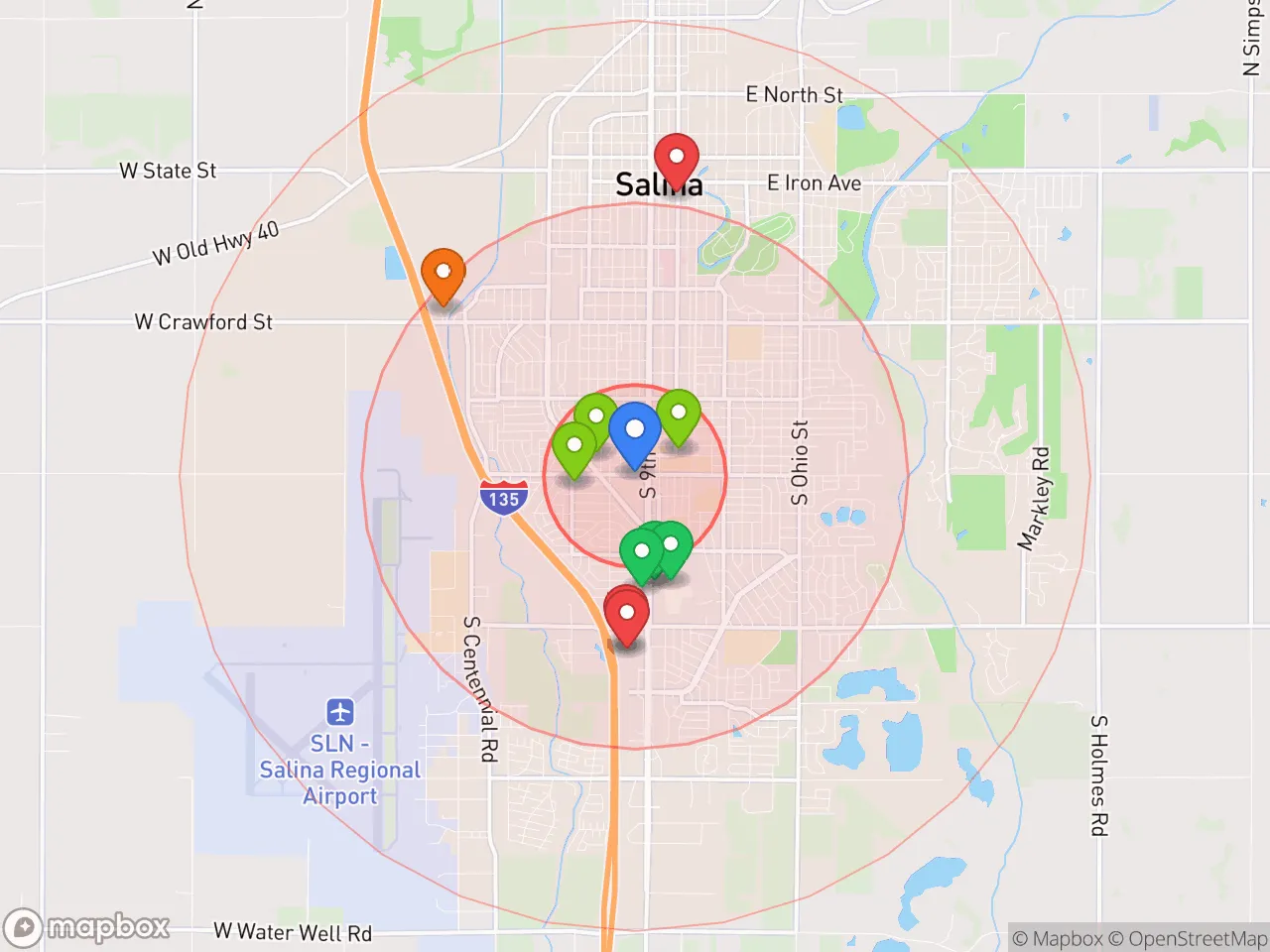
Hobbies
Explore the areaGroceries
5 within 10 miles
Gas
19 within 10 miles
Hospital
3 within 20 miles
Airport
MCI — Kansas City International
Post Office
USPS — Salina, KS
Critical Amenities
Quality-of-Life Analysis
Salina, Kansas, offers a quality of life defined by genuine affordability and a steady, family-oriented pace, with a cost of living index of 70—30% below the national average—that attracts a mix of young families, retirees, and workers in manufacturing and healthcare. The city’s median home value of $164,500 and median rent of $911 create a housing market where a single-income household can comfortably own a home, a reality increasingly rare in larger metros. This economic accessibility draws people who prioritize financial stability and community connection over the fast-paced, high-cost lifestyle of Kansas City or Wichita.
Cost of living, housing affordability, and how Salina compares to nearby cities
Salina’s cost of living index of 70 is significantly lower than the national benchmark of 100, and it undercuts nearby regional hubs like Manhattan (index ~85) and Wichita (index ~80). The median home value of $164,500 is roughly half the national median of around $350,000, meaning a household earning the local median income of about $55,000 can afford a mortgage with a standard 20% down payment. Renters also benefit: the median rent of $911 is well below the national average of $1,200, and the average commute of just 14 minutes—one of the shortest in Kansas—further reduces transportation costs. Compared to Salina, nearby Abilene (median home ~$140,000) is slightly cheaper but offers fewer job opportunities, while Manhattan’s housing market is tighter and more expensive due to Kansas State University’s presence. For buyers and renters alike, Salina delivers a rare combination of low entry costs and short commutes that directly improves disposable income and daily convenience.
What daily life is like for families: schools, amenities, and local rhythm
Daily life in Salina revolves around a compact, car-friendly layout where most errands and commutes take under 15 minutes. The Salina Public Schools system (USD 305) serves roughly 6,500 students and includes Salina Central and Salina South high schools, both offering strong extracurricular programs in athletics and the arts. For amenities, the city punches above its weight with the Salina Regional Health Center—the largest hospital between Wichita and Manhattan—and a downtown revitalized around the historic Fox Theatre and the Salina Art Center. Outdoor recreation centers on Lakewood Park and the 5-mile-long Smoky Hill River Trail, while the Bicentennial Center hosts concerts and trade shows. The local rhythm is unhurried: restaurants like The Cozy Inn (famous for sliders) and Martinelli’s Lunch Counter reflect a community that values tradition over trend. Residents frequently drive 90 minutes to Wichita for major shopping or flights, but for daily needs—groceries, healthcare, schools—Salina is self-contained and efficient.
Salina is best suited for people who value financial breathing room, short commutes, and a slower, community-focused lifestyle. Young families will find affordable starter homes and solid public schools; retirees can stretch savings further here than in most of Kansas; and workers in manufacturing (e.g., Great Plains Manufacturing), healthcare, or logistics will appreciate the job stability and low stress of a 14-minute drive to work. Those seeking nightlife, cultural diversity, or rapid career advancement may find Salina too quiet, but for anyone prioritizing affordability and a manageable daily routine, it is a strong, data-backed choice.

Crime in Salina, KS
Higher crime rates than 60% of comparable U.S. locations.
Violent CrimeViolent Crime Analysis
Property CrimeProperty Crime Analysis
Crime Analysis
Salina, Kansas, reports a violent crime rate of 431.1 incidents per 100,000 residents and a property crime rate of 2,255.7 per 100,000, placing it above national averages for both categories. While not among the most dangerous cities in Kansas, these figures indicate that crime is a tangible concern for residents and prospective movers. The city’s safety profile is shaped by its status as a regional hub in north-central Kansas, where economic factors and policing resources play a significant role in crime patterns.
Crime in context
Salina’s violent crime rate of 431.1 per 100,000 is roughly 23% higher than the national average of approximately 350 per 100,000, and its property crime rate of 2,255.7 per 100,000 exceeds the national average of about 1,950 per 100,000. Compared to other Kansas cities of similar size, Salina’s rates are elevated; for context, the statewide violent crime average is around 350 per 100,000. Property crime, particularly theft and vehicle break-ins, drives the higher numbers, while aggravated assault accounts for the majority of violent incidents. Homicide rates remain low, with typically 0–2 per year in a population of roughly 46,000. The presence of Interstate 135 and the city’s role as a commercial center for surrounding rural areas contribute to transient crime, including drug-related offenses and property theft.
What residents experience
Daily life in Salina involves a heightened awareness of property crime, especially in commercial districts and near the interstate corridor. Residents commonly report theft from vehicles, bicycle theft, and occasional burglaries in older neighborhoods. Violent crime is less random, often concentrated in specific areas and involving individuals who know each other. The Salina Police Department maintains a visible presence, but response times can vary in outlying parts of the city. Progressive judicial philosophies in Saline County courts have been a point of contention; critics argue that lenient sentencing and diversion programs for repeat property offenders contribute to a cycle of recidivism, undermining public confidence in the justice system. This approach, while intended to reduce incarceration, can result in more offenders returning to the streets quickly, which directly impacts victims and neighborhood safety. Residents in areas like the downtown core and near the Kansas State University Salina campus report more frequent encounters with panhandling and low-level disorder, while suburban subdivisions see fewer incidents.
Neighborhood-level variation is notable. The southwest quadrant, including newer developments near the Salina Regional Health Center, generally experiences lower crime rates. Older central neighborhoods, particularly south of Crawford Street and east of Ninth Street, report higher concentrations of both property and violent crime. Areas near the Salina Municipal Airport and industrial zones see elevated theft and vandalism. Prospective residents should consult the Salina Police Department’s online crime mapping tool and consider visiting neighborhoods at different times of day to gauge local conditions. Overall, Salina requires a cautious approach to personal safety, with an emphasis on securing property and staying informed about local judicial trends that may affect public safety outcomes.
* Values derived from national, state, county, city and local statistics and may differ in a specific area. Last updated: 2026-04-29T17:52:38.000Z
Narrative content on this page is AI-generated and may contain mistakes. Verify any details that matter before acting on them.
ReloMaps may earn a commission from affiliate links at no extra cost to you.

