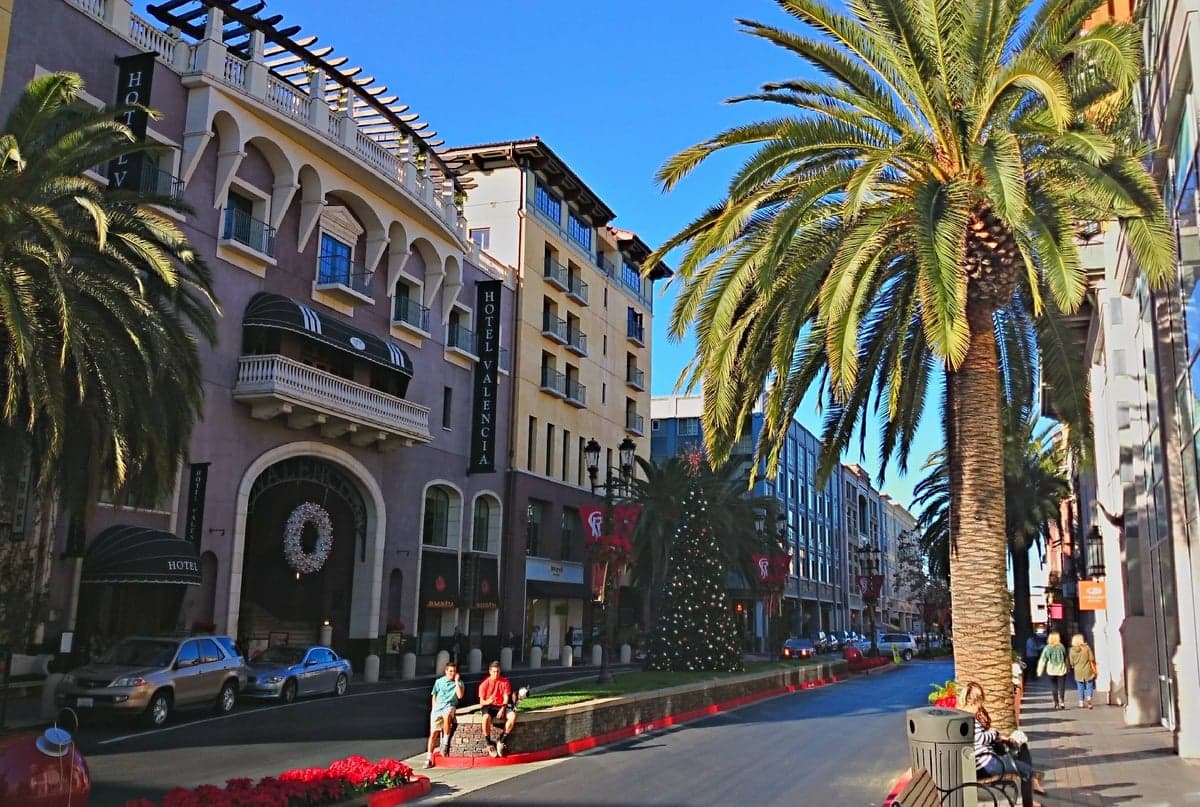
Photo: Wikipedia
Personal Sovereignty in San Jose, CA
Viable for self-reliance. Generally workable, though some barriers may limit total independence.
What does Personal Sovereignty tell us?
Personal Sovereignty measures your capacity for self-reliance and independence with minimal government friction. Higher scores mean fewer barriers between you and the way you want to live... but it assumes you have the space you need and good neighbors.
What does this tell us?
Personal Sovereignty measures your capacity for self-reliance and independence with minimal government friction. Higher scores mean fewer barriers between you and the way you want to live... but it assumes you have the space you need and good neighbors.
State Policy
Energy independence: Importer (33% of energy produced in-state)
Personal Liberty
Homesteading

Personal Liberty Analysis
For the liberty-minded individual or family evaluating San Jose, California, as a relocation destination, the concept of personal sovereignty faces severe structural headwinds. The city operates within a state framework that consistently prioritizes collective mandates over individual autonomy, creating an environment where self-reliance is systematically discouraged through high taxation, restrictive land-use policies, and aggressive regulatory oversight. While Silicon Valley’s wealth creates pockets of affluence, the underlying governance model in Santa Clara County actively limits the scope of personal decision-making, making San Jose one of the most challenging major cities in the United States for those seeking to maximize their personal freedom and minimize government entanglement.
Tax burden and regulatory climate for individuals and families
San Jose’s tax and regulatory posture is a textbook case of government overreach into personal finances and daily life. The state income tax tops out at 13.3%, the highest marginal rate in the nation, and applies aggressively to upper-middle-class earners—meaning a family with two working professionals can easily hit that bracket. Sales tax in Santa Clara County is 9.125%, and property taxes, while capped at 1% of assessed value under Proposition 13, are supplemented by Mello-Roos community facility districts and parcel taxes that can add thousands annually. For a prepper or survivalist mindset, the cumulative effect is a constant drain on resources that could otherwise go toward self-sufficiency investments like land, supplies, or off-grid infrastructure. The regulatory environment is equally suffocating: building permits for even minor home improvements can take months, and the city’s rent control ordinance (covering units built before 1995) creates a landlord-tenant dynamic where property rights are heavily tilted toward tenants, discouraging small-scale rental property ownership as a path to financial independence. The city’s green building codes and energy efficiency mandates add compliance costs to any construction project, further eroding the ability to modify one’s property without bureaucratic approval.
Self-defense rights and California gun law realities
For those prioritizing the right to keep and bear arms as a cornerstone of personal sovereignty, San Jose represents a near-hostile environment. California’s Roster of Handguns Certified for Sale limits new handgun purchases to models with microstamping technology, effectively banning most modern firearms. The state’s assault weapons ban and 10-round magazine limit apply fully in San Jose, and the city itself has gone further: in 2022, San Jose became the first U.S. city to require gun liability insurance and a $25 annual fee from gun owners, though this ordinance is currently tied up in litigation. Concealed carry permits (CCWs) are issued by the Santa Clara County Sheriff’s office, and while the Bruen decision has loosened the “good cause” requirement, the process remains expensive and time-consuming—typically taking 6-12 months and costing over $500 in fees, training, and fingerprinting. Open carry is illegal. For the survivalist, the practical reality is that building a meaningful firearms inventory requires navigating a complex web of state-level purchase limits (one handgun per 30 days), background check fees, and a 10-day waiting period. Self-defense ammunition types like hollow points are legal but restricted in certain contexts. The message is clear: the state and city view firearm ownership as a privilege to be regulated, not a right to be exercised freely.
Self-reliance and homesteading viability in an urban core
San Jose’s dense urban layout and zoning codes make traditional homesteading or off-grid living nearly impossible. The typical single-family lot in established neighborhoods like Willow Glen or Cambrian Park is 5,000 to 7,000 square feet, with newer subdivisions squeezing homes onto 3,000-square-foot parcels. Backyard chickens are allowed in most residential zones (up to four hens, no roosters), but beekeeping requires a permit and neighbor notification. Rainwater harvesting is legal but limited to two 50-gallon barrels per property without a more complex permit. Solar panels are common, but net metering policies have been weakened by the California Public Utilities Commission, reducing the financial incentive. Growing a substantial vegetable garden is feasible on a small lot, but the city’s water restrictions—which can limit outdoor watering to two days per week during drought—undermine serious food production. For those seeking true self-reliance, the only viable option is to move to the rural edges of Santa Clara County (like Morgan Hill or Gilroy) or out of the county entirely. San Jose’s zoning code explicitly prohibits “agricultural uses” on residential lots, meaning no goats, pigs, or livestock beyond small fowl. The city’s building code also effectively bans composting toilets and off-grid sewage systems, tying residents to municipal infrastructure. For the prepper, San Jose is a place to earn money, not to build a resilient homestead.
Personal liberties: parental rights, medical autonomy, and free speech
On the spectrum of personal liberties, San Jose reflects California’s broader trend of prioritizing state authority over individual and family decision-making. Parental rights are significantly curtailed: California is a “parental consent” state for minors seeking abortion (requiring judicial bypass), but schools can provide reproductive health services and mental health counseling without notifying parents under the California Healthy Youth Act. The state’s gender identity policies allow students to use preferred names and pronouns without parental consent, a flashpoint for conservative families. Medical autonomy is similarly constrained: California’s mandatory vaccination laws for school attendance (SB 277) eliminated personal belief exemptions, meaning families who refuse vaccines must homeschool or seek alternative education. The state’s public health emergency powers were used aggressively during COVID-19, with Santa Clara County imposing some of the nation’s longest lockdowns and mask mandates. Free speech is protected under the First Amendment, but San Jose’s “buffer zone” ordinance around abortion clinics restricts protest activity, and the city’s hate speech policies can be used to penalize certain political expressions. Property rights are weak: the city’s rent control and just cause eviction ordinances limit what landlords can do with their own property, and the state’s Coastal Commission and California Environmental Quality Act (CEQA) can block or delay development projects indefinitely. For the liberty-minded individual, San Jose offers little refuge from government intrusion into family, health, and property decisions.
In the broader landscape of American cities, San Jose ranks among the lowest for personal sovereignty when measured by tax burden, gun rights, land-use freedom, and parental autonomy. Compared to cities in Texas, Florida, or Tennessee, where income tax is zero, gun laws are permissive, and zoning allows for genuine self-reliance, San Jose feels like a managed environment where the state is the primary decision-maker. For the survivalist or prepper who values the ability to prepare, defend, and live according to their own values, San Jose is a place to visit for work—not a place to build a life of freedom. The city’s wealth and infrastructure come at the cost of constant regulatory friction, making it a poor fit for those who prioritize autonomy over convenience.

* Values derived from national, state, county, city and local statistics and may differ in a specific area. Last updated: 2026-04-24T06:53:40.000Z
Narrative content on this page is AI-generated and may contain mistakes. Verify any details that matter before acting on them.
ReloMaps may earn a commission from affiliate links at no extra cost to you.

