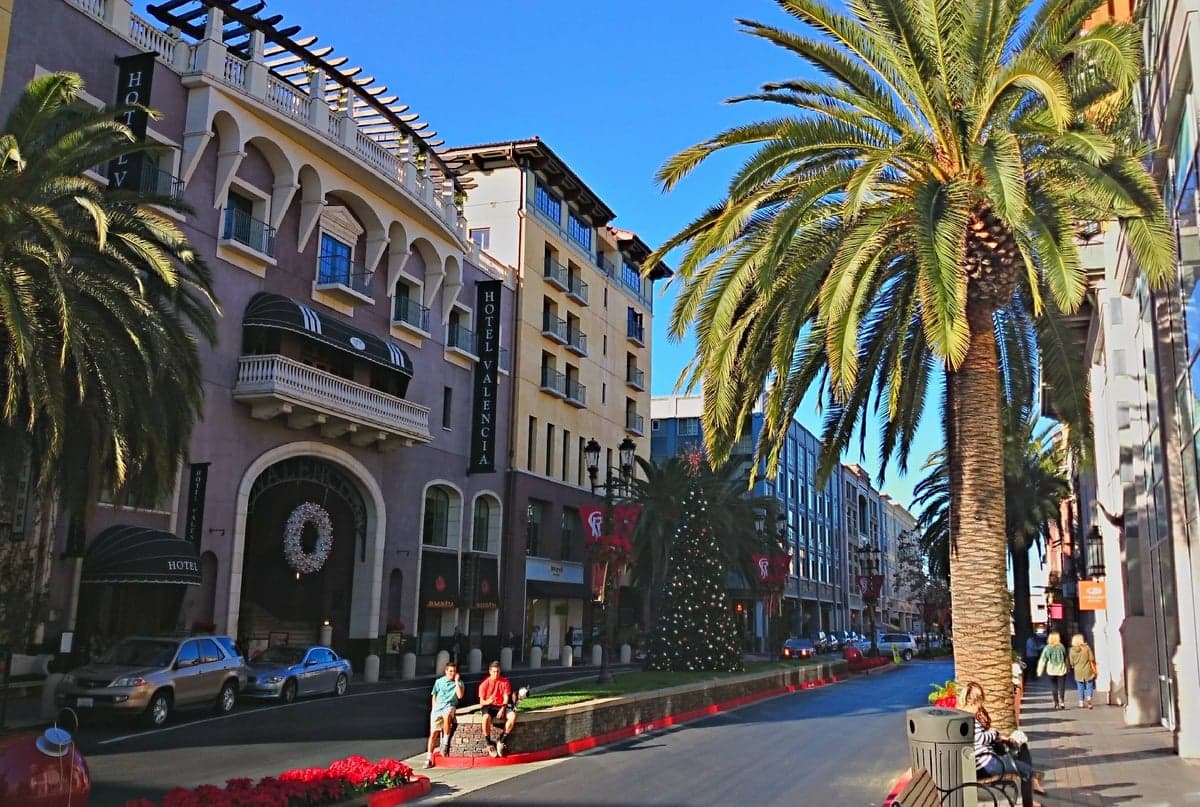
Photo: Wikipedia
Political ClimatePolitical Climate in San Jose, CA
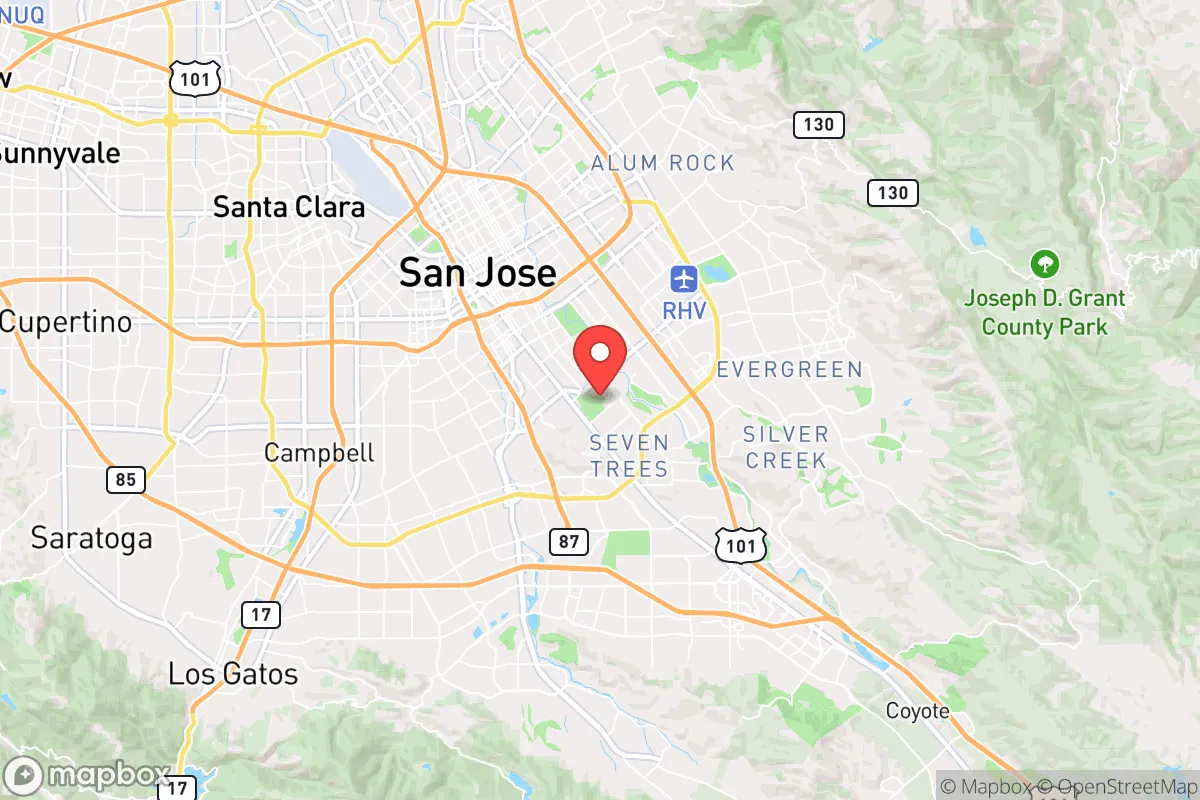
District shown is the primary district for this city’s centroid. Cities may span multiple districts.
Local Political AnalysisPolitical Analysis of San Jose, CA
San Jose has been a deep blue stronghold for decades, and honestly, it’s only gotten more lopsided in recent years. The Cook PVI of D+26 tells you everything you need to know—this isn’t a purple city or a swing district; it’s a place where progressive policies are baked into the local DNA. If you’re coming from a more balanced area, the political uniformity here can feel suffocating, especially when you realize that nearly every elected official, from city council to the county board, runs unopposed or wins by a 30-point margin. The trajectory is clear: San Jose is moving further left, not moderating.
How it compares
Drive 20 minutes south to Morgan Hill or Gilroy, and you’ll notice a different vibe. Those towns still lean blue, but they’re closer to D+5 or D+8, with more visible conservative-leaning voters at local meetings and in small business circles. Head east over the hills to Livermore or Pleasanton, and you’re in solidly purple territory where property rights and tax limits are taken seriously. San Jose, by contrast, is the progressive engine of the South Bay. The city council has pushed through rent control expansions, sanctuary city policies, and a business tax hike that small shop owners I know say is strangling them. Meanwhile, the surrounding unincorporated areas of Santa Clara County—places like Alum Rock or the Coyote Valley—are often dragged along by county policies set by San Jose’s voting bloc, with little local say.
What this means for residents
For the average homeowner or small business owner, the political climate translates directly into your wallet and your daily life. Property taxes are already high thanks to Prop 13 loopholes being chipped away, but the real concern is the steady creep of new regulations. Want to add an ADU to your backyard? Expect a permitting process that takes months and costs thousands, driven by city staff who see any new construction as a chance to impose green building mandates or inclusionary zoning requirements. On the personal freedom side, San Jose was one of the first cities in the region to mandate paid sick leave for all workers, and it’s now considering a citywide “right to repair” law for electronics that sounds good but could drive up costs for independent repair shops. The mask and vaccine mandates during COVID were among the strictest and longest-lasting in the state, and many residents I talk to feel that the city government has learned the wrong lesson—that it can keep imposing emergency-style rules indefinitely. If you value being left alone to run your life or your business without a dozen new forms to fill out each year, San Jose’s political culture will wear on you.
Culturally, San Jose is distinct from San Francisco’s in-your-face activism. It’s more of a quiet, bureaucratic progressivism—the kind that shows up in zoning code changes and school board curriculum fights rather than street protests. But that doesn’t make it less intrusive. The school district, for example, has adopted ethnic studies requirements and gender identity notification policies that have parents on both sides feeling uneasy. Long-term, I see the city continuing to tighten its regulatory grip, especially on housing and land use, as the state government in Sacramento pushes even more mandates down. If you’re considering a move here, my honest advice is to look closely at the city council candidates in your district—they’re the ones who will decide how much freedom you actually have to fix your own house, start a side business, or just live without a government form for every decision.

State Political ClimatePolitical Climate in California
State Political AnalysisPolitical Environment in the State
California is a deep blue state where Democrats hold a supermajority in both legislative chambers and control every statewide office, but the political landscape is far more fractured than the statewide numbers suggest. Over the past 20 years, the state has shifted from a competitive purple state—where Republicans like Arnold Schwarzenegger could win—to a one-party progressive stronghold, driven largely by massive population growth in coastal metros and a steady exodus of conservative-leaning voters from rural and inland areas. The 2024 presidential election saw Kamala Harris carry the state by roughly 30 points, but that margin masks a growing rural-urban chasm and a quiet but persistent conservative resistance in places like Bakersfield, Fresno, and the Inland Empire.
Urban vs. rural divide
The political map of California is a tale of two states. The coastal urban corridor—San Francisco, Los Angeles, San Diego, and Oakland—generates the overwhelming Democratic majority, with San Francisco County delivering 85% of its vote to Biden in 2020 and Harris in 2024. But drive an hour inland and the picture flips dramatically. The Central Valley, anchored by Bakersfield and Fresno, is reliably Republican, with Kern County voting +16 R in 2024. The Inland Empire, including Riverside and San Bernardino counties, has become a key battleground: Riverside County flipped from blue to red in 2022 and stayed red in 2024, driven by suburban families fleeing coastal housing costs. Even Orange County, once a GOP stronghold, has trended purple-to-blue in presidential races, though its northern suburbs like Yorba Linda and Huntington Beach remain conservative holdouts. The real divide isn’t just urban vs. rural—it’s coastal vs. interior, with the state’s population concentrated in the blue coastal strip while the vast interior leans red.
Policy environment
California’s policy environment is aggressively progressive, with a tax-and-regulate posture that has driven a net domestic migration loss of over 700,000 residents since 2020. The state has the highest top marginal income tax rate in the nation at 13.3%, a 7.25% sales tax (with local add-ons pushing it over 10% in many cities), and some of the highest gas taxes in the country—currently 68 cents per gallon. On education, California has a universal school choice program in name only, with a weak voucher system that doesn’t come close to funding private options, while public schools remain underperforming despite per-pupil spending above $20,000. Healthcare is dominated by the state’s Medicaid expansion, and a single-payer bill (AB 1400) has been introduced repeatedly but stalled due to cost. Election laws are among the most liberal in the nation: universal mail-in ballots, same-day registration, and no voter ID requirement, which has fueled ongoing concerns about election integrity among conservatives. Property rights are heavily restricted by the California Environmental Quality Act (CEQA), which can be weaponized by NIMBY groups to block housing and infrastructure projects for years.
Trajectory & freedom
California is becoming less free by almost any measure, particularly for conservatives. The state has enacted some of the strictest gun control laws in the nation, including a 2024 law (SB 2) that effectively bans carrying firearms in most public places, and a 2023 law (AB 28) that imposes an 11% excise tax on gun and ammunition sales. Parental rights have been eroded by the state’s 2023 law (AB 1078) that prohibits school boards from banning books on the basis of race or gender identity, effectively overriding local control. Medical autonomy took a hit with the 2022 law (SB 523) that mandates insurance coverage for gender transition procedures, including for minors, overriding parental consent in some cases. On speech, the state’s 2023 law (AB 587) requires social media platforms to report hate speech, which critics argue is a backdoor to content moderation mandates. Property taxes are somewhat protected by Prop 13, but a 2020 ballot measure (Prop 15) that would have weakened it was defeated—though it’s likely to return. The overall trajectory is one of expanding state power at the expense of local and individual decision-making.
Civil unrest & political movements
California has been a flashpoint for civil unrest and political movements on both sides. The 2020 George Floyd protests in Los Angeles and San Francisco caused billions in damage and led to a wave of progressive district attorney elections that have since been reversed in recall efforts—most notably the 2024 recall of Alameda County DA Pamela Price. The state’s sanctuary policies, codified by the 2017 California Values Act (SB 54), limit local law enforcement cooperation with federal immigration authorities, creating ongoing tension with the Trump administration and fueling conservative anger in border-adjacent areas like San Diego and Imperial County. Election integrity remains a hot-button issue: the 2020 and 2022 elections saw widespread use of ballot drop boxes and mail-in voting, with no voter ID requirement, leading to persistent distrust among conservatives. The secession movement, while fringe, has a real presence: the “State of Jefferson” proposal to carve out a conservative state from northern California and southern Oregon has active supporters in counties like Siskiyou and Modoc. Visible flashpoints include the 2023-2024 homeless encampment sweeps in Los Angeles and San Francisco, which have sparked both left-wing protests against displacement and right-wing criticism of the state’s failure to address the crisis.
Projection
Over the next 5-10 years, California will likely become more progressive at the state level, but the political geography will continue to fragment. Demographic trends favor Democrats: the state’s Latino population, while historically more conservative on social issues, has shifted left on economic and immigration policy, and the white working-class base that once supported Republicans is shrinking. However, the exodus of conservative-leaning residents to Texas, Arizona, and Idaho is accelerating, which could actually make the state bluer in presidential elections even as it loses population. The wild card is the housing crisis: if the state fails to build enough housing (which seems likely given CEQA and local opposition), the cost of living will continue to drive out middle-class families, leaving a wealthier, more liberal coastal elite and a poorer, more diverse interior. A new resident moving in now should expect to see higher taxes, more regulation, and a state government that is increasingly hostile to conservative values—but also a vibrant, if shrinking, conservative counterculture in the Central Valley, Inland Empire, and rural north.
For a conservative considering relocation, California offers a mixed bag: world-class natural beauty, a strong economy, and a climate that’s hard to beat, but at the cost of living under a government that is actively working against your values on guns, education, taxes, and parental rights. If you’re willing to fight for your freedoms in a blue state, places like Bakersfield, Huntington Beach, or Temecula offer like-minded communities—but be prepared for a constant uphill battle against Sacramento. If you value low taxes, school choice, and gun rights above all else, you’ll find California a frustrating place to call home. The bottom line: come for the weather, stay for the paycheck, but don’t expect the state to change its stripes anytime soon.
* Values derived from national, state, county, city and local statistics and may differ in a specific area. Last updated: 2026-04-24T06:53:40.000Z
Narrative content on this page is AI-generated and may contain mistakes. Verify any details that matter before acting on them.
ReloMaps may earn a commission from affiliate links at no extra cost to you.

