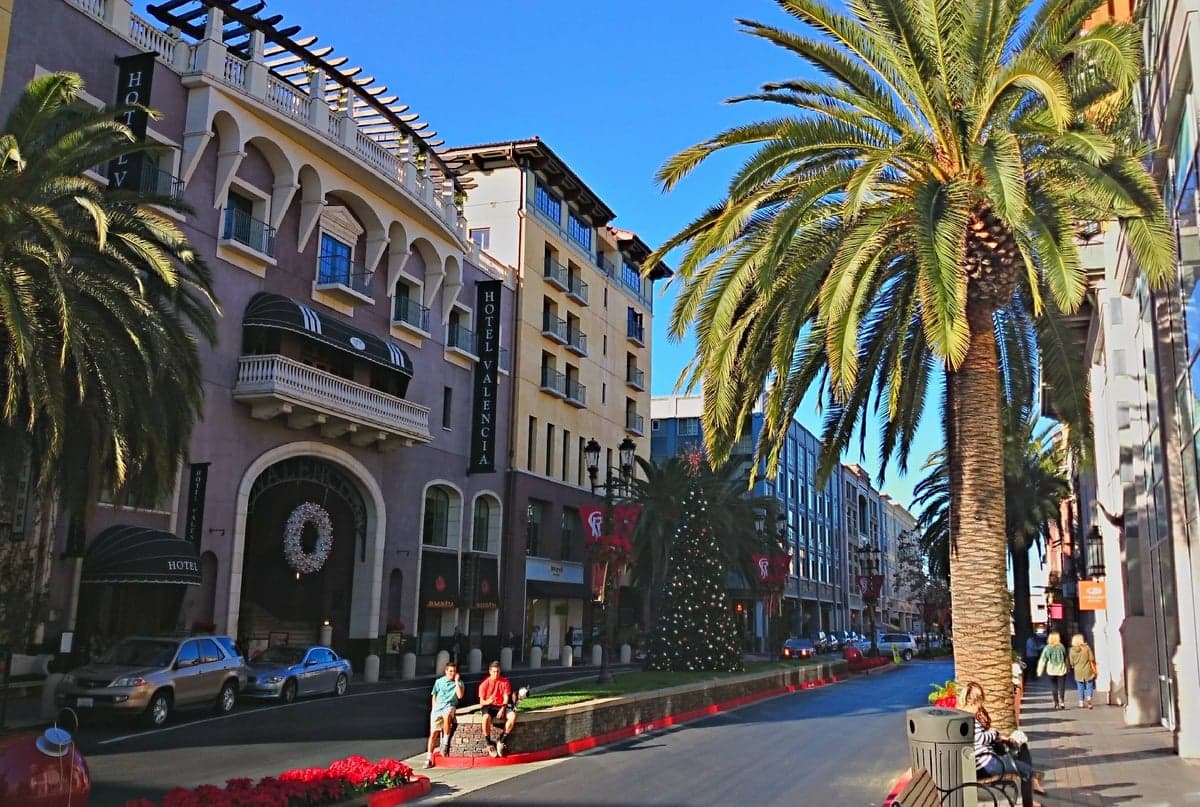
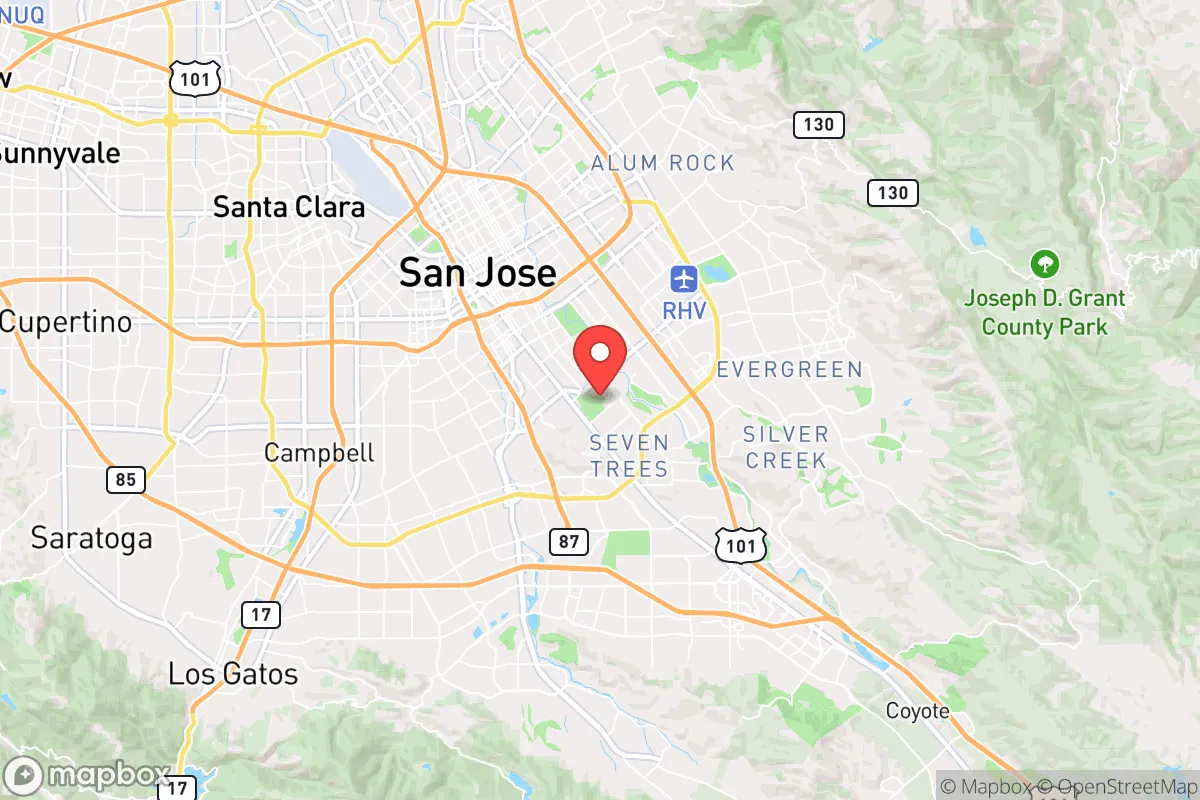
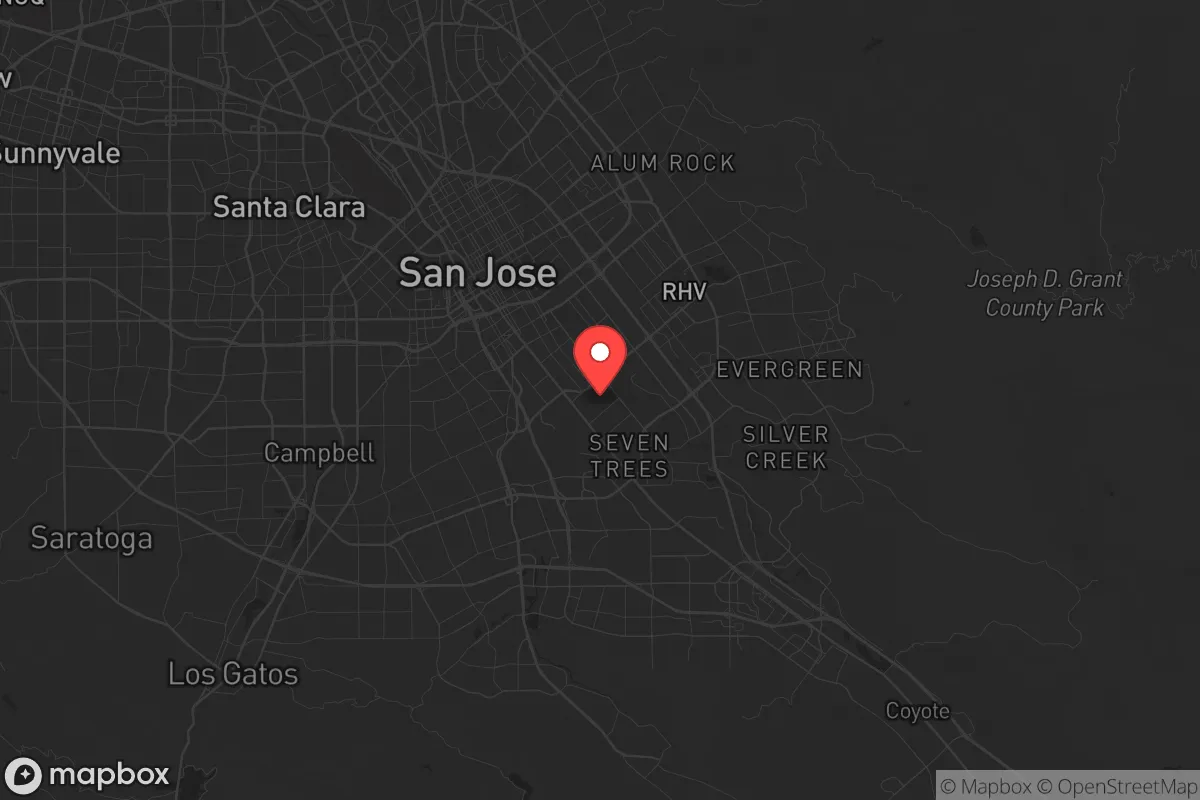
Photo: Wikipedia
Strategic Assessment of San Jose, CA
High tactical risk. This location is likely close to major population centers, strategic targets, or sits in a high-disaster corridor. A retreat property and careful exit planning is required.
What does the Strategic Assessment tell us?
Our Strategic Assessment grades tactical survivability of an area. Major population centers, military targets, fallout zones, natural disasters, and border exposure all drive risk — lower exposure means a more defensible position in a crisis.
This is heavily inspired by Joel Skousen's Strategic Relocation book. Highly recommended you checkout the book ($)What does this tell us?
Our Strategic Assessment grades tactical survivability of an area. Major population centers, military targets, fallout zones, natural disasters, and border exposure all drive risk — lower exposure means a more defensible position in a crisis.
This is heavily inspired by Joel Skousen's Strategic Relocation book. Highly recommended you checkout the book ($)Strategic Pillars

Key Distances
Regional Safe Places
Below is our recommended "safe zones" in California and the surrounding area based on our strategic heuristics. For most people, it's unrealistic to live in a “safe zone” full-time due to work, family or other personal reasons. They tend to be more rural. However, many of these areas are perfect for second homes and retreat properties that double as a vacation home or even a short-term rental.

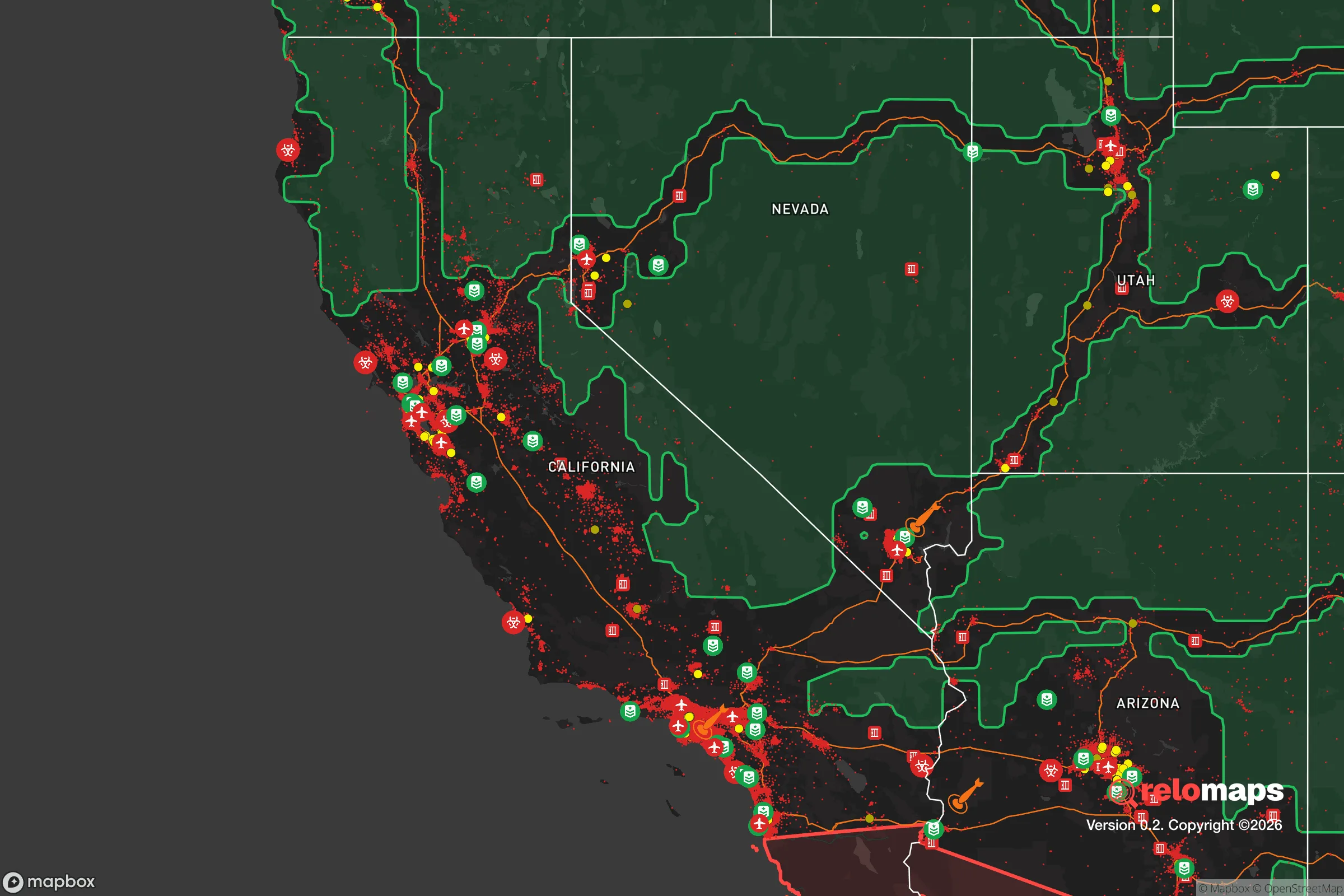


Important Note: For informational purposes only. This does not mean nothing bad ever happens in the green zones. Please use common sense. This is based on public data and modeled with AI. We tried to take a conservative approach but mistakes happen. We update this regularly as new information becomes available.
Solar Generator Recommendations
Backup power matters more here than in safer locations. We've picked three solar generators across budgets and capacity tiers — start with the budget unit if you only need a few essentials, or step up if you want to run a fridge and HVAC for days at a time.

Jackery Portable Power Station Explorer 300
Budget OptionPower on the Go: Weighing only 11 lbs, it's convenient to set up and store with book-sized foldable solar panels

BLUETTI Portable Power Station AC180
Designed for both indoor and outdoor scenarios, AC180 is highly capable as it has a robost capacity and continuous output power.

EF ECOFLOW DELTA Pro Ultra Power Station
Upgraded PickEcoFlow DELTA Pro Ultra is a whole-home energy system designed to grow with your family. Integrated with the Smart Home Panel 2, it scales to meet your evolving energy needs — keeping your home powered, intelligent, and secure through every stage of life.
We earn a commission, at no additional cost to you.
Strategic Assessment Analysis
San Jose presents a complex strategic picture for the conservative prepper or survivalist. While its location in the heart of Silicon Valley offers certain logistical advantages—namely access to high-tech resources and a robust local economy—its position within a densely populated, politically progressive region introduces significant vulnerabilities. The city’s resilience is paradoxically both its greatest asset and its most glaring liability: it sits in a fertile valley with a mild climate, yet it is a primary target for civil unrest, infrastructure failure, and cascading disasters due to its sheer density and proximity to high-value targets. For the relocator prioritizing long-term security, San Jose demands a sober, risk-adjusted assessment rather than a rosy outlook.
Geographic position and natural advantages for long-term survival
San Jose occupies the southern end of the Santa Clara Valley, a flat, alluvial basin ringed by the Santa Cruz Mountains to the west and the Diablo Range to the east. This geography provides a natural bowl that moderates temperatures—summers rarely exceed 90°F, and winters stay above freezing—which is a genuine advantage for extended grid-down scenarios. The valley’s agricultural history is not just a relic; the region still supports some of the most productive farmland in California, with the nearby Gilroy garlic fields and Watsonville berry farms within a 30-minute drive. For a prepper, this means local food production is theoretically possible, though much of the land has been paved over for tech campuses. The real strategic value lies in the multiple microclimates within a 45-minute radius: you can retreat to the cooler, forested Santa Cruz Mountains for cover or to the hotter, drier Diablo Range for isolation. The proximity to the Pacific Ocean (roughly 20 miles west) also offers a potential maritime escape route, though the coast itself is heavily developed and patrolled. Water is a more complicated story—the region relies on the Sierra Nevada snowpack via the Hetch Hetchy system and local reservoirs like Anderson Lake and Coyote Creek. In a prolonged drought or infrastructure collapse, these sources are vulnerable to contamination and competition.
Risks, exposures, and proximity to fallout-relevant landmarks
The most significant risk for a San Jose relocator is the city’s status as a primary target for civil unrest and cascading economic collapse. As the largest city in the Bay Area by population (over 1 million), San Jose is a hub for political activism, and the 2020–2021 protests and riots demonstrated how quickly downtown can become a flashpoint. The city’s proximity to San Francisco (45 miles north) and Oakland (40 miles north) means that any major event—whether a terrorist attack, a power grid failure, or a mass casualty incident—will send shockwaves southward. The San Jose International Airport (SJC) and the Mineta San Jose Airport are both within city limits, making them potential targets for a coordinated attack or a no-fly zone scenario. Additionally, the Lawrence Livermore National Laboratory (about 30 miles east) and the NASA Ames Research Center (at Moffett Field, 10 miles north) are high-value government installations that could draw military or terrorist attention. For the survivalist, the dense urban grid of downtown San Jose is a death trap in a disaster: narrow streets, limited escape routes, and a population density of over 5,000 people per square mile mean that any evacuation would be chaotic. The San Andreas Fault runs just west of the city, and a major earthquake (like the 1989 Loma Prieta event) could collapse freeways, rupture gas lines, and trigger fires that would overwhelm emergency services. The city’s reliance on the Dumbarton Bridge and San Mateo-Hayward Bridge for cross-bay access means that a single bridge failure could trap residents on the peninsula.
Practical resilience for a relocator: food, water, energy, and defensibility
For the individual or family looking to establish a resilient foothold, San Jose offers a mixed bag. Food security is a major concern: while the city has a thriving farmers’ market scene and a few community gardens, the vast majority of food is trucked in from the Central Valley. In a supply chain disruption, grocery shelves would empty within 48 hours. The San Jose Food Bank is a resource, but it would be overwhelmed in a crisis. A better bet is to establish relationships with local growers in the South County (Morgan Hill, Gilroy) or to invest in a suburban home with enough land for a substantial garden—something increasingly rare and expensive. Water storage is non-negotiable: the city’s tap water is treated and safe, but a major earthquake could break the Hetch Hetchy aqueduct, leaving residents without potable water for weeks. A 55-gallon drum per person, plus a Berkey filter, is a minimum. Energy independence is more feasible here than in many parts of the country: solar panels are common, and net metering is still available, though the grid is notoriously fragile during heat waves and wildfire seasons. A backup generator (preferably dual-fuel) is essential, as PG&E has a history of public safety power shutoffs. Defensibility is the weakest link. San Jose is a sprawling, low-density city in many neighborhoods (Willow Glen, Cambrian Park), but it lacks natural chokepoints. The foothills of the Diablo Range (e.g., Alum Rock Park, Sierra Vista) offer some retreat potential, but they are public land and heavily trafficked. A more practical approach is to choose a home on a cul-de-sac with a single access point, preferably with a fence and a clear line of sight. The South Bay’s high property values mean that a defensible property with acreage will cost $2 million or more, pricing out most relocators. For those on a budget, the East San Jose foothills (near Evergreen) offer slightly more space and lower density, but they are also closer to the fault lines and wildfire zones.
The overall strategic picture for San Jose is one of high risk with moderate reward. The city’s economic engine and mild climate are genuine assets, but they are outweighed by the density, the political volatility, and the proximity to multiple high-value targets. For the conservative prepper, San Jose is best viewed as a temporary staging ground rather than a long-term retreat. The ideal strategy is to use the city’s job market and resources to build capital, then relocate to a more defensible rural property in the Sierra Nevada foothills (e.g., Mariposa, Tuolumne County) or the Central Coast (e.g., Paso Robles, San Luis Obispo). If you must stay, focus on a suburban or exurban property with good water access, solar capability, and a strong community network—and keep a bug-out bag ready for the inevitable earthquake, riot, or grid failure. San Jose is not a fortress; it’s a hub. And in a crisis, hubs attract chaos.

* Values derived from national, state, county, city and local statistics and may differ in a specific area. Last updated: 2026-04-24T06:53:40.000Z
Narrative content on this page is AI-generated and may contain mistakes. Verify any details that matter before acting on them.
ReloMaps may earn a commission from affiliate links at no extra cost to you.

