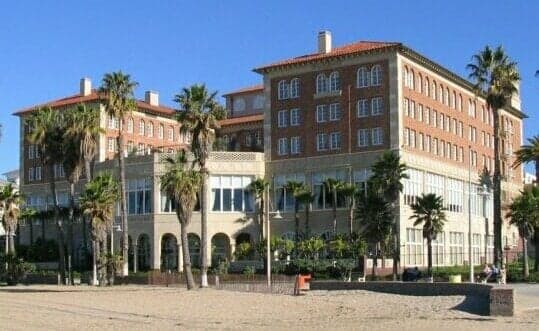
Photo: Wikipedia
Demographics of Santa Monica, CA
Affluence Level in Santa Monica, CA
A wealthy area with high-earning, well-educated households. Incomes, home values, and educational attainment meaningfully outpace national averages.
People of Santa Monica, CA
Santa Monica’s 91,535 residents form one of the densest and most educated urban populations in California, with nearly 69% holding a bachelor’s degree or higher. The city is predominantly White (61.8%), with a significant Hispanic community (16.4%) and a growing East/Southeast Asian population (7.5%), while the foreign-born share is a relatively low 7.5%. Known for its beachfront lifestyle, progressive politics, and high cost of living, Santa Monica’s population today is a mix of longtime working-class families, affluent professionals, and a transient student and creative workforce drawn by the tech and entertainment industries.
How the city was settled and grew
Santa Monica’s original inhabitants were the Tongva people, who lived along the coast for thousands of years before Spanish colonization. The modern city was founded in 1875 when Senator John P. Jones and Robert Baker platted a seaside resort at the terminus of the Los Angeles & Independence Railroad. The first major wave of settlers were Midwestern and Eastern European migrants seeking land and opportunity, building modest homes in the Ocean Park and Santa Monica Pier areas. By the early 1900s, the arrival of the Pacific Electric Railway turned Santa Monica into a beachside destination, drawing tourists and second-home owners. The 1920s and 1930s saw a boom in apartment construction in Wilshire-Montana and Sunset Park, attracting white-collar workers from downtown Los Angeles. During World War II, the Douglas Aircraft Company plant (now the Santa Monica Airport) brought thousands of defense workers, including African Americans from the South and the Midwest, who settled in the Pico neighborhood. Post-war, the city’s population peaked near 100,000, but suburban flight and rising rents began reshaping its demographics by the 1960s.
Modern era (post-1965)
The 1965 Immigration and Nationality Act opened doors for new waves of immigrants, but Santa Monica’s foreign-born share (7.5%) remains well below the Los Angeles County average. The most notable post-1965 shift was the growth of the Hispanic population, concentrated in the Pico and Santa Monica Airport areas, as Mexican and Central American families filled service and construction jobs. The East/Southeast Asian community (7.5%) grew more slowly, with Japanese and Chinese residents clustering in Ocean Park and Wilshire-Montana, often in professional and tech roles. The Indian subcontinent population (1.8%) is smaller but visible in the tech and healthcare sectors, with no single dominant neighborhood. Meanwhile, the Black population (4.8%) has declined from its post-war peak, as rising housing costs pushed many families to Inglewood and the Antelope Valley. The 1980s and 1990s saw a wave of affluent white professionals—drawn by the tech boom and proximity to Silicon Beach—renovating bungalows in North of Montana and Sunset Park, accelerating gentrification. Today, Santa Monica is one of the most racially integrated cities in the region, though income disparities between the Pico neighborhood and North of Montana are stark.
The future
Santa Monica’s population is projected to remain stable or grow slowly, constrained by high housing costs and strict rent control. The Hispanic share is likely to hold steady or decline slightly as families are priced out, while the East/Southeast Asian and Indian populations are expected to grow modestly, driven by tech and biotech employment. The white population will likely remain dominant but may become more diverse in origin, with an influx of European and Australian expatriates in Ocean Park and Santa Monica Pier areas. The city’s cultural identity is evolving from a laid-back beach town to a dense, high-amenity urban center, with new mixed-use developments in Downtown Santa Monica attracting younger, childless professionals. For families, the trend is toward smaller household sizes and a higher share of renters, as single-family homes become unaffordable for all but the wealthiest. The next decade will likely see continued demographic stability, with the city becoming whiter and wealthier at the top while retaining a diverse service workforce in the Pico corridor.
For someone moving in now, Santa Monica offers a highly educated, politically progressive, and amenity-rich environment, but the population is increasingly stratified by income. The city is becoming a place for professionals and empty-nesters who can afford its premium, while families and working-class residents face growing pressure to leave. New arrivals should expect a dense, walkable, and expensive community where diversity is present but concentrated in specific neighborhoods.

* Values derived from national, state, county, city and local statistics and may differ in a specific area. Last updated: 2026-06-08T04:53:42.000Z
Narrative content on this page is AI-generated and may contain mistakes. Verify any details that matter before acting on them.
ReloMaps may earn a commission from affiliate links at no extra cost to you.

