
Photo: Wikipedia
Political ClimatePolitical Climate in Santa Monica, CA
District shown is the primary district for this city’s centroid. Cities may span multiple districts.
Local Political AnalysisPolitical Analysis of Santa Monica, CA
Santa Monica is one of the most reliably liberal cities in California, with a Cook Partisan Voting Index (PVI) of D+21 — meaning it votes Democratic by a margin 21 points above the national average. That’s a full nine points bluer than California as a whole (D+12), and it’s been that way for decades. If you look at presidential elections, Santa Monica routinely gives Democrats 75-80% of the vote; in 2020, Joe Biden pulled in over 80% here. The city’s politics are shaped by a highly educated, affluent, and socially progressive population, plus a strong union presence and a vocal activist class. But it’s not a monolith — there are real tensions between the city’s progressive ideals and the practical realities of governing a dense, expensive coastal city.
How it compares
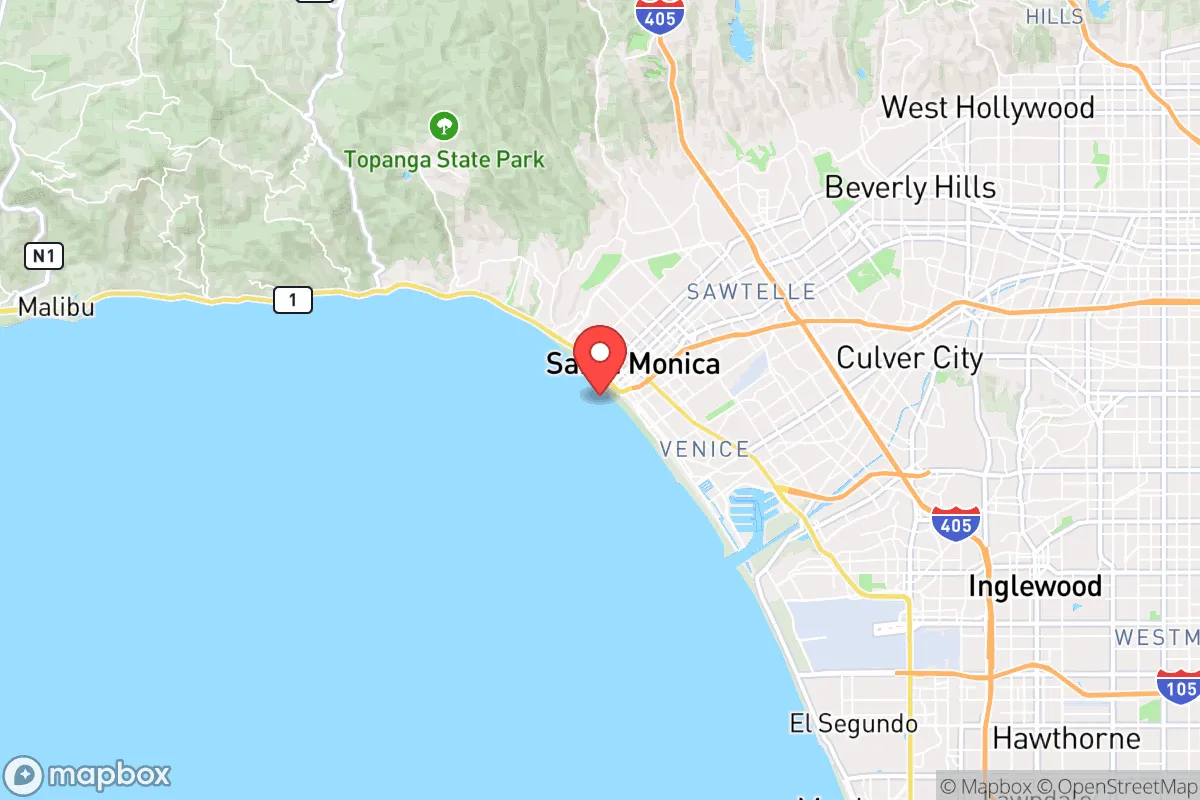
Compared to the rest of California, Santa Monica is a deep-blue outlier even within a blue state. The state’s D+12 PVI already makes it one of the most Democratic states in the country, but Santa Monica’s D+21 puts it in the same league as Berkeley or San Francisco’s core. Drive just a few miles inland, and the picture shifts dramatically. West Los Angeles and Mar Vista are still solidly blue but less intense, while Brentwood and Pacific Palisades lean more moderate — you’ll see more Republican yard signs in those neighborhoods during close races. Head further east to Beverly Hills or Century City, and the politics get noticeably more centrist, especially on taxes and business regulation. The real contrast comes when you go north to Malibu, which is still blue but with a stronger libertarian streak, or south to Venice, which is even more progressive than Santa Monica on social issues but more skeptical of development. In statewide elections, Santa Monica’s votes help push California left, but locally, the city’s politics are often more radical than the state average — especially on housing, homelessness, and police reform.
What this means for residents
For liberal residents, Santa Monica is largely a comfortable fit. The city council is dominated by progressives, and policies like rent control, universal preschool, and strong tenant protections are the norm. You’ll find plenty of like-minded neighbors, and local activism is a major part of civic life — whether it’s climate marches, homeless outreach, or school board meetings. For conservative residents, life here can feel isolating. There’s no real Republican infrastructure; the local GOP club is tiny and mostly symbolic. You’ll hear progressive viewpoints in most casual conversations, and local media leans hard left. But it’s not hostile — more like a place where you keep your politics to yourself unless you want a debate. The practical impact is that conservative residents often feel their votes don’t matter in local elections, and they may find city policies on taxes, business licensing, and land use frustrating. Property taxes are high even by California standards, and new business regulations tend to favor established players over newcomers.
Culturally, Santa Monica stands apart from much of California in its intensity around local issues. The homelessness crisis is a daily political flashpoint — the city has poured millions into services while also facing lawsuits over encampment sweeps. Development is another battleground: the city’s slow-growth faction fights nearly every new apartment building, while pro-housing groups push for more density near the Expo Line stations. The result is a political climate that’s both deeply engaged and often paralyzed by internal disagreements. If you move here, expect to hear a lot about zoning, parking, and the Santa Monica Pier — and expect those conversations to be passionate, even among friends. The trajectory is toward more of the same: Santa Monica will likely stay D+21 or drift slightly bluer, but the real action is in the intra-progressive fights over how to govern a city that wants to be both a beach paradise and a social justice model.

State Political ClimatePolitical Climate in California
State Political AnalysisPolitical Environment in the State
California is a solidly Democratic state with a Cook PVI of D+12, meaning it votes about 12 points more Democratic than the national average in presidential elections. The dominant coalition is a mix of coastal urban professionals, Latino voters, and younger generations, but the state has been shifting rightward in recent cycles—Donald Trump improved his margin by about 5 points from 2020 to 2024, and down-ballot races in places like Orange County and the Central Valley have tightened. Over the last 10-20 years, California has gone from a competitive purple state (it voted for George W. Bush in 2004) to a deep blue stronghold, but the last two election cycles suggest that blue is fading toward a lighter shade of blue, especially in inland areas.
Urban vs. rural divide
The political map of California is a tale of two states. The coastal metros—San Francisco, Los Angeles, and Oakland—drive the Democratic supermajority, with San Francisco County giving Biden 85% of the vote in 2020. But the Central Valley and inland regions tell a different story: Bakersfield (Kern County) voted +20 for Trump in 2024, and Redding (Shasta County) is one of the most conservative small cities in the state, with Trump winning by 30 points. The real story is the suburbs: Orange County, once a Republican stronghold, flipped blue in 2018 and has stayed there, but Riverside and San Bernardino counties in the Inland Empire are now battlegrounds—Biden won them by single digits in 2020, and Trump narrowed that gap in 2024. The divide isn't just coastal vs. inland; it's also density-driven. High-density urban cores are deep blue, while exurbs and rural areas are red or trending red.
Policy environment
California's policy environment is defined by high taxes, heavy regulation, and progressive social policies. The state has a progressive income tax with a top marginal rate of 13.3% (the highest in the nation), a state sales tax that can exceed 10% in some cities, and some of the highest gas taxes in the country. Property taxes are capped at 1% of assessed value under Proposition 13, but reassessment upon sale means newer homeowners pay much more than long-term residents. Education policy is centralized in Sacramento, with a strong teachers' union influence and a recent push for ethnic studies requirements in high schools. Healthcare is heavily regulated, with the state running its own insurance exchange (Covered California) and expanding Medi-Cal to all income-eligible residents regardless of immigration status. Election laws are among the most accessible in the nation: all registered voters receive a mail-in ballot, same-day registration is available, and the state has automatic voter registration at the DMV. For conservatives, the policy environment can feel stifling—high costs, strict environmental rules, and a regulatory apparatus that makes building anything (housing, businesses, infrastructure) slow and expensive.
Recent policy direction
Recent legislation shows California moving further left on social issues while making modest concessions on economic regulation. On gun and self-defense law, the state passed SB 2 in 2023, which bans carrying firearms in most public places (including parks, hospitals, and public transit) and raises the age for concealed carry permits to 21—this is currently tied up in federal court. On parental and education rights, the state passed AB 1955 in 2024, which prohibits school districts from requiring parental notification when a child changes their gender identity or pronouns, making California a "sanctuary state" for transgender students. On speech, the state passed AB 587 in 2022, requiring social media platforms to report their content moderation policies, which critics call a backdoor censorship law. On privacy and surveillance, the California Privacy Rights Act (CPRA) of 2020 expanded consumer data protections, but the state also expanded police surveillance powers through the use of AI-powered license plate readers. On medical and bodily autonomy, California has codified abortion rights into law (SB 245, 2022) and expanded Medicaid coverage for abortion services. Property rights remain constrained by rent control laws (AB 1482 caps annual rent increases at 5% plus inflation) and strict environmental review under the California Environmental Quality Act (CEQA), which is often used to block new housing. On voting and ballot access, the state has moved to expand mail-in voting permanently (AB 37, 2021) and restore voting rights to people on parole (AB 646, 2023). For a relocator weighing liberties, the trade-off is clear: California offers broad personal autonomy on medical and privacy issues but imposes tight restrictions on property use, self-defense, and parental rights in education.
Civil unrest & political movements
California has a long history of political activism, and recent years have seen both left- and right-wing movements flare up. The 2020 George Floyd protests in Los Angeles and Oakland were among the largest in the nation, with some turning into looting and property destruction. The "Recall Newsom" movement in 2021 gathered 1.7 million signatures and forced a special election, though Newsom survived with 62% of the vote. On the right, the "California Exodus" narrative has been fueled by high-profile defections of businesses and residents to Texas and Tennessee, but actual net migration data shows the outflow is concentrated among lower-income households, not just wealthy conservatives. Immigration politics are a constant flashpoint: California is a "sanctuary state" under SB 54 (2017), which limits local law enforcement cooperation with federal immigration authorities. In San Francisco, the "New California" secession movement has fizzled, but rural counties like Modoc and Siskiyou have passed symbolic resolutions declaring themselves "Second Amendment sanctuaries" or "constitutional counties." Election integrity controversies have been muted compared to other states, but the 2022 recall of progressive District Attorney Chesa Boudin in San Francisco showed that even deep-blue cities have limits on tolerance for crime and disorder.
Projection
Over the next 5-10 years, California is likely to remain Democratic but continue its slow rightward drift, especially in inland areas. Demographic shifts are key: the state's population has declined for three consecutive years (2020-2023), with net out-migration concentrated among working-age families and middle-income earners. The people leaving tend to be more moderate or conservative, while the people arriving (mostly international immigrants) lean Democratic. This means the state's political center of gravity will shift toward the coast, but the inland areas—the Central Valley, the Inland Empire, and the far north—will become more Republican. Housing costs will remain the dominant political issue, and if the state fails to build enough housing, the exodus of middle-class families will accelerate, further polarizing the electorate. A new resident moving in now should expect to find a state where the Democratic supermajority in Sacramento remains intact, but where local politics in places like Bakersfield, Redding, and even parts of Orange County will feel increasingly conservative. The policy environment will likely see incremental moderation on economic issues (permitting reform, housing deregulation) but continued expansion on social issues (transgender rights, abortion access, criminal justice reform).
For a new resident, the bottom line is this: California offers a high-cost, high-regulation environment with broad personal freedoms on medical and privacy issues but tight restrictions on property use, self-defense, and parental rights in education. If you're a conservative, you'll find like-minded communities in the Central Valley, the Inland Empire, and the far north, but you'll be fighting uphill on state policy. If you're a liberal, you'll find a state that largely aligns with your values, but you'll pay for it in taxes and cost of living. Either way, the state's trajectory is toward a more polarized, expensive, and politically active future—plan accordingly.
* Values derived from national, state, county, city and local statistics and may differ in a specific area. Last updated: 2026-06-08T04:53:42.000Z
Narrative content on this page is AI-generated and may contain mistakes. Verify any details that matter before acting on them.
ReloMaps may earn a commission from affiliate links at no extra cost to you.

