Photo: Wikipedia
Strategic Assessment of Santa Rosa, CA
Multiple tactical vulnerabilities. Population density, target proximity, or disaster risk are likely compounding. A retreat property and exit planning is required.
What does the Strategic Assessment tell us?
Our Strategic Assessment grades tactical survivability of an area. Major population centers, military targets, fallout zones, natural disasters, and border exposure all drive risk — lower exposure means a more defensible position in a crisis.
This is heavily inspired by Joel Skousen's Strategic Relocation book. Highly recommended you checkout the book ($)What does this tell us?
Our Strategic Assessment grades tactical survivability of an area. Major population centers, military targets, fallout zones, natural disasters, and border exposure all drive risk — lower exposure means a more defensible position in a crisis.
This is heavily inspired by Joel Skousen's Strategic Relocation book. Highly recommended you checkout the book ($)Strategic Pillars

Key Distances
Regional Safe Places
Below is our recommended "safe zones" in California and the surrounding area based on our strategic heuristics. For most people, it's unrealistic to live in a “safe zone” full-time due to work, family or other personal reasons. They tend to be more rural. However, many of these areas are perfect for second homes and retreat properties that double as a vacation home or even a short-term rental.

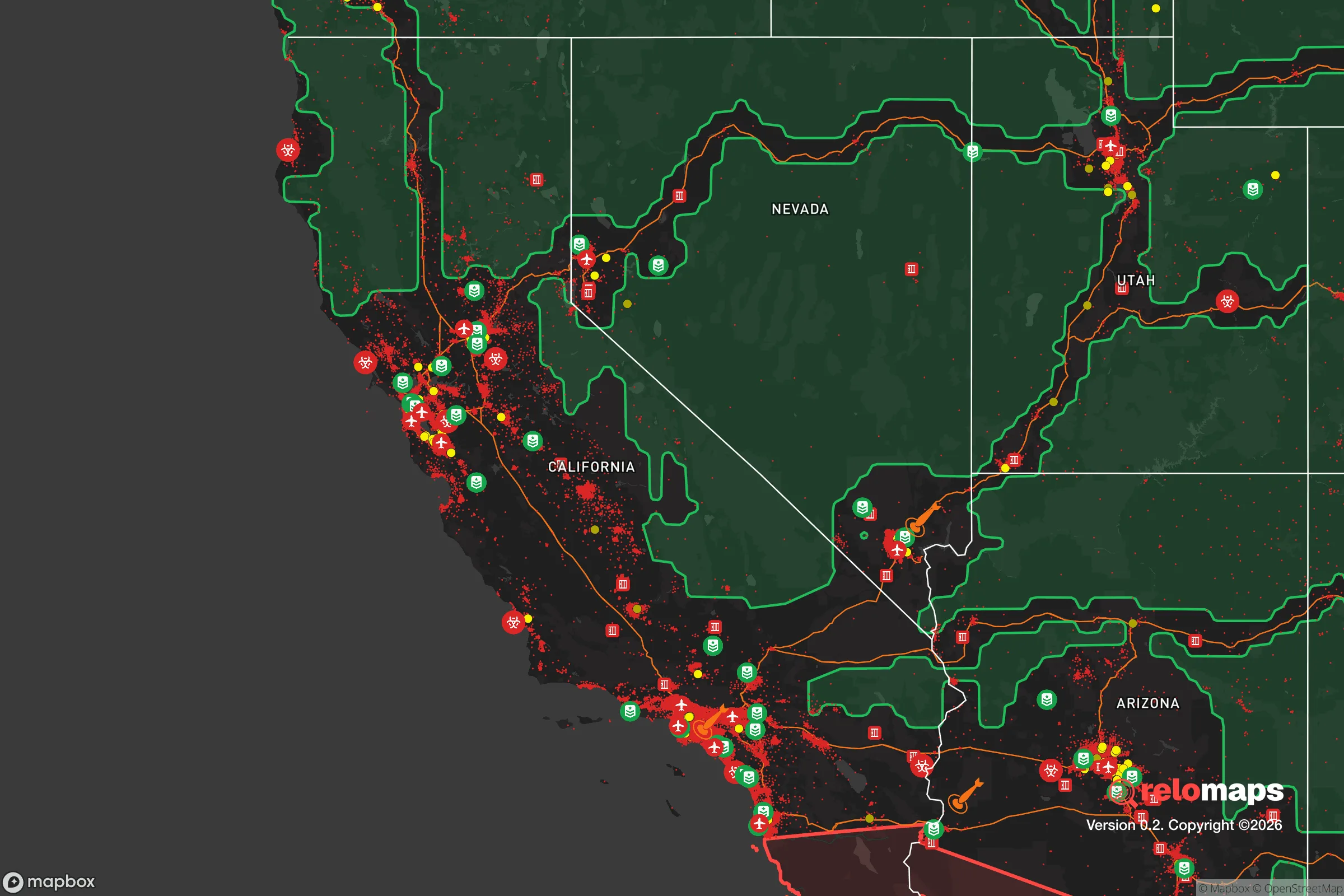


Important Note: For informational purposes only. This does not mean nothing bad ever happens in the green zones. Please use common sense. This is based on public data and modeled with AI. We tried to take a conservative approach but mistakes happen. We update this regularly as new information becomes available.
Solar Generator Recommendations
Backup power matters more here than in safer locations. We've picked three solar generators across budgets and capacity tiers — start with the budget unit if you only need a few essentials, or step up if you want to run a fridge and HVAC for days at a time.

Jackery Portable Power Station Explorer 300
Budget OptionPower on the Go: Weighing only 11 lbs, it's convenient to set up and store with book-sized foldable solar panels

BLUETTI Portable Power Station AC180
Designed for both indoor and outdoor scenarios, AC180 is highly capable as it has a robost capacity and continuous output power.

EF ECOFLOW DELTA Pro Ultra Power Station
Upgraded PickEcoFlow DELTA Pro Ultra is a whole-home energy system designed to grow with your family. Integrated with the Smart Home Panel 2, it scales to meet your evolving energy needs — keeping your home powered, intelligent, and secure through every stage of life.
We earn a commission, at no additional cost to you.
Strategic Assessment Analysis
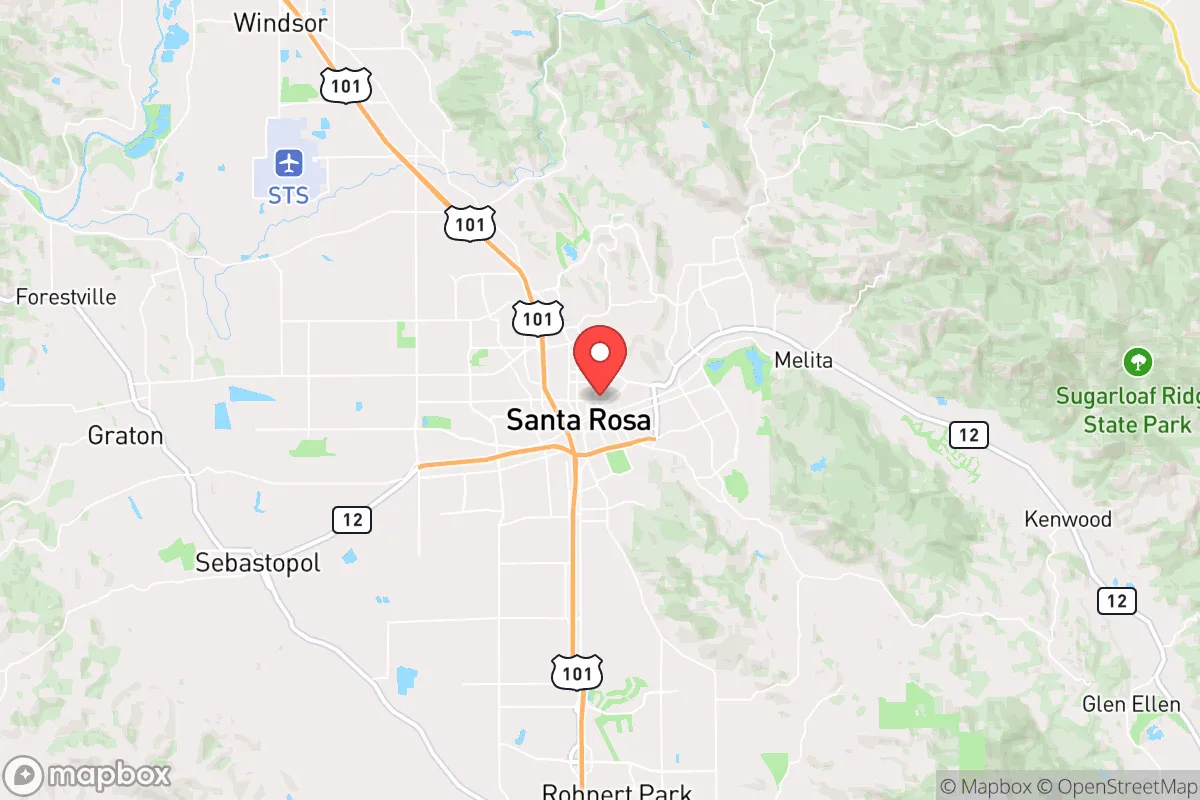
Santa Rosa, California, presents a complex strategic picture for the conservative prepper or survivalist. While its location in Sonoma County offers genuine resilience advantages—abundant water, fertile soil, and a climate that supports year-round food production—it sits uncomfortably close to the San Francisco Bay Area’s population centers and the associated risks of civil unrest, supply chain collapse, and mass casualty events. For a relocator prioritizing long-term security and self-sufficiency, Santa Rosa is a mixed bag: a potentially defensible redoubt with serious exposure to the fallout of a major urban crisis.
Geographic position and natural advantages for long-term security
Santa Rosa’s position in the Russian River Valley gives it a set of natural advantages that are hard to find closer to the coast or the Bay. The area is ringed by the Mayacamas and Sonoma Mountains, providing natural chokepoints and defensible terrain. The Russian River and its tributaries, including Mark West Creek and Santa Rosa Creek, offer a reliable surface water source—critical if municipal systems fail. The Mediterranean climate means a growing season that can run 8–9 months, allowing for serious food production. The surrounding agricultural land, much of it in vineyards and orchards, can be converted to staple crops with effort. The proximity to the Pacific (about 20 miles west) provides a potential maritime escape route or resupply corridor, though the coast itself is heavily populated and a likely target during a crisis. The area’s elevation, ranging from 100 to 1,000 feet, offers good line-of-sight for observation and defense, while the hills provide natural barriers against large-scale movement.
Risks, exposures, and proximity to fallout-relevant landmarks
The biggest strategic liability is Santa Rosa’s proximity to the Bay Area—roughly 55 miles north of San Francisco and 40 miles from the Oakland-San Jose corridor. In a major civil unrest event, mass casualty disaster, or economic collapse, the Bay Area’s 7.8 million people would likely trigger a mass exodus north along US 101 and CA 12. Santa Rosa sits directly on that evacuation funnel. The city itself has a population of about 178,000, but the greater Sonoma County area pushes 500,000. That density means competition for resources—food, water, fuel, medical supplies—will be intense in the first 72 hours. The area also has several high-value targets within a 100-mile radius: the Diablo Canyon nuclear plant (about 150 miles south), the Port of Oakland, the San Francisco financial district, and the Silicon Valley tech infrastructure. A nuclear incident, EMP, or coordinated attack on those targets would create a fallout zone that could drift northward depending on wind patterns. The 2017 Tubbs Fire and 2020 Glass Fire demonstrated that wildfire is a recurring, acute threat—one that can force mass evacuations and destroy infrastructure. For a prepper, the fire risk means you need a defensible space and a bug-out plan, not just a bug-in strategy.
Practical resilience for a relocator: food, water, energy, and defensibility
For a relocator serious about self-sufficiency, Santa Rosa offers a workable baseline but requires significant investment. Water is the strongest asset: the Russian River and local aquifers provide a reliable source, but you’ll need a well or a surface-water catchment system with filtration. Municipal water is treated and vulnerable to contamination or shutdown. Food production is viable: the climate supports fruit trees (apples, plums, citrus), vegetables, and small livestock (chickens, goats, rabbits). The local farmers’ markets and agricultural supply chains are robust in normal times, but in a crisis, you’ll need to be growing your own. The soil is generally good, but you’ll need to amend for heavy clay in some areas. Energy is a mixed picture. The area gets 260+ sunny days a year, making solar a strong option—but the wildfire risk means grid outages are common, and solar panels can be damaged by smoke and ash. A backup generator with fuel storage is essential. The local power grid is aging and vulnerable; PG&E’s public safety power shutoffs (PSPS) are a recurring reality. Defensibility is moderate. The hills and valleys provide natural chokepoints, but the suburban sprawl of Santa Rosa means most properties are within sight of neighbors. A rural property in the hills west of town (near Sebastopol or Occidental) offers better isolation and defensible terrain. The local law enforcement presence is decent, but in a prolonged crisis, you cannot rely on them. The community is politically mixed—Sonoma County leans left, but there are strong conservative and libertarian pockets, especially in the rural areas. Building a mutual assistance network with like-minded neighbors is critical.
The overall strategic picture for a conservative relocator
Santa Rosa is not a bug-out location for the hardcore survivalist—it’s too close to too many people and too many targets. But for a relocator who wants a balance of natural resources, climate resilience, and a reasonable distance from the worst of urban chaos, it has real potential. The key is to get outside the city limits, secure a property with its own water and solar, and build relationships with the local prepper and homesteading community. The wildfire risk is a constant factor that forces you to stay prepared—which is actually a good discipline. The proximity to the Bay Area is a double-edged sword: it gives you access to medical and supply networks in normal times, but it’s a liability in a crisis. If you’re looking for a place where you can ride out a moderate collapse while still being able to work a job and send kids to school, Santa Rosa is worth a hard look. Just don’t expect to be able to hold off a wave of refugees from San Francisco—that’s not realistic. Plan for a layered defense: a primary residence with good supplies, a secondary rural retreat further north (Mendocino or Lake counties), and a clear trigger for when to bug out. Santa Rosa can be a solid base of operations, but it’s not a fortress.

* Values derived from national, state, county, city and local statistics and may differ in a specific area. Last updated: 2026-04-24T11:35:09.000Z
Narrative content on this page is AI-generated and may contain mistakes. Verify any details that matter before acting on them.
ReloMaps may earn a commission from affiliate links at no extra cost to you.

