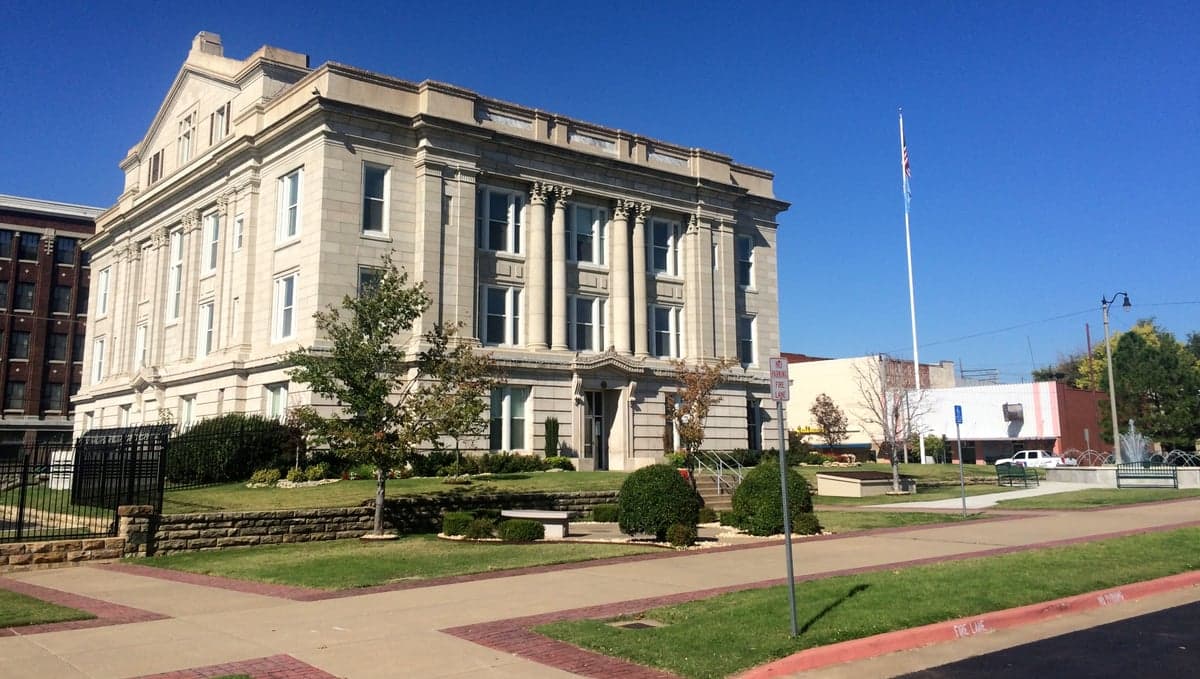
Photo: Wikipedia
Political ClimatePolitical Climate in Sapulpa, OK
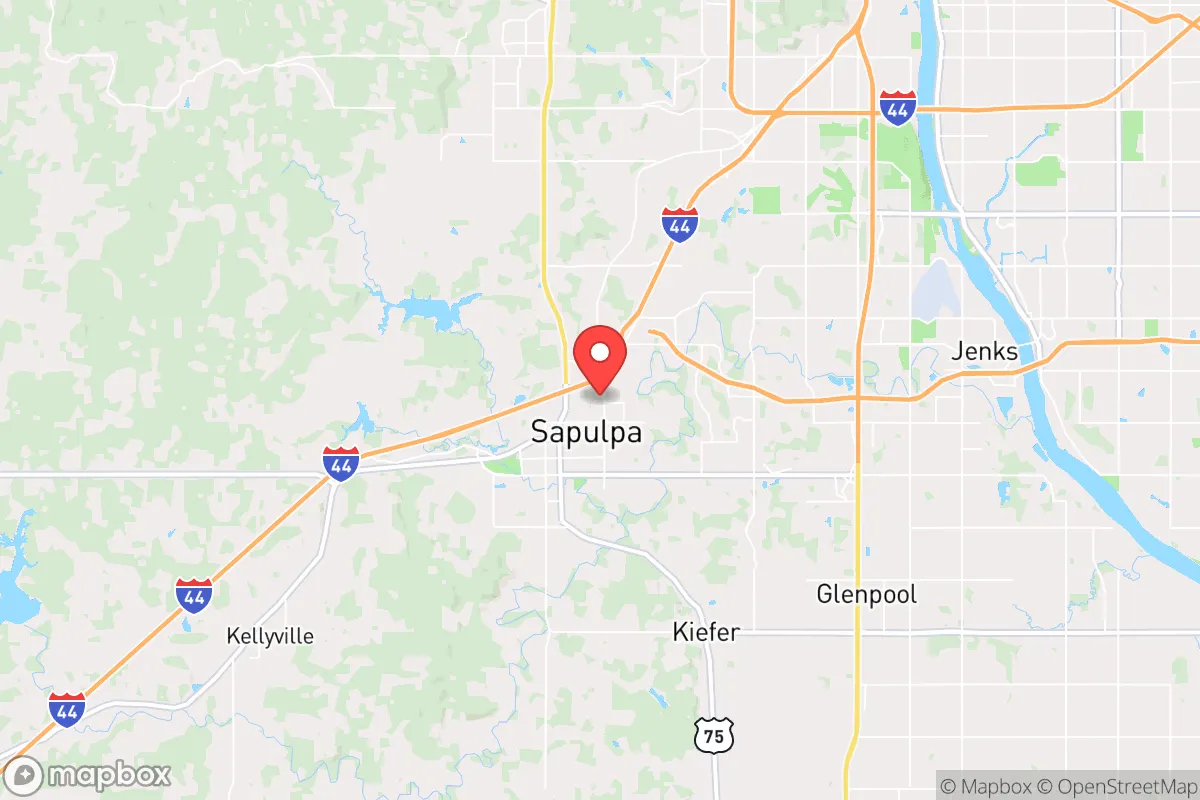
District shown is the primary district for this city’s centroid. Cities may span multiple districts.
Local Political AnalysisPolitical Analysis of Sapulpa, OK
Sapulpa has long been a solidly conservative community, and that hasn't changed much, even as the broader Tulsa metro area has seen some shifts. The Cook PVI rating of R+11 tells you the basics—this is a place where Republican candidates can generally count on winning by a comfortable margin, and that's held true in recent cycles. But if you've lived here a while, you know the real story is less about the raw numbers and more about the feeling on the ground. The political climate here is still rooted in the kind of common-sense, limited-government thinking that built this town, but you can sense a subtle pressure from the west, where Tulsa's more progressive energy sometimes bleeds over.
How it compares
Drive ten miles east into Tulsa proper, and you'll hit a very different political atmosphere—especially in midtown or near the university areas, where you'll see more Harris/Walz signs and hear talk about city-level diversity initiatives and zoning reforms. Head south to Bixby or Jenks, and you'll find a more reliably conservative, family-oriented vibe, but even there you'll notice a growing number of transplants bringing big-city ideas about housing and land use. Sapulpa, by contrast, feels like a bit of a holdout. Compared to nearby Glenpool or even Sand Springs, Sapulpa's politics are more straightforwardly conservative, with less of the suburban hand-wringing over growth management. The city council and county commission here still lean heavily toward protecting property rights and keeping taxes low, which is a big reason why folks from more regulated parts of the country are starting to take notice.
What this means for residents
For the average person living here, the political climate translates into a pretty hands-off approach from local government. You're not going to see the kind of overreach you hear about in places like Norman or Oklahoma City, where city councils have toyed with mask mandates or tried to restrict short-term rentals. In Sapulpa, the prevailing attitude is still that your property is your own, and the city's job is to keep the roads paved and the water running, not to manage your personal choices. That said, there's a quiet concern among longtime residents that as the metro area grows, so will the pressure to adopt more progressive policies—things like inclusionary zoning or even just more aggressive code enforcement that can feel like a backdoor way of telling people how to live. The school board has stayed pretty traditional, which matters to families who want to avoid the kind of curriculum battles you see in larger districts.
One thing that sets Sapulpa apart culturally is its independent streak. You'll see more "Don't Tread on Me" flags here than in the suburbs to the south, and there's a real skepticism of any new program that sounds like it comes from a state or federal mandate. The local gun culture is strong, and the Second Amendment isn't really debated—it's just assumed. If you're looking for a place where the government stays out of your business and the neighbors mostly agree that less regulation is better, Sapulpa still fits that bill. But keep an eye on the city council elections in the next couple of cycles; that's where any shift toward a more progressive agenda would show up first, and it's worth paying attention to if you value the way things have been.

State Political ClimatePolitical Climate in Oklahoma
State Political AnalysisPolitical Environment in the State
Oklahoma has been a reliably red state for decades, with Republicans holding every statewide office and supermajorities in both legislative chambers, but the real story is how much deeper that red has gotten since the early 2000s. The state voted for Donald Trump by 33 points in 2020 and by a similar margin in 2024, a shift from the 2000s when it was still solidly Republican but with a stronger Democratic presence in rural areas and the eastern part of the state. The dominant coalition is now a mix of evangelical conservatives, oil and gas interests, and a growing number of transplants from bluer states who are specifically seeking a freer environment, which has pushed the state further right on cultural and economic issues.
Urban vs. rural divide
The political map of Oklahoma is starkly divided between its two major metro areas and the vast rural expanse. Oklahoma City and its suburbs, including Edmond and Norman, lean Republican overall, but with significant variation: Norman, home to the University of Oklahoma, is the bluest city in the state, consistently voting Democratic in presidential races and electing progressive local officials. Oklahoma City itself is a Republican-leaning city, but its core is more moderate, while the outer suburbs like Yukon and Mustang are deeply conservative. Tulsa, the second-largest city, is a Republican stronghold, with its suburbs like Broken Arrow and Jenks among the most reliably red areas in the state. The real engine of Oklahoma’s Republican dominance is the rural and small-town vote—counties like Texas County in the panhandle, Custer County in the west, and Le Flore County in the southeast routinely deliver 80%+ margins for GOP candidates. The eastern part of the state, historically more Democratic due to union influence and a populist streak, has flipped hard to the right over the past two decades, driven by cultural issues and the decline of organized labor.
Policy environment
Oklahoma’s policy environment is aggressively conservative, with a focus on low taxes, limited regulation, and cultural conservatism. The state has a flat income tax of 4.75%, which is being phased down toward 3.99% under legislation passed in 2024, and no estate tax. Property taxes are among the lowest in the nation, capped by a constitutional amendment that limits annual increases to 5%. The regulatory posture is business-friendly, particularly for oil and gas, agriculture, and manufacturing, with a right-to-work law and minimal environmental permitting hurdles. Education policy has been a major battleground: in 2022, the state passed the Oklahoma Parental Rights Act, which requires schools to notify parents of any changes to a student’s services or mental health, and in 2023, it enacted a universal school voucher program that allows any family to use state funds for private or homeschool expenses. Healthcare policy is limited, with the state refusing Medicaid expansion until 2020, and even then only through a ballot initiative that the legislature has since tried to restrict. Election laws are strict: voter ID is required, early voting is limited to three days, and absentee ballots require a notary or two witnesses. The state also passed a law in 2021 banning ranked-choice voting, a move aimed at preventing any future shift toward progressive electoral reforms.
Trajectory & freedom
Oklahoma is becoming more free in several key areas, particularly on gun rights, parental rights, and tax policy, but there are concerning trends in government overreach on social issues. In 2019, the state passed constitutional carry, allowing any adult to carry a firearm without a permit, and in 2023, it enacted a law prohibiting state enforcement of any federal gun control measures. Parental rights expanded significantly with the 2022 Parental Rights Act and the 2023 school voucher program, which gives families direct control over education funding. On medical freedom, Oklahoma was one of the first states to ban COVID-19 vaccine mandates for state employees and contractors in 2021, and it passed a law in 2023 prohibiting businesses from requiring vaccine passports. However, the state has also seen government overreach in the form of a near-total abortion ban passed in 2022, which includes no exceptions for rape or incest, and a 2023 law that restricts gender-affirming care for minors, both of which represent the state using its power to enforce a specific moral code. Property rights remain strong, with no statewide zoning mandates and a 2021 law limiting homeowners’ associations’ ability to restrict solar panels or clotheslines. The overall trajectory is toward more individual freedom on guns, education, and medical choice, but with a corresponding increase in government intervention on social and moral issues.
Civil unrest & political movements
Oklahoma has seen relatively little civil unrest compared to other states, but there are active political movements on both sides that a new resident would notice. The most visible flashpoint in recent years was the 2022 protests at the state capitol over the abortion ban, which drew hundreds of demonstrators but remained peaceful. On the right, the Oklahoma Second Amendment Association and the Oklahoma Parents’ Bill of Rights group are highly active, organizing rallies and lobbying efforts that have successfully pushed the legislature further right. Immigration politics are less heated than in border states, but Oklahoma passed a law in 2024 requiring law enforcement to cooperate with federal immigration authorities and banning sanctuary city policies, which has sparked some local resistance in Norman and Oklahoma City. Election integrity controversies have been minimal, though the state did conduct a forensic audit of the 2020 election in 2021, which found no evidence of widespread fraud. There is a small but vocal secessionist movement in the panhandle, centered around the town of Guymon, where some residents have called for joining Texas due to perceived neglect from Oklahoma City, but this remains fringe. The most visible political movement is the growing number of conservative transplants from California and Colorado, who are actively reshaping the political culture in suburbs like Edmond and Bixby, pushing for even lower taxes and more school choice.
Projection
Over the next 5-10 years, Oklahoma is likely to become even more conservative, driven by two key demographic trends: the continued exodus of liberals from urban centers like Norman and the influx of conservative migrants from high-tax states. The state’s population is growing fastest in the Oklahoma City suburbs and the Tulsa exurbs, areas that already vote 70%+ Republican, while rural counties are slowly depopulating. This will likely push the state further right on tax policy, with the flat income tax likely dropping to 3% or lower by 2030, and on education, with the voucher program expanding to cover all private school costs. The biggest wildcard is the energy transition: as oil and gas jobs decline, the state may face economic pressure that could moderate its politics, but for now, the cultural and political momentum is firmly toward more conservative policies. A new resident moving in now should expect to find a state that is increasingly aligned with traditional values, low taxes, and limited government, but also one where the government is willing to intervene heavily on social issues. The practical takeaway is that Oklahoma offers a high degree of personal freedom on economic and gun issues, but less on social and medical choices, and that trajectory is likely to continue for the foreseeable future.
For someone considering a move to Oklahoma, the bottom line is that you’ll find a state that respects your wallet and your right to defend yourself, but one that also expects you to conform to a specific set of cultural norms. The tax burden is low and getting lower, schools are increasingly parent-driven, and the political climate is stable and predictable. If you’re looking for a place where government stays out of your business on most fronts, Oklahoma is a strong choice—just be aware that on certain social issues, the state is more than willing to step in.
* Values derived from national, state, county, city and local statistics and may differ in a specific area. Last updated: 2026-04-21T09:09:34.000Z
Narrative content on this page is AI-generated and may contain mistakes. Verify any details that matter before acting on them.
ReloMaps may earn a commission from affiliate links at no extra cost to you.

