Photo: Wikipedia
Personal Sovereignty in Saratoga Springs, NY
Moderate friction. Expect trade-offs in some aspect of personal liberty and independence.
What does Personal Sovereignty tell us?
Personal Sovereignty measures your capacity for self-reliance and independence with minimal government friction. Higher scores mean fewer barriers between you and the way you want to live... but it assumes you have the space you need and good neighbors.
What does this tell us?
Personal Sovereignty measures your capacity for self-reliance and independence with minimal government friction. Higher scores mean fewer barriers between you and the way you want to live... but it assumes you have the space you need and good neighbors.
State Policy
Energy independence: Importer (12% of energy produced in-state)
Personal Liberty
Homesteading

Personal Liberty Analysis
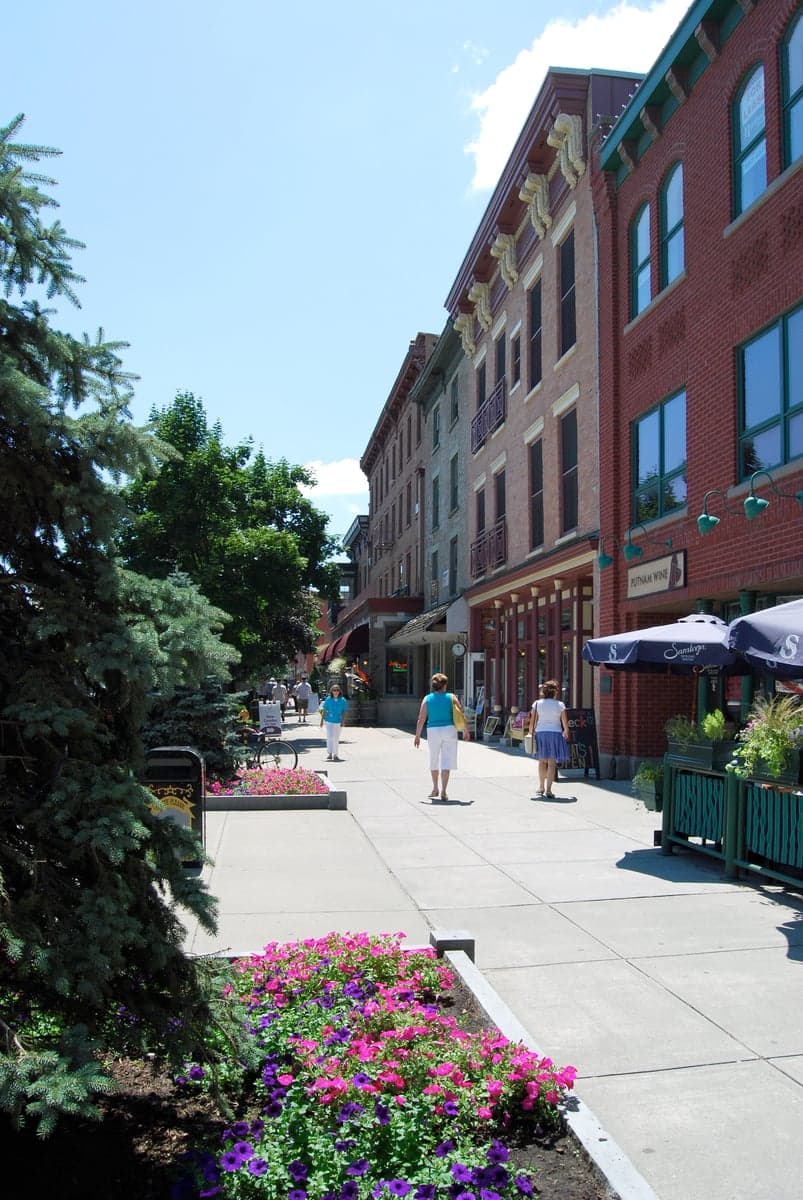
Saratoga Springs, New York, presents a complex and often contradictory environment for personal sovereignty, one that requires a clear-eyed, strategic assessment rather than a simple thumbs-up or thumbs-down. While the city’s historic charm and natural beauty are undeniable, the underlying legal and political framework—dominated by New York State’s aggressively progressive agenda—places significant constraints on individual autonomy, particularly for those with a survivalist or prepper mindset. For a conservative-leaning individual or family, the trade-offs here are sharp: you gain access to a relatively high-functioning local economy and community, but you must navigate a state government that actively encroaches on gun rights, parental control, and economic self-reliance. This analysis breaks down the key sovereignty factors, from tax burden to homesteading viability, so you can decide if the price of admission is worth it.
Tax burden and regulatory posture in Saratoga Springs
New York State’s tax burden is among the highest in the nation, and Saratoga Springs is no exception. The combined state and local income tax rate can exceed 10% for higher earners, and property taxes in Saratoga County are well above the national average—typically ranging from 2.5% to 3.5% of assessed home value annually. For a $400,000 home, that’s $10,000 to $14,000 per year in property taxes alone, with no homestead exemption to soften the blow. Sales tax in the city is 8%, applied to most goods and services. This heavy tax burden directly funds a state government that has shown increasing hostility toward personal freedoms, from strict gun control to expansive vaccine mandates. The regulatory posture is equally burdensome: New York’s building codes, environmental regulations, and land-use rules are among the most restrictive in the country. For anyone looking to build a self-sufficient homestead or operate a small business without bureaucratic interference, the state’s red tape is a major obstacle. The city itself has a reputation for progressive local governance, with zoning boards and planning commissions that often prioritize “smart growth” and density over individual property rights. In short, you are paying a premium for the privilege of living under a regulatory regime that actively limits your autonomy.
Self-defense and gun law specifics in New York
For those who view the Second Amendment as a cornerstone of personal sovereignty, New York State is a hostile environment. The state’s SAFE Act (2013) and the more recent Concealed Carry Improvement Act (CCIA, 2022) have created one of the most restrictive gun law regimes in the country. In Saratoga Springs, you cannot carry a concealed firearm without a “proper cause” permit—a standard that, in practice, gives local licensing officers (usually county sheriffs or judges) broad discretion to deny applications. The CCIA also bans firearms in a long list of “sensitive locations,” including parks, public transportation, and even private businesses unless the owner explicitly posts a sign allowing carry. Magazine capacity is capped at 10 rounds, and the state maintains a registry of assault weapons and high-capacity magazines. For a prepper, this means your ability to defend your home and family with standard equipment is legally constrained. Ammunition purchases require a background check and are tracked by the state. While Saratoga County is more conservative than downstate areas, and some sheriffs have pushed back against the CCIA, the legal reality is that you are operating under a regime that views armed self-defense as a privilege, not a right. If you value the ability to carry a sidearm without government permission, this is not your state.
Self-reliance and homesteading viability in Saratoga Springs
The city itself is dense and suburban, with typical lot sizes of 0.1 to 0.5 acres in the core, making serious homesteading impractical. However, the surrounding Saratoga County offers more options. In the towns of Greenfield, Wilton, and Moreau, you can find 2- to 10-acre parcels for $50,000 to $150,000, depending on proximity to amenities. Zoning in these areas generally allows for small-scale agriculture, including chickens, goats, and vegetable gardens, but you will need to check local ordinances carefully—some towns restrict livestock or require minimum lot sizes of 5 acres for a single horse or cow. Off-grid feasibility is limited: New York State requires connection to the electrical grid for new construction in most areas, and solar panel installations must comply with state net metering rules that are less favorable than in sunnier states. Rainwater collection is legal but regulated, and composting toilets require a permit from the county health department. The growing season is short (roughly 140 frost-free days), and the soil in much of the county is heavy clay, requiring significant amendment for productive gardening. For a serious prepper, the best bet is to buy land in a more rural township like Edinburg or Day, where zoning is looser and neighbors are farther apart. But even there, you are still subject to state-level restrictions on water rights, building codes, and waste disposal. Self-reliance here is possible, but it requires navigating a thicket of regulations that a state like Texas or Montana would not impose.
Personal liberties: parental rights, medical autonomy, speech, and property
New York State has been at the forefront of expanding government authority over personal decisions, and Saratoga Springs reflects that trend. Parental rights are under direct assault: the state’s Education Law now mandates that schools cannot notify parents if a child requests a name or pronoun change, and the state’s “safe harbor” laws allow minors to consent to certain medical procedures without parental knowledge. For conservative parents, this is a dealbreaker—your authority over your child’s upbringing is legally subordinate to the state’s agenda. Medical autonomy has also been eroded: New York maintained strict vaccine mandates for healthcare workers and school attendance during the COVID-19 pandemic, and the state has shown no interest in rolling back those powers. The state’s health department retains broad authority to impose quarantines, mask mandates, and vaccine requirements during declared emergencies. Free speech is ostensibly protected, but the state’s hate speech laws and social media regulation efforts have raised concerns among those who value unfiltered discourse. Property rights are constrained by the state’s strong eminent domain powers and its aggressive environmental regulations, which can restrict what you do with your land—for example, the Adirondack Park Agency’s jurisdiction extends into parts of Saratoga County, limiting development near wetlands and waterways. In sum, the state treats personal autonomy as a conditional grant from the government, not an inherent right.
Overall, Saratoga Springs offers a relatively safe, prosperous community with good schools and a vibrant downtown, but the price of admission is a state government that actively undermines the core tenets of personal sovereignty. For a conservative-leaning individual or family with a prepper mindset, the trade-offs are stark: you gain a high quality of life in a scenic, historic setting, but you must accept heavy taxes, restrictive gun laws, limited homesteading potential, and a legal environment that prioritizes state authority over parental and individual rights. Compared to a state like New Hampshire or Texas, where personal freedoms are more robustly protected, Saratoga Springs is a compromise—one that may be acceptable if you are willing to fight for your rights at the local level, but one that will never offer the full autonomy that many conservatives seek. If you value liberty above all else, look elsewhere. If you can tolerate a high-tax, high-regulation environment for the sake of community and culture, this city can work—but only if you are prepared to be a vigilant defender of your own freedoms.

* Values derived from national, state, county, city and local statistics and may differ in a specific area. Last updated: 2026-05-01T05:23:08.000Z
Narrative content on this page is AI-generated and may contain mistakes. Verify any details that matter before acting on them.
ReloMaps may earn a commission from affiliate links at no extra cost to you.

