Photo: Wikipedia
Political ClimatePolitical Climate in Saratoga Springs, NY
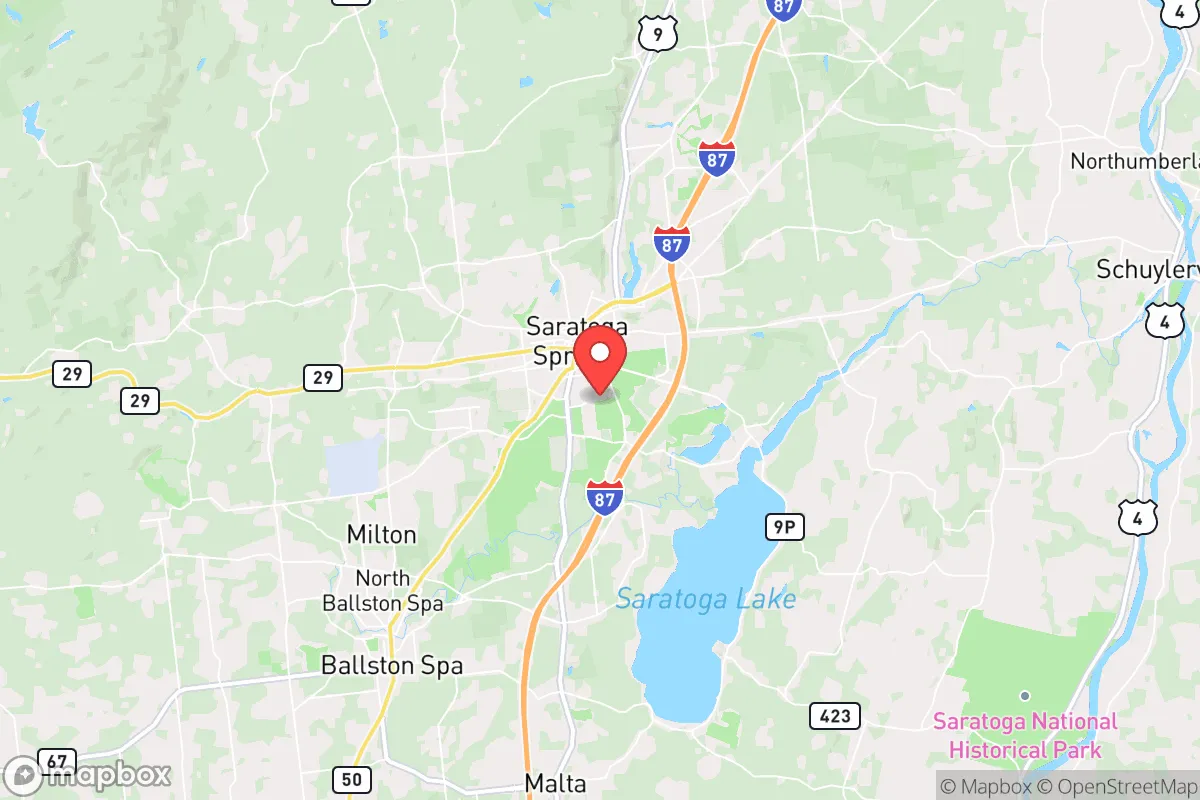
District shown is the primary district for this city’s centroid. Cities may span multiple districts.
Local Political AnalysisPolitical Analysis of Saratoga Springs, NY
Saratoga Springs has long been a blue dot in an otherwise red upstate New York region, but the political climate here has shifted noticeably leftward in recent years. The city now carries a Cook PVI of D+8, meaning it votes about 8 points more Democratic than the national average—a far cry from the more balanced, independent-minded community many of us remember from the 1990s and early 2000s. While the surrounding towns like Wilton, Greenfield, and Malta still lean conservative or at least purple, Saratoga Springs proper has become a stronghold for progressive policies, especially on the city council and school board. If you’re someone who values limited government and personal freedoms, you’ll want to keep a close eye on how things are trending here.
How it compares
Drive just 10 minutes north to Glens Falls or 20 minutes south to Clifton Park, and you’ll find a very different political vibe. Those communities still elect Republicans to local offices and tend to resist the kind of heavy-handed regulations that have become common in Saratoga Springs. Even within Saratoga County, the city stands out: the county as a whole voted for Donald Trump in 2020 by a narrow margin, while Saratoga Springs went for Joe Biden by over 20 points. The contrast is even starker when you compare it to nearby rural towns like Schuylerville or Stillwater, where property rights and Second Amendment protections are taken more seriously. What used to be a live-and-let-live atmosphere in Saratoga has increasingly become a place where progressive social agendas drive policy, from zoning changes to public health mandates.
What this means for residents
For longtime residents, the most noticeable change has been the steady creep of government into everyday life. The city council has pushed through stricter short-term rental regulations that limit how homeowners can use their own property, and there’s been talk of rent control measures that would further restrict what landlords can do. During the pandemic, Saratoga Springs was one of the most aggressive upstate cities in enforcing mask mandates and business closures, while neighboring towns largely let people make their own choices. On the school front, the district has embraced progressive curriculum changes and diversity initiatives that some parents feel prioritize ideology over academics. If you’re a small business owner, a property owner, or just someone who believes in personal responsibility over government oversight, these trends are worth watching closely.
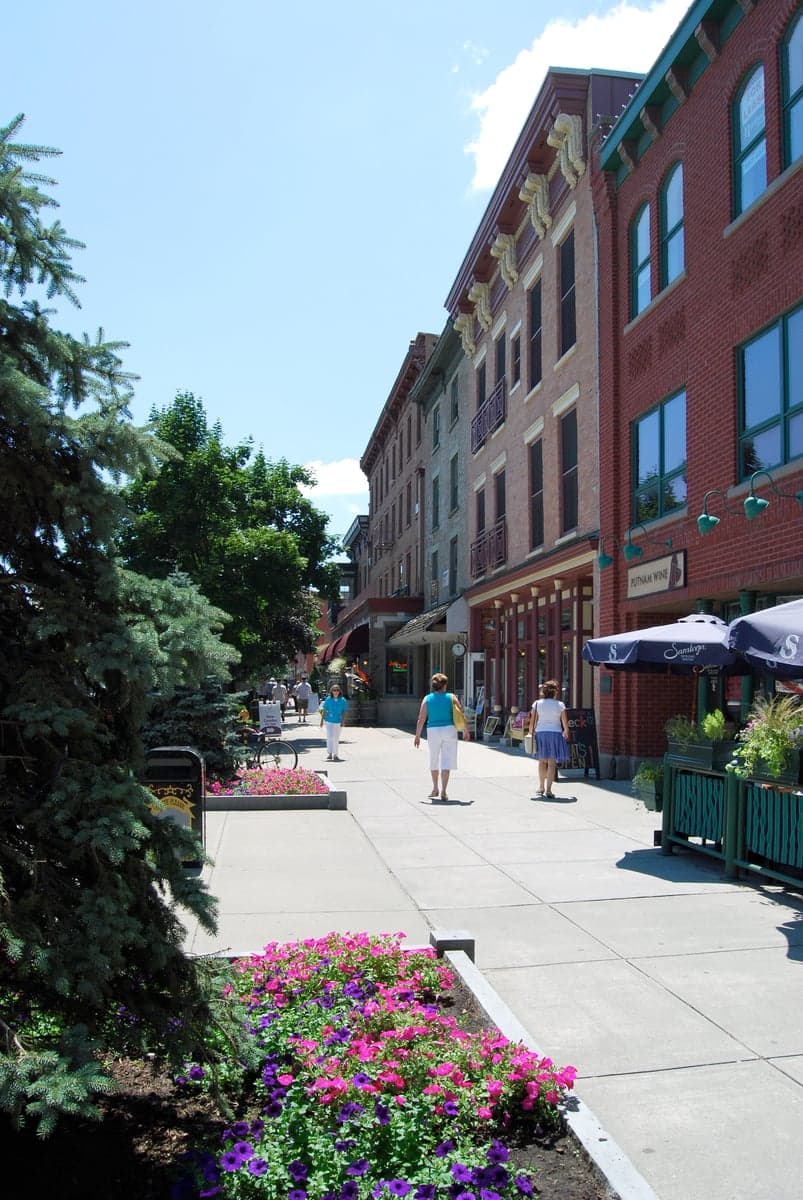
Culturally, Saratoga Springs still has its charms—the racetrack, the springs, the vibrant downtown—but the political undercurrent has become harder to ignore. The city’s identity as a place where horse racing and high society meet has been slowly replaced by a more activist, urban-minded ethos. You’ll see more yard signs for progressive candidates than for local Republicans, and the local paper’s editorial board consistently backs left-leaning positions. For those of us who remember when Saratoga was a place where neighbors disagreed without demonizing each other, the shift feels real. If the current trajectory holds, expect more regulations, higher taxes, and a growing divide between the city and the rest of the county. It’s still a great place to visit, but living here full-time means accepting that your personal freedoms may face more scrutiny than they would just a few miles down the road.

State Political ClimatePolitical Climate in New York
State Political AnalysisPolitical Environment in the State
New York State has long been a one-party Democratic stronghold at the statewide level, but that label hides a deeply fractured political landscape. The state hasn't voted Republican for president since 1984, and Democrats hold supermajorities in both legislative chambers, but this dominance is almost entirely powered by New York City and its immediate suburbs. Outside the five boroughs, much of the state is conservative-leaning or outright red, creating a constant tension between upstate and downstate that shapes every policy debate. Over the last 20 years, the Democratic grip has tightened as the city's population and influence have grown, while rural and exurban areas have become more Republican and more frustrated with Albany's one-party rule.
Urban vs. rural divide
The political map of New York is essentially a battle between the five boroughs and everything else. New York City alone accounts for roughly 40% of the state's population and delivers Democratic margins of 70-80% in most elections. The immediate suburbs—Nassau County, Westchester County, and Suffolk County on Long Island—are competitive but lean Democratic, especially as younger, more liberal voters move in. Buffalo, Rochester, Syracuse, and Albany are blue islands in a red sea, each surrounded by rural counties that vote Republican by 20-30 points. Staten Island is the notable exception: it's the only NYC borough that regularly votes Republican, often by double digits. The rural north country—counties like Lewis, St. Lawrence, and Jefferson—is deeply red, while the Southern Tier (think Chemung, Steuben, Allegany) is similarly conservative. The divide isn't just about party ID; it's about culture, economics, and trust in government. Upstaters feel ignored by a legislature that prioritizes subway funding and rent control over dairy farms and snowplow budgets.
Policy environment
New York's policy environment is among the most progressive in the nation, and it shows no signs of moderating. The state has the highest combined state and local tax burden in the country, with income tax rates topping out at 10.9% and property taxes that can exceed 2% of home value annually—particularly brutal in Westchester and Nassau. The regulatory climate is dense: the state has its own environmental review process (SEQRA) that can delay projects for years, and a strict rent stabilization law that covers over a million units in NYC and its suburbs. On education, New York spends more per pupil than almost any other state, but much of that money goes to the city's massive bureaucracy; upstate districts often struggle with declining enrollment and aging facilities. Healthcare is heavily regulated, with a state-run insurance exchange and a Medicaid program that covers nearly 30% of residents. Election laws are among the most liberal: no-excuse absentee voting, early voting, automatic voter registration, and same-day registration are all in place. The state also has a "sanctuary" law (the Green Light Law) that bars state and local law enforcement from cooperating with federal immigration authorities, a flashpoint for many conservatives.
Trajectory & freedom
Over the past decade, New York has moved decisively toward more government control over personal and economic life, and the trend is accelerating. The 2019 bail reform law eliminated cash bail for most misdemeanors and nonviolent felonies, leading to a surge in repeat offending that has fueled a backlash in suburban and upstate communities. The 2022 SAFE Act amendments tightened gun laws further, banning "ghost guns" and raising the purchase age for semiautomatic rifles to 21. In 2024, the state passed a parental rights bill that actually weakened parents' ability to opt their children out of LGBTQ-inclusive curriculum, sparking protests in Long Island and Rockland County. Medical autonomy took a hit with the state's strict COVID-19 vaccine mandates for healthcare workers and school staff, which remained in place long after other states dropped them. Property rights are under constant pressure from rent control expansions and a 2019 law that capped property tax increases at 2% or inflation, whichever is lower—a boon for renters but a constraint on local governments. On the plus side, the state did repeal its "blue law" banning Sunday alcohol sales in 2022, a small but symbolic win for personal choice. Overall, the trajectory is clear: more regulation, higher taxes, and less individual freedom, especially for gun owners, parents, and small business owners.
Civil unrest & political movements
New York has been a flashpoint for political activism on both sides. The 2020 Black Lives Matter protests in NYC were among the largest and most destructive in the country, with over $1 billion in property damage and a lasting impact on public safety perceptions. The "defund the police" movement gained traction in the city council, leading to a $1 billion cut to the NYPD budget in 2020, though much of that was later restored. On the right, the "Parents Matter" movement has been strongest in Nassau County and Suffolk County, where school board meetings have become battlegrounds over critical race theory, gender ideology, and library books. The state's sanctuary policy has made it a target for immigration enforcement battles; in 2023, the mayor of El Paso (Texas) actually bused migrants to NYC, straining the city's shelter system and fueling a political crisis. Election integrity remains a live issue: the state's 2020 decision to mail absentee ballot applications to every registered voter was challenged in court, and the 2024 election saw allegations of ballot harvesting in competitive congressional races. Secession talk is mostly rhetorical, but the "New York State of Mind" movement—a push for upstate counties to secede and form a new state—has gained some traction in Lewis County and Otsego County, though it's a long shot legally.
Projection
Over the next 5-10 years, New York will likely become even more Democratic and more progressive at the state level, driven by continued in-migration of liberal-leaning populations to NYC and its inner suburbs, and out-migration of conservatives to Florida, Texas, and the Carolinas. The state's population has been declining since 2020, losing a congressional seat after the 2020 census, and that trend is expected to continue. The upstate-downstate divide will widen, with rural areas becoming more Republican and more resentful, but without the population to flip statewide offices. Expect further gun control measures (universal background checks on private sales are already being debated), more rent control expansion, and a push for single-payer healthcare (the New York Health Act) that would impose massive tax increases. Parental rights battles will intensify, especially around school curriculum and medical consent for minors. For a conservative moving in now, the realistic outlook is that you'll be living in a state where your vote for president, Senate, and governor won't matter, but your local school board and county legislature races will be the real battlegrounds. The best bet for conservatives is to focus on local control—town boards, county legislatures, and school districts—where the upstate majority can still hold the line.
For a new resident, the bottom line is this: New York is a beautiful state with incredible natural resources, strong communities, and world-class cities, but it's also a state where the political and policy direction is firmly set against conservative values. If you're moving here, expect high taxes, heavy regulation, and a constant cultural battle in schools and local government. The smart play is to choose your location carefully—look at Staten Island, Long Island's eastern towns, or the rural north country—and get involved in local politics immediately. Your vote for governor won't change anything, but your voice on the school board might.
* Values derived from national, state, county, city and local statistics and may differ in a specific area. Last updated: 2026-05-01T05:23:08.000Z
Narrative content on this page is AI-generated and may contain mistakes. Verify any details that matter before acting on them.
ReloMaps may earn a commission from affiliate links at no extra cost to you.

