 Popular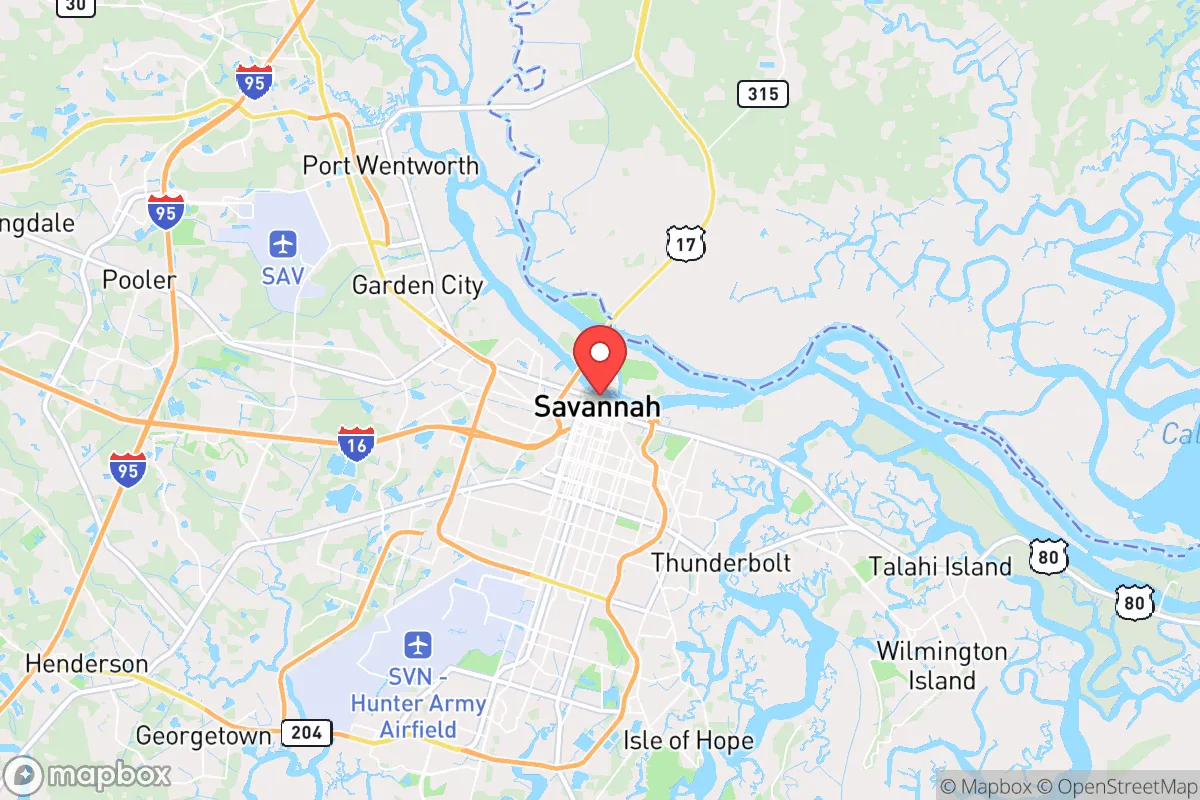
Photo: Wikipedia
Political ClimatePolitical Climate in Savannah, GA
District shown is the primary district for this city’s centroid. Cities may span multiple districts.
Local Political AnalysisPolitical Analysis of Savannah, GA
Look, I’ve been around Savannah long enough to remember when this town was a solid, quiet conservative stronghold—folks minded their own business, kept their guns, and didn’t expect the government to solve every little problem. These days, the political climate here is shifting, and not in a way that sits well with those of us who value personal freedom. Chatham County as a whole has been trending bluer, especially inside the city limits, but the surrounding areas—like Pooler, Richmond Hill, and Effingham County—still lean heavily Republican. The Cook PVI for the broader district is R+8, which tells you the real muscle is outside Savannah proper. But inside the city? That’s where the progressive wave is creeping in, and it’s got a lot of longtime residents worried about overreach.
How it compares
If you drive just 20 minutes west to Pooler or south to Richmond Hill, you’ll find a completely different vibe—lower taxes, fewer regulations, and a general “leave us alone” attitude. Those towns are growing fast because people are fleeing Savannah’s rising cost of living and the city council’s appetite for new ordinances. Compare that to Savannah itself, where you’ve got the city pushing things like stricter noise ordinances, limits on short-term rentals, and even talk of rent control. It’s a stark contrast: the suburbs are holding the line on conservative values, while Savannah’s leadership seems more interested in following the playbook of places like Atlanta or Charleston. For a guy like me, that’s a red flag—government getting bigger, telling you what you can do with your property, and nickel-and-diming you with new fees.
What this means for residents
For folks who value personal freedoms—like the right to carry without a permit, or the freedom to run a small business without a stack of permits—Savannah’s shift is a real concern. The city council has been flirting with progressive policies that sound nice on paper but end up as headaches for everyday people. For example, there’s been chatter about “equity” initiatives that sound a lot like government picking winners and losers. Meanwhile, property taxes keep climbing, and the city’s response is to spend more on pet projects rather than cutting waste. If you’re a conservative or even a moderate who just wants to be left alone, you’re better off looking at the suburbs or even smaller towns like Rincon or Guyton. The long-term trend here is clear: Savannah is becoming a place where the government’s hand gets heavier, not lighter.
One thing that still sets Savannah apart culturally is its deep Southern roots—the historic district, the squares, the food—but even that’s getting tangled up in politics. There’s a push to rename streets and take down statues, which feels less like history and more like a power grab. The local paper and the city’s social media crowd cheer this stuff on, but out in the neighborhoods, a lot of us just roll our eyes. My honest take? Savannah’s still a great place to visit, but if you’re looking to raise a family or run a business without the government breathing down your neck, the writing’s on the wall. The next few years will tell if this city can shake off the progressive itch or if it doubles down. I’m not holding my breath.

State Political ClimatePolitical Climate in Georgia
State Political AnalysisPolitical Environment in the State
Georgia has transformed from a reliably Republican stronghold into a competitive battleground state over the past two decades, with a partisan lean that now sits roughly even at the presidential level — Joe Biden won the state by just 0.2% in 2020, and Donald Trump lost it by a similar margin in 2024. The dominant coalition is a tense standoff between a rapidly growing, diverse metro Atlanta electorate that leans Democratic and a deeply conservative rural and exurban base that still controls the state legislature. Over the last 10-20 years, the trajectory has been a slow but steady leftward shift in statewide races, driven by massive in-migration from blue states and the political mobilization of suburban voters, particularly in counties like Cobb, Gwinnett, and Henry that flipped from red to purple or blue.
Urban vs. rural divide
The political map of Georgia is a textbook case of the urban-rural chasm. Metro Atlanta, home to roughly 60% of the state's population, is the engine of Democratic gains. Cities like Atlanta, Decatur, and Sandy Springs are deep blue, but the real story is the suburbs: Cobb County, once a GOP stronghold, voted for Biden in 2020 and has stayed competitive; Gwinnett County, now majority-minority, is reliably Democratic; and Henry County, south of Atlanta, flipped blue in 2016 and hasn't looked back. Meanwhile, rural and small-town Georgia remains overwhelmingly Republican. Places like Dalton, Valdosta, and Waycross vote 70-80% GOP, and the state's Second Congressional District, which includes rural southwest Georgia, is one of the few remaining conservative-leaning seats held by a Democrat. The divide isn't just about party — it's about culture. Rural Georgians feel increasingly alienated from the Atlanta metro's priorities, from transit funding to zoning reform to school curriculum battles. The 2024 election saw Trump win back Georgia by a narrow margin, but the underlying demographic trends haven't reversed: the Atlanta suburbs are still growing and diversifying, while rural counties are losing population.
Policy environment
Georgia's policy environment is a mixed bag for conservatives. On the plus side, the state has a flat income tax rate of 5.39% (down from 6% in 2022), with a scheduled phase-down to 4.99% by 2029. There's no state-level property tax, though local rates vary widely. The regulatory posture is generally business-friendly, with a right-to-work law and a low corporate tax rate. On education, Georgia has a robust school choice program — the Georgia Promise Scholarship Act, passed in 2024, provides up to $6,500 per year for private school tuition or homeschooling expenses for students in low-performing public schools. However, the state also has a controversial "Opportunity School District" law that allows the state to take over failing schools, which some conservatives view as government overreach. On healthcare, Georgia did not expand Medicaid under the Affordable Care Act, but the state's "Pathways to Coverage" program, launched in 2023, imposes work requirements that have kept enrollment low — a win for fiscal conservatives but a frustration for those who want more options. Election laws have been a flashpoint: the 2021 Election Integrity Act (SB 202) added voter ID requirements for absentee ballots, limited drop boxes, and restricted third-party ballot collection. Conservatives generally support these measures as necessary to secure elections, while critics call them suppression. The law has survived multiple court challenges.
Trajectory & freedom
On the freedom front, Georgia is a mixed bag trending in the right direction on some issues but concerning on others. Gun rights are strong: Georgia is a constitutional carry state since 2022 (HB 218), meaning no permit is needed to carry a concealed firearm. The state also has a "Stand Your Ground" law and preempts local gun ordinances. Parental rights got a boost with the 2022 "Parents' Bill of Rights" (HB 1178), which requires schools to notify parents of any medical or mental health services provided to their children and prohibits instruction on sexual orientation or gender identity in grades K-3. However, the state's medical autonomy record is troubling: Georgia's 2019 "Heartbeat Bill" (HB 481) bans abortion after a fetal heartbeat is detected, roughly six weeks, which conservatives generally support, but the law also includes criminal penalties for doctors, which some see as government overreach into medical decisions. On property rights, Georgia has strong protections against eminent domain abuse, but local zoning battles in metro Atlanta suburbs are increasingly contentious, with some cities like Decatur and Brookhaven pushing for more density and transit-oriented development that can feel like top-down planning. The biggest freedom concern for many conservatives is the growing influence of Atlanta's progressive city government, which has enacted rent control measures and mandated paid sick leave — policies that conflict with state preemption laws but create a patchwork of local regulations.
Civil unrest & political movements
Georgia has seen its share of political flashpoints. The 2020 election aftermath was particularly intense, with massive protests in Atlanta over the death of George Floyd that turned into clashes with police and widespread property damage. The "Stop Cop City" movement, which opposes the construction of a police training facility in Atlanta's South River Forest, has led to repeated protests, arson attacks, and a state law (SB 44) that expanded penalties for protest-related crimes. On the right, the Georgia Republican Party has been riven by internal battles between establishment conservatives and Trump-aligned populists, with the 2022 primary for governor seeing a bitter fight between Brian Kemp and David Perdue. Immigration politics are a hot-button issue: Georgia passed a strict anti-sanctuary city law (HB 1105) in 2024, requiring local law enforcement to cooperate with federal immigration authorities. The state also has a law (SB 160) that bans most undocumented immigrants from receiving public benefits. Election integrity remains a live issue, with ongoing lawsuits over absentee ballot deadlines and the state's new voter roll maintenance system. A new resident would notice the political polarization in everyday life — from yard signs to church conversations to the way local news covers school board meetings.
Projection
Over the next 5-10 years, Georgia is likely to remain a competitive battleground, but the trend lines favor Democrats at the statewide level. Metro Atlanta's population is projected to grow by another 1.5 million people by 2035, and the vast majority of that growth is in diverse, college-educated suburbs that lean blue. Rural Georgia will continue to shrink and become more Republican, but not fast enough to offset Atlanta's gains. The state legislature will likely remain under Republican control through at least 2030 due to gerrymandered districts, but the governor's mansion and Senate seats will be toss-ups. For conservatives moving in now, the practical reality is that Georgia offers a relatively low-tax, business-friendly environment with strong gun rights and school choice, but the cultural and political center of gravity is shifting. The state's "freedom" is increasingly a matter of geography: live in rural or exurban areas like Forsyth County or Oconee County, and you'll experience a conservative-friendly environment; move to Decatur or East Atlanta, and you'll be in a progressive bubble. The wild card is whether the influx of new residents from California, New York, and Illinois will continue to lean left or whether some will shift right as they experience Georgia's lower cost of living and less intrusive government.
For a new resident, the bottom line is this: Georgia is a state where you can still find a conservative lifestyle with low taxes, strong gun rights, and good schools — but you have to choose your location carefully. The Atlanta metro is becoming more progressive by the year, and the state's political future is uncertain. If you value personal freedom and limited government, you'll want to settle in the exurbs or smaller cities like Gainesville or Warner Robins, where the culture still matches the values. Just don't expect the state to stay red forever — the demographic tide is real, and the next decade will determine whether Georgia remains a place where conservative families can thrive or becomes another blue-state suburbia with a Southern accent.
* Values derived from national, state, county, city and local statistics and may differ in a specific area. Last updated: 2026-04-15T23:50:20.000Z
Narrative content on this page is AI-generated and may contain mistakes. Verify any details that matter before acting on them.
ReloMaps may earn a commission from affiliate links at no extra cost to you.

