 Popular
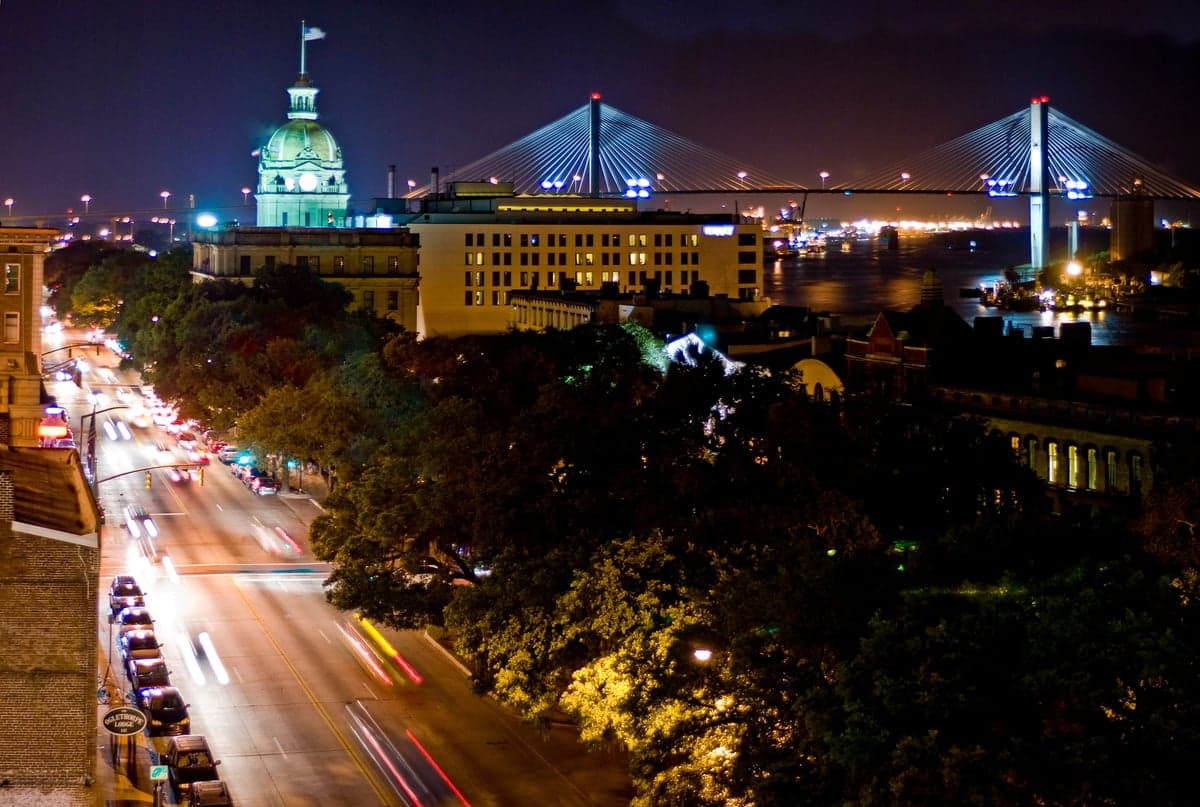
Photo: Wikipedia
Strategic Assessment of Savannah, GA
Meaningful friction. Expect exposure to either population pressure, blast zones, or natural disaster risk. Consider buying a retreat property.
What does the Strategic Assessment tell us?
Our Strategic Assessment grades tactical survivability of an area. Major population centers, military targets, fallout zones, natural disasters, and border exposure all drive risk — lower exposure means a more defensible position in a crisis.
This is heavily inspired by Joel Skousen's Strategic Relocation book. Highly recommended you checkout the book ($)What does this tell us?
Our Strategic Assessment grades tactical survivability of an area. Major population centers, military targets, fallout zones, natural disasters, and border exposure all drive risk — lower exposure means a more defensible position in a crisis.
This is heavily inspired by Joel Skousen's Strategic Relocation book. Highly recommended you checkout the book ($)Strategic Pillars

Key Distances
Regional Safe Places
Below is our recommended "safe zones" in Georgia and the surrounding area based on our strategic heuristics. For most people, it's unrealistic to live in a “safe zone” full-time due to work, family or other personal reasons. They tend to be more rural. However, many of these areas are perfect for second homes and retreat properties that double as a vacation home or even a short-term rental.
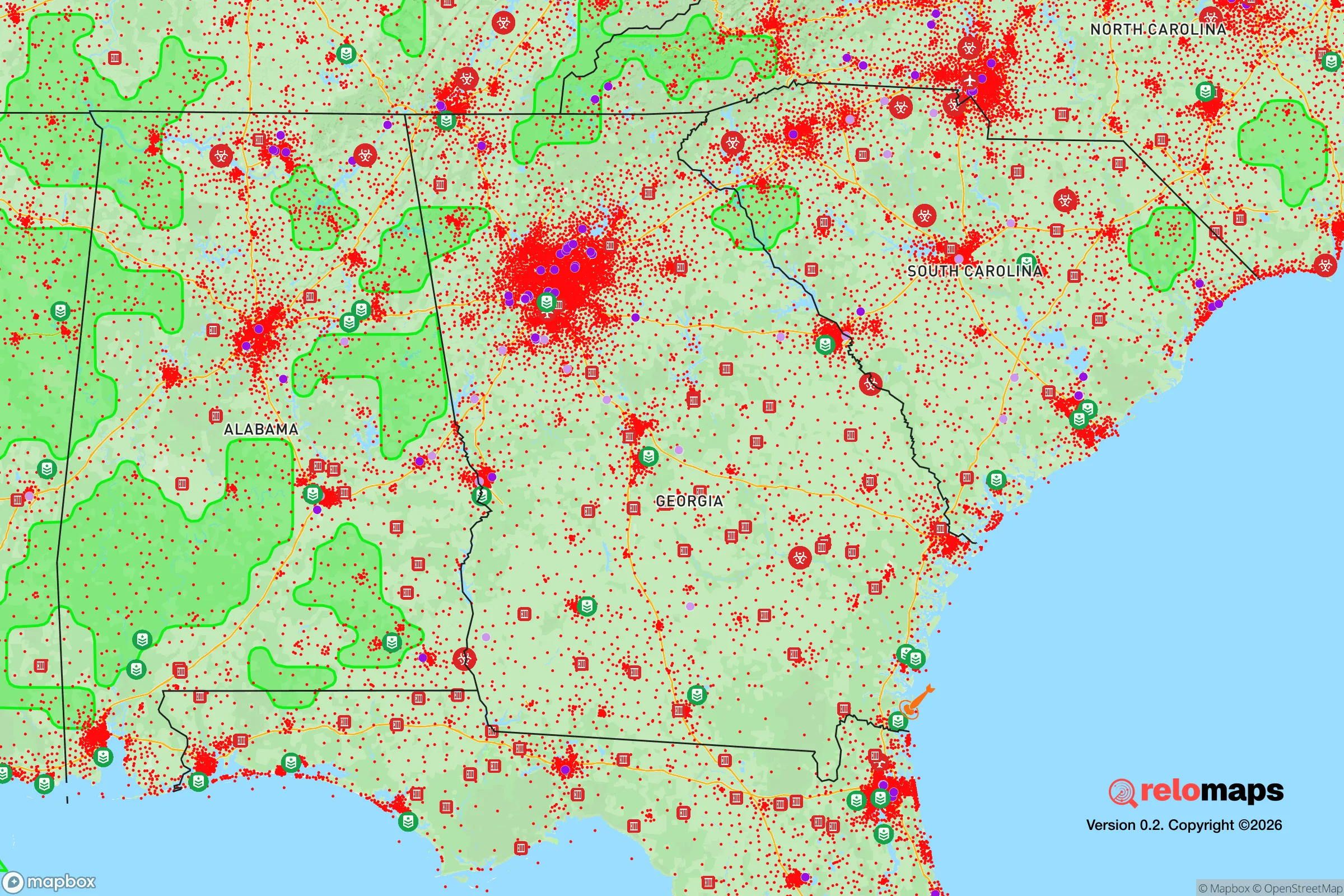
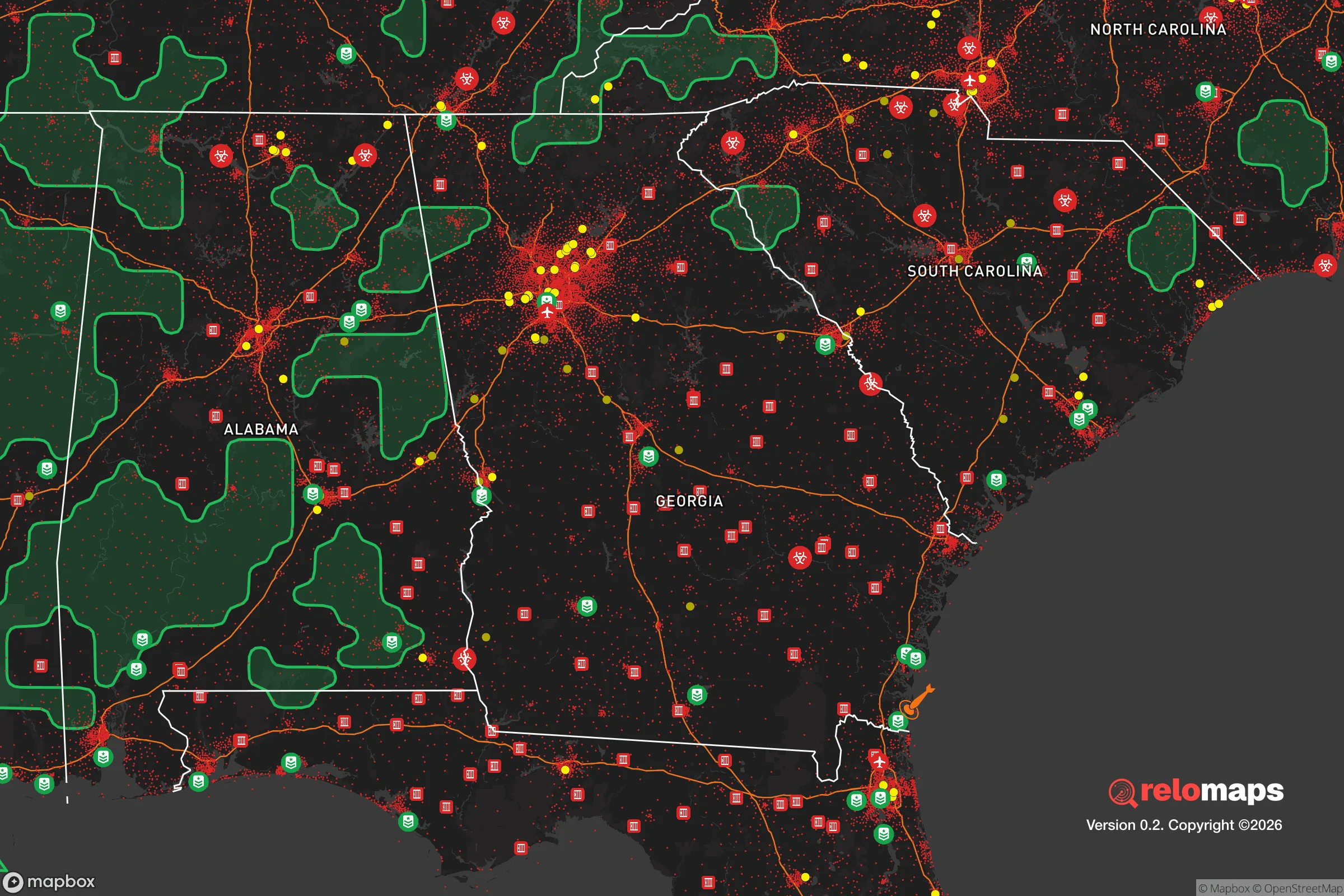


Important Note: For informational purposes only. This does not mean nothing bad ever happens in the green zones. Please use common sense. This is based on public data and modeled with AI. We tried to take a conservative approach but mistakes happen. We update this regularly as new information becomes available.
Solar Generator Recommendations
Backup power matters more here than in safer locations. We've picked three solar generators across budgets and capacity tiers — start with the budget unit if you only need a few essentials, or step up if you want to run a fridge and HVAC for days at a time.

Jackery Portable Power Station Explorer 300
Budget OptionPower on the Go: Weighing only 11 lbs, it's convenient to set up and store with book-sized foldable solar panels

BLUETTI Portable Power Station AC180
Designed for both indoor and outdoor scenarios, AC180 is highly capable as it has a robost capacity and continuous output power.

EF ECOFLOW DELTA Pro Ultra Power Station
Upgraded PickEcoFlow DELTA Pro Ultra is a whole-home energy system designed to grow with your family. Integrated with the Smart Home Panel 2, it scales to meet your evolving energy needs — keeping your home powered, intelligent, and secure through every stage of life.
We earn a commission, at no additional cost to you.
Strategic Assessment Analysis
Savannah, Georgia, sits in a precarious strategic position that demands a clear-eyed assessment from anyone serious about long-term preparedness. Its location offers genuine advantages in terms of climate resilience and resource access, but those benefits come with severe liabilities tied to its proximity to major population centers, critical infrastructure, and coastal exposure. For a relocator operating from a survivalist or prepper mindset, Savannah is not a retreat—it is a forward operating base with a short shelf life if things go sideways. The city’s charm and economic vitality are real, but they also make it a target for both natural and man-made disruptions.
Geographic position and natural advantages for long-term survival
Savannah’s location on the Georgia coast, roughly 20 miles inland from the Atlantic, gives it a mix of maritime climate and access to the Intracoastal Waterway, which is a strategic asset for both transportation and resource movement. The area sits on the Savannah River, providing a reliable freshwater source, though it is tidal and brackish near the city, requiring filtration or well access further inland. The surrounding Lowcountry terrain is flat, with extensive marshlands and pine forests that offer some natural barriers to overland movement—useful for creating buffer zones against civil unrest spreading from urban centers. The climate is humid subtropical, with mild winters and long growing seasons, which supports year-round food production if you secure land with decent soil. However, the region’s high water table and frequent flooding from heavy rains mean that any defensible property must be elevated and drained properly. The proximity to the Savannah National Wildlife Refuge and the Ogeechee River basin provides hunting, fishing, and foraging opportunities, but these are not inexhaustible and will be contested in a crisis. The area’s primary natural advantage is its access to multiple water bodies and a relatively low population density outside the city core—Chatham County has about 300,000 people, but the surrounding counties like Effingham and Bryan are far more sparse, offering better options for a dispersed retreat.
Risks, exposures, and proximity to fallout-relevant landmarks
The most glaring vulnerability for Savannah is its proximity to the Port of Savannah, the largest single-terminal container port in the Western Hemisphere and a critical node in the national supply chain. In any scenario involving mass casualty events, economic collapse, or foreign conflict, this port becomes a high-value target for disruption, whether through cyberattack, physical sabotage, or military action. The city is also within 100 miles of the Savannah River Site, a nuclear weapons facility and waste storage site in South Carolina, which presents a dual risk: both as a potential target and as a source of radiological contamination in the event of an accident or attack. Additionally, the nearby Hunter Army Airfield and Fort Stewart, a major Army base, mean that Savannah is a military logistics hub. While this provides some security in the short term, it also makes the area a magnet for federal response and potential martial law scenarios during civil unrest. The city itself is vulnerable to hurricane storm surge—Category 2 or higher storms can push water up the Savannah River and flood downtown, with the historic district sitting at only 15 feet above sea level. The evacuation routes, primarily I-16 and US-17, are limited and choke quickly, as seen during Hurricane Matthew in 2016. For a prepper, the combination of a major port, nuclear site, military base, and coastal exposure means that Savannah is a high-risk zone for both natural disasters and man-made events, and the fallout from any of these would ripple through the region rapidly.
Practical resilience for a relocator: food, water, energy, and defensibility
For someone looking to establish a resilient household in the Savannah area, the practical challenges are significant but manageable with the right strategy. Water is the most critical concern: municipal water comes from the Floridan Aquifer, which is generally reliable but vulnerable to contamination from saltwater intrusion and industrial runoff near the port. A deep well on private property, ideally 200 feet or more, is essential for independence, and rainwater catchment is viable given the 50 inches of annual rainfall. Food production is feasible but requires effort—the sandy, acidic soil needs amendment for vegetable gardens, and the humid climate promotes fungal diseases. Raised beds with compost and drip irrigation are the standard approach, and local extension services recommend crops like collards, sweet potatoes, and okra that thrive in the heat. Energy resilience is mixed: the grid is served by Georgia Power, which has a history of storm-related outages, so solar panels with battery storage are a wise investment, though tree cover in many neighborhoods limits sun exposure. Defensibility is the weakest point for most properties in the area. The flat, open terrain and dense vegetation in many residential zones make it hard to establish clear sightlines or secure perimeters. Rural properties in Effingham or Bryan counties offer more space for fencing, gates, and standoff distance, but they also require longer travel to supplies and medical care. The local culture is generally friendly and community-oriented, which is a double-edged sword—it fosters mutual aid but also means that outsiders are noticed quickly. For a single individual or family, the best approach is to buy land at least 30 minutes from the city center, establish a well and solar setup, and build relationships with neighbors who share a preparedness mindset. The Savannah area has a growing number of homesteaders and off-grid enthusiasts, but it is not a place where you can disappear easily.
The overall strategic picture for Savannah is one of calculated risk. It offers genuine advantages in water access, growing seasons, and relative isolation from the worst of the coastal storm surge, but those are offset by its role as a critical infrastructure hub and its proximity to nuclear and military assets. For a relocator with a conservative, prepper-oriented worldview, Savannah is not a safe haven—it is a place to build a base of operations that can be abandoned if the situation deteriorates. The key is to treat the city as a resource node, not a permanent retreat. Secure a property with independent water and power, stockpile supplies for at least six months, and have a bug-out plan that moves inland toward the Georgia Piedmont or the Appalachian foothills. If you are willing to accept the trade-offs and stay vigilant, Savannah can work as a strategic location for weathering moderate disruptions. But for anyone looking for a true redoubt against systemic collapse, the risks here outweigh the rewards, and the smart move is to look further inland, away from the coast and the targets that come with it.

* Values derived from national, state, county, city and local statistics and may differ in a specific area. Last updated: 2026-04-15T23:50:20.000Z
Narrative content on this page is AI-generated and may contain mistakes. Verify any details that matter before acting on them.
ReloMaps may earn a commission from affiliate links at no extra cost to you.

