
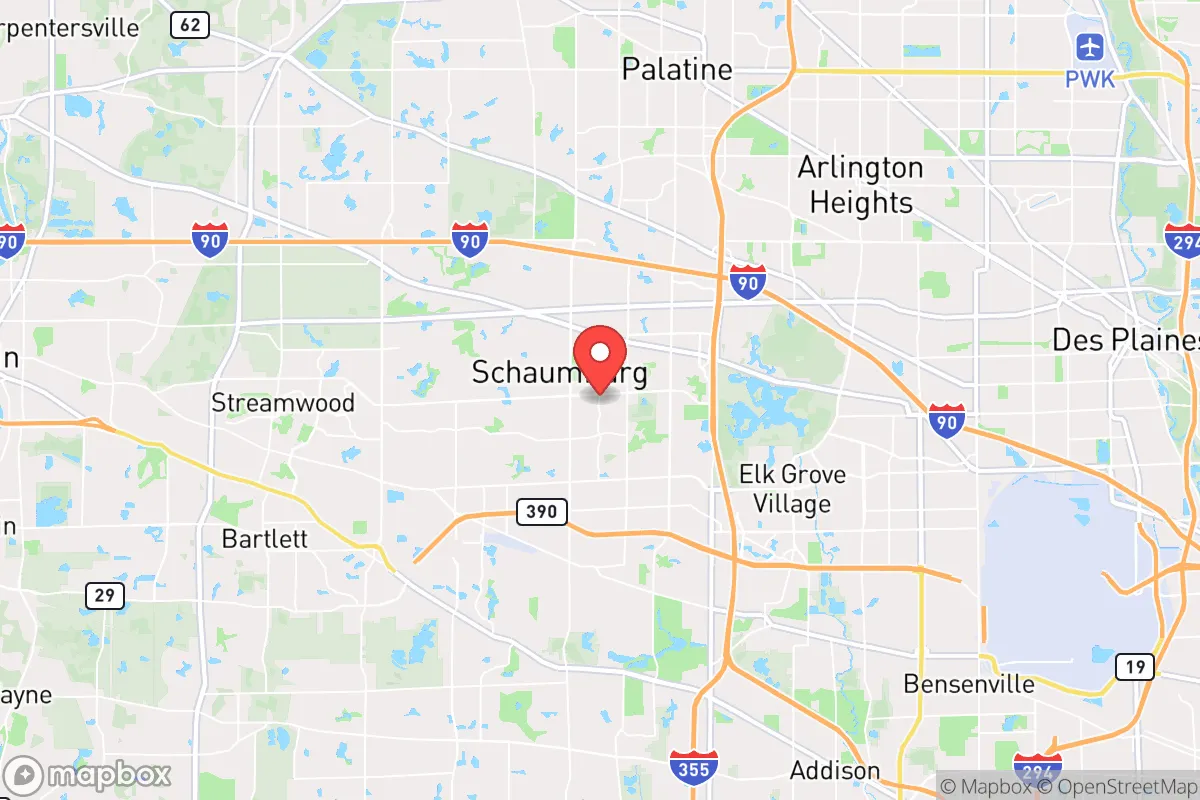
Photo: Wikipedia
Quality of Life in Schaumburg, IL
A high quality of life with strong walkability, manageable living costs, healthy neighborhood signals, and solid amenity access.
What does Quality of Life tell us?
Quality of Life blends cost of living, nearby amenities, socioeconomic signals, and neighborhood character. City-level scores represent the whole municipality; individual neighborhoods can differ.
What does this tell us?
Quality of Life blends cost of living, nearby amenities, socioeconomic signals, and neighborhood character. City-level scores represent the whole municipality; individual neighborhoods can differ.
Cost of Living
36% above national average
The Real Cost of Living in Schaumburg, IL for 2026
| Tier | Individual | Family (4) |
|---|---|---|
| Survival | $28k | $53k |
| Comfortable | $61k | $89k |
| Luxury | $146k+ | $226k+ |
| Elite (Top 5%) | $172k+ | $266k+ |
106%
The Area Signal
A metric tracking the socioeconomic signals of the area.


Hobbies
Explore the areaGroceries
1 within 10 miles
Gas
0 within 10 miles
Hospital
3 within 20 miles
Airport
ORD — Chicago O'Hare International
Post Office
USPS — Carol Stream, IL
Critical Amenities
Quality-of-Life Analysis
Schaumburg, Illinois, is an affluent northwest suburb of Chicago where the cost of living index registers at 136, significantly above the national baseline of 100. The community is predominantly composed of upper-middle-class families, white-collar professionals, and a substantial population of Asian and Indian immigrants drawn by the area's strong employment base and highly rated schools. With a median home value of $312,200 and a median rent of $1,774, Schaumburg offers a suburban lifestyle that is notably more expensive than neighboring towns like Hoffman Estates or Elk Grove Village, yet remains more affordable than the priciest North Shore suburbs such as Winnetka or Glenview.
Cost of living, housing affordability, and how Schaumburg compares to nearby suburbs
The cost of living in Schaumburg is 36% above the U.S. average, driven primarily by housing costs that are roughly double the national median. The median home value of $312,200 places the market well above the Illinois state median of approximately $250,000, but below the Cook County median of around $330,000. Renters face a median monthly rent of $1,774, which is competitive with nearby Arlington Heights ($1,850) but higher than in Rolling Meadows ($1,600). Property taxes in Schaumburg are a significant factor, with effective rates around 2.2% of assessed value — typical for Cook County but substantially higher than in neighboring DuPage County suburbs like Bloomingdale. For a family earning the area's median household income of roughly $85,000, housing costs consume about 28% of gross income, which is considered manageable by national standards. The average commute of 27.9 minutes is shorter than the Chicago metro average of 33 minutes, largely because many residents work locally at major employers like Zurich Insurance, Motorola Solutions, or the Woodfield Mall retail complex.
What daily life is like for families: schools, amenities, and community rhythm
Daily life in Schaumburg revolves around a dense network of amenities that make it one of the most self-contained suburbs in the region. The Schaumburg Township District Library is one of the busiest in the state, and the Park District operates over 50 parks, multiple aquatic centers, and the popular Schaumburg Golf Club. The community is served by School District 54 (elementary) and District 211 (high school), which consistently rank among Illinois' top-performing public school systems — Schaumburg High School and Conant High School both post graduation rates above 95%. The Woodfield Mall anchors a massive retail corridor along Golf Road, while the nearby Schaumburg Convention Center and the Prairie Center for the Arts provide cultural programming. Traffic congestion is a real issue, particularly on I-290 and Golf Road during peak hours, but the Pace suburban bus system and the Metra Schaumburg station (on the Milwaukee District West line) offer alternatives for commuters heading to Chicago's Ogilvie Transportation Center. The community's rhythm is distinctly suburban: weekends are filled with youth sports leagues, library programs, and dining at the dozens of chain and independent restaurants along Roselle Road.
Schaumburg is best suited for families and professionals who prioritize strong public schools, abundant shopping and dining, and a safe, well-maintained environment over urban excitement or rural quiet. The high cost of living and property taxes will deter budget-conscious renters and first-time buyers, but for those earning the area's median income or higher — especially dual-income households with children — the trade-off delivers a reliable, amenity-rich suburban experience. Empty nesters and retirees may find the pace and tax burden less appealing, but for the core demographic of working families, Schaumburg remains one of the most functional and desirable suburbs in the northwest Chicago corridor.

Crime in Schaumburg, IL
Generally safer than 72% of comparable U.S. locations.
Violent CrimeViolent Crime Analysis
Property CrimeProperty Crime Analysis
Crime Analysis
Schaumburg, Illinois, reports a violent crime rate of 62.5 incidents per 100,000 residents and a property crime rate of 1,625.6 per 100,000, placing it in a complex safety landscape for a major Chicago suburb. While the violent crime figure is significantly lower than both the Illinois state average and national median, the property crime rate is notably elevated, reflecting challenges common to dense, high-traffic commercial hubs. Prospective residents should weigh these statistics against the reality that Schaumburg’s location within Cook County—a jurisdiction with progressive prosecutors and lenient sentencing policies—can undermine public safety by prioritizing offender rehabilitation over victim protection and deterrence.
Crime in context
Compared to national benchmarks, Schaumburg’s violent crime rate of 62.5 per 100,000 is roughly one-fifth the U.S. average of about 380 per 100,000, and well below Illinois’ statewide rate of approximately 440 per 100,000. However, its property crime rate of 1,625.6 per 100,000 is nearly 30% higher than the national average of roughly 1,250 per 100,000. This disparity is driven by theft and vehicle-related offenses, common in areas with extensive retail corridors like Woodfield Mall and the surrounding commercial zones. The influence of Cook County’s progressive criminal justice policies—including cash bail reform and reduced prosecution of non-violent property crimes—means that repeat offenders often face minimal consequences, contributing to elevated property crime rates that frustrate residents and local businesses.
What residents experience
Daily life in Schaumburg is generally safe for most residents, with violent incidents being rare and typically isolated to specific circumstances rather than random attacks. The most common concerns involve package theft, vehicle break-ins, and shoplifting, particularly in areas near the I-90 corridor and major shopping centers. Residents in single-family home neighborhoods often report a strong sense of security, while those in apartment complexes near commercial hubs may experience more frequent property crime. The progressive judicial environment in Cook County means that even when arrests are made, offenders are often released quickly on electronic monitoring or diverted to treatment programs, which can erode trust in the justice system and leave victims feeling unsupported.
Neighborhood-level variation is notable. Areas west of Route 53 and north of Golf Road, such as the Weathersfield subdivision, tend to have lower crime rates due to less commercial traffic and stronger community watch programs. In contrast, neighborhoods near the Woodfield Mall and the Schaumburg Metra station see higher property crime volumes. The village’s proactive police department, which uses data-driven patrols and community engagement, helps mitigate some risks, but the broader county-level policies remain a persistent concern for those prioritizing long-term safety and justice for victims.
* Values derived from national, state, county, city and local statistics and may differ in a specific area. Last updated: 2026-04-19T10:27:51.000Z
Narrative content on this page is AI-generated and may contain mistakes. Verify any details that matter before acting on them.
ReloMaps may earn a commission from affiliate links at no extra cost to you.

