
Photo: Wikipedia
Political ClimatePolitical Climate in Schaumburg, IL
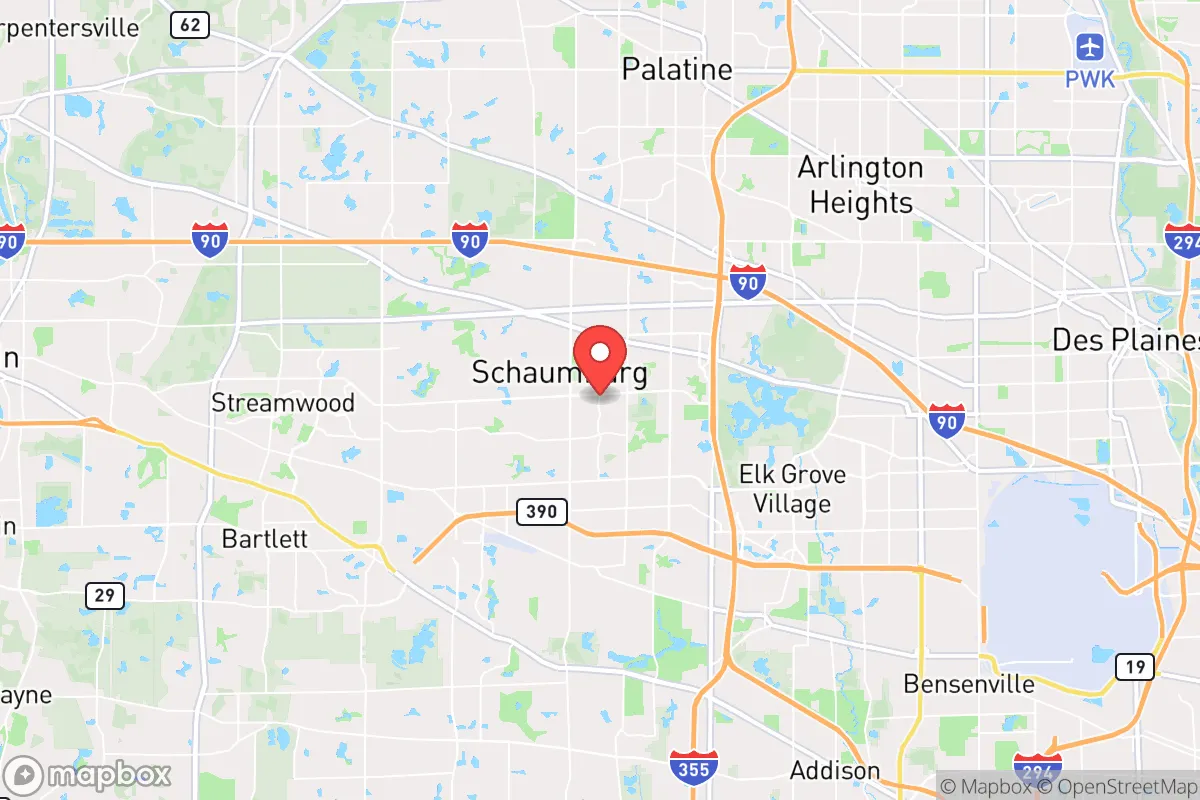
District shown is the primary district for this city’s centroid. Cities may span multiple districts.
Local Political AnalysisPolitical Analysis of Schaumburg, IL
Schaumburg, Illinois, sits in a political landscape that has shifted noticeably over the past decade, and if you’ve lived here as long as I have, you’ve felt it. The Cook Partisan Voting Index (PVI) for this area is D+5, meaning it leans about five points more Democratic than the national average—a far cry from the more balanced, common-sense community I remember settling into back in the ’90s. While the village itself still has a strong contingent of folks who value fiscal responsibility and personal liberty, the overall trajectory has been steadily leftward, driven largely by new arrivals from Chicago proper and a growing influence from progressive county-level policies. It’s not a radical shift overnight, but the trend is unmistakable, and it’s worth understanding if you’re thinking about planting roots here.
How it compares
To get a real feel for Schaumburg’s politics, you have to look at the towns around it. Head west a few miles to Hoffman Estates or Streamwood, and you’ll find a similar D+5 to D+7 vibe—suburban, mixed, but with a creeping progressive edge. Drive north to Palatine or Arlington Heights, and you’re in more reliably Republican territory, where local elections still hinge on tax restraint and school choice. But the real contrast is south and east: Elk Grove Village and Itasca lean more conservative, with a stronger small-business, low-regulation ethos. Schaumburg, unfortunately, has become a bit of a bellwether for Cook County’s broader shift—where the county board and state legislature increasingly push mandates on everything from energy codes to zoning rules that feel like they’re written by people who’ve never met a payroll. The village council itself has managed to stay relatively moderate, but the pressure from above is real.
What this means for residents
For the average family here, the political climate translates into a few concrete headaches. Property taxes are among the highest in the nation, and while that’s a statewide issue, Schaumburg’s local governance hasn’t done much to push back against the spending habits that drive them. You’ll also see more ordinances creeping in—like restrictions on short-term rentals, stricter noise and signage rules, and a general attitude that the village knows best. The school district, Schaumburg Township District 54, has leaned into social-emotional learning and equity initiatives that can feel like they’re replacing academic rigor. If you value being left alone to run your life, your business, and your family without a bureaucrat’s input, you’ll find yourself increasingly at odds with the direction things are heading. The local elections matter more than ever, but turnout among conservative-leaning residents has been spotty.
On the cultural side, Schaumburg still has its charms—the Woodfield Mall area is a hub, and there’s a genuine diversity of people and cuisines that makes it interesting. But the policy distinctions are telling: the village has embraced sanctuary city-style policies for undocumented immigrants, and the county health department has pushed vaccine mandates and mask requirements that went beyond state guidance. These aren’t just abstract political points—they affect how your kids’ school operates, what your small business has to comply with, and how much of your paycheck goes to the government. If you’re looking for a place where personal freedom still comes first, Schaumburg is a mixed bag. It’s not hopeless, but it’s a community that needs more voices willing to say “enough is enough” at the ballot box and the village hall podium.

State Political ClimatePolitical Climate in Illinois
State Political AnalysisPolitical Environment in the State
Illinois has been a reliably blue state in presidential elections for over three decades, but its political climate is far more complicated than a simple partisan label suggests. The state is dominated by the Chicago metropolitan area, which accounts for roughly two-thirds of the population and drives the statewide Democratic lean, while the rest of Illinois—particularly downstate and the collar counties—has shifted sharply rightward over the past 20 years. For a conservative considering relocation, the key takeaway is that Illinois is a state of stark internal contradictions: a deep-blue urban core imposing its policy preferences on a deeply skeptical, increasingly red hinterland.
Urban vs. rural divide
The political map of Illinois is essentially a battle between Cook County and everything else. Chicago and its immediate suburbs vote overwhelmingly Democratic—Cook County gave Joe Biden 74% of the vote in 2020—while the rest of the state has trended Republican. The collar counties (DuPage, Lake, Kane, Will, McHenry) were once reliably red but have become competitive or even blue in recent cycles, driven by suburban professional-class migration and demographic change. Downstate, places like Peoria, Springfield, and Rockford have become Republican strongholds, while rural counties such as Effingham and Marion vote 70-80% Republican. The divide is not just partisan but cultural: downstate residents often feel ignored or overruled by Chicago, fueling resentment and a growing "separation" movement in some southern counties. In 2024, several downstate counties passed non-binding resolutions calling for a breakaway state of "New Illinois," though such efforts remain symbolic.
Policy environment
Illinois’s policy environment is a case study in progressive governance with high costs. The state has a flat income tax rate of 4.95% (after a failed 2020 attempt to switch to a graduated rate), but property taxes are among the highest in the nation—averaging over 2% of home value statewide, with Cook County often exceeding 2.5%. Sales taxes can exceed 10% in Chicago. The regulatory posture is business-unfriendly: Illinois has a $15 minimum wage (indexed to inflation), strict environmental regulations, and a strong union presence. Education policy is dominated by the Chicago Teachers Union, which has successfully resisted charter school expansion and accountability measures. Healthcare is heavily regulated, with Illinois expanding Medicaid aggressively under the Affordable Care Act. Election laws are among the most liberal in the country: no voter ID requirement, automatic voter registration, same-day registration, and universal mail-in voting (made permanent after COVID). For a conservative, these policies represent a significant expansion of government reach into daily life.
Trajectory & freedom
Over the past decade, Illinois has moved decisively toward greater government control over personal liberties. The most visible flashpoint is gun rights: in 2023, Governor JB Pritzker signed the "Protect Illinois Communities Act," which banned the sale and possession of dozens of semi-automatic firearms and high-capacity magazines—one of the strictest gun laws in the nation. This law is currently being challenged in federal court, but it represents a clear contraction of Second Amendment rights. On parental rights, Illinois passed a law in 2021 requiring public schools to teach "inclusive" history and LGBTQ+ topics, and in 2023 it became a "sanctuary state" for gender-affirming care, protecting providers from out-of-state lawsuits. Medical autonomy was expanded in 2020 with the legalization of recreational marijuana, but the state tightly controls licensing and taxation. Property rights have been eroded by a 2021 law that limits local zoning authority for affordable housing projects, overriding local control. The overall trajectory is toward less individual freedom and more state-level mandates, particularly on social and economic issues.
Civil unrest & political movements
Illinois has seen significant civil unrest, particularly in Chicago. The 2020 George Floyd protests in Chicago were among the largest in the country, with widespread looting and property damage. The city's response—including a controversial curfew and National Guard deployment—was criticized from both sides. Since then, organized activist movements have focused on police reform, with Chicago passing a "consent decree" requiring sweeping changes to the police department. On the right, the "New Illinois" movement has gained traction in downstate counties, with some counties exploring secession or nullification of state laws. Immigration politics are a major flashpoint: Illinois is a sanctuary state, and Chicago has seen a surge of migrant arrivals from Texas since 2022, straining city resources and creating tension between progressive activists and working-class residents. Election integrity remains a hot-button issue, with downstate Republicans pushing for voter ID laws that have been repeatedly blocked by the Democratic-controlled legislature. A new resident would notice the visible presence of both progressive activism (especially in Chicago) and conservative resistance (especially downstate), creating a palpable cultural tension.
Projection
Over the next 5-10 years, Illinois is likely to become even more polarized. Chicago’s population is declining (down about 2% since 2020), but the city’s political influence remains dominant due to its economic and media power. Downstate counties are losing population even faster, which will reduce their political clout in the legislature. The Democratic supermajority in Springfield is likely to persist, meaning more progressive legislation on guns, taxes, and social issues. However, there are countervailing trends: some collar counties are becoming more competitive, and the state’s fiscal crisis (pension debt exceeds $140 billion) may force moderation on spending. In-migration is net negative—Illinois lost over 100,000 residents in 2023 alone—with many leaving for Texas, Florida, and Tennessee. For a conservative moving in now, the realistic expectation is that Illinois will remain a blue state with a strong progressive tilt, but with significant internal resistance and a growing sense of two separate states within one border.
For a conservative new resident, the bottom line is that Illinois offers a mixed bag: low crime in many downstate communities, strong schools in some suburbs, and a relatively stable economy anchored by Chicago. But the trade-offs are steep: high taxes, a restrictive regulatory environment, and a political culture that increasingly prioritizes government mandates over individual freedom. If you value low taxes, gun rights, and local control, Illinois is likely a poor fit. If you are willing to accept the trade-offs for proximity to Chicago’s job market or family ties, you will need to be strategic about where you live—consider McHenry County or Ogle County for a more conservative environment, or DuPage County for a purple suburb with good schools. Just know that the state’s political trajectory is unlikely to reverse anytime soon.
* Values derived from national, state, county, city and local statistics and may differ in a specific area. Last updated: 2026-04-19T10:27:51.000Z
Narrative content on this page is AI-generated and may contain mistakes. Verify any details that matter before acting on them.
ReloMaps may earn a commission from affiliate links at no extra cost to you.

