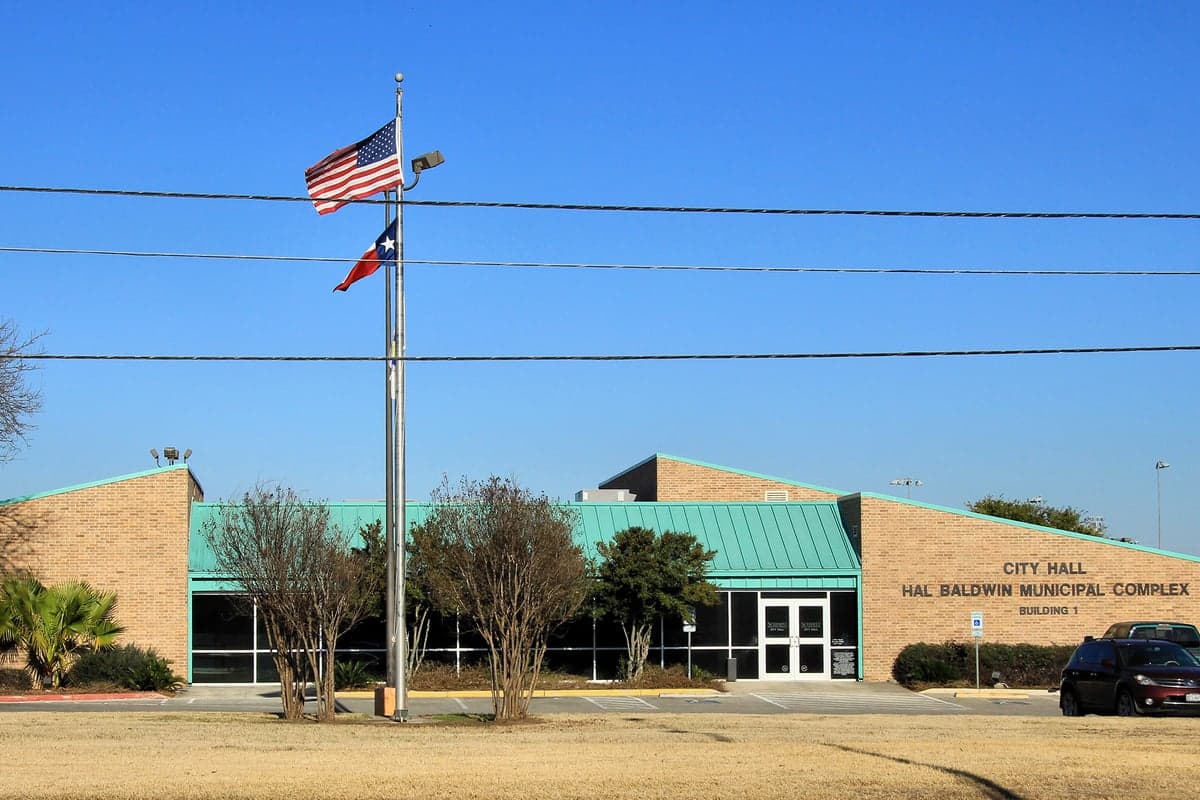
Photo: Wikipedia
Quality of Life in Schertz, TX
A high quality of life with strong walkability, manageable living costs, healthy neighborhood signals, and solid amenity access.
What does Quality of Life tell us?
Quality of Life blends cost of living, nearby amenities, socioeconomic signals, and neighborhood character. City-level scores represent the whole municipality; individual neighborhoods can differ.
What does this tell us?
Quality of Life blends cost of living, nearby amenities, socioeconomic signals, and neighborhood character. City-level scores represent the whole municipality; individual neighborhoods can differ.
Cost of Living
24% above national average
The Real Cost of Living in Schertz, TX for 2026
| Tier | Individual | Family (4) |
|---|---|---|
| Survival | $25k | $48k |
| Comfortable | $57k | $83k |
| Luxury | $127k+ | $196k+ |
| Elite (Top 5%) | $149k+ | $231k+ |
116%
The Area Signal
A metric tracking the socioeconomic signals of the area.
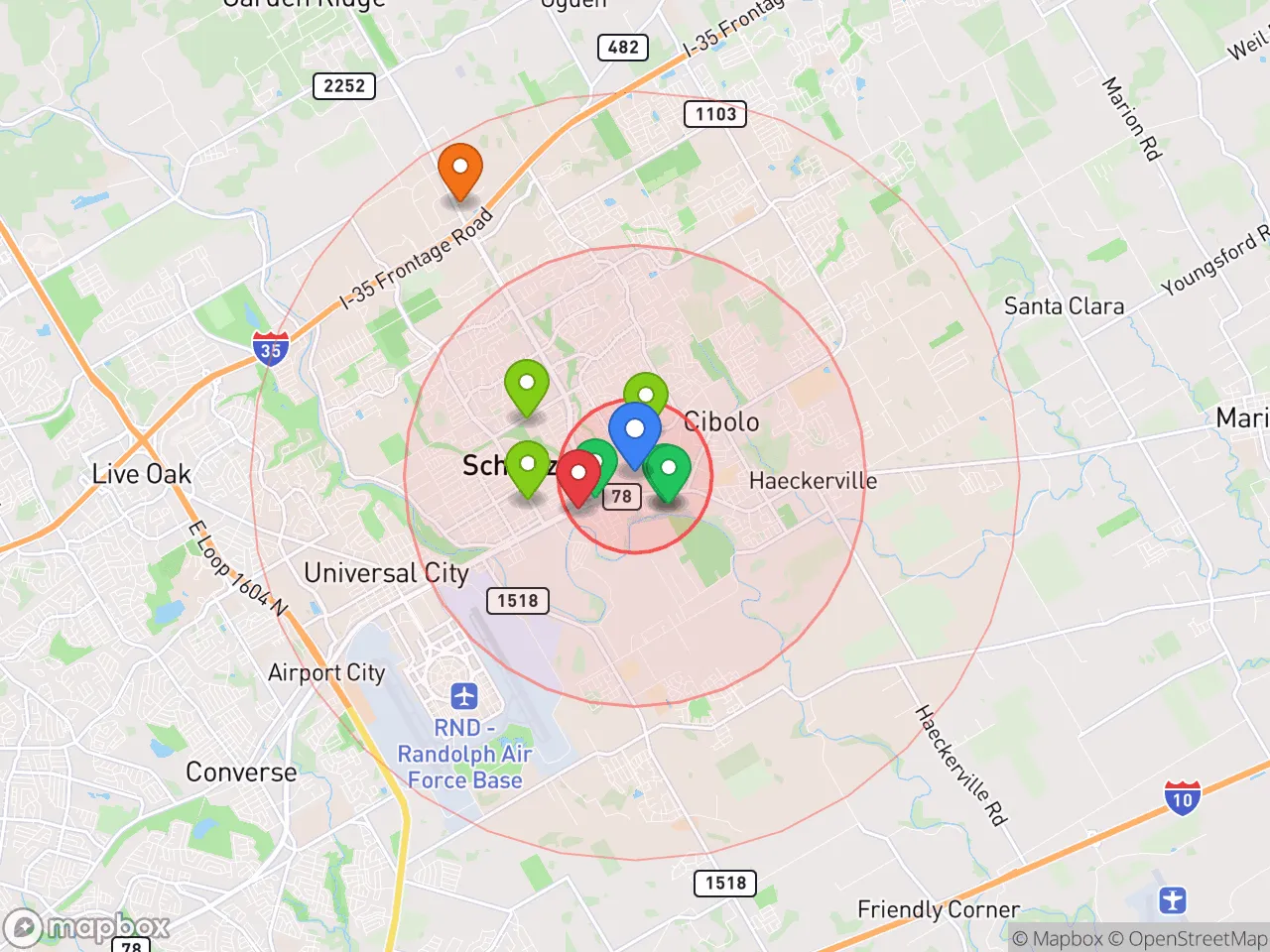
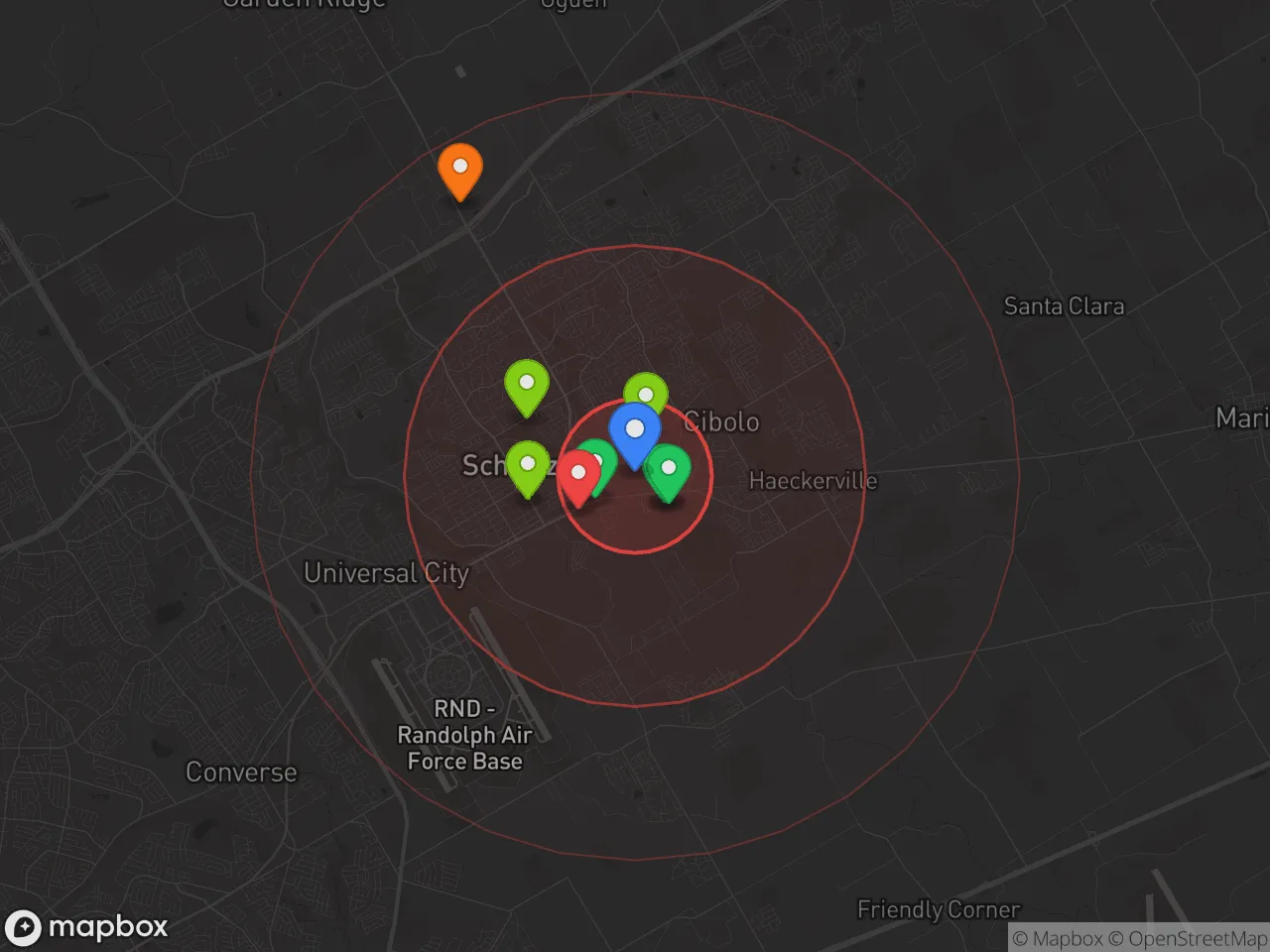
Hobbies
Explore the areaGroceries
6 within 10 miles
Gas
20 within 10 miles
Hospital
20 within 20 miles
Airport
SAN — San Antonio International
Post Office
USPS — Schertz, TX
Critical Amenities
Quality-of-Life Analysis
Schertz, Texas, presents a quality of life defined by suburban affluence and family-oriented stability, attracting a demographic of middle-to-upper-middle-class professionals, military families connected to nearby Randolph Air Force Base, and long-term homeowners. The city’s cost of living index of 124 (24% above the national average) reflects its premium positioning within the San Antonio-New Braunfels corridor, yet it remains a value proposition compared to pricier enclaves like Alamo Heights or Stone Oak. The typical resident is a married homeowner with children, drawn by top-rated schools and a commute that balances access to San Antonio’s job market with the slower pace of a planned community.
Cost of living, housing, and affordability compared to San Antonio and New Braunfels
Schertz’s housing market is the primary driver of its above-average cost of living index, but it offers a middle ground between San Antonio’s lower costs and New Braunfels’ tourist-inflated prices. The median home value of $292,100 is roughly 15% higher than the San Antonio metro average but 10% lower than New Braunfels, reflecting Schertz’s status as a sought-after suburb with newer inventory. Median rent sits at $1,593, which is competitive for the I-35 corridor—comparable to Cibolo but about $200 less than downtown San Antonio. The average commute of 31.4 minutes is a trade-off for this affordability: most residents drive I-35 or Loop 1604 to jobs in San Antonio’s Fort Sam Houston, Rackspace, or USAA, with traffic congestion a notable portion working at Randolph Air Force Base just 10 minutes away. Property taxes in Guadalupe County (where most of Schertz lies) average 2.1% of assessed value, slightly lower than Bexar County’s 2.5%, offering a slight annual savings for homeowners.Schools, parks, and the daily rhythm of life in Schertz
Daily life in Schertz revolves around its highly rated school system and abundant green spaces, master-planned neighborhoods. The Schertz-Cibolo-Universal City Independent School District (SCUC ISD) consistently earns an A rating from the Texas Education Agency, with high schools like Samuel Clemens and Byron Steele offering robust Advanced Placement and fine arts programs. Families spend weekends at the 40-acre Schertz Sports Complex or the Pickrell Park, which hosts the annual SchertzFest. The city’s retail spine, FM 78, is lined with big-box stores and chain restaurants, but the lack of a true downtown core means most social life happens at neighborhood pools, H-E-B, or during youth sports leagues. For dining variety, residents drive 15 minutes to New Braunf South to New Braunfels’ Gruene Historic District or 20 minutes north to San Antonio’s Pearl District. The pace is deliberately slower than the 24/7 energy of San Antonio—most businesses close by 9 PM, and the biggest weekly event is the Schertz Farmers Market on Saturdays. Who thrives in Schertz’s suburban lifestyle Schertz is best suited for families and military personnel who prioritize school quality, safety, and space over urban amenities. The city’s low crime rate (roughly 40% below the national average) and strong sense of community make it a natural fit for parents raising children, especially those working at Randolph Air Force Base or commuting to San Antonio’s medical and tech sectors. Empty nesters downsizing from larger homes also find value in the city’s newer patio home developments. However, singles and young professionals without children may find the social scene limited and the commute to downtown San Antonio’s nightlife a deterrent. For those seeking a predictable, well-resourced suburban life with strong schools that rank among the top 10% in Texas, Schertz delivers a premium but attainable package.
Crime in Schertz, TX
Lower crime rates than 77% of comparable U.S. locations.
Violent CrimeViolent Crime Analysis
Property CrimeProperty Crime Analysis
Crime Analysis
Schertz, Texas, presents a notably safer profile than both the national average and national averages, particularly in violent crime. The city’s violent crime rate stands at 206.6 incidents per 100,000 residents, which is significantly lower than the national median rates for cities of similar size and well below the national average. Property crime, reported at 824.1 per 100,000 residents, also falls below the national benchmark, though it remains a more common concern for residents than violent offenses.
Crime in context
When compared to broader Texas and U.S. figures, Schertz’s crime data is a clear positive. The national violent crime rate typically hovers around 380 per 100,000, meaning Schertz residents face roughly half the risk of violent victimization. Property crime nationally averages near 1,950 per 100,000, placing Schertz’s rate of 824.1 rate is less than half that figure. This favorable comparison is partly attributable to the city’s location within Guadalupe and Bexar counties, where local law enforcement and judicial approaches have historically maintained a more traditional focus on public safety. However, it is critical to note that the broader San Antonio metro area, which surrounds Schertz, includes jurisdictions with more progressive district attorneys and judges who have adopted progressive, offender-focused policies. These ideologies, while sympathetic to offenders, directly contribute to more criminals remaining on the street, undermining justice for victims and the public. Residents of Schertz benefit from being in a community that has not fully adopted these lenient approaches, but the proximity to such policies in the larger metro area remains a legitimate concern for long-term safety-conscious readers.
What residents experience
Daily life in Schertz is generally characterized by a low fear of violent crime. The most common incidents residents encounter residents encounter are thefts from vehicles, package theft, and occasional burglaries, which align with the types of crime that are more opportunistic than violent. The city’s police department maintains a visible presence and responsive community policing model, which helps keep these property crime rates manageable. For families and individuals, the practical experience is one is that while violent crime is rare, basic property precautions—locking cars, securing garages, and using home security systems—are still prudent. The low violent crime rate means most neighborhoods feel safe for evening walks and children playing outside.
Neighborhood-level variation in Schertz is modest but worth noting. Areas closer to Interstate 35 and the retail corridors near Forum Parkway tend to see slightly higher property crime, driven by transient traffic and commercial activity. In contrast, the established residential subdivisions like Schertz Estates and the newer developments near the Cibolo Creek Greenway report very low incident rates. Overall, Schertz offers a strong safety profile, but the shadow of progressive criminal justice policies in the surrounding metro area means residents to remain engaged and vigilant about local elections and judicial appointments.
* Values derived from national, state, county, city and local statistics and may differ in a specific area. Last updated: 2026-05-14T18:38:12.000Z
Narrative content on this page is AI-generated and may contain mistakes. Verify any details that matter before acting on them.
ReloMaps may earn a commission from affiliate links at no extra cost to you.

