 Popular
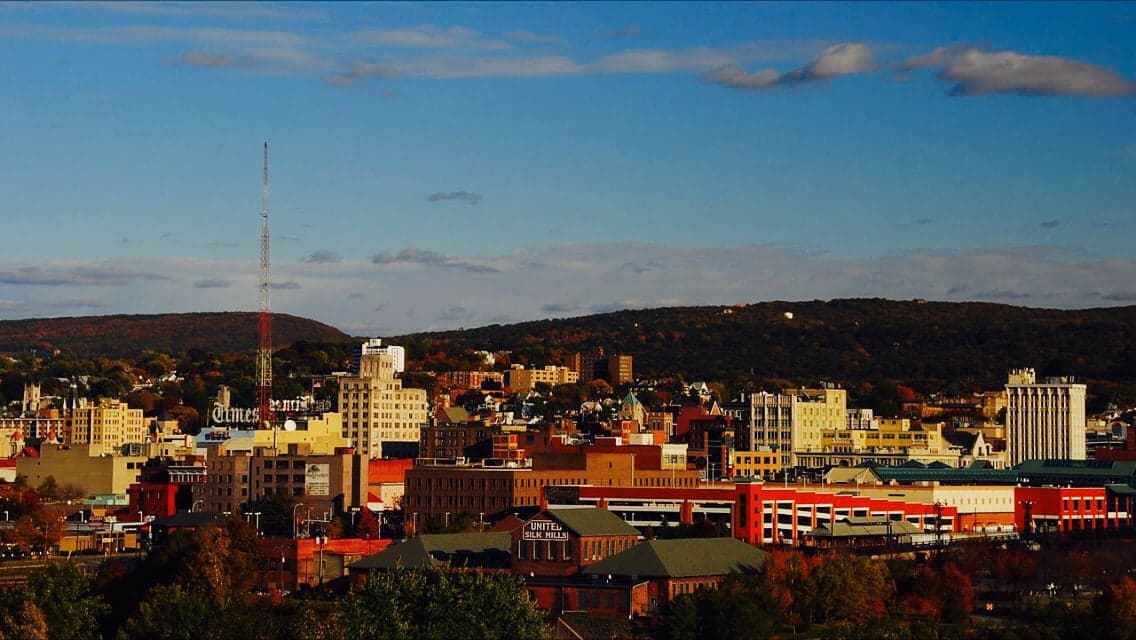
Photo: Wikipedia
Personal Sovereignty in Scranton, PA
Strong independent fundamentals that actively favor personal liberty and low regulation.
What does Personal Sovereignty tell us?
Personal Sovereignty measures your capacity for self-reliance and independence with minimal government friction. Higher scores mean fewer barriers between you and the way you want to live... but it assumes you have the space you need and good neighbors.
What does this tell us?
Personal Sovereignty measures your capacity for self-reliance and independence with minimal government friction. Higher scores mean fewer barriers between you and the way you want to live... but it assumes you have the space you need and good neighbors.
State Policy
Energy independence: Net exporter (150% of energy produced in-state)
Personal Liberty
Homesteading

Personal Liberty Analysis
Scranton, Pennsylvania, offers a mixed bag for those prioritizing personal sovereignty, where the rugged individualism of its coal-mining heritage clashes with a state-level political apparatus that has steadily expanded its reach into daily life. For the survivalist or prepper, the city itself presents challenges of density and urban decay, but the surrounding Lackawanna County and broader northeastern Pennsylvania region provide opportunities for those willing to navigate a complex regulatory environment. The key question for the autonomy-minded individual is whether the area's lower cost of living and access to rural buffers outweigh the creeping hand of Harrisburg and the lingering influence of union-era governance.
Tax burden and regulatory posture in Lackawanna County
Pennsylvania's tax structure is a double-edged sword for those seeking financial independence. The state levies a flat 3.07% personal income tax on all earned income, which is moderate compared to high-tax neighbors like New York or New Jersey, but it still represents a fixed cut of your labor with no progressive relief. Property taxes in Scranton and surrounding Lackawanna County are notably high, driven by school district funding and municipal pensions, with effective rates often exceeding 2% of assessed home value—a significant burden for anyone trying to build self-sufficient land holdings. On the regulatory front, Pennsylvania is not a "right-to-work" state, meaning union influence remains strong in construction and public sectors, which can drive up costs for building or renovating a homestead. The state also imposes a 9.99% corporate net income tax, one of the highest in the nation, which discourages small business formation and side hustles that preppers often rely on for income diversification. However, there is no state tax on Social Security benefits or military pensions, a small nod to retirees and veterans looking to escape higher-tax jurisdictions.
Self-defense and gun law specifics for Scranton residents
Pennsylvania is a "shall-issue" state for concealed carry permits, meaning Scranton residents can obtain a License to Carry Firearms (LCF) with a clean background check and no subjective "good cause" requirement—a solid foundation for personal defense. The state preempts local firearm ordinances, so Scranton cannot enact its own bans on carry in parks or other municipal spaces, though state law prohibits open carry in Philadelphia during a state of emergency and restricts carry in courthouses, schools, and federal buildings. For the prepper, the ability to keep and bear arms is relatively secure, but there are traps: Pennsylvania has a universal background check law for handgun purchases (private sales must go through a licensed dealer), and the state maintains a firearm database that some view as a slippery slope toward registration. Stand-your-ground laws are not explicitly codified in Pennsylvania statute; instead, the state relies on case law that generally allows a person to use deadly force if they are in a place they have a right to be and face imminent threat, but the burden of proof can shift unfavorably in court. Magazine capacity and "assault weapon" bans are not currently on the books at the state level, but local activism in Scranton's city council has occasionally floated symbolic resolutions that signal future pressure. For those serious about self-reliance, the legal landscape is workable but demands vigilance—joining a local gun club or training group in the rural parts of Lackawanna County is a wise move to stay ahead of any legislative shifts.
Self-reliance and homesteading viability in the Scranton area
The city of Scranton itself is a dense, post-industrial grid with small lots averaging 0.1 to 0.25 acres, making serious homesteading impractical within city limits. Zoning codes restrict keeping livestock, and the city's aging water and sewer infrastructure means you're tied to municipal systems. However, drive 15-20 minutes outside the city into townships like Newton, Ransom, or Dalton, and the picture changes dramatically. These areas offer 1- to 5-acre parcels at prices often under $10,000 per acre, with more permissive agricultural zoning that allows chickens, goats, and even small-scale farming. Off-grid feasibility is limited by Pennsylvania's building codes, which require connection to public utilities in most subdivisions, but rural townships often have looser enforcement for "primitive" cabins or tiny homes on raw land—provided you avoid triggering a permit inspection. The region's average annual rainfall of 40 inches supports rain catchment systems, and many rural properties have existing wells or springs, reducing dependency on municipal water. Solar is viable but faces cloudy winters; a hybrid system with a backup generator is the practical prepper approach. The biggest hurdle is the Act 32 stormwater management regulations in Lackawanna County, which can impose fees or restrictions on land clearing and impervious surfaces, so any homestead plan should include a buffer of wooded acreage to stay compliant.
Personal liberties: parental rights, medical autonomy, and property
Pennsylvania has a mixed record on parental rights. The state does not have a comprehensive "parental bill of rights" like some red states, but it does allow for religious and philosophical exemptions to mandatory vaccinations for school attendance, a key concern for families wanting medical autonomy. Homeschooling is legal and relatively straightforward: parents must file a notarized affidavit with the local school district each year, maintain a portfolio of work, and have a standardized test or evaluation in grades 3, 5, and 8. This is more bureaucratic than states like Texas or Idaho, but it is workable for committed families. Medical freedom is under pressure: Pennsylvania has a broad emergency health powers act that was used aggressively during the COVID-19 pandemic, including mask mandates and business closures that were enforced by local health departments in Scranton. The state also has a prescription drug monitoring program that tracks controlled substances, which some view as an overreach into private medical decisions. Property rights are generally respected, but the state's Eminent Domain Code allows for takings for economic development, and Scranton's history of urban renewal projects means that land use can be unpredictable. The Clean and Green program offers tax breaks for agricultural land, which can help preppers keep property taxes low if they enroll at least 10 acres in active use. Free speech is protected under the state constitution, but Scranton's city council has occasionally considered "disorderly conduct" ordinances that could be used to chill protest or public assembly—a reminder that local politics can shift against individual expression.
Overall, Scranton and its surrounding region offer a moderate-to-low sovereignty score compared to the American West or Deep South. The tax burden is real, the regulatory environment is bureaucratic but navigable, and the gun laws are better than the Northeast average but worse than free states like Alaska or New Hampshire. For the prepper or survivalist willing to live on the rural fringe of Lackawanna County, the area provides affordable land, decent water resources, and a community of like-minded outdoorsmen. But anyone moving here should expect to fight for their freedoms at the local level—attending township meetings, joining gun rights groups, and building networks of trusted neighbors. It is not a retreat; it is a frontier of constant vigilance, where personal sovereignty is earned through knowledge and persistence rather than granted by law.

* Values derived from national, state, county, city and local statistics and may differ in a specific area. Last updated: 2026-05-01T23:24:44.000Z
Narrative content on this page is AI-generated and may contain mistakes. Verify any details that matter before acting on them.
ReloMaps may earn a commission from affiliate links at no extra cost to you.

