 Popular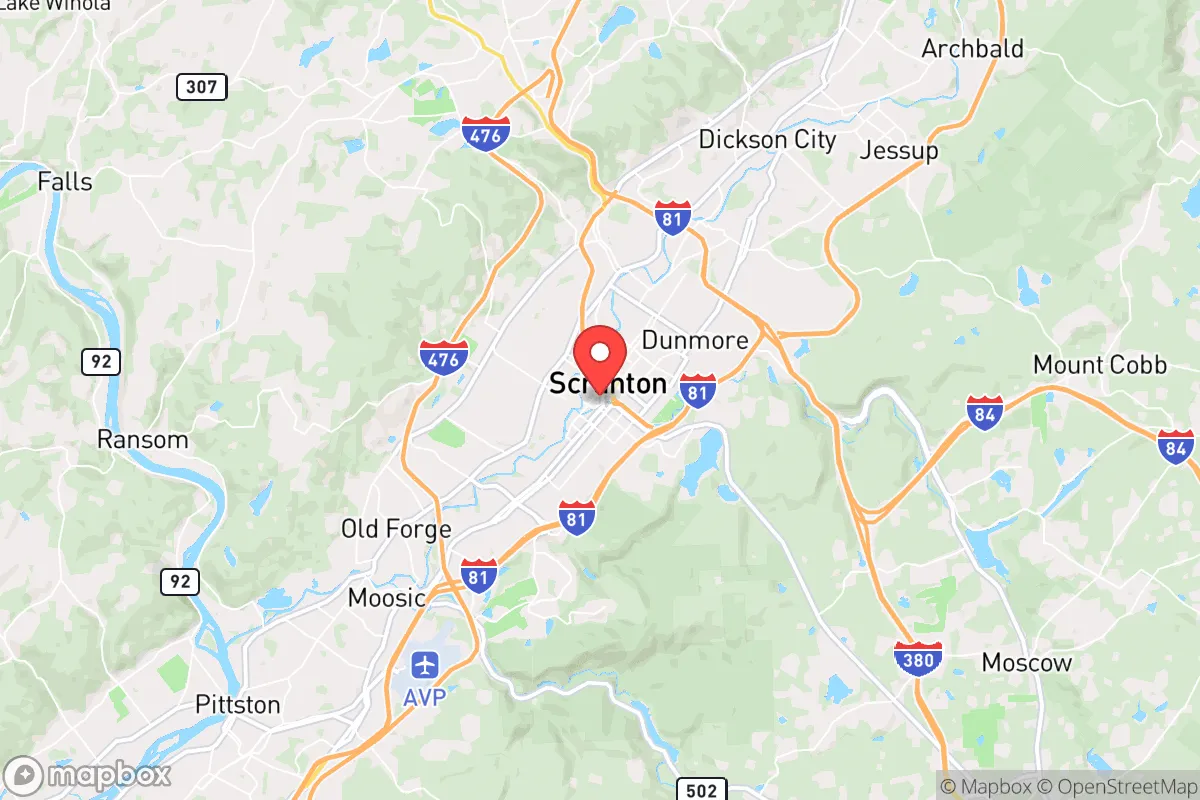
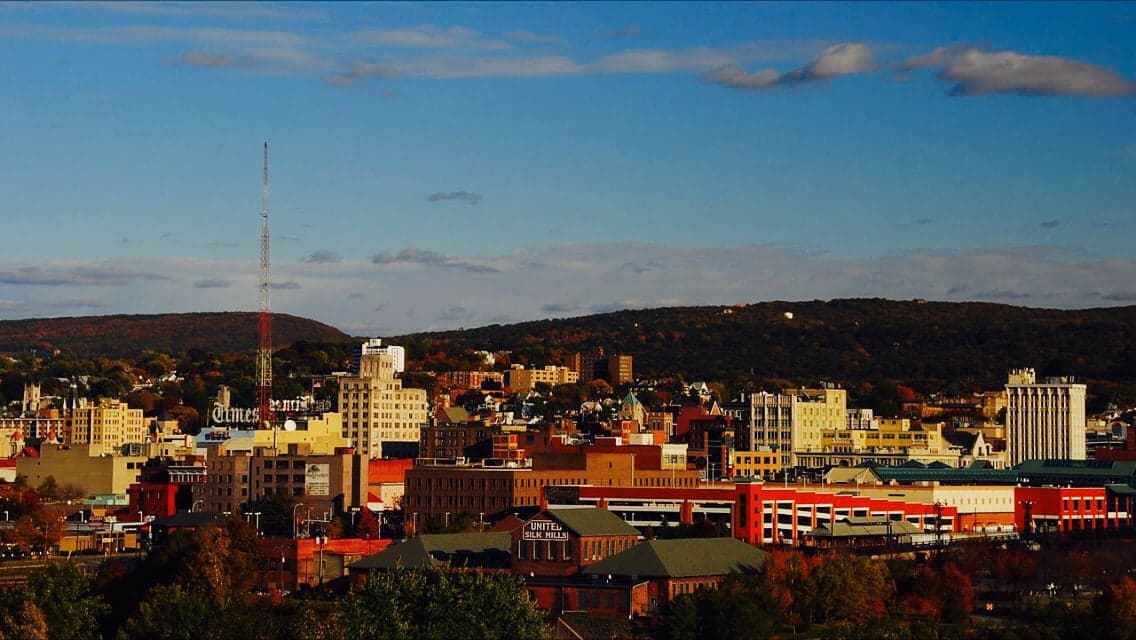
Photo: Wikipedia
Political ClimatePolitical Climate in Scranton, PA
District shown is the primary district for this city’s centroid. Cities may span multiple districts.
Local Political AnalysisPolitical Analysis of Scranton, PA
Scranton, Pennsylvania, sits in a politically divided region, but its overall lean has shifted rightward in recent years. The city itself has a Cook PVI of R+4, meaning it votes about four points more Republican than the national average, though this masks a lot of internal tension. If you’ve lived here long enough, you remember when the city was a reliable blue-collar Democratic stronghold, but those days are fading fast. The working-class roots that once made Scranton a union-heavy, Democrat-voting town are now being pulled in a different direction, especially as national politics get more polarized and local issues like energy policy and school boards take center stage.
How it compares
Compared to its neighbors, Scranton is actually a bit of a moderate outlier. Drive 20 minutes south to Wilkes-Barre, and you’ll find a similar R+4 vibe, but head east to the Poconos or west to State College, and the political landscape shifts dramatically. The surrounding Lackawanna County has trended more conservative in rural townships like Dalton or Clarks Summit, where you see stronger Republican turnout and a lot of pushback against state-level mandates. Meanwhile, the city proper still has pockets of progressive activism, especially around the university and hospital corridors, but those voices are getting louder and more aggressive, which is concerning for anyone who values personal freedom. The contrast is stark: Scranton’s suburbs are increasingly skeptical of government overreach, while the city core sees more support for things like rent control and expanded public transit—policies that often come with more red tape and less individual choice.
What this means for residents
For the average person living here, the political climate means you have to stay sharp. The shift toward progressive ideology in local government—like the push for stricter zoning laws or higher minimum wages—can feel like a slow creep into your daily life. I’ve seen it firsthand: a few years back, the city council tried to pass a “fair workweek” ordinance that would have forced small businesses to schedule employees months in advance, which is a nightmare for flexibility and personal autonomy. That kind of government overreach is a red flag, and it’s why many long-time residents are voting more conservatively now. On the flip side, the R+4 lean means there’s still a strong conservative base that fights back on issues like school choice and property rights. If you value keeping your money in your pocket and making your own decisions about your home and business, Scranton’s political trajectory is a mixed bag—you’ll find allies in the suburbs, but the city hall crowd is increasingly cozy with top-down control.
Culturally, Scranton has a distinct blue-collar identity that resists being pigeonholed. You’ll still hear people talk about the old coal-mining days and the union halls, but there’s a growing libertarian streak, especially among younger residents who are tired of both parties. The biggest policy distinction is probably energy: the region’s natural gas boom has made many locals pro-drilling and skeptical of environmental regulations that feel like federal overreach. That’s a big reason why the area’s politics are shifting—people see their livelihoods tied to energy independence, and they don’t want bureaucrats in Harrisburg or Washington telling them how to live. If you’re moving here, expect a place where neighborly conversations can get heated over a beer, but where most folks still agree on one thing: the government should stay out of your backyard.

State Political ClimatePolitical Climate in Pennsylvania
State Political AnalysisPolitical Environment in the State
Pennsylvania has long been the quintessential swing state, but over the past 10-20 years, its political center of gravity has shifted in ways that should give any conservative pause. The state is currently a patchwork of deep-blue urban strongholds and deep-red rural expanses, with a shrinking number of true swing suburbs. The overall partisan lean is a razor-thin Democratic tilt at the presidential level (Biden won by just 1.2 points in 2020), but the state legislature remains under Republican control, creating a constant tug-of-war that frustrates both sides. The trajectory since 2000 has been a slow, steady march leftward in the populous southeast, while the rest of the state has hardened its conservative resolve.
Urban vs. rural divide
The political map of Pennsylvania is a tale of two commonwealths. The Democratic machine is powered almost entirely by Philadelphia and its collar counties (Montgomery, Delaware, Chester, Bucks), plus Pittsburgh and its immediate suburbs in Allegheny County. These two metros alone account for roughly 40% of the state's vote and reliably deliver margins of 60-70% for Democrats. The rest of the state—places like Lancaster, York, Erie, and the vast rural expanse of the northern tier and central Pennsylvania—votes solidly Republican. The key battlegrounds have been the "collar counties" around Philadelphia, which flipped from red to blue between 2000 and 2020. Bucks County, once a Republican stronghold, now votes Democratic by 5-10 points. Meanwhile, Luzerne County (Wilkes-Barre) flipped hard from blue to red, becoming a Trump stronghold. The divide isn't just geographic—it's cultural. The urban cores are dense, diverse, and heavily reliant on government services, while the rural areas are agrarian, resource-extractive, and deeply skeptical of state power.
Policy environment
Pennsylvania's policy environment is a mixed bag that reflects its split government. On taxes, the state has a flat income tax of 3.07%—relatively low by Northeast standards—and a sales tax of 6% (with no tax on clothing or groceries). Property taxes are a major pain point, averaging around 1.5% of home value, which is high compared to the South or Midwest. The regulatory posture is heavy: Pennsylvania is one of the few states that still has a state-level liquor monopoly (the PLCB), though recent reforms have allowed beer and wine sales in grocery stores. On education, the state has a robust public school system, but school choice is limited—there's no universal voucher program, though a small tax-credit scholarship program exists for low-income students. Healthcare is heavily regulated, with the state expanding Medicaid under Obamacare. Election laws are a flashpoint: Pennsylvania has no-excuse mail-in voting (passed in 2019 under Act 77), which conservatives view as a recipe for fraud, and the state has been at the center of post-2020 election integrity battles. Voter ID is required for first-time voters but not for repeat voters—a gap many conservatives want closed.
Trajectory & freedom
On the freedom front, Pennsylvania is a state in tension. On the positive side for conservatives, the state has strong preemption laws that prevent local municipalities from enacting their own gun control—a major win after Philadelphia and Pittsburgh tried to pass their own restrictions. The state also has a "Shall Issue" concealed carry system, and permitless carry is not yet law but has been debated. However, the trajectory on personal liberty is concerning. In 2022, the state passed a near-total abortion ban at 24 weeks (Act 118), but the Democratic governor, Josh Shapiro, has vetoed any further restrictions. On parental rights, the state has no explicit "parents' bill of rights," and school boards in blue counties like Montgomery have pushed controversial curriculum on gender identity without parental opt-in. Medical freedom took a hit during COVID: Pennsylvania had some of the longest-lasting mask mandates in the country, and the state health department still has broad emergency powers. Property rights are generally respected, but the state's Act 32 (2016) allows for aggressive eminent domain for economic development in blighted areas. The biggest red flag for conservatives is the state's election system: the 2020 election saw massive use of mail-in ballots, and the state supreme court (controlled by Democrats) has repeatedly ruled against Republican efforts to tighten security. The trajectory is toward more centralized control from Harrisburg, with the governor's office likely staying Democratic for the foreseeable future.
Civil unrest & political movements
Pennsylvania has seen its share of political flashpoints. The 2020 election aftermath was particularly intense: the "Stop the Steal" movement had major rallies in Harrisburg and Philadelphia, and the state was ground zero for lawsuits challenging mail-in ballot procedures. In 2021, the Lancaster County commissioners voted to audit the 2020 election, sparking a legal battle with the state. On the left, the Black Lives Matter protests in Philadelphia in 2020 were large and destructive, with looting and property damage that led to a permanent police presence in Center City. Immigration politics are a growing issue: Philadelphia is a self-declared "sanctuary city," and the state has a law (Act 29 of 2020) that prohibits local police from cooperating with ICE in certain situations—a law conservatives are trying to repeal. The secession/nullification rhetoric is mostly confined to the rural northern tier, where some counties have passed "Second Amendment Sanctuary" resolutions, but no serious movement exists. Election integrity remains the hottest-button issue: the 2022 gubernatorial race saw Republican Doug Mastriano run on a platform of decertifying voting machines and requiring hand-counted paper ballots, though he lost decisively. The organized activist scene is robust on both sides: the Pennsylvania Freedom Caucus in the state house is a vocal conservative bloc, while groups like Indivisible and the Pennsylvania Democratic Party are well-funded and organized in the cities.
Projection
Looking ahead 5-10 years, the demographic trends are not favorable for conservatives. The population is aging and shrinking in rural areas, while the southeastern suburbs continue to grow and diversify. In-migration is mostly from New York and New Jersey—people who bring their blue-state voting habits with them. The Lehigh Valley (Allentown, Bethlehem, Easton) is a bellwether: it was once a swing region but is now trending Democratic as it becomes a bedroom community for New York City commuters. The Scranton/Wilkes-Barre area is holding red, but its population is declining. The state's electoral college votes will likely remain competitive, but the state legislature is gerrymandered enough to stay Republican for at least another decade. The biggest wildcard is the governor's race: if a Republican can win in 2026 or 2030, they could veto the worst of the progressive agenda. But the long-term trend is toward a state that looks more like New Jersey: high taxes, heavy regulation, and a Democratic lock on the executive branch. The rural areas will continue to feel disenfranchised, and the cultural divide will widen.
For a conservative considering a move to Pennsylvania, the bottom line is this: you can find a great life here if you pick your location carefully. The rural areas and smaller cities like Lancaster, York, or Erie offer a strong sense of community, lower cost of living, and like-minded neighbors. But you'll be fighting an uphill battle at the state level. The state government in Harrisburg is increasingly hostile to conservative values on education, election integrity, and individual liberty. If you value low taxes, school choice, and a government that stays out of your life, Pennsylvania is a state where you'll need to stay politically engaged just to hold the line. It's not a lost cause—but it's a state that requires constant vigilance.
* Values derived from national, state, county, city and local statistics and may differ in a specific area. Last updated: 2026-05-01T23:24:44.000Z
Narrative content on this page is AI-generated and may contain mistakes. Verify any details that matter before acting on them.
ReloMaps may earn a commission from affiliate links at no extra cost to you.

