Demographics of Seabrook Island, SC
Affluence Level in Seabrook Island, SC
A wealthy area with high-earning, well-educated households. Incomes, home values, and educational attainment meaningfully outpace national averages.
People of Seabrook Island, SC
Seabrook Island, South Carolina, is home to 2,107 residents who form one of the most demographically homogeneous communities in the Charleston region. The population is 96.5% white, with a foreign-born share of just 0.3%, and 82.1% of adults hold a college degree — a profile that reflects the island’s history as an exclusive, planned resort community rather than a traditional Southern settlement. The island’s identity is defined by gated residential enclaves, private golf and beach clubs, and a seasonal rhythm driven by second-home owners and retirees, not by a year-round working population.
How the city was settled and grew
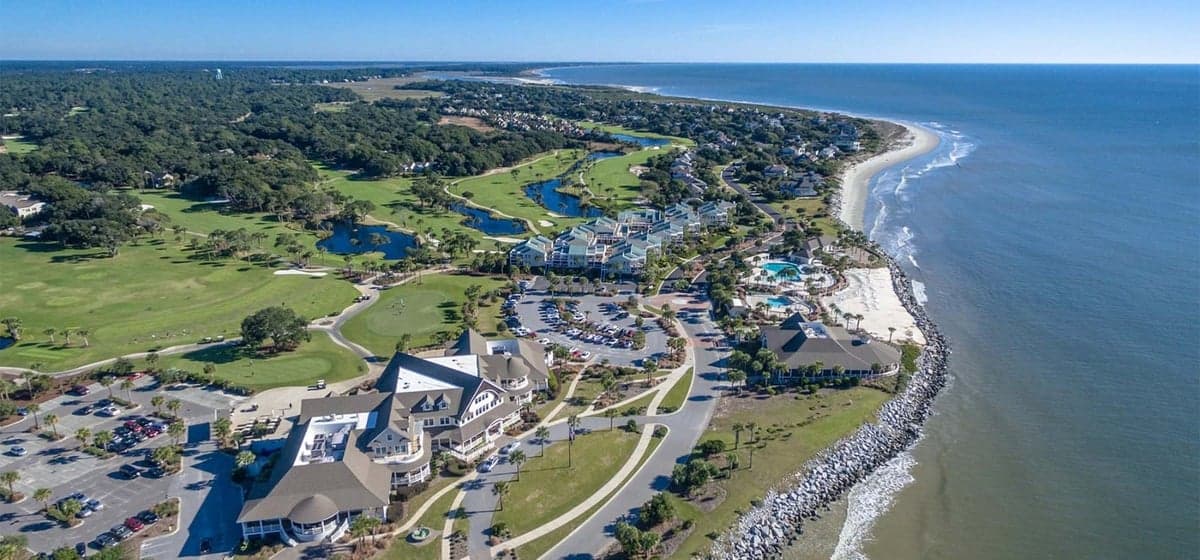
Unlike most South Carolina coastal towns, Seabrook Island has no deep colonial or antebellum history as a plantation settlement. The island remained largely undeveloped through the 19th and early 20th centuries, used primarily for timber and hunting by absentee landowners. The first permanent residents were a handful of Gullah Geechee families who lived in small clusters along the island’s marshy edges, but their numbers were never large enough to form a named neighborhood. The modern population history begins in the 1970s, when a development company purchased the island and began building a private, gated resort community. The earliest residential phase, Ocean Winds, was laid out along the northern beachfront and attracted affluent retirees and second-home buyers from the Northeast and Midwest. These early buyers were almost entirely white, drawn by the promise of a low-density, amenity-rich coastal lifestyle with no commercial zoning. The North Shore area followed in the late 1970s, offering larger lots and marsh views, and solidified the island’s reputation as an exclusive enclave. By 1980, the permanent population was under 500, and the seasonal population already dwarfed it.
Modern era (post-1965)
Seabrook Island’s modern demographic trajectory was set by its development model, not by immigration or industrial change. The Hart-Cellar Act of 1965 had no measurable impact here — the island’s foreign-born share remains at 0.3%, far below the national average. Instead, domestic in-migration from the Northeast, Midwest, and Mid-Atlantic drove growth. The 1990s and 2000s saw the construction of Cap’n Sams, a gated neighborhood of single-family homes and villas oriented around the island’s second golf course, and Bohicket Marina Village, a mixed-use area with condominiums and boat slips that attracted a slightly younger demographic of professionals and early retirees. These neighborhoods absorbed nearly all new residents, and the island’s racial composition remained virtually unchanged: white share has stayed above 95% since the 1980s. The Black population, at 0.4%, consists almost entirely of descendants of the original Gullah Geechee families who remained after development, concentrated in a small pocket near the island’s entrance. The Hispanic share (1.8%) and East/Southeast Asian share (0.4%) are almost entirely seasonal workers and service staff who live off-island in Johns Island or West Ashley, not permanent Seabrook residents. The Indian-subcontinent population (0.2%) is negligible and likely represents a handful of medical professionals or business owners who commute to Charleston.
The future
Seabrook Island’s population is heading toward further homogenization, not diversification. The island has no room for large-scale new construction — the Seabrook Island Property Owners Association strictly limits building density, and the remaining developable lots are infill parcels within existing neighborhoods. The population is aging: the median age is estimated above 55, and the share of residents under 18 is below 10%. Younger families are increasingly priced out by rising home values — the median home price exceeded $1 million in 2024 — and the island’s school-age population is fed almost entirely by private schools or off-island public schools in Charleston County. The 0.3% foreign-born share is likely to remain flat, as there is no economic base to attract immigrant communities. The Hispanic and East/Southeast Asian shares may rise slightly as seasonal service workers transition to permanent off-island residence, but they will not become a meaningful part of the permanent Seabrook population. The island is not tribalizing into distinct ethnic enclaves — it is simply becoming more uniformly affluent, older, and whiter.
For a conservative-leaning individual or family considering a move to Seabrook Island, the bottom line is clear: this is a place that has deliberately preserved its character as a quiet, private, amenity-rich community for those who can afford it. The population is not changing in any meaningful demographic sense — it is stable, homogeneous, and likely to remain so for the next 10 to 20 years. New residents will find a community of like-minded, highly educated, and politically conservative neighbors, but they should also expect limited diversity, a high cost of entry, and a social life that revolves around the island’s private clubs rather than a broader civic or commercial center.

* Values derived from national, state, county, city and local statistics and may differ in a specific area. Last updated: 2026-04-23T03:28:37.000Z
Narrative content on this page is AI-generated and may contain mistakes. Verify any details that matter before acting on them.
ReloMaps may earn a commission from affiliate links at no extra cost to you.

