 Popular
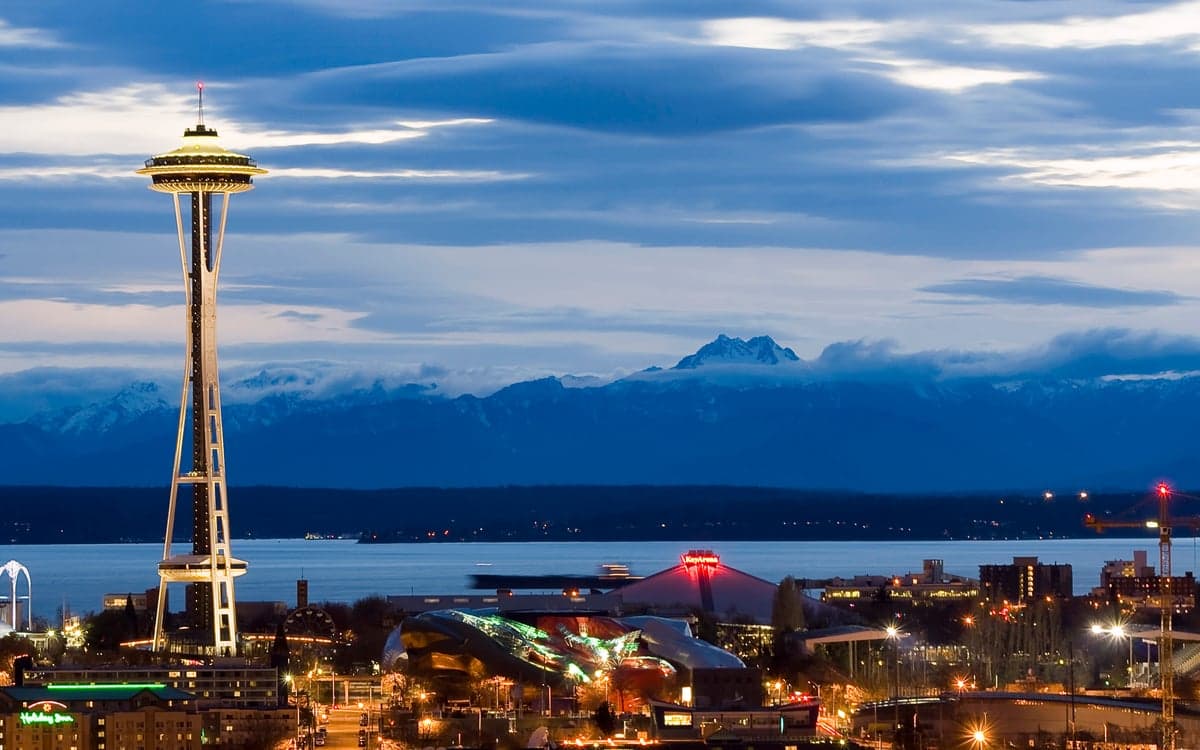
Photo: Wikipedia
Demographics of Seattle, WA
Affluence Level in Seattle, WA
An upper-middle-class area. Household wealth, education levels, and homeownership run ahead of national benchmarks.
People of Seattle, WA
Seattle today is a densely educated, tech-driven city of 741,440 residents, where 67.5% of adults hold a college degree and the economy revolves around Amazon, Microsoft, and a sprawling startup ecosystem. The city is majority-white (59.9%) but has a significant East/Southeast Asian population (13.8%), a smaller Indian-subcontinent community (3.2%), and a Hispanic share of 8.2% that is growing faster than the city average. Only 10.7% of residents are foreign-born, a relatively low figure for a major West Coast city, reflecting Seattle’s character as a destination for domestic transplants rather than a traditional immigrant gateway.
How the city was settled and grew
Seattle’s original population was the Duwamish people, who lived in longhouse villages along Elliott Bay and the Duwamish River for centuries before white settlement. The city’s modern founding dates to 1851, when the Denny Party landed at Alki Point in what is now West Seattle, drawn by the promise of timber and a deep-water harbor. The 1897 Klondike Gold Rush turned Seattle into a boomtown, with Pioneer Square becoming the chaotic hub of outfitters, saloons, and boarding houses for stampeders heading north. The early 20th century brought waves of Scandinavian immigrants—Norwegians, Swedes, and Finns—who settled in Ballard, building a fishing fleet and a tight-knit Lutheran community that still defines the neighborhood’s character. Japanese immigrants arrived to work in railroads and sawmills, establishing a vibrant community in the International District before wartime internment devastated it. African Americans came in significant numbers during World War II for shipyard jobs at Boeing and the Puget Sound Naval Shipyard, concentrating in the Central District and later the Rainier Valley, where redlining had confined them.
Modern era (post-1965)
The 1965 Hart-Cellar Act opened immigration from Asia, but Seattle’s foreign-born share (10.7%) remains low compared to San Francisco or Los Angeles because the city’s growth has been driven overwhelmingly by domestic in-migration. The 1970s and 1980s saw an influx of Vietnamese and Cambodian refugees, who joined the existing Chinese and Japanese communities in the International District and spread south into Rainier Valley and Beacon Hill. East/Southeast Asians now make up 13.8% of the population, with the largest groups being Chinese and Vietnamese. The Indian-subcontinent community (3.2%) is newer and more affluent, concentrated in tech hubs like South Lake Union and the neighborhoods near Microsoft’s Redmond campus, though many live across Lake Washington rather than in Seattle proper. The Hispanic population (8.2%) grew steadily from the 1990s onward, with Mexican and Central American families settling in South Park and White Center (just outside city limits), often working in construction, landscaping, and food service. The Black population, once 15% in 1970, has fallen to 6.5% as gentrification pushed families out of the Central District to suburbs like Renton and Kent. The white population, meanwhile, has become younger, wealthier, and more concentrated in Capitol Hill, Fremont, and Queen Anne, where tech workers dominate the housing market.
The future
Seattle’s population is heading toward greater economic stratification and ethnic sorting. The city is not homogenizing—it is tribalizing into distinct enclaves by income and education level. The white, college-educated majority is consolidating in the urban core and northern neighborhoods, while the Hispanic and East/Southeast Asian populations are growing fastest in the southern parts of the city, particularly Rainier Valley and Beacon Hill. The Black population is likely to continue declining within city limits as housing costs rise, though the suburbs south of Seattle are becoming majority-minority. The Indian-subcontinent community is growing but remains small and geographically diffuse, with many families choosing suburban school districts over Seattle’s urban schools. The foreign-born share is rising slowly, but Seattle will remain a city of domestic transplants rather than a classic immigrant gateway. The next 10-20 years will see continued infill development, a widening gap between the tech elite and service workers, and a southern shift of immigrant and minority populations as the north side becomes increasingly expensive and white.
For someone moving in now, Seattle is a city where your neighborhood largely determines your experience: the urban core is young, transient, and expensive; the north end is family-oriented and increasingly homogeneous; and the south end is more diverse, working-class, and community-rooted. The city’s future is one of deepening economic divides, with the tech sector driving growth but also pushing out the very diversity that once defined Seattle’s character.

* Values derived from national, state, county, city and local statistics and may differ in a specific area. Last updated: 2026-04-21T10:00:39.000Z
Narrative content on this page is AI-generated and may contain mistakes. Verify any details that matter before acting on them.
ReloMaps may earn a commission from affiliate links at no extra cost to you.

