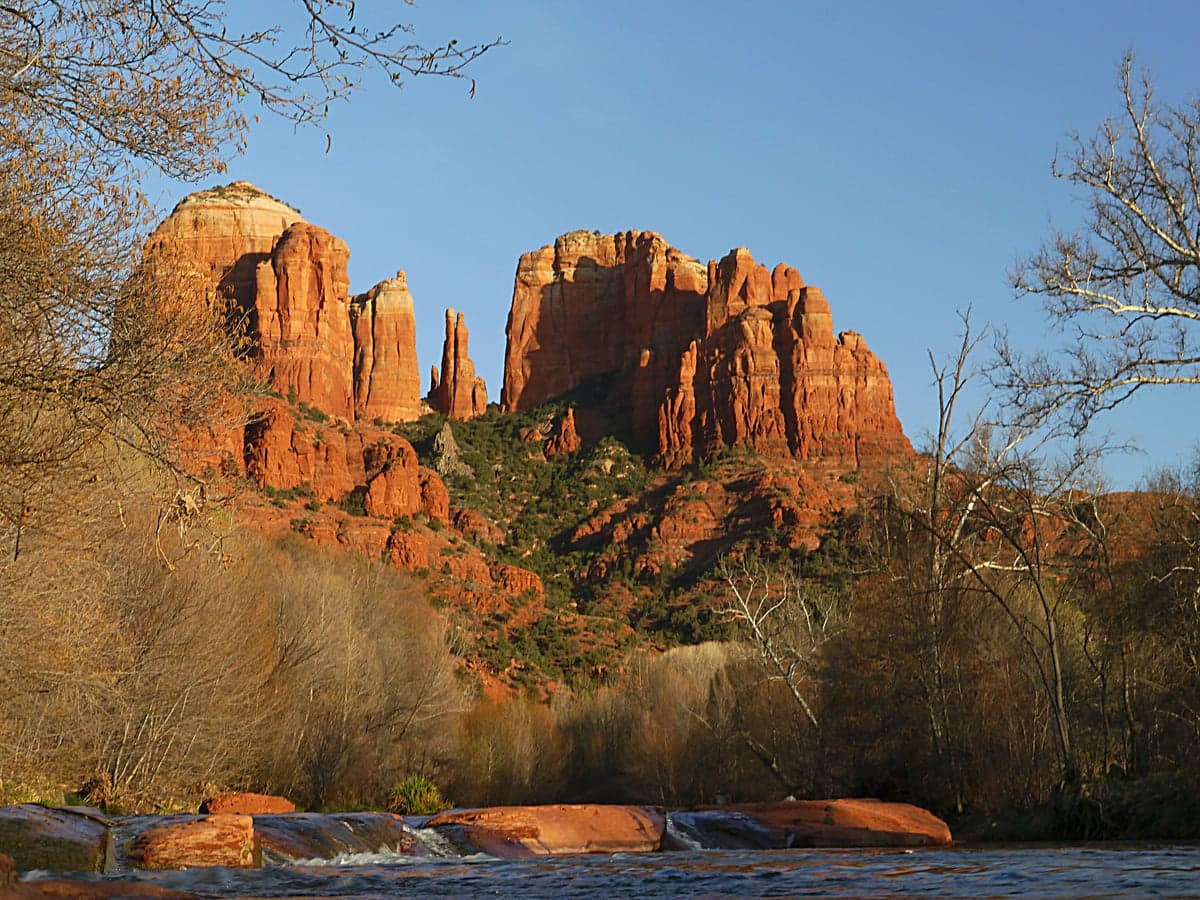
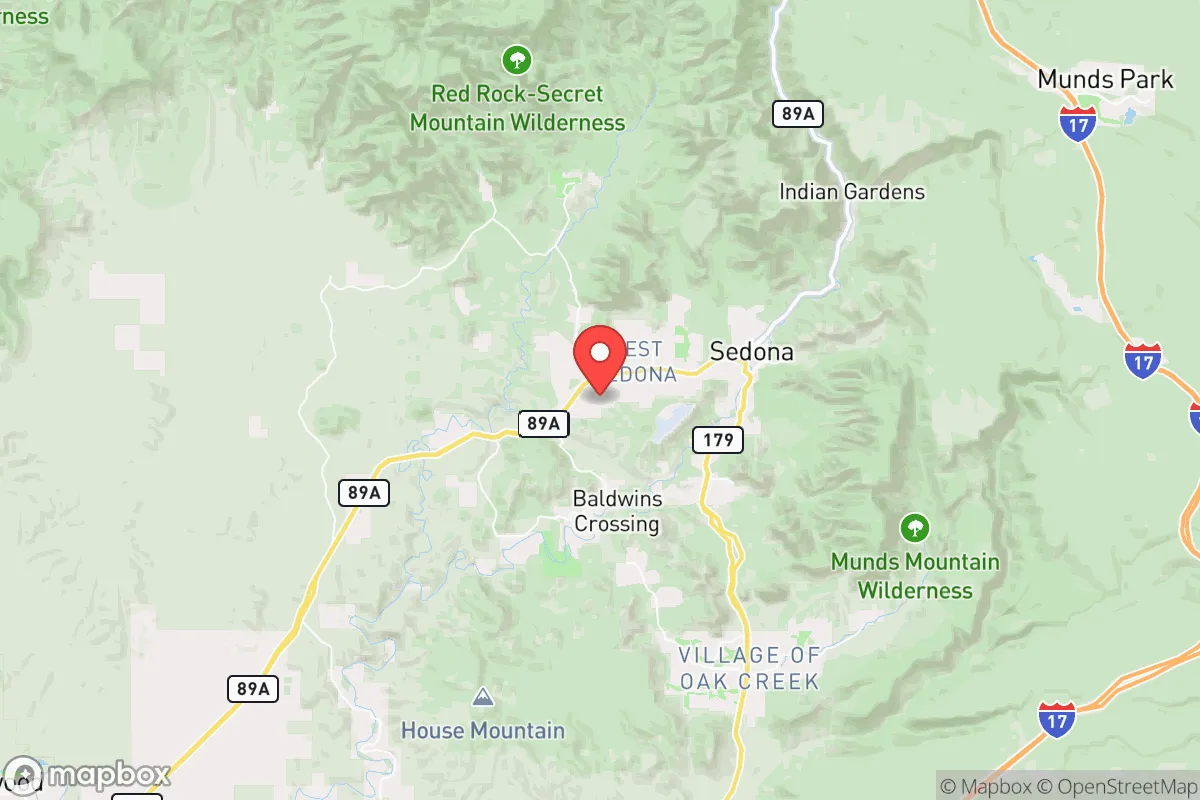
Photo: Wikipedia
Demographics of Sedona, AZ
Affluence Level in Sedona, AZ
An upper-middle-class area. Household wealth, education levels, and homeownership run ahead of national benchmarks.
People of Sedona, AZ
The people of Sedona, Arizona, today number roughly 9,770, forming a community that is predominantly white (73.4%) with a significant Hispanic minority (19.9%) and a notable share of college-educated residents (51.0%). The city’s identity is shaped by a blend of longtime ranching families, New Age spiritual seekers, and affluent retirees drawn by the red rock landscape, creating a culture that is politically progressive-leaning but economically stratified. Foreign-born residents make up 12.6% of the population, with East/Southeast Asian communities (2.4%) and Indian subcontinent residents (0.5%) adding modest diversity. This is a place where tourism and luxury living dominate, yet the working-class Hispanic population remains a quiet backbone of the service economy.
How the city was settled and grew
Sedona’s human history begins with the Sinagua people, who inhabited the area from roughly 650 to 1400 AD, leaving behind cliff dwellings at sites like Palatki Heritage Site and Honanki. By the time Anglo settlers arrived in the late 19th century, the Yavapai and Apache peoples were the primary inhabitants, but they were forcibly removed to reservations by the 1870s. The first permanent Anglo settlers, primarily Mormon ranchers and farmers, arrived in the 1880s, drawn by the fertile Oak Creek Valley. They established homesteads in what is now Oak Creek Canyon and the Uptown area, naming the settlement after Sedona Arabella Miller Schnebly, a local postmaster’s wife. The railroad bypassed Sedona, keeping it a small, isolated ranching community through the early 20th century. The population remained under 500 until the 1950s, when Hollywood films like Broken Arrow (1950) showcased the red rocks, sparking the first wave of tourism and artist migration. The West Sedona district began to develop during this period as a commercial corridor serving the growing visitor economy.
Modern era (post-1965)
The 1965 Immigration and Nationality Act had a limited direct impact on Sedona, as the city’s growth has been driven overwhelmingly by domestic in-migration rather than international immigration. The major demographic shift came in the 1970s and 1980s, when New Age spiritual seekers—attracted by the area’s reported vortex energy—began settling in Village of Oak Creek and the Chapel Area near the Chapel of the Holy Cross. This wave was predominantly white, college-educated, and affluent, transforming Sedona from a ranching town into a wellness and tourism hub. The Hispanic population, which now stands at 19.9%, grew steadily from the 1980s onward as Mexican and Central American immigrants arrived to work in construction, hospitality, and landscaping. They concentrated in West Sedona and the Jail Hill area, where more affordable housing and mobile home parks exist. The East/Southeast Asian community (2.4%) is a smaller, more recent addition, largely composed of professionals and business owners in the tourism and retail sectors, with no single dominant neighborhood. The Indian subcontinent population (0.5%) is similarly dispersed, often tied to tech and healthcare jobs in nearby Flagstaff or remote work. The Black population remains negligible at 0.8%, reflecting Sedona’s historic lack of industrial employment that drew Black migrants to other parts of Arizona.
The future
Sedona’s population is likely to continue homogenizing along economic lines, with the white, affluent demographic solidifying its dominance as housing prices push out lower-income residents. The Hispanic community, while growing in absolute numbers, faces displacement pressure from rising rents and a shortage of affordable housing in West Sedona and Jail Hill. The foreign-born share (12.6%) is expected to plateau or decline slightly, as international immigration to Sedona is limited by the high cost of living and lack of entry-level job growth outside tourism. The East/Southeast Asian and Indian subcontinent populations are likely to remain small, as Sedona lacks the tech or academic sectors that attract these groups to larger Arizona cities like Phoenix or Tucson. The next 10-20 years will see Sedona become older, whiter, and wealthier, with the working-class Hispanic population either assimilating into the broader community or being pushed to outlying towns like Cottonwood or Camp Verde. The city’s strict growth management policies, including a 1986 citizen initiative limiting building permits, will keep the population near its current size, reinforcing its character as an exclusive enclave.
For someone moving to Sedona now, the city is becoming a high-cost, low-diversity destination for affluent retirees and remote workers, with a shrinking middle class and a Hispanic service workforce that commutes from cheaper areas. The cultural divide between the New Age spiritualists and the conservative ranching families has largely faded, replaced by a more uniform lifestyle-oriented population. New residents should expect a community that values environmental preservation and tourism over economic expansion, with limited opportunities for those not already financially established.

* Values derived from national, state, county, city and local statistics and may differ in a specific area. Last updated: 2026-05-14T18:03:46.000Z
Narrative content on this page is AI-generated and may contain mistakes. Verify any details that matter before acting on them.
ReloMaps may earn a commission from affiliate links at no extra cost to you.

