
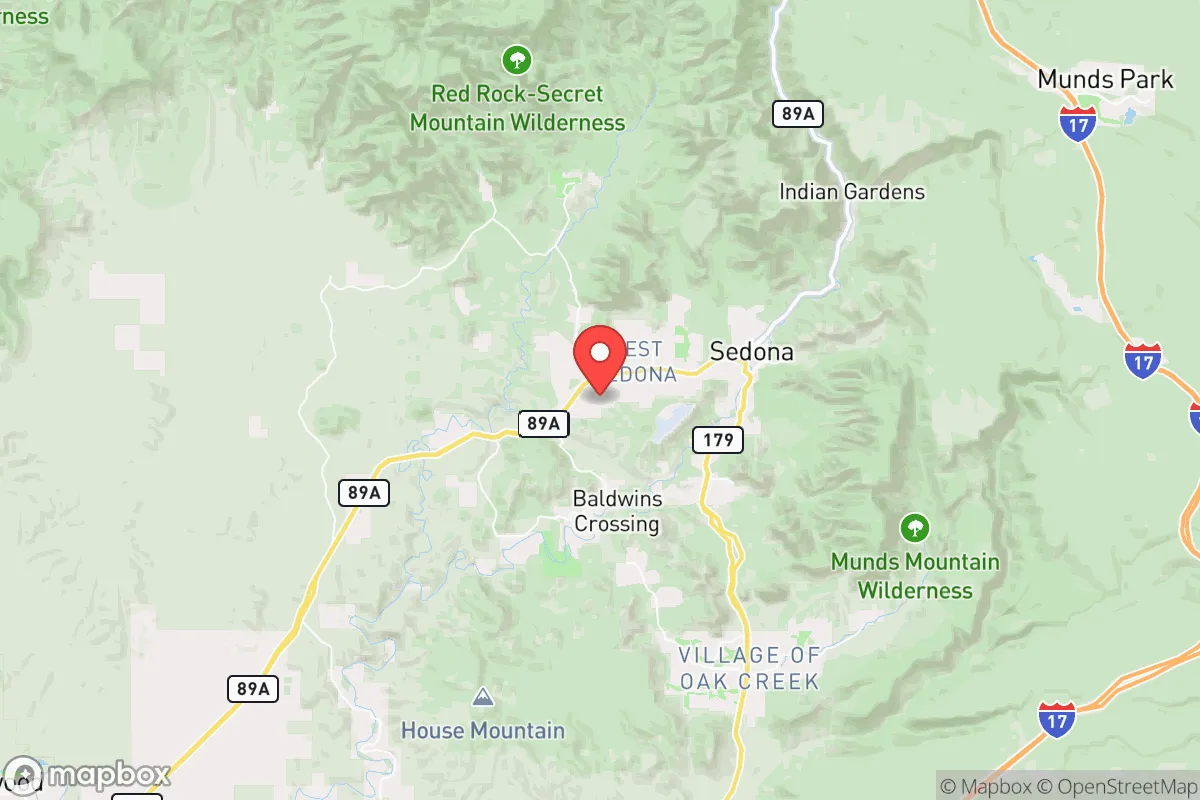
Photo: Wikipedia
Quality of Life in Sedona, AZ
A high quality of life with strong walkability, manageable living costs, healthy neighborhood signals, and solid amenity access.
What does Quality of Life tell us?
Quality of Life blends cost of living, nearby amenities, socioeconomic signals, and neighborhood character. City-level scores represent the whole municipality; individual neighborhoods can differ.
What does this tell us?
Quality of Life blends cost of living, nearby amenities, socioeconomic signals, and neighborhood character. City-level scores represent the whole municipality; individual neighborhoods can differ.
Cost of Living
74% above national average
The Real Cost of Living in Sedona, AZ for 2026
| Tier | Individual | Family (4) |
|---|---|---|
| Survival | $23k | $43k |
| Comfortable | $108k | $158k |
| Luxury | $122k+ | $189k+ |
| Elite (Top 5%) | $186k+ | $288k+ |
43%
The Area Signal
A metric tracking the socioeconomic signals of the area.
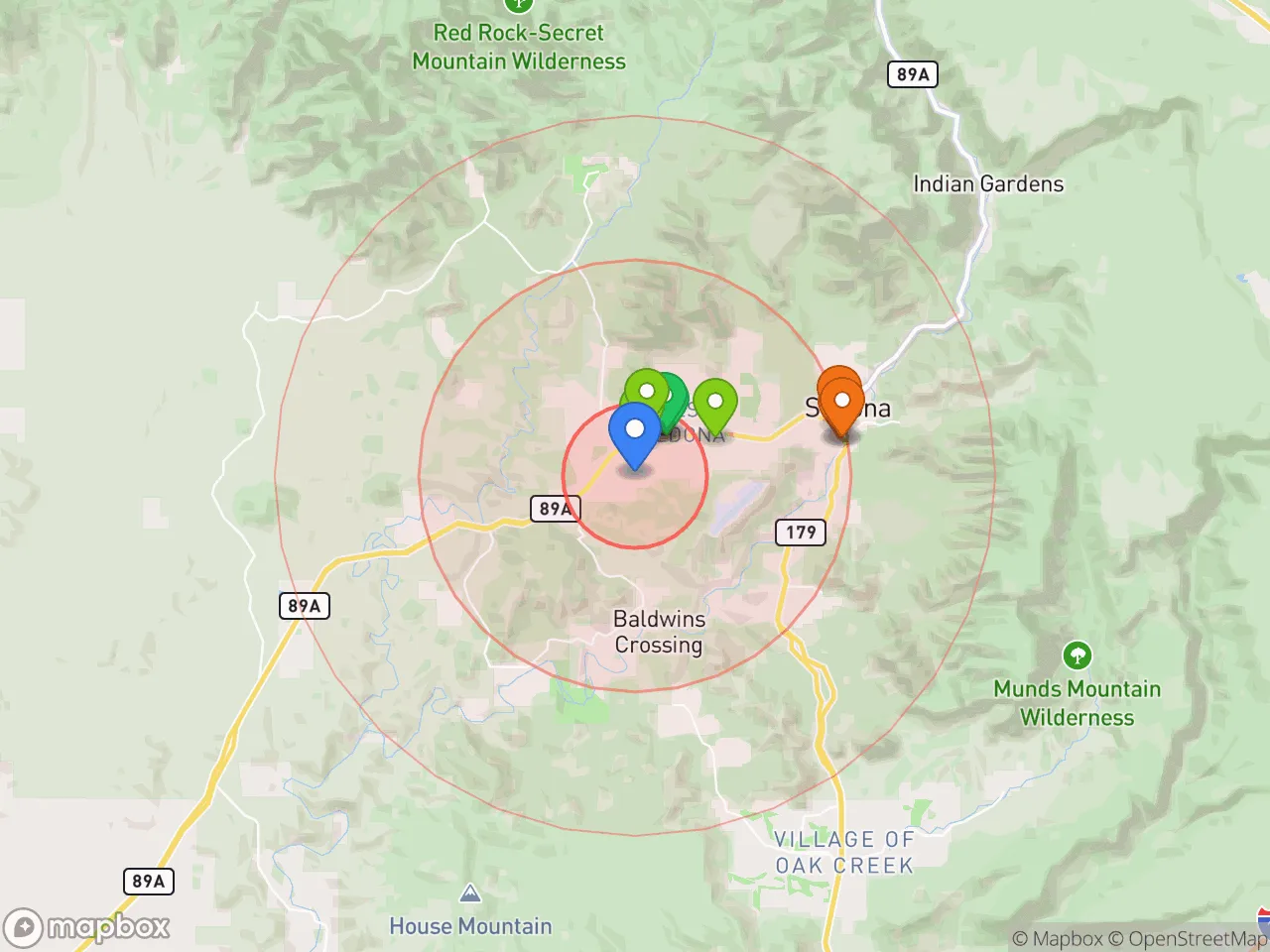
Hobbies
Explore the areaGroceries
3 within 10 miles
Gas
8 within 10 miles
Hospital
2 within 20 miles
Airport
PHX — Phoenix Sky Harbor International
Post Office
USPS — Sedona, AZ
Critical Amenities
Quality-of-Life Analysis
Sedona consistently ranks among Arizona's most desirable—and most expensive—places to live, drawing a population skewed toward affluent retirees, second-home owners, remote professionals, and wellness-oriented transplants. With a cost-of-living index of 174 (74% above the U.S. average), the city's economy runs largely on tourism, real estate, and creative services rather than heavy industry, giving it a distinctly upscale, leisure-oriented character. The median age hovers near 55, reflecting a community where empty-nesters and seasonal residents outnumber young families, though a modest contingent of service workers and full-time remote staff keep the daytime population far younger than the census suggests.
Cost of living in Sedona vs. Flagstaff and Cottonwood: housing and affordability
Sedona's housing market is the primary driver of its high cost burden. The median home value sits at $708,400—roughly 2.5 times the Arizona statewide median—while median rent stands at $1,421, a figure that understates true market conditions because the rental stock is heavily tilted toward vacation rentals and short-term leases. By comparison, Cottonwood, 20 minutes south, offers median home values around $380,000 and a COL index near 105, making it a practical bedroom community for Sedona workers. Flagstaff, 45 minutes north, is only modestly cheaper (COL index ~145) and adds its own housing scarcity driven by Northern Arizona University. Property taxes in Sedona are relatively low due to Arizona's Proposition 117, but homeowners insurance is elevated because of wildfire risk in the surrounding Coconino National Forest. For the 30% of households that rent, the low vacancy rate (under 3%) and stringent short-term rental regulations adopted in 2023 keep the market tight and competitive.
What daily life looks like in Sedona: amenities, schools, and commute
Daily rhythm in Sedona revolves around outdoor recreation, boutique shopping along Uptown and West Sedona, and a calendar of wellness retreats and art festivals. The 21.8-minute average commute is remarkably short for a town with limited employment—most residents work locally in hospitality, retail, healthcare, or remotely, so the drive rarely exceeds 15 minutes within city limits. Sedona-Oak Creek Unified School District serves about 2,000 students across three schools, with West Sedona Elementary and Sedona Red Rock High School each earning 7/10 ratings on GreatSchools; many families from outlying areas choose private or charter options such as the Sedona Charter School or the Montessori School of Sedona. Grocery access is adequate with a well-stocked Bashas' and a Whole Foods Market, but medical specialists require a drive to Flagstaff (45 minutes) or Phoenix (2 hours), which can be a real concern for older residents managing chronic conditions. The lack of a major hospital within town limits is the most frequently cited drawback in resident surveys, though the Verde Valley Medical Center in Cottonwood handles most urgent cases.
Sedona is best suited to retirees, high‑income remote workers, and wellness‑oriented professionals who value stunning natural scenery and a slow‑paced, outdoor lifestyle above career opportunity and urban convenience. Families on a middle‑class budget will find the housing market punishing and may prefer Cottonwood or Camp Verde for more square footage per dollar. Singles under 40 often report social isolation outside the tourist and spiritual‑retreat scenes, though the growing co‑working and digital‑nomad infrastructure—including dedicated coworking spaces like the Hub Sedona—is slowly shifting that dynamic. For anyone with the financial flexibility to absorb the COL premium, Sedona delivers an unmatched daily environment of red‑rock views, mild winters, and direct access to national forest trails; for anyone price‑sensitive or career‑driven, the trade‑offs quickly become untenable.

Crime in Sedona, AZ
Lower crime rates than 86% of comparable U.S. locations.
Violent CrimeViolent Crime Analysis
Property CrimeProperty Crime Analysis
Crime Analysis
Sedona, Arizona, presents a mixed safety profile: its violent crime rate of 204.1 per 100,000 residents is notably lower than the national average, but its property crime rate of 1,453.3 per 100,000 is significantly higher, placing it above both state and national benchmarks. This contrast means that while the risk of a violent encounter is relatively low, residents and visitors face a heightened threat of theft, burglary, and vehicle break-ins. The city’s status as a major tourist destination, drawing millions annually to its red rock landscapes, directly contributes to these property crime pressures.
Crime in context
Sedona’s violent crime rate of 204.1 per 100,000 is roughly 40% lower than the U.S. average of about 380 per 100,000, and also below the Arizona state average of approximately 430 per 100,000. This suggests that serious offenses like homicide, assault, and robbery are uncommon. However, the property crime rate of 1,453.3 per 100,000 is nearly 40% higher than the national average of roughly 1,050 per 100,000 and well above Arizona’s state average of about 1,200 per 100,000. Theft from vehicles and shoplifting are the most frequently reported incidents, often concentrated in the Uptown Sedona shopping district and popular trailhead parking lots. Coconino County, which encompasses Sedona, has a justice system that leans progressive, with a focus on diversion programs and restorative justice. While these policies aim to reduce recidivism, critics argue they can result in lighter sentences for repeat property offenders, potentially contributing to the elevated property crime numbers.
What residents experience
For those living in Sedona, daily life is shaped more by property crime concerns than by fear of violence. Residents commonly report package theft, unlocked-car prowling, and occasional home burglaries, especially in neighborhoods near tourist corridors like West Sedona and the Village of Oak Creek. Vehicle break-ins at trailheads are a persistent problem, with thieves targeting rental cars and vehicles with visible belongings. The Sedona Police Department actively runs patrols and public awareness campaigns, but the sheer volume of transient visitors makes prevention difficult. Violent crime is rare and typically domestic in nature, not random. The progressive orientation of local courts—emphasizing treatment over incarceration for non-violent offenders—means that many property crime arrests do not lead to extended jail time, a dynamic that frustrates some long-term residents who feel it encourages repeat offending.
Neighborhood-level variation is notable. Gated communities and private subdivisions, such as those in the Chapel area or along Verde Valley School Road, report far fewer incidents due to restricted access and private security. In contrast, areas with high rental turnover and easy public access—like parts of West Sedona and the 89A corridor—see the bulk of property crime. The Village of Oak Creek, while quieter, still experiences occasional thefts from vehicles. Overall, Sedona is a safe place to live in terms of personal safety, but residents must adopt proactive habits—locking cars, securing homes, and avoiding leaving valuables in plain sight—to mitigate the area’s elevated property crime risk.
* Values derived from national, state, county, city and local statistics and may differ in a specific area. Last updated: 2026-05-14T18:03:46.000Z
Narrative content on this page is AI-generated and may contain mistakes. Verify any details that matter before acting on them.
ReloMaps may earn a commission from affiliate links at no extra cost to you.

