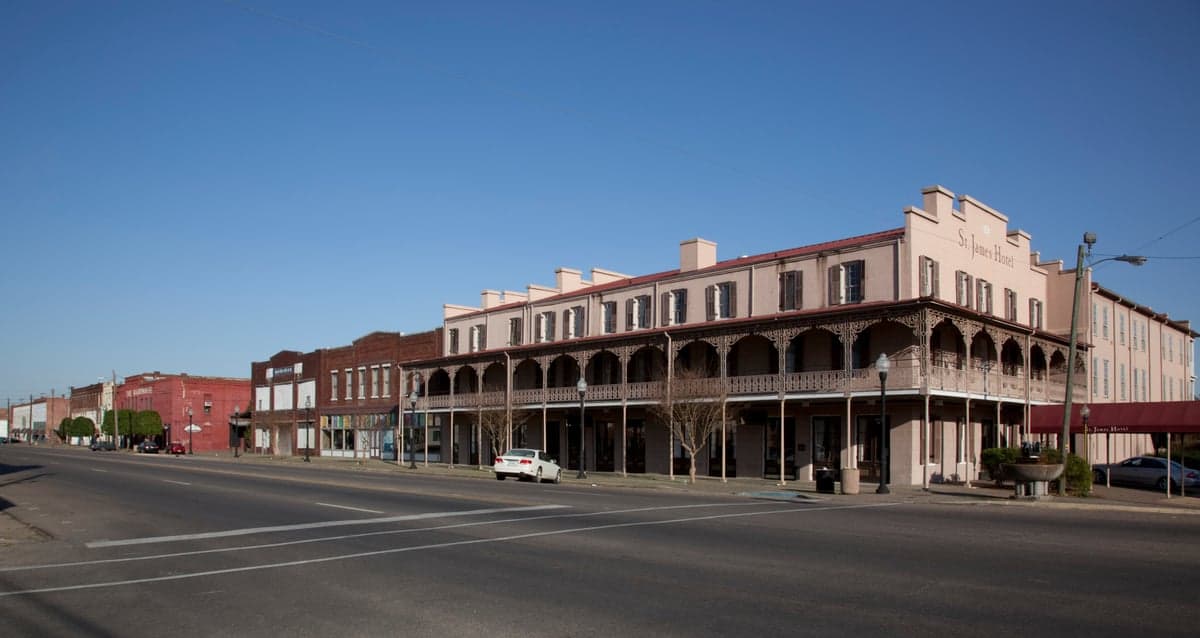
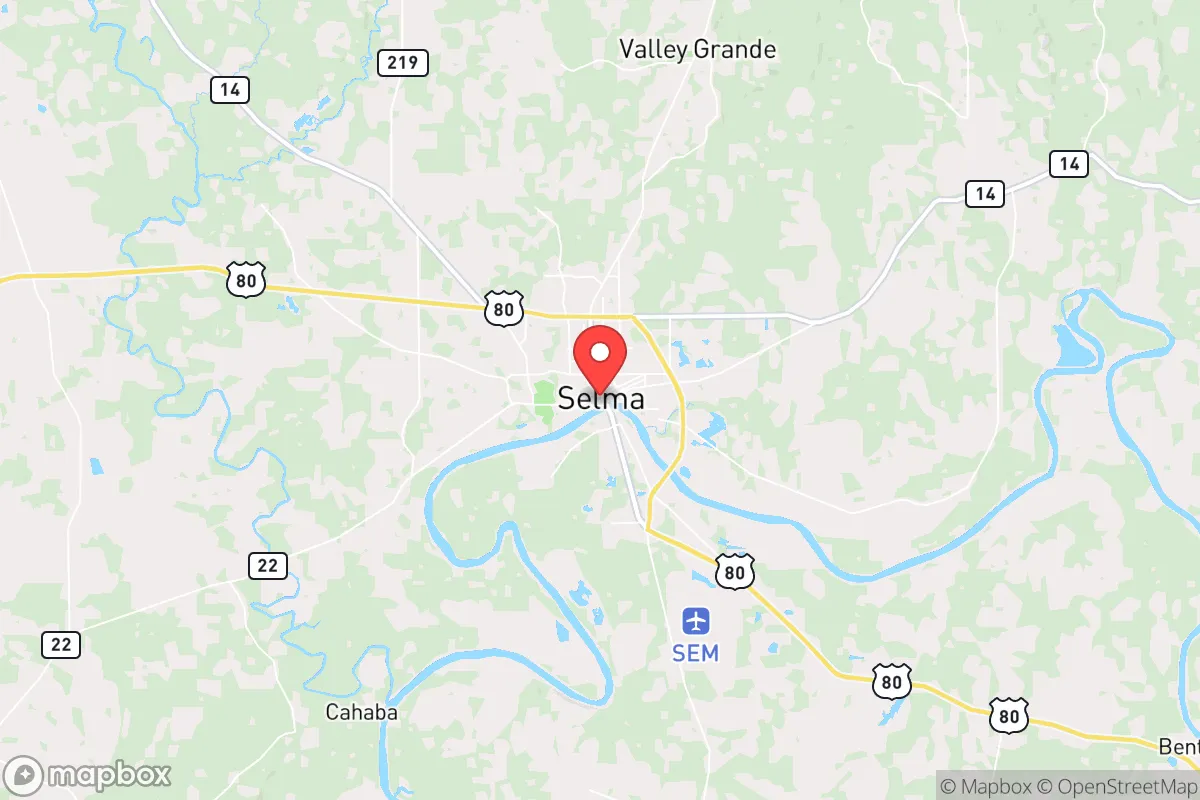
Photo: Wikipedia
Quality of Life in Selma, AL
Above-average quality of iife. The area offers a reasonable cost of living, decent mobility, and a mix of neighborhood amenities.
What does Quality of Life tell us?
Quality of Life blends cost of living, nearby amenities, socioeconomic signals, and neighborhood character. City-level scores represent the whole municipality; individual neighborhoods can differ.
What does this tell us?
Quality of Life blends cost of living, nearby amenities, socioeconomic signals, and neighborhood character. City-level scores represent the whole municipality; individual neighborhoods can differ.
Cost of Living
48% below national average
The Real Cost of Living in Selma, AL for 2026
| Tier | Individual | Family (4) |
|---|---|---|
| Survival | $12k | $22k |
| Comfortable | $20k | $29k |
| Luxury | $58k+ | $90k+ |
| Elite (Top 5%) | $93k+ | $144k+ |
110%
The Area Signal
A metric tracking the socioeconomic signals of the area.


Hobbies
Explore the areaGroceries
4 within 10 miles
Gas
0 within 10 miles
Hospital
3 within 20 miles
Airport
ATL — Hartsfield–Jackson Atlanta International
Post Office
USPS — Selma, AL
Critical Amenities
Quality-of-Life Analysis
Selma, Alabama, presents a quality of life defined by deep historical significance and an exceptionally low cost of living, attracting residents who prioritize affordability and community over high-powered career markets. With a cost-of-living index of 52—roughly half the national average—the city draws a mix of retirees, long-term local families, and workers in manufacturing, healthcare, and education who value financial breathing room. The population skews older and more rooted than the national median, with a strong sense of place shaped by the city’s role in the Civil Rights Movement and its position along the Alabama River.
How affordable is Selma compared to Montgomery and Birmingham?
Selma’s affordability is its most defining economic feature, with a cost-of-living index of 52 (100 = U.S. average) that dramatically undercuts both state and national benchmarks. The median home value sits at $102,500, roughly one-third of Alabama’s statewide median and less than half of Montgomery’s typical home price. Renters also benefit significantly: the median rent of $723 is about 40% lower than the national median and well below Birmingham’s average of roughly $1,100. For context, a household earning the Dallas County median income of around $35,000 can afford a mortgage on a median-priced home with a standard 30-year loan, a scenario increasingly rare in larger Alabama metros. However, this low cost comes with trade-offs: the housing stock is older, with many properties built before 1970, and property appreciation has been flat over the past decade compared to the rapid gains seen in Huntsville or Auburn. The average commute of 24.2 minutes is slightly shorter than the national average of 26 minutes, reflecting the city’s compact layout and limited traffic congestion, though job opportunities within Selma itself are fewer than in the I-65 corridor.
What daily life is like for families and retirees in Selma
Daily life in Selma revolves around a slower, more neighborly pace, with amenities concentrated along Broad Street and the historic Water Avenue district. The city’s public school system, Selma City Schools, serves roughly 2,800 students across six campuses, with an overall graduation rate near 85%—slightly below the state average of 91%. For families, the presence of Wallace Community College Selma provides a local option for associate degrees and workforce training, though four-year universities require a 45-minute drive to Montgomery. Healthcare access is anchored by Vaughan Regional Medical Center, a 177-bed facility that handles emergency and surgical care, though specialists are more common in Montgomery. Retirees and history enthusiasts gravitate toward the Selma to Montgomery National Historic Trail, the Old Depot Museum, and the annual Bridge Crossing Jubilee, which draws thousands each March. Grocery and retail options are limited compared to larger cities; residents often drive to Prattville or Montgomery for big-box shopping and entertainment. The city’s crime rate, particularly property crime, runs higher than the national median—a factor that weighs on daily decisions about evening activities and neighborhood choice.
Selma is best suited for those who value deep community ties, historical immersion, and an extremely low cost of living over career mobility, nightlife, or rapid home equity growth. Retirees on fixed incomes, remote workers with stable salaries, and families willing to commute to Montgomery for higher-paying jobs will find the most financial leverage here. The city rewards patience and local engagement, but may frustrate those seeking the amenities and economic dynamism of Alabama’s larger metros.

Crime in Selma, AL
Higher crime rates than 72% of comparable U.S. locations.
Violent CrimeViolent Crime Analysis
Property CrimeProperty Crime Analysis
Crime Analysis
Selma, Alabama, faces a serious public safety challenge, with violent crime rates that are significantly higher than both state and national averages. The city's overall crime picture is dominated by a violent crime rate of 720.8 incidents per 100,000 residents, a figure that places it among the more dangerous small cities in the state. Property crime, while also elevated, is less extreme relative to national benchmarks, with a rate of 1,867.8 per 100,000.
Crime in context
To understand the severity of Selma's safety situation, it is essential to compare its crime rates to broader benchmarks. The city's violent crime rate of 720.8 per 100,000 is roughly double the national average and well above the Alabama state average of approximately 450 per 100,000. This disparity is driven primarily by high rates of aggravated assault and robbery. Property crime, at 1,867.8 per 100,000, is closer to the national average but still represents a tangible risk for residents, with larceny-theft being the most common offense. These figures reflect systemic challenges, including economic distress and limited police resources, rather than isolated incidents.
What residents experience
For those living in Selma, the high crime rate translates into a daily reality of heightened vigilance. Residents frequently report concerns about property crimes such as vehicle break-ins and home burglaries, particularly in less trafficked areas. The violent crime rate means that the likelihood of becoming a victim of a violent offense—such as an assault or robbery—is significantly higher than in most other Alabama communities of similar size. This environment can erode trust in public safety and limit residents' willingness to engage in evening activities or walk alone. The local justice system's approach, which some observers characterize as progressive in its handling of repeat offenders, has been a point of contention, with critics arguing that it contributes to a cycle of recidivism that keeps crime rates elevated.
Neighborhood-level variation in Selma is pronounced, though data is limited. Areas closer to the downtown core and along the Alabama River tend to report higher concentrations of both violent and property crime, while residential neighborhoods on the city's outskirts, such as those near the Selma Country Club, generally experience lower crime rates. Prospective residents should research specific blocks and consult local police department crime maps, as safety can change dramatically within a few streets. The city's ongoing economic revitalization efforts have yet to produce a measurable reduction in overall crime, making thorough due diligence essential for anyone considering a move to Selma.
* Values derived from national, state, county, city and local statistics and may differ in a specific area. Last updated: 2026-10-10T16:28:52.000Z
Narrative content on this page is AI-generated and may contain mistakes. Verify any details that matter before acting on them.
ReloMaps may earn a commission from affiliate links at no extra cost to you.

