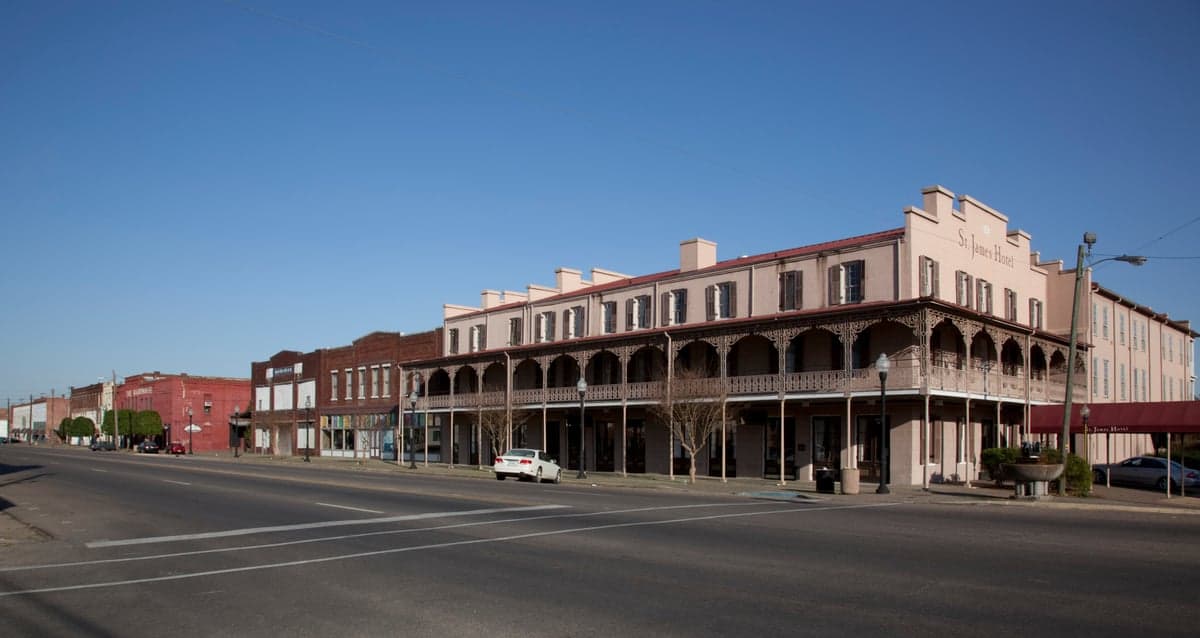
Photo: Wikipedia
Political ClimatePolitical Climate in Selma, AL
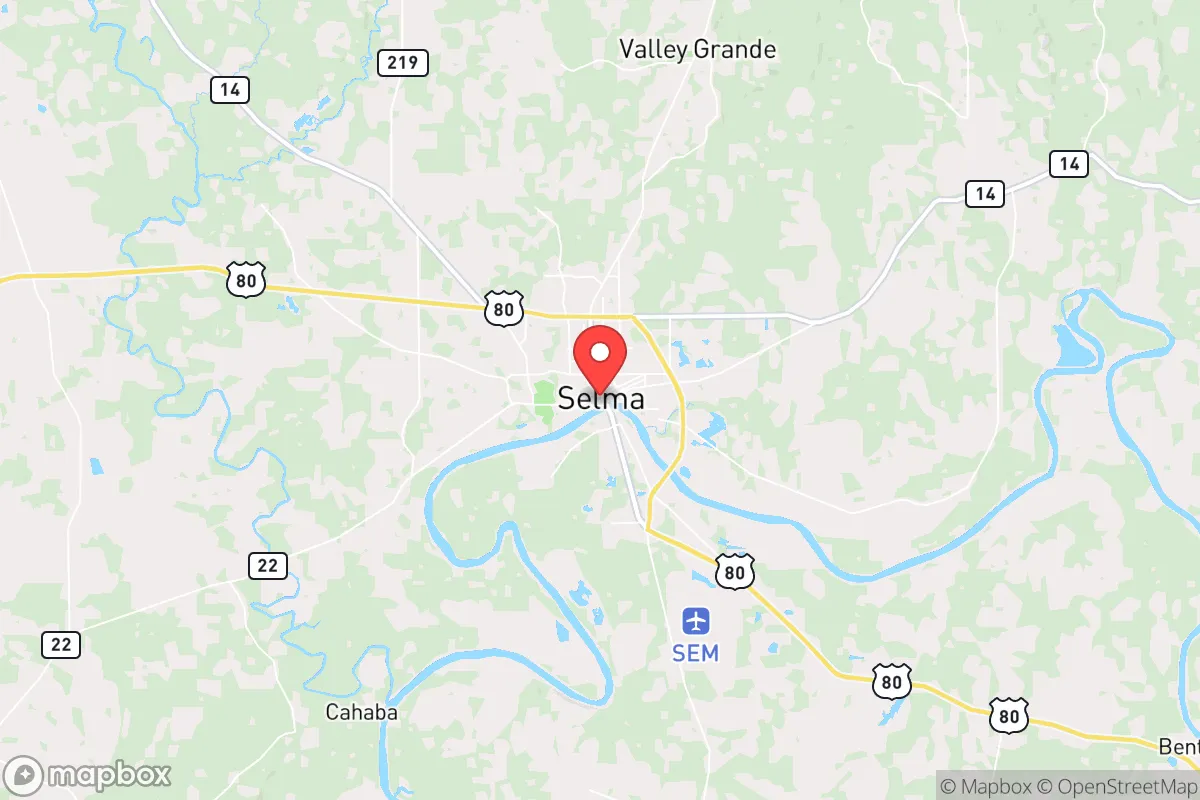
District shown is the primary district for this city’s centroid. Cities may span multiple districts.
Local Political AnalysisPolitical Analysis of Selma, AL
Selma, Alabama, has long been a deep blue island in a red sea, and that hasn't changed much. The city's Cook Partisan Voting Index of D+13 tells you all you need to know about its political leanings—it's reliably Democratic, and has been for generations. But if you've lived here as long as I have, you know the real story isn't just about party registration; it's about a slow, creeping shift in what "Democratic" even means around here. The old-school, church-going, conservative Democrats who ran things for decades are fading out, and the new wave of progressive activism is pushing the city in a direction that a lot of us find unsettling.
How it compares
Drive twenty minutes north to Valley Grande or over to the outskirts of Marion, and you're in a completely different world politically. Those areas vote solidly Republican, and folks there tend to be more skeptical of government overreach—whether it's mandates from Montgomery or Washington. Selma, by contrast, has a long history of looking to the federal government for solutions, which is understandable given the civil rights legacy here. But what concerns me is how that's evolved. It's not just about infrastructure or schools anymore; it's about local ordinances that feel like they're micromanaging everyday life. While Dallas County as a whole is more purple, Selma itself has become a place where progressive ideas—like certain housing regulations or public health mandates—get a much warmer welcome than they would in, say, Prattville or even parts of Montgomery. The contrast is stark, and it's widening every election cycle.
What this means for residents
For the average person living here, this political climate means you have to be careful about who you talk to and what you say. There's a growing pressure to fall in line with the progressive agenda, especially if you're involved in local business or community organizations. I've seen small business owners get quietly pressured over not displaying certain signs or not participating in certain city-sponsored events. The local government has a tendency to expand its reach into areas that used to be left to families and churches—things like how you run your property, what kind of events you can host, and even some health-related decisions. It's a slow erosion of personal freedom, all wrapped up in the language of "equity" and "public good." If you value being left alone to live your life without a bunch of red tape or social pressure, you'll feel that squeeze here more than you would in the surrounding counties.
One of the biggest cultural distinctions is how Selma's identity is tied to the Edmund Pettus Bridge and the Voting Rights Movement. That history is sacred, and it should be. But in recent years, it's been used to justify a lot of top-down policy changes that go way beyond voting rights. The city council and county commission have become more willing to take stands on national issues, which can feel like government overreach into things that don't directly affect Selma. Looking ahead, I see this trend continuing. The younger, more progressive crowd is getting more organized, and the old guard of conservative Democrats is dying off. If you're thinking about moving here, just know that the political culture is shifting away from the live-and-let-live attitude that used to define the South. It's becoming a place where the government's hand feels a little heavier every year, and that's something to keep in mind before you put down roots.

State Political ClimatePolitical Climate in Alabama
State Political AnalysisPolitical Environment in the State
Alabama has been a reliably red state for decades, with Republicans holding every statewide office and supermajorities in both legislative chambers. The state’s political DNA is rooted in deep cultural conservatism, evangelical Christianity, and a strong skepticism of federal overreach. Over the past 10-20 years, the shift has been toward even more solid GOP dominance, driven by the realignment of rural white voters and the collapse of the old Democratic coalition that once held sway in the Black Belt. Today, Alabama is one of the most conservative states in the country, but it’s not a monolith — the urban-rural split and a growing suburban electorate are creating subtle but important political fault lines.
Urban vs. rural divide
The political map of Alabama is starkly divided. The state’s largest metro, Birmingham (Jefferson County), is a Democratic stronghold, delivering 60-65% of its vote to Democratic presidential candidates. Montgomery and the Black Belt counties — like Lowndes, Greene, and Macon — are also heavily Democratic, driven by African American voters who make up a significant share of the electorate. On the flip side, the rural and exurban areas are overwhelmingly Republican. Mobile and Baldwin County (Gulf Coast) have trended red for decades, with Baldwin County now one of the fastest-growing and most reliably conservative areas in the state. Huntsville (Madison County) is a fascinating exception: a high-tech, aerospace-driven city that votes Republican but with a libertarian-leaning, educated electorate that sometimes bucks the party line on social issues. The Auburn-Opelika area, home to Auburn University, is a conservative stronghold, while Tuscaloosa (home of the University of Alabama) leans red but has a younger, more transient population that can shift local races. The divide isn’t just about party — it’s about culture. Rural voters in places like Cullman or DeKalb County are deeply skeptical of Birmingham’s progressive politics, and that tension defines much of the state’s political conversation.
Policy environment
Alabama’s policy environment is aggressively conservative. The state has no state income tax on retirement income, a flat 5% income tax on wages, and one of the lowest property tax rates in the nation — roughly 0.4% of assessed value. This low-tax posture is a major draw for retirees and families. The regulatory climate is business-friendly, with right-to-work laws and minimal zoning restrictions outside of major cities. Education policy is a flashpoint: the state has a robust school choice movement, with the Alabama Accountability Act providing tax credits for private school tuition, and the 2024 CHOOSE Act expanding Education Savings Accounts (ESAs) for families. However, public school funding remains low, and many rural districts struggle. Healthcare is a mixed bag: Alabama did not expand Medicaid under the Affordable Care Act, leaving a coverage gap for low-income adults. Election laws are strict — voter ID is required, and the state has closed primaries. The legislature has also passed laws restricting ballot harvesting and limiting absentee voting. On social issues, Alabama is among the most restrictive in the nation, with a near-total abortion ban (the Human Life Protection Act of 2019) and laws protecting religious freedom and parental rights in education.
Trajectory & freedom
On balance, Alabama is moving in a direction that expands personal freedom in several key areas, but with some notable caveats. The 2022 permitless carry law (Constitutional Carry) allows law-abiding citizens to carry a concealed firearm without a permit — a clear expansion of Second Amendment rights. The 2024 CHOOSE Act gives families more control over their children’s education, a win for parental rights. The state has also passed laws restricting government overreach during emergencies, like the 2021 law limiting the governor’s ability to issue extended lockdowns without legislative approval — a direct response to COVID-era mandates. However, freedom is not absolute. The state’s medical cannabis program, passed in 2021, has been mired in bureaucratic delays and legal challenges, leaving patients without access. Property rights are generally strong, but local governments in places like Birmingham have imposed rent control and zoning restrictions that some see as overreach. The biggest concern for liberty-minded residents is the state’s heavy reliance on federal funding — roughly 40% of the state budget comes from Washington, creating a dependency that could constrain future policy choices. Overall, Alabama is trending toward more personal freedom in the areas that matter most to conservatives: guns, education, and limited government.
Civil unrest & political movements
Alabama has not seen the kind of large-scale civil unrest seen in other states. The 2020 George Floyd protests were relatively muted, with mostly peaceful demonstrations in Birmingham and Montgomery. The state’s political activism is more organized around conservative causes. The Alabama Citizens for Life and the Alabama Family Alliance are powerful lobbying forces, and the state has seen a surge in school board activism around curriculum and library books. Immigration politics are less heated than in border states, but there is a strong undercurrent of concern about illegal immigration, with the legislature passing a 2024 law requiring law enforcement to cooperate with federal immigration authorities. There is no serious secessionist movement, but “nullification” rhetoric occasionally surfaces in debates over federal gun laws or environmental regulations. Election integrity remains a hot topic: the 2020 election saw no major fraud in Alabama, but the legislature has passed multiple bills to tighten voting procedures, including a 2024 law requiring citizenship verification for voter registration. The most visible flashpoint for a new resident would likely be the ongoing debate over Confederate monuments and school names, particularly in Birmingham and Montgomery, where local governments have removed or relocated statues.
Projection
Over the next 5-10 years, Alabama is likely to remain solidly Republican, but the demographic trends are worth watching. The state is growing, driven by in-migration from California, Illinois, and other high-tax states, particularly to the Huntsville and Baldwin County areas. These newcomers tend to be conservative but more libertarian than traditional Alabama Republicans — they care about low taxes and gun rights but may be less engaged on social issues like abortion or school prayer. The Black Belt is losing population, which will further reduce the Democratic base. The biggest wildcard is the growing suburban vote in places like Madison (suburban Huntsville) and Vestavia Hills (suburban Birmingham), which could push the state toward a more pragmatic, business-friendly conservatism. Expect continued expansion of school choice, further tax cuts, and a hardening of election laws. The biggest risk to freedom is the state’s fiscal dependence on federal dollars — if Washington tightens the purse strings, Alabama will face tough choices. For someone moving in now, the Alabama of 2035 will look much like today: deeply conservative, low-tax, and gun-friendly, but with a more educated and suburban electorate that may temper the culture wars.
Bottom line for a new resident: If you’re looking for a state where your tax dollars stay in your pocket, your Second Amendment rights are protected, and your kids can attend a school that aligns with your values, Alabama is a strong bet. The political climate is stable and predictable, with no signs of a blue shift. Just be prepared for a state that is still wrestling with its past, and understand that local politics in Birmingham or Montgomery can feel very different from the rest of the state. If you value personal liberty and limited government, you’ll find a lot to like here — just keep an eye on the federal money pipeline.
* Values derived from national, state, county, city and local statistics and may differ in a specific area. Last updated: 2026-10-10T16:28:52.000Z
Narrative content on this page is AI-generated and may contain mistakes. Verify any details that matter before acting on them.
ReloMaps may earn a commission from affiliate links at no extra cost to you.

