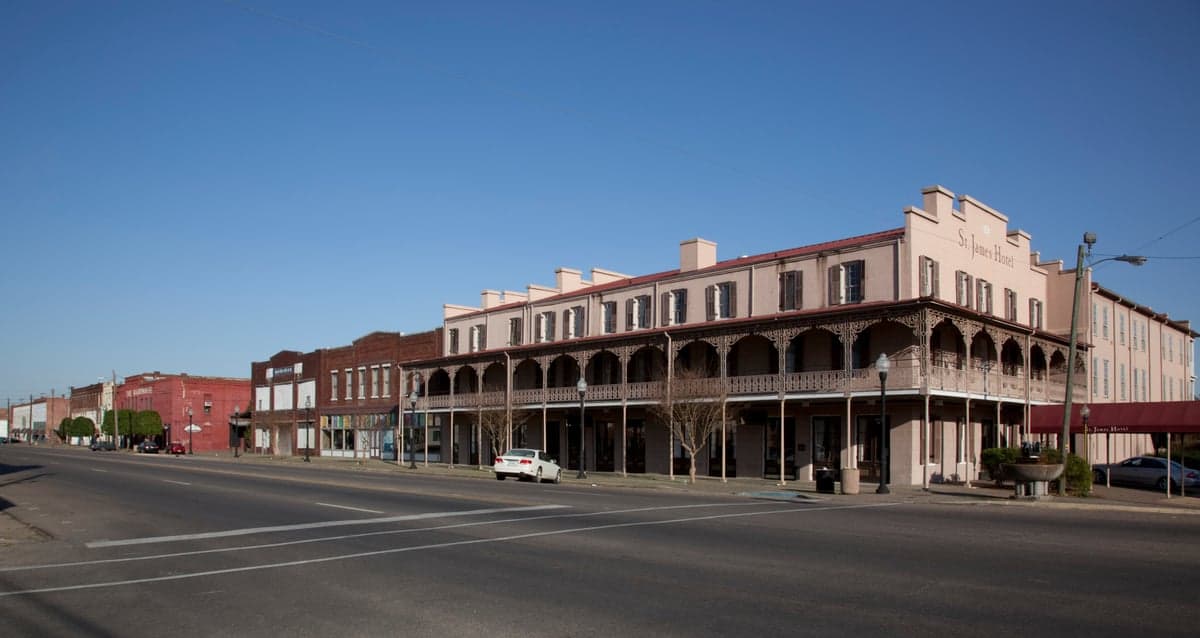
Photo: Wikipedia
Strategic Assessment of Selma, AL
Workable tactical position. Some exposure to population density or targets, but generally defensible in a crisis.
What does the Strategic Assessment tell us?
Our Strategic Assessment grades tactical survivability of an area. Major population centers, military targets, fallout zones, natural disasters, and border exposure all drive risk — lower exposure means a more defensible position in a crisis.
This is heavily inspired by Joel Skousen's Strategic Relocation book. Highly recommended you checkout the book ($)What does this tell us?
Our Strategic Assessment grades tactical survivability of an area. Major population centers, military targets, fallout zones, natural disasters, and border exposure all drive risk — lower exposure means a more defensible position in a crisis.
This is heavily inspired by Joel Skousen's Strategic Relocation book. Highly recommended you checkout the book ($)Strategic Pillars

Key Distances
Regional Safe Places
Below is our recommended "safe zones" in Alabama and the surrounding area based on our strategic heuristics. For most people, it's unrealistic to live in a “safe zone” full-time due to work, family or other personal reasons. They tend to be more rural. However, many of these areas are perfect for second homes and retreat properties that double as a vacation home or even a short-term rental.
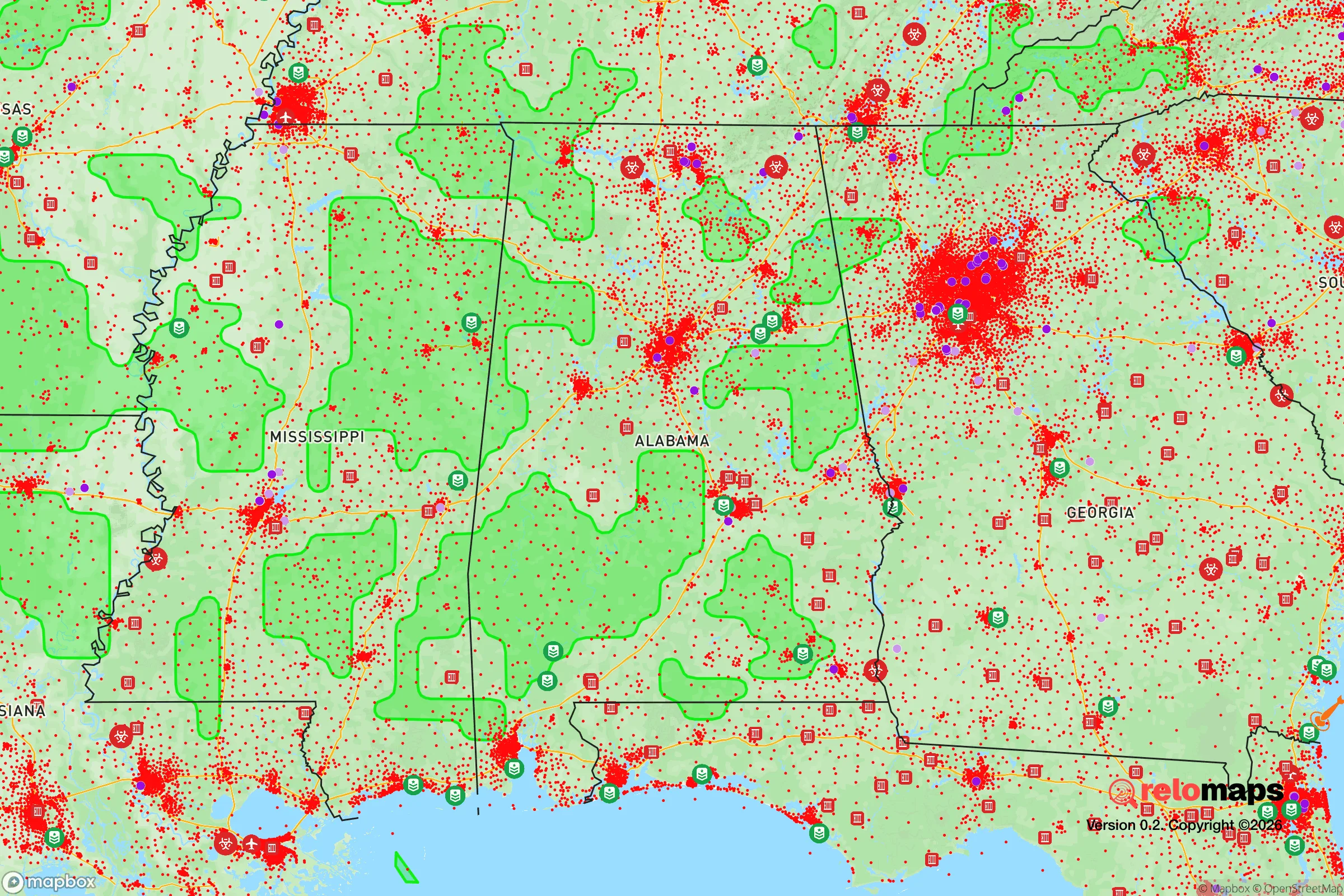
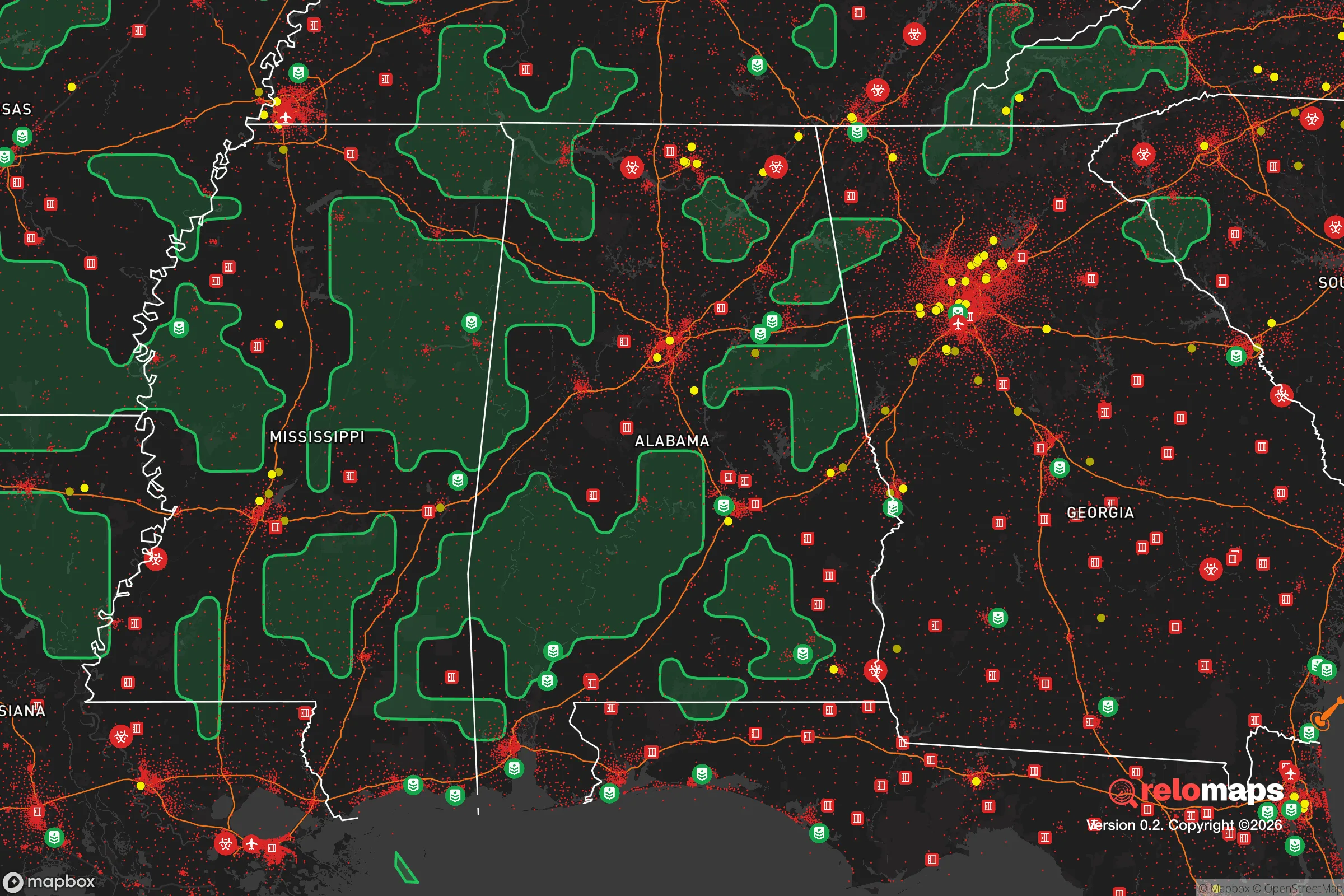


Important Note: For informational purposes only. This does not mean nothing bad ever happens in the green zones. Please use common sense. This is based on public data and modeled with AI. We tried to take a conservative approach but mistakes happen. We update this regularly as new information becomes available.
Solar Generator Recommendations
Backup power matters more here than in safer locations. We've picked three solar generators across budgets and capacity tiers — start with the budget unit if you only need a few essentials, or step up if you want to run a fridge and HVAC for days at a time.

Jackery Portable Power Station Explorer 300
Budget OptionPower on the Go: Weighing only 11 lbs, it's convenient to set up and store with book-sized foldable solar panels

BLUETTI Portable Power Station AC180
Designed for both indoor and outdoor scenarios, AC180 is highly capable as it has a robost capacity and continuous output power.

EF ECOFLOW DELTA Pro Ultra Power Station
Upgraded PickEcoFlow DELTA Pro Ultra is a whole-home energy system designed to grow with your family. Integrated with the Smart Home Panel 2, it scales to meet your evolving energy needs — keeping your home powered, intelligent, and secure through every stage of life.
We earn a commission, at no additional cost to you.
Strategic Assessment Analysis
Selma, Alabama, offers a strategic relocation option for those prioritizing resilience and community stability in an uncertain future, though it requires a clear-eyed assessment of both its defensive strengths and its exposure to regional risks. Situated in the Black Belt region along the Alabama River, Selma provides a blend of rural isolation and access to critical infrastructure that appeals to preppers and survivalists seeking a buffer from the chaos of major metropolitan areas. However, its proximity to industrial and military targets, along with historical vulnerabilities to natural disasters, demands careful planning. For a conservative-leaning individual or family focused on self-reliance, Selma represents a calculated trade-off: a low-cost, defensible location with deep community ties, but one that sits within a broader zone of potential fallout and logistical challenges.
Geographic position and natural advantages for long-term survival
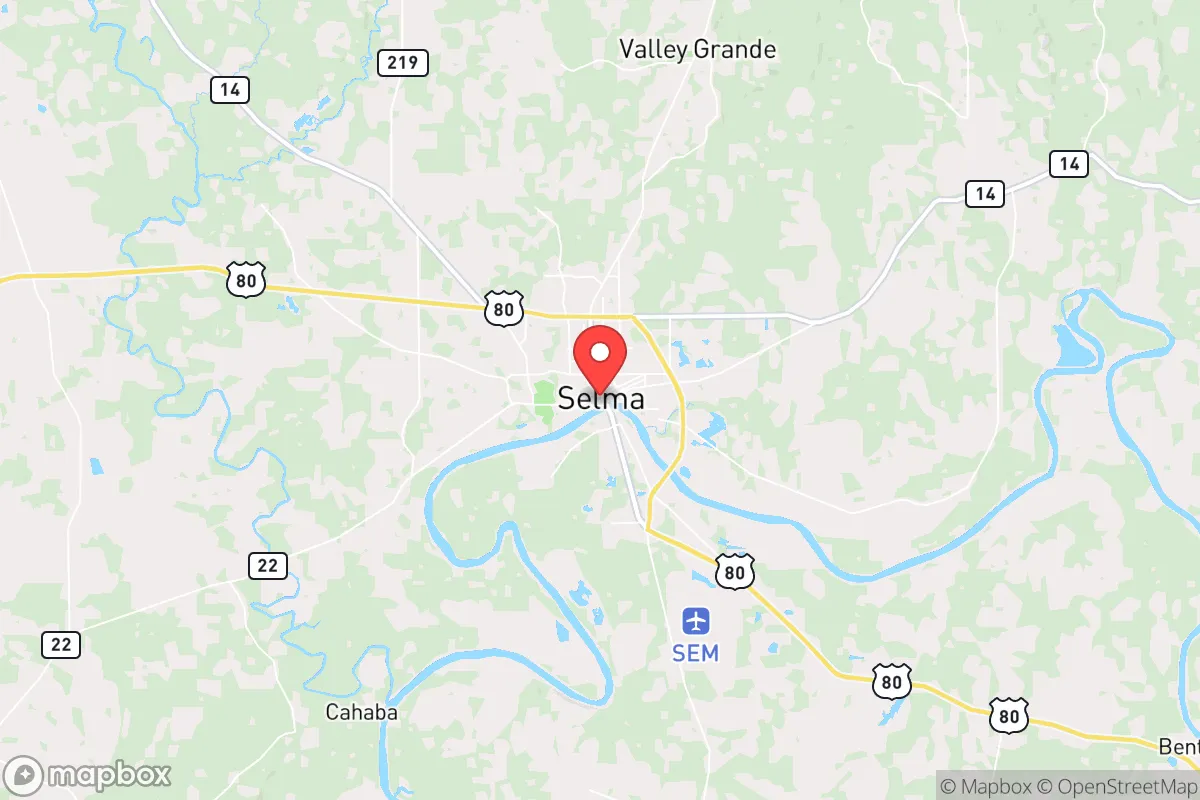
Selma’s location in central Alabama, roughly 50 miles west of Montgomery and 100 miles south of Birmingham, places it far enough from major population centers to reduce exposure to urban unrest, yet close enough to access supply routes if needed. The Alabama River runs through the city, providing a reliable freshwater source for drinking, irrigation, and potential hydropower—a critical asset for off-grid living. The surrounding Black Belt soil, historically fertile for cotton, is still viable for small-scale agriculture, allowing residents to cultivate food security through gardens, orchards, and livestock. The region’s temperate climate supports year-round growing seasons, with mild winters that reduce heating demands and lower the risk of freeze-related crop failures. For a prepper, this means a lower dependency on external supply chains for basic sustenance. The area’s rolling hills and dense forests also offer natural concealment and defensible terrain, with numerous rural properties providing space for bunkers, water storage, and solar arrays without drawing attention. Selma’s position along Interstate 65 and U.S. Highway 80 gives it connectivity to the Gulf Coast and the broader Southeast, but the city itself remains off the beaten path—a strategic advantage for those wanting to avoid the chaos of interstate choke points during a crisis.
Risks, exposures, and proximity to fallout-relevant landmarks
Selma’s strategic value is tempered by its proximity to several high-risk targets that could become fallout zones or sources of mass casualty events. The most immediate concern is the Alabama River itself: while a water asset, it also makes the city vulnerable to flooding, particularly in low-lying areas near the riverfront. Hurricane remnants and severe thunderstorms can cause flash flooding, and the region’s clay soil exacerbates drainage issues. More critically, Selma lies within 100 miles of Montgomery (state capital, military installations like Maxwell Air Force Base, and major government infrastructure) and Birmingham (industrial hubs, chemical plants, and the University of Alabama at Birmingham medical complex). In a scenario involving civil unrest or a coordinated attack, these cities could become primary targets for disruption, potentially drawing refugees or creating secondary fallout from infrastructure failures. The Selma Army Ammunition Plant, located just north of the city, is a dormant but still-regulated site that could pose contamination risks if damaged. Additionally, the region’s chemical plants and fertilizer facilities along the Alabama River corridor (e.g., in nearby Demopolis and Mobile) represent industrial hazards that could release toxic plumes during a disaster. For a relocator, this means Selma is not a remote bunker—it’s a community within a broader risk zone. The key is to choose a property on higher ground, away from the river and major highways, and to maintain a 72-hour bug-out plan for a secondary location further into rural Alabama or Mississippi.
Practical resilience for a relocator: food, water, energy, and defensibility
For a family or individual serious about self-sufficiency, Selma offers a mix of practical advantages and gaps that require upfront investment. Water security is strong: the Alabama River is a year-round source, but it requires filtration and treatment due to agricultural runoff and industrial upstream activity. Many rural properties have existing wells, and the water table in the Black Belt is generally accessible at depths of 50–150 feet. Food production is viable, with local farmers’ markets (like the Selma Farmers Market) and a growing interest in homesteading, but the soil may need amendment due to decades of monoculture farming. Raising chickens, goats, or pigs is common and legal in unincorporated areas, and hunting (deer, turkey, wild hog) is abundant in surrounding forests. Energy resilience is a mixed bag: the local grid is aging and prone to outages during storms, but solar potential is good (average 4.5 peak sun hours per day), and many preppers install off-grid systems with battery storage. Natural gas is available in town but not in rural pockets, so propane tanks or wood stoves are practical backups. Defensibility is where Selma shines: the city’s layout—with its historic district, narrow streets, and river bend—creates natural chokepoints for perimeter security, but the real advantage is in the surrounding countryside. Properties with acreage, tree lines, and long driveways offer standoff distance and concealment. The local sheriff’s office (Dallas County) is underfunded but responsive, and the community has a strong church-based social fabric that can provide mutual aid networks. However, medical access is a concern: Vaughan Regional Medical Center is a small facility, and trauma cases require a 45-minute drive to Montgomery. Stockpiling first-aid supplies and training in basic emergency medicine is non-negotiable for a relocator here.
In the overall strategic picture, Selma is a viable but not ideal location for a conservative prepper seeking long-term resilience. Its strengths—affordable land, water access, agricultural potential, and distance from major urban chaos—are real, but they come with trade-offs: proximity to industrial and military targets, flood risks, and limited medical infrastructure. For a single individual or family willing to invest in property on high ground, drill a well, and build a self-sufficient homestead, Selma offers a low-cost entry point into a lifestyle of preparedness. However, it is not a bug-out location for a total collapse scenario; it is a community that requires active engagement with local networks and a realistic plan for secondary evacuation if the region becomes a target. The best approach is to treat Selma as a base of operations—a place to build resilience while maintaining mobility—rather than a final redoubt. If you can accept that trade-off, the Black Belt’s quiet, hardscrabble character may be exactly what you’re looking for.

* Values derived from national, state, county, city and local statistics and may differ in a specific area. Last updated: 2026-10-10T16:28:52.000Z
Narrative content on this page is AI-generated and may contain mistakes. Verify any details that matter before acting on them.
ReloMaps may earn a commission from affiliate links at no extra cost to you.

