Photo: Wikipedia
Demographics of Seward, NE
Affluence Level in Seward, NE
A middle-class area roughly in line with national averages across income, home values, education, and employment.
People of Seward, NE
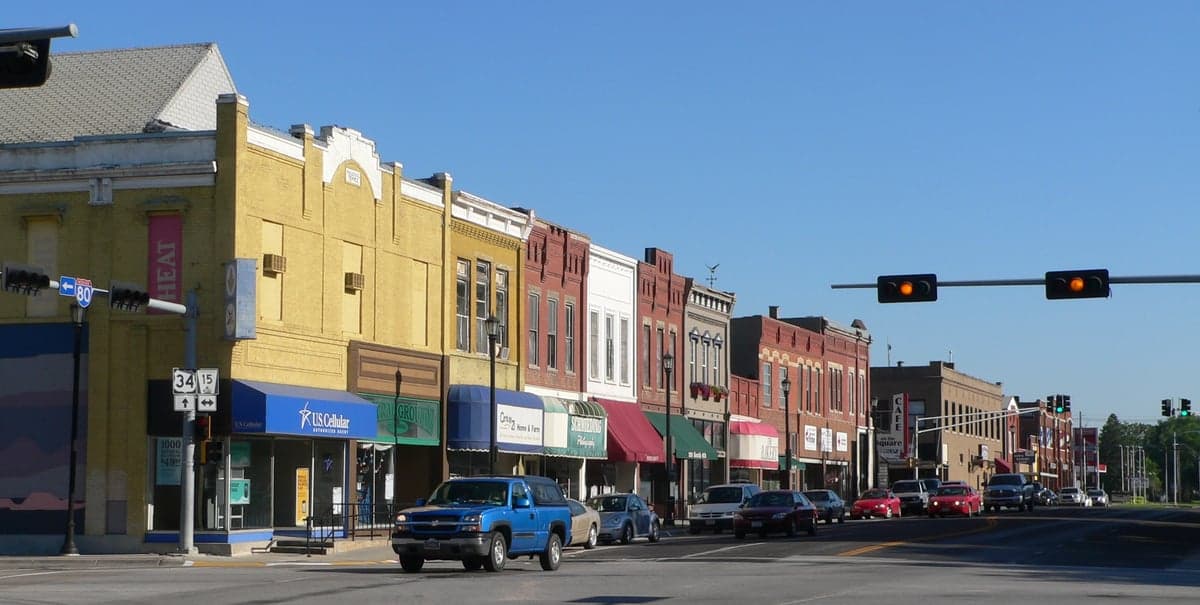
The people of Seward, Nebraska, today number 7,665 and form one of the most ethnically homogeneous communities in the state, with a population that is 93.3% white and a foreign-born share of just 0.2%. The city’s identity is shaped by its deep German and Czech roots, a strong Lutheran and Catholic church presence, and a college-town character anchored by Concordia University. With 37.2% of adults holding a bachelor’s degree or higher—well above the Nebraska average—Seward combines small-town conservatism with an educated, civically engaged populace. The city is known for its annual Fourth of July celebration, the largest in Nebraska, which reflects a community that prizes tradition, family, and local pride.
How the city was settled and grew
Seward’s founding population was overwhelmingly German and Czech, drawn to the fertile plains of eastern Nebraska by the Homestead Act of 1862 and the arrival of the Burlington and Missouri River Railroad in the 1870s. The town was platted in 1868 and named after William H. Seward, then Secretary of State, but the people who built it were immigrants from Central Europe seeking farmland and religious freedom. The original German settlers clustered in what is now North Seward, a neighborhood centered around St. John’s Lutheran Church (founded 187什么人), where German-language services persisted into the 1940s. Czech families, many from Bohemia and Moravia, settled south of the railroad tracks in the South Seward district, establishing St. Vincent’s Catholic Church and the Czech-language Sokol hall. A third wave of German Lutherans arrived in the 1880s and 1890s, filling the West Hill area near Concordia University (founded 1894 by the Lutheran Church–Missouri Synod). These three neighborhoods—North Seward, South Seward, and West Hill—remained ethnically distinct through the 1950s, with each maintaining its own church, school, and social organizations. The city’s population grew steadily from 1,000 in 1880 to 4,000 by 1950, driven almost entirely by natural increase and the expansion of farming and rail-related commerce.
Modern era (post-1965)
The post-1965 period brought little demographic change to Seward, as the city did not experience the immigration waves that reshaped larger Nebraska cities like Omaha or Lincoln. The 1965 Hart-Cellar Act, which opened immigration from Asia and Latin America, had virtually no effect here: the foreign-born share remains 0.2%, and the Hispanic population is just 4.2%. Instead, Seward’s modern growth has come from domestic in-migration—primarily white families from rural Nebraska and the Great Plains seeking jobs in manufacturing and education. The East Seward neighborhood, developed in the 1970s and 1980s around the Seward County Industrial Park, absorbed many of these newcomers, who worked at plants like the Becton Dickinson medical device facility and the Nebraska Plastics plant. The College Heights district, adjacent to Concordia University, grew in the 1990s and 2000s as faculty and staff built homes there, reinforcing the city’s educated, Lutheran character. The Black population (0.6%) and East/Southeast Asian population (0.6%) are tiny and concentrated almost entirely among Concordia University students and faculty, not in any permanent residential neighborhood. The Indian-subcontinent population is 0.0%. Seward has effectively remained a white, German-Czech enclave, with no significant ethnic enclave formation outside the historic neighborhoods.
The future
Seward’s population is projected to grow slowly, reaching roughly 8,500 by 2040, driven by continued domestic in-migration from rural Nebraska and the expansion of Concordia University. The city is not homogenizing further—it is already near the demographic ceiling for white homogeneity—but it is also not tribalizing into distinct ethnic enclaves. The Hispanic share (4.2%) is growing at a modest pace, primarily through births rather than immigration, and these families are dispersing across the South Seward and East Seward neighborhoods rather than forming a barrio. The foreign-born share is unlikely to rise above 1% given the city’s limited job base and lack of refugee resettlement programs. The most notable demographic trend is the aging of the population: the median age is 36.5, and the share of residents over 65 is 17%, reflecting the out-migration of young adults to Lincoln (25 miles west) and Omaha (50 miles east). The next 10–20 years will likely see Seward become slightly more Hispanic (perhaps 6–7%) and slightly older, but remain overwhelmingly white, Lutheran, and conservative.
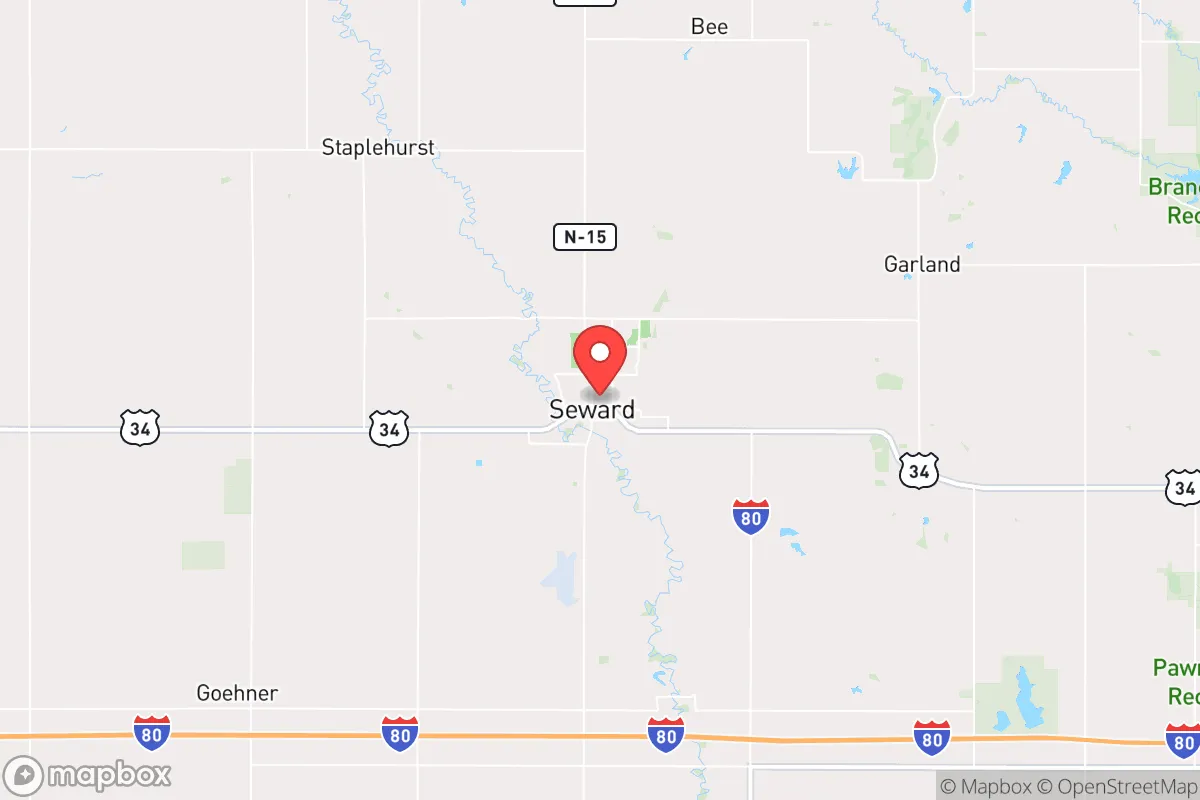
For someone moving in now, Seward offers a stable, safe, and culturally cohesive community where the population is not changing rapidly. The city is becoming a bedroom suburb for Lincoln commuters, with new subdivisions like Prairie View Estates attracting young families who value the low crime rate, strong schools, and traditional values. The trade-off is limited diversity: if you are looking for a place where your children will grow up surrounded by people of similar backgrounds and beliefs, Seward delivers. If you seek racial or ethnic variety, you will not find it here.

* Values derived from national, state, county, city and local statistics and may differ in a specific area. Last updated: 2026-09-21T19:02:24.000Z
Narrative content on this page is AI-generated and may contain mistakes. Verify any details that matter before acting on them.
ReloMaps may earn a commission from affiliate links at no extra cost to you.

