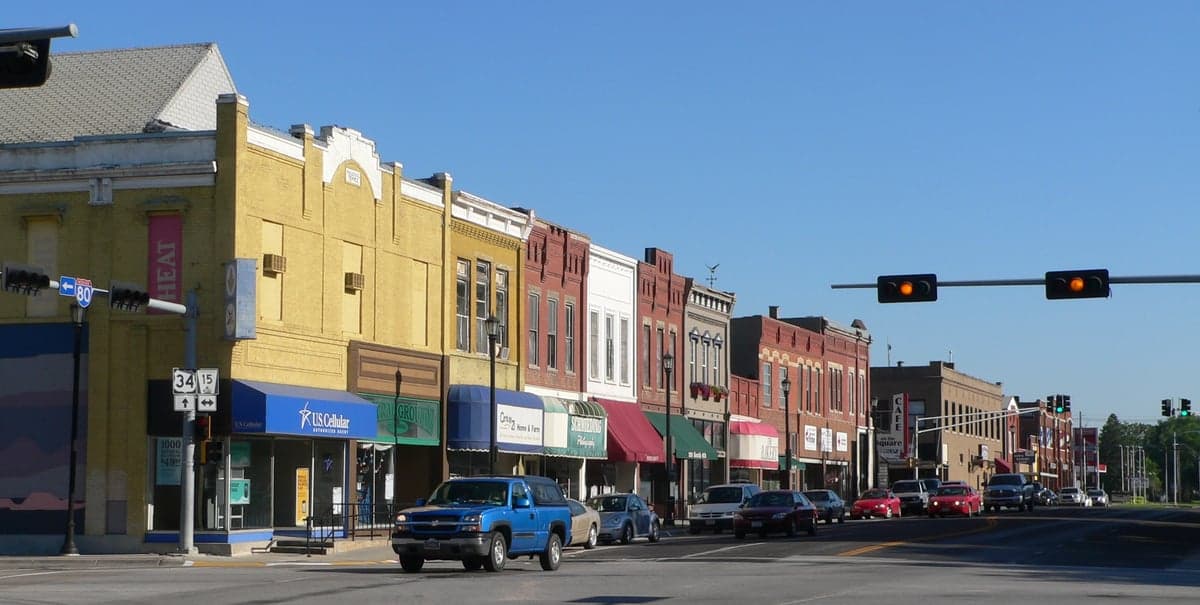
Photo: Wikipedia
Political ClimatePolitical Climate in Seward, NE
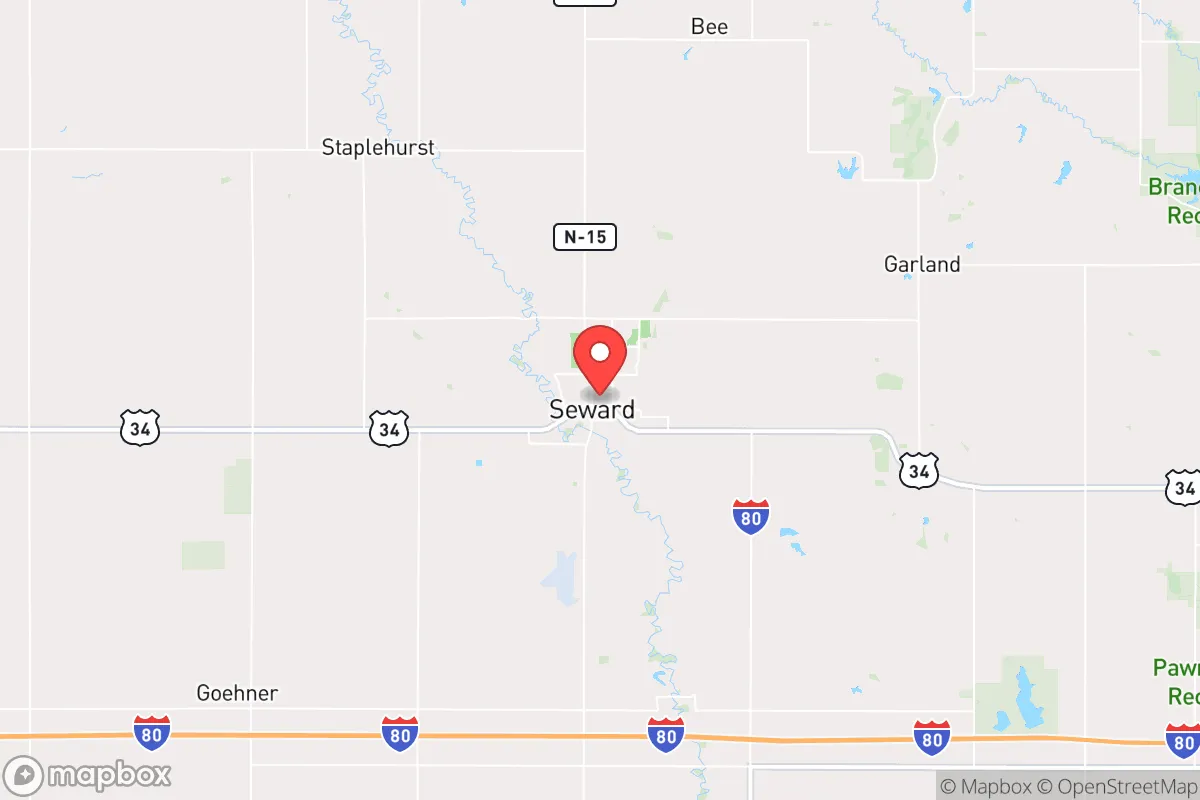
District shown is the primary district for this city’s centroid. Cities may span multiple districts.
Local Political AnalysisPolitical Analysis of Seward, NE
Seward, Nebraska, has long been a solidly conservative community, and the numbers back that up with a Cook PVI of R+6. But if you’ve lived here a while, you know the political climate isn’t just about voting patterns—it’s about a deep-seated belief in personal responsibility and limited government. For decades, this town has leaned Republican, and while the surrounding farm country is even redder, Seward itself has held the line pretty well. That said, you can feel the winds shifting a bit, especially as Lincoln’s sprawl creeps closer and brings with it a more progressive mindset. The real question is whether Seward can hold onto its core values or if it’ll slowly get pulled into the orbit of the state’s more liberal hubs.
How it compares
Drive 20 minutes west to Lincoln, and you’re in a completely different world—a blue dot in a red state where government intervention is often seen as the solution, not the problem. Seward, by contrast, still values the idea that local control and individual freedoms should come first. Compare it to smaller towns like Milford or Utica, and you’ll find they’re even more conservative, with less exposure to the urban drift. But here’s the thing: Seward’s R+6 rating puts it right in the middle of Nebraska’s political spectrum. It’s not as deep red as the Panhandle, but it’s far from the progressive lean of Omaha or Lincoln. That makes it a bit of a bellwether—if Seward starts to shift left, it’s a sign the whole state is changing. And honestly, that’s a little concerning for those of us who value keeping government out of our lives.
What this means for residents
For folks living here, the political climate directly affects how much freedom you have in your daily life. Seward still has a strong sense of community where neighbors look out for each other, and the local government tends to stay out of the way. But as the county grows, there’s pressure to adopt more progressive policies—things like stricter zoning, higher taxes for “community programs,” and even talk of diversity initiatives that sound good on paper but often lead to more bureaucracy and less personal choice. If you’re someone who believes your rights shouldn’t be trampled by well-meaning regulations, this is something to keep an eye on. The good news? The local school board and city council are still largely conservative, so for now, the overreach is minimal. But the trajectory is worth watching, especially if you’re planning to raise a family here and want to ensure your kids grow up with the same freedoms you had.
Culturally, Seward stands out for its strong sense of tradition—things like the Fourth of July celebration are a big deal, and there’s a real pride in self-reliance. You won’t find the same push for “equity” programs or government-run initiatives that you see in bigger cities. That said, there’s been a quiet push for more “inclusive” policies at the county level, which often translates to more red tape and less personal liberty. For now, the conservative majority holds, but if you’re considering moving here, know that the fight to keep government small and personal freedoms intact is ongoing. It’s still a great place to live if you value that, but don’t take it for granted—keep an eye on local elections and show up to vote. That’s how we keep Seward, Seward.

State Political ClimatePolitical Climate in Nebraska
State Political AnalysisPolitical Environment in the State
Nebraska has long been a reliably conservative state, but its political climate is more layered than the simple "red state" label suggests. The state has voted Republican in every presidential election since 1968, with Donald Trump carrying it by 19 points in 2024, yet its unique unicameral legislature and nonpartisan elections create a political environment where pragmatism often trumps pure ideology. Over the past 20 years, the dominant coalition has been a mix of rural conservatives, agricultural interests, and business-friendly Republicans, but a slow demographic shift in its two major metro areas—Omaha and Lincoln—has begun to introduce more competitive dynamics, particularly in the 2nd Congressional District, which has flipped between parties in recent cycles.
Urban vs. rural divide
The political map of Nebraska is a textbook case of the urban-rural split. Omaha (Douglas County) and Lincoln (Lancaster County) are the blue dots in a sea of red. Douglas County has trended Democratic in recent presidential elections, with Joe Biden winning it in 2020 and Kamala Harris narrowly carrying it in 2024, thanks to a growing professional class, a diverse population, and union-heavy manufacturing sectors. Lincoln is more moderate but still leans left relative to the state, driven by the University of Nebraska–Lincoln and state government employment. Meanwhile, the rest of the state is deeply Republican. Scottsbluff in the Panhandle, Grand Island in the central Platte Valley, and Norfolk in the northeast all vote reliably red, often by 30-40 point margins. The rural counties along the Kansas border, like Furnas County and Harlan County, are among the most conservative in the nation, with Trump winning them by 70+ points. The 2nd Congressional District (Omaha metro) is the only competitive seat in the state, and its electoral vote split in 2020 and 2024 highlighted Nebraska’s unique system—one of only two states that can split its electoral votes by congressional district.
Policy environment
Nebraska’s policy environment is broadly conservative, but with a pragmatic, low-drama bent. The state has no state income tax on Social Security benefits and a flat individual income tax rate that was cut from 6.84% to 5.84% in 2023, with further reductions scheduled to reach 3.99% by 2027. Property taxes are a perennial frustration—among the highest in the region as a percentage of home value—but the legislature has passed annual relief measures, including a 2024 bill that increased the property tax credit refund and capped local levy growth. Education policy is a flashpoint: the state passed a school choice law in 2023 (LB 753) creating tax-credit scholarships for private and parochial school students, though opponents are gathering signatures to repeal it via referendum in 2026. Healthcare is a mixed bag; Nebraska expanded Medicaid under the Affordable Care Act in 2020 via a ballot initiative, but the state has not expanded postpartum coverage beyond 60 days, and abortion is banned after 12 weeks (with exceptions for rape, incest, and life of the mother) under the 2023 Nebraska Abortion Act. Election laws are moderately restrictive: voter ID is required (implemented in 2024), and the state has no same-day registration, but early voting by mail is widely available. The nonpartisan unicameral legislature means that while Republicans hold a supermajority (33 of 49 seats), bills often pass with bipartisan coalitions, and the governor’s veto can be overridden with a simple majority—a dynamic that keeps extreme measures in check.
Trajectory & freedom
On balance, Nebraska has been moving in a more freedom-oriented direction over the past five years, but the pace is uneven. Gun rights expanded significantly with the 2023 passage of LB 77, which eliminated the requirement for a permit to carry a concealed handgun (constitutional carry). The state also preempts local gun ordinances, so Omaha and Lincoln cannot enact their own restrictions. Parental rights saw a win with the 2024 passage of LB 1402, which requires school districts to notify parents of any changes to a student’s health or well-being, including mental health services and gender-related accommodations. However, medical autonomy took a hit with the 12-week abortion ban, which some conservatives view as insufficiently protective of life, while others see it as a reasonable compromise. Property rights remain strong—Nebraska has no statewide rent control, and eminent domain for private development is rare. The biggest concern for liberty-minded residents is taxation: while income tax rates are falling, property taxes remain a heavy burden, and the state’s reliance on local levies for schools means that high-value homes in Omaha and Lincoln face significant bills. The 2024 legislative session also saw a failed attempt to pass a school choice expansion that would have allowed Education Savings Accounts, which would have been a major win for educational freedom.
Civil unrest & political movements
Nebraska is not a hotbed of civil unrest, but there have been notable flashpoints. The 2020 George Floyd protests in Omaha turned violent, with looting and fires in the Old Market district, leading to a heavy National Guard presence. Since then, organized activist movements have been relatively quiet, though the left-leaning group Nebraskans for Peace remains active on issues like prison reform and immigrant rights. On the right, the Nebraska Republican Party has seen internal battles between establishment conservatives and more populist, Trump-aligned factions, particularly over election integrity. The 2020 and 2022 cycles saw lawsuits over ballot drop boxes and mail-in voting procedures, but no major fraud was found. Immigration politics are a simmering issue: the state has no sanctuary policies, and a 2024 bill (LB 1089) would have required local law enforcement to cooperate with ICE, but it stalled in committee. The most visible political movement in recent years has been the school choice coalition, which has mobilized parents and religious groups to push for expanded options, while teachers’ unions have fought back with equal intensity. A new resident would notice the absence of the kind of street-level political theater seen in states like Oregon or Texas—Nebraska’s politics are more boardroom than barricade.
Projection
Over the next 5-10 years, Nebraska is likely to remain a solidly red state, but with a slowly purpling hue in its urban cores. In-migration is modest but growing, driven by remote workers and retirees attracted to low housing costs (median home price around $250,000) and the absence of state income tax on Social Security. Most of these newcomers are settling in the Omaha suburbs like Elkhorn and Gretna, which are reliably Republican, or in Lincoln’s expanding south and east sides, which are more moderate. The demographic shift is slow: the state’s population is aging and white (85%), but the Latino population is growing, particularly in South Sioux City and Lexington, which could shift some rural districts toward more competitive margins. The biggest wildcard is the unicameral legislature: if Democrats can flip a few more seats in Omaha and Lincoln, they could break the Republican supermajority, which would make it harder to pass conservative priorities like further tax cuts or school choice expansion. However, the state’s rural tilt is deeply entrenched, and the 2024 election results suggest that the urban shift is not accelerating fast enough to change the overall balance. A resident moving in now should expect a state that remains conservative on most issues, with a pragmatic, low-drama political culture, but with growing friction over education funding and property taxes.
For a new resident, the bottom line is this: Nebraska offers a stable, conservative environment with low crime, strong property rights, and a government that generally stays out of your personal business—but you’ll pay for it in property taxes, and you’ll need to accept that the state’s political future is more about incremental change than dramatic shifts. If you’re looking for a place where your vote actually matters in state-level races, the Omaha metro is the only battleground; everywhere else, the primary is the real election. The state’s freedom trajectory is positive on guns and parental rights, but the tax burden and the ongoing school choice fight mean there’s still work to be done. It’s a good place to raise a family or retire, but don’t expect the kind of rapid, transformative policy changes you’d see in Florida or Texas.
* Values derived from national, state, county, city and local statistics and may differ in a specific area. Last updated: 2026-09-21T19:02:24.000Z
Narrative content on this page is AI-generated and may contain mistakes. Verify any details that matter before acting on them.
ReloMaps may earn a commission from affiliate links at no extra cost to you.

