Photo: Wikipedia
Political ClimatePolitical Climate in Shawnee, KS
District shown is the primary district for this city’s centroid. Cities may span multiple districts.
Local Political AnalysisPolitical Analysis of Shawnee, KS
Shawnee, Kansas, sits in a political landscape that has shifted noticeably over the past decade, and if you’ve lived here as long as I have, you’ve felt it. The Cook Partisan Voting Index (PVI) currently rates the area as D+2, meaning it leans two points more Democratic than the national average—a far cry from the reliably conservative Johnson County I grew up in. While the city itself still has a strong Republican base, especially among long-time families, the influx of new residents from the Kansas City metro and out-of-state transplants has nudged local elections and policy debates leftward. The trajectory feels like a slow but steady drift, and for those of us who value limited government and personal freedoms, it’s worth keeping a close eye on.
How it compares
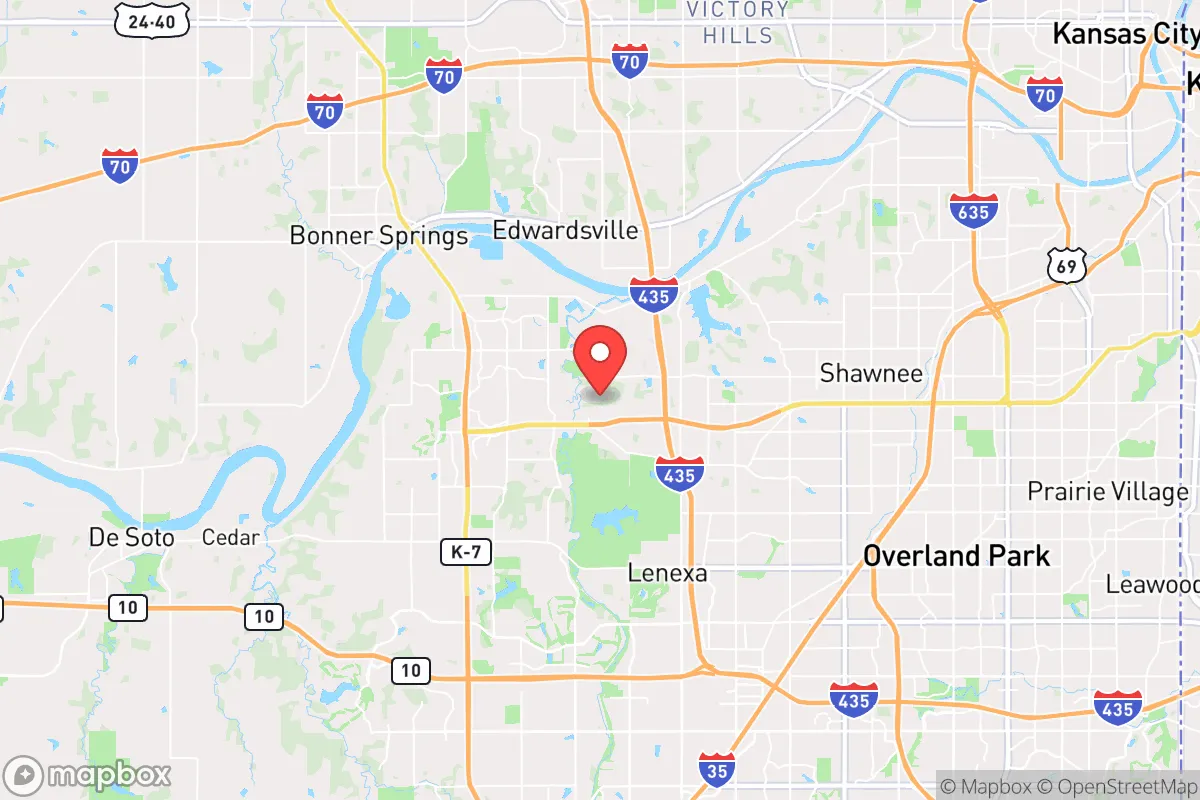
To understand Shawnee’s political character, you have to look at its neighbors. Head west to De Soto or Eudora, and you’ll find communities that still vote reliably red—places where the county commission and school board races rarely see a contested primary from the left. Drive east into Overland Park or Prairie Village, and you’re in territory that’s become solidly blue, with progressive candidates winning city council seats and pushing policies like inclusionary zoning and expanded public transit. Shawnee sits right in the middle, a kind of political buffer zone. We’re not as conservative as the rural towns to the west, but we’re not as progressive as the inner-ring suburbs. That middle ground is getting harder to hold, though, as the county’s overall trend tilts left. The 2020 presidential election saw Johnson County flip to Biden by a comfortable margin, and while Shawnee itself still voted for Trump, the gap was narrower than it was in 2016. That’s the kind of shift that makes you wonder what the next decade will bring.
What this means for residents
For folks who value personal freedoms—like the right to make your own choices about your property, your business, and your family—the political drift in Shawnee is something to watch. Local government here has historically been hands-off, with a city council that focused on basic services like roads, parks, and public safety. But as the political center moves left, there’s more talk of zoning restrictions, environmental mandates, and even discussions about police funding that would have been unthinkable 15 years ago. The school board, too, has become a battleground, with debates over curriculum transparency and parental rights heating up. If you’re the kind of person who believes government should stay out of your life unless absolutely necessary, you’ll want to stay engaged in local elections—because the people who show up for city council and school board races are the ones who shape the rules you live by. The good news is that Shawnee still has a strong core of residents who remember when the city was more about common sense than ideology, and they’re not going down without a fight.
Cultural and policy distinctions
One thing that sets Shawnee apart from its more progressive neighbors is a lingering sense of independence. You don’t see the same push for “sanctuary city” policies or aggressive climate action plans here that you do in Overland Park or Kansas City, Missouri. The city’s leadership has mostly stuck to a pragmatic, low-tax approach, and the local business climate remains friendly to small entrepreneurs. That said, the cultural shift is real. New developments along Shawnee Mission Parkway and near the Johnson County Community College campus are bringing in younger, more diverse residents who tend to vote differently than the families who’ve been here for generations. The long-term outlook depends on whether those newcomers assimilate into the local ethos or reshape it. If I had to bet, I’d say Shawnee will remain a purple community for the next decade, but the shade of purple is definitely getting bluer. For those of us who prefer a government that stays out of our way, the best strategy is to stay informed, vote in every local election, and keep reminding our neighbors that freedom isn’t a partisan issue—it’s a principle worth defending.

State Political ClimatePolitical Climate in Kansas
State Political AnalysisPolitical Environment in the State
Kansas has long been a reliably Republican state at the presidential level — it hasn't voted for a Democrat since Lyndon Johnson in 1964 — but the real story is the internal tug-of-war between its conservative rural base and a growing moderate-to-liberal urban corridor. Over the last 20 years, the state has shifted from a solid red monolith into a more volatile battleground where the GOP’s internal factions (traditional conservatives vs. the more populist, liberty-minded wing) fight it out in primaries, while Democrats hold onto a few key suburban seats. For a conservative-leaning relocator, the bottom line is that Kansas offers a deeply red policy environment outside of Johnson and Wyandotte counties, but the state’s overall trajectory is one of slow, contested change rather than a runaway progressive takeover.
Urban vs. rural divide
The political map of Kansas is a textbook case of the urban-rural split. The eastern third of the state, anchored by the Kansas City metro area, is the blue island. Johnson County (Overland Park, Olathe, Lenexa) was once reliably red but has been trending purple-to-blue since 2016, driven by an influx of college-educated professionals and out-of-state transplants. In 2020, Joe Biden won Johnson County by about 8 points, a stark contrast to the rest of the state. Wyandotte County (Kansas City, KS) is the state’s most reliably Democratic stronghold, with a large minority population and union-heavy industrial base. Douglas County (Lawrence, home to the University of Kansas) is another blue anchor, voting Democratic by wide margins. Meanwhile, the rest of the state — the vast rural and small-town expanse from the Flint Hills to the High Plains — is deeply red. Sedgwick County (Wichita) is a bellwether: it’s Republican-leaning but not overwhelmingly so, and it often decides statewide races. The rural counties, like Thomas County (Colby) and Finney County (Garden City), routinely vote 80%+ Republican. The divide isn’t just about party; it’s about culture. Rural Kansans see the state government in Topeka as a distant bureaucracy, while suburbanites in Johnson County worry about school funding and social services.
Policy environment
Kansas’s policy environment is a mixed bag for conservatives. On the plus side, the state has a flat income tax rate of 5.7% (as of 2026), and the sales tax is moderate at 6.5% state rate, though local add-ons can push it higher. The state is a “right-to-work” state, meaning union membership is optional, and it has some of the weakest labor union laws in the country. Property taxes are a sore spot — they’re relatively high compared to neighboring states like Missouri, and there’s no homestead exemption for primary residences, which hits retirees and families hard. On education, Kansas has a mixed record: the state constitution guarantees adequate school funding, which has led to repeated court battles and tax increases to satisfy the Kansas Supreme Court. School choice is limited compared to states like Florida or Arizona — there’s no universal voucher program, though there are a few tax-credit scholarship programs for low-income students. Healthcare policy is largely status quo; the state did not expand Medicaid under the Affordable Care Act, a win for fiscal conservatives, though it means rural hospitals are under constant financial pressure. Election laws are generally conservative: voter ID is required, and the state has a clean voter roll maintenance process. There’s no early voting by mail without an excuse, though in-person early voting is available. The state legislature has been aggressive on social issues, passing a near-total abortion ban in 2022 (which was then upheld by a state constitutional amendment vote in 2024, a major victory for pro-life advocates).
Trajectory & freedom
On the freedom front, Kansas has been a mixed bag over the last decade. The good news for liberty-minded folks: the state passed a constitutional carry law in 2015, allowing concealed carry without a permit, and it has strong preemption laws that prevent local governments from enacting stricter gun ordinances. The state also passed a “Parental Bill of Rights” in 2021, giving parents more say in their children’s education and medical decisions. On the concerning side, the state’s tax burden has crept up. The infamous “Kansas Experiment” of deep income tax cuts under Governor Sam Brownback (2012-2017) was largely reversed by a bipartisan coalition in 2017, and the state’s top marginal rate has since increased. Property taxes have risen steadily, driven by local school bond issues and rising home values. There’s also been a push for more government transparency — the state has a relatively strong open records law, but enforcement is weak. The biggest freedom concern for conservatives is the growing influence of the Kansas Supreme Court, which has repeatedly ordered the legislature to increase school funding, effectively overriding the elected branches on tax policy. This has led to calls for judicial reform, including merit selection changes, but so far, the court remains a check on legislative power. On medical freedom, Kansas was slow to legalize medical marijuana — it remains fully illegal as of 2026 — which frustrates both libertarians and some conservatives who see it as a states’ rights issue.
Civil unrest & political movements
Kansas is not a hotbed of civil unrest, but there have been notable flashpoints. The most visible was the 2022 abortion referendum, where voters rejected a proposed constitutional amendment that would have removed the right to abortion — a surprising defeat for pro-life forces in a red state. That vote energized progressive activists in Johnson County and Lawrence, and it led to a wave of grassroots organizing on both sides. Immigration politics are relatively quiet compared to border states, but there’s a strong undercurrent of concern in rural counties like Finney County (Garden City) and Seward County (Liberal), where meatpacking plants have drawn a large immigrant workforce. The state has no sanctuary city policies, and local law enforcement generally cooperates with federal immigration authorities. Election integrity has been a hot topic since 2020, with the state legislature passing a series of bills to tighten voter ID laws and ban ballot drop boxes. There have been no major election fraud scandals, but the issue remains a rallying point for conservative activists. The “Free State” movement, which has a small but vocal presence, pushes for nullification of federal gun laws and marijuana prohibition, but it hasn’t gained mainstream traction. Overall, political activism in Kansas is more about legislative lobbying and primary elections than street protests.
Projection
Looking ahead 5-10 years, Kansas is likely to remain a red state, but the shade of red will depend on migration patterns. The Kansas City suburbs — particularly Johnson County — are growing faster than the rest of the state, and they’re trending left. If that trend continues, statewide races could become competitive, especially for governor and Senate. However, the rural counties are not shrinking as fast as in some other Plains states, thanks to a stable agricultural economy and a growing meatpacking industry. The state’s biggest demographic shift is the aging of its population — Kansas has one of the oldest median ages in the region, which tends to favor conservative candidates. The wild card is the state’s ability to attract young families and remote workers. If Kansas can keep taxes low and maintain its reputation for safe, affordable living, it could see a net inflow of conservatives from high-tax states like California and Illinois. If not, the urban drift will continue. For a new resident, the realistic expectation is that Kansas will stay broadly conservative on social and cultural issues, with occasional battles over school funding and tax policy. The state is unlikely to become a progressive stronghold, but it’s also unlikely to become a libertarian paradise.
For a conservative relocator, Kansas offers a solid foundation: low crime, strong gun rights, a pro-life legal environment, and a generally business-friendly regulatory climate. The trade-offs are higher property taxes than neighboring Missouri and a state supreme court that can override the legislature on spending. If you’re moving to a rural county or a small city like Manhattan or Hays, you’ll find a deeply conservative community where your values are the norm. If you’re looking at the Kansas City suburbs, be prepared for a more politically mixed environment, but one that still leans center-right compared to the national average. The key is to pick your county wisely — the political climate varies more by zip code than by state line.
* Values derived from national, state, county, city and local statistics and may differ in a specific area. Last updated: 2026-05-03T06:02:22.000Z
Narrative content on this page is AI-generated and may contain mistakes. Verify any details that matter before acting on them.
ReloMaps may earn a commission from affiliate links at no extra cost to you.

